
New Ways to Reach the Wealthy
The coronavirus pandemic has changed the day-to-day interactions of Affluent Americans, strengthening communication within tightly knit families while weakening interactions with almost everyone else. For marketers, this world of changed interactions means old ways of messaging to Affluents don’t work anymore.
Our research shows that despite positive news on the vaccine front, Affluents are living in a narrower world until there is widespread inoculation. Because people are generally social beings, with a sense of needing to belong, they are looking for ways to be a part of something bigger. Marketing messages that help Affluents feel part of that “something bigger” will help establish good will and connections with brands.
For more than 40 years, Ipsos has tracked the lives and lifestyles of financially successful Americans in its syndicated Affluent Survey and quarterly Barometers. This paper shares research and offers guidance to marketers on the changes that COVID-19 has brought to wealthy consumers—download a copy today!
NEW WAYS TO REACH THE WEALTHY
Ipsos’ widely-used study of Affluent Americans has some surprising findings as the new year kicks off—ones that can help marketers embrace people’s desire for closeness.
The coronavirus pandemic has changed the day-to-day interactions of Affluent Americans, strengthening communication within tightly knit families while weakening interactions with almost everyone else. For marketers, this world of changed interactions means old ways of messaging to Affluents don’t work anymore. But what does work? Marketers should focus on one mission: Messaging that makes people feel close to others. For more than 40 years, Ipsos has tracked the lives and lifestyles of financially successful Americans in its syndicated Affluent Survey and quarterly Barometers. This wave offers guidance to marketers on the changes that COVID-19 has brought to wealthy consumers—and shows what can be learned from them.
In Ipsos’ most recent study of the Affluent, respondents told Ipsos that prior to COVID, they typically communicated with 5.1 kinds of people in an average week (out of 19 interpersonal categories from spouses to close friends, co-workers to store clerks). On average, men and women interacted with the same number of groups, although there were distinct differences between the sexes: women were far more likely to communicate with parents and siblings than men, while men were more likely to connect with their children and co-workers than women. Roughly a third of Affluents communicated significantly more with their immediate family (spouses/children) as a result of COVID, given the great likelihood that they were somewhat confined to the same living quarters during the lockdowns. Few Affluents claimed to have communicated less during this time.
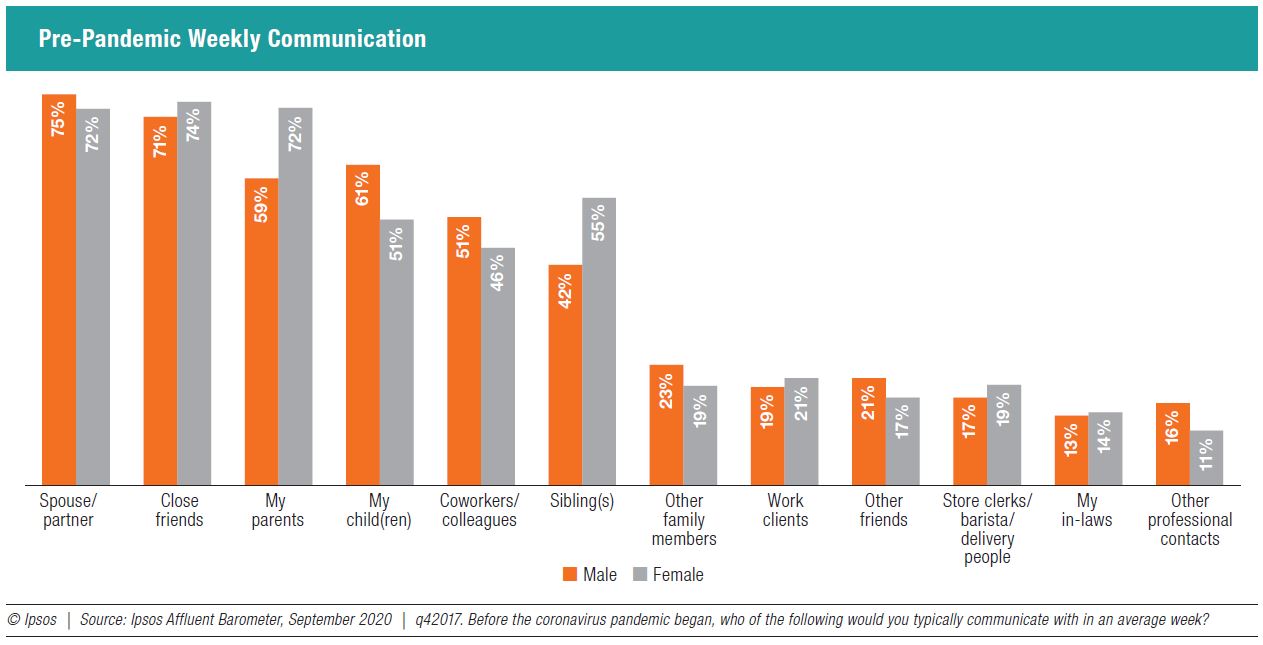
But outside of the family, communication was more likely to be negatively impacted, and most other categories saw bigger declines in communication.
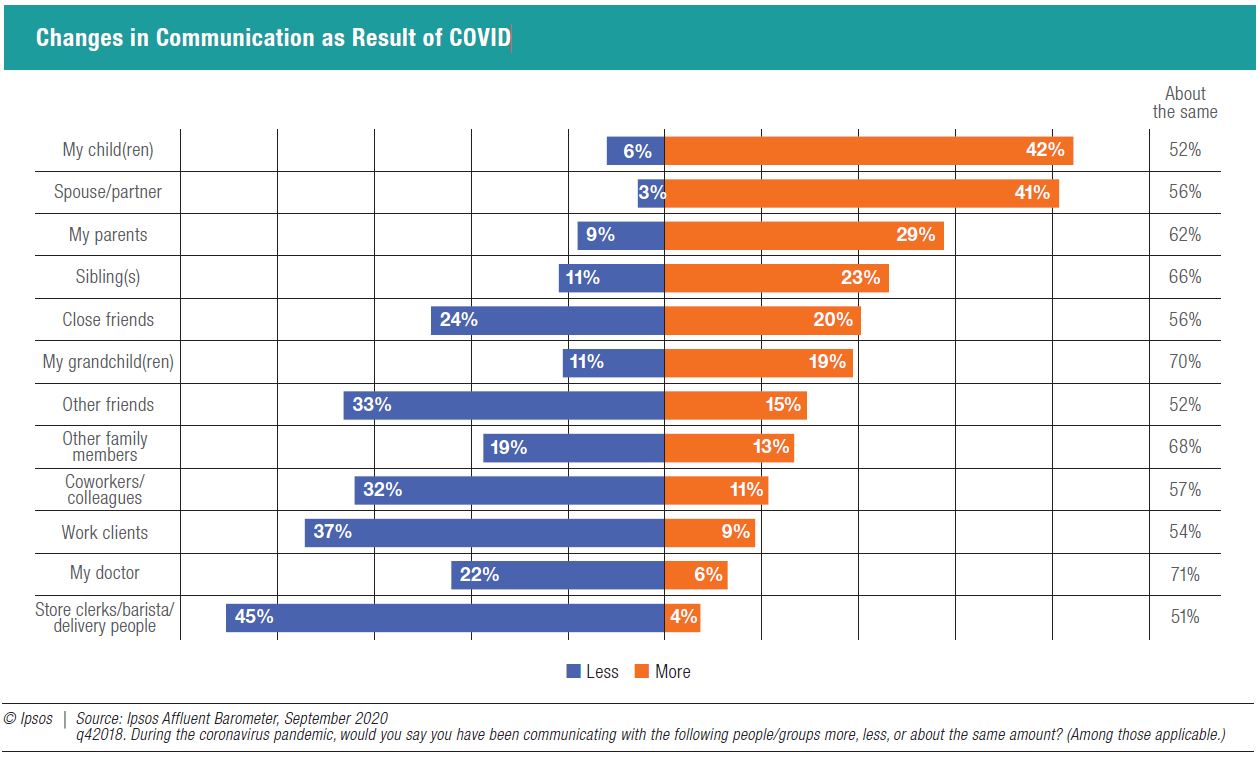
These changes make it imperative for marketers to recast their messaging in a way that makes Affluents feel close to others, especially given the changes that have occurred within age groups. While increased communication within Affluents’ families occurred in every generational group, both Gen X and the Boomer/Senior cohorts slipped when it came to the extended family. This may be due to the fact that these extended family members are less important to individuals focused on protecting their immediate family. For Millennials and members of Generation Z, their facility with technology, especially video chatting, texting and social networking, likely accounted for their ability to maintain and increase communications with family during the pandemic.
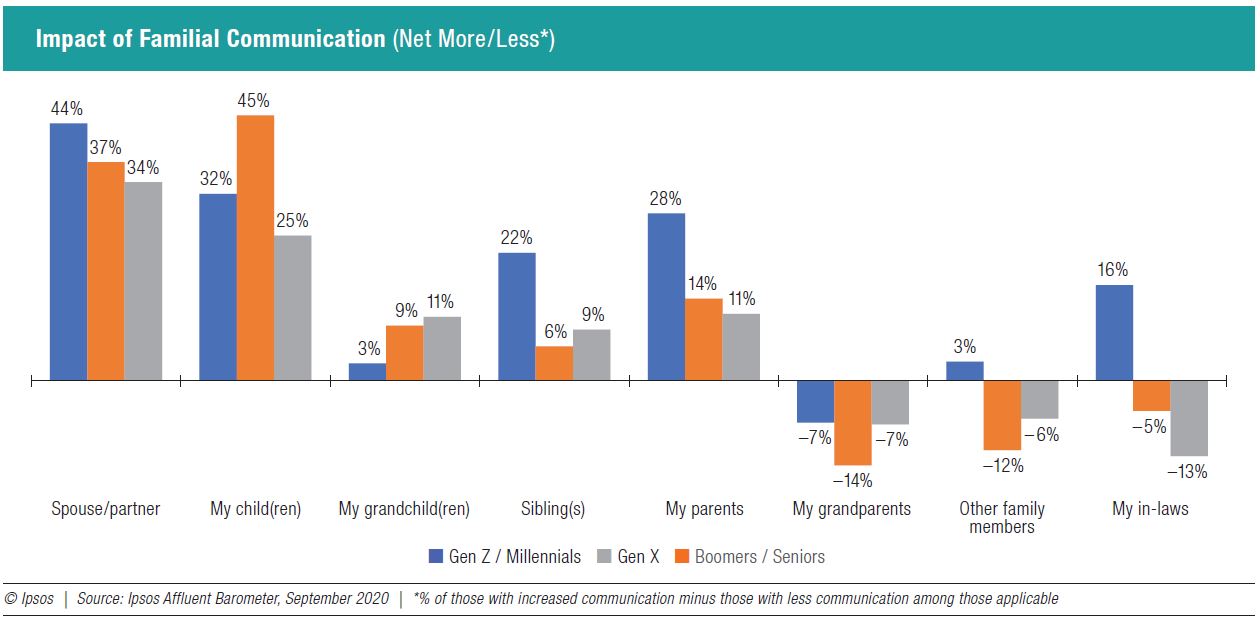
Another reason for marketers to focus on messaging that makes people feel close to others: Beyond the family, Affluent Millennials and members of Gen Z kept up and, in some cases, improved their interactions with friends and acquaintances, while older generations suffered. The familiarity and proficiency with using technology most likely helped younger folks bridge gaps.
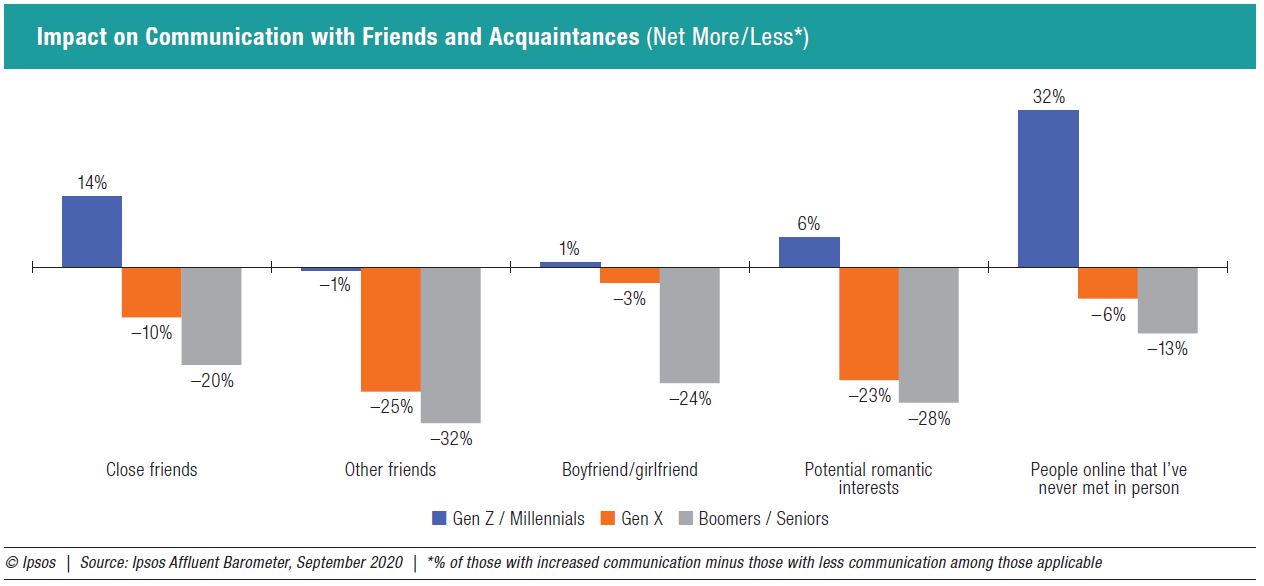
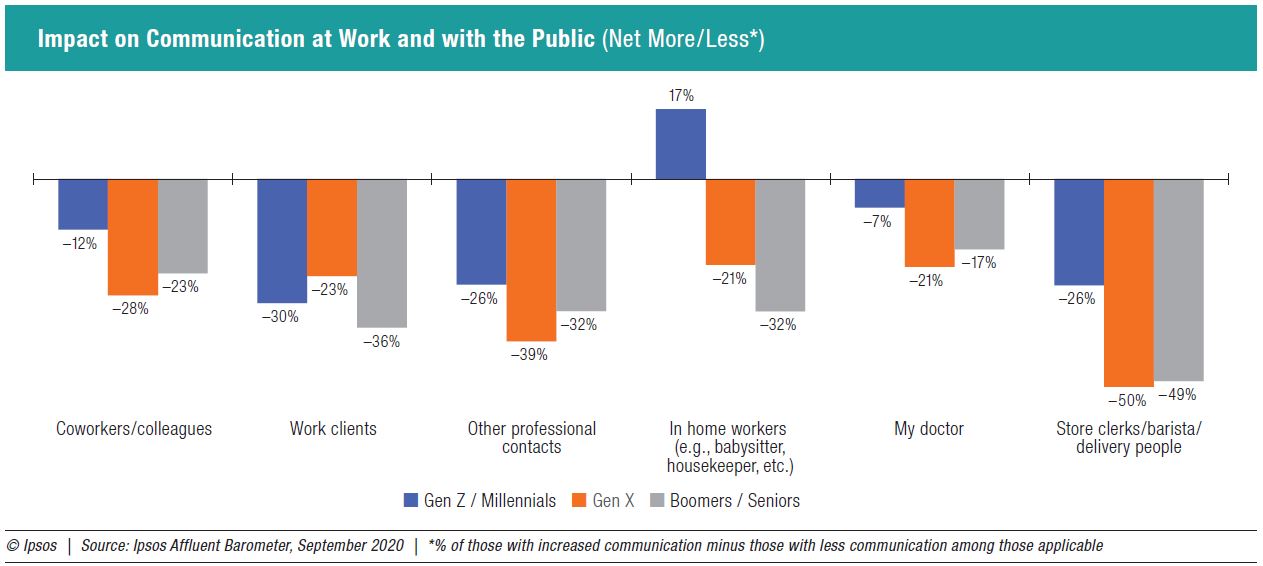
Affluent consumers also became harder for marketers to reach in the public sphere. With many offices and retail spaces closed or under restrictions, it’s not surprising that everyone, regardless of age, had fewer interactions with the public. Across generations, Affluents had decreased levels of communication with their co-workers/colleagues, work clients, and other professional contacts.
Despite positive news on the vaccine front, Affluents will continue living in a narrower world until there is widespread inoculation. Because people are generally social beings, with a sense of needing to belong, they’ll be looking for ways to be a part of something bigger. Marketing messages that help Affluents feel part of that “something bigger” will help establish good will and connections with brands.
![[WEBINAR] How winning brands are making themselves essential in a tight economy](/sites/default/files/styles/list_item_image/public/ct/publication/2026-09/thumbnail-templates%20demo_3.png?itok=0YmowUKN)

