Many are still feeling the inflationary pain
Jerome Powell, the head of the Fed, indicated today that he will keep raising interest rates to bring down inflation. He also pointed to the likelihood that these moves will inflict some amount of economic pain on consumers and businesses. The recessionary marks are sounding.
Even with some hopeful readings on inflation recently, this is likely nowhere near the end. Gas prices are coming down but rent and food costs remain high.
In light of all of this, we revisit where Americans are on inflation, who is being hurt the most by this, and what people are expecting from the future.
- Cautiously optimistic? Consumer prices softened last month, a potentially positive sign that the efforts the Fed is taking to reel in inflation may be starting to work. Though, data is noisy. Is this the beginning of a downward trend or a blip, a false dawn? It is hard to say. We will have to wait and see.

- Economic worries. Yet, despite some good news, the economy remains Americans' biggest concern. The slight dip in macroeconomic indicators isn’t necessarily making a tangible difference for most.

- Regressive tax. With rising costs, many Americans are living paycheck to paycheck and just getting by. Not everyone is in this boat though. Majorities of lower-income Americans, younger people, parents, Black and Hispanic respondents, and those without a college degree all say they are living paycheck to paycheck. Inflation hurts consumers when their budget includes a larger portion of essentials. Stretching that same dollar becomes more of a challenge. The poor always lose out when times are tough.

- Inflation for now. Right now, most consumers are anticipating price hikes for goods and services to continue for the foreseeable future. This will shape how people move through the economy (and vote), with consumers valuing bargain or store brands, and sales, and adjusting their budget accordingly. Don’t lose sight of this.
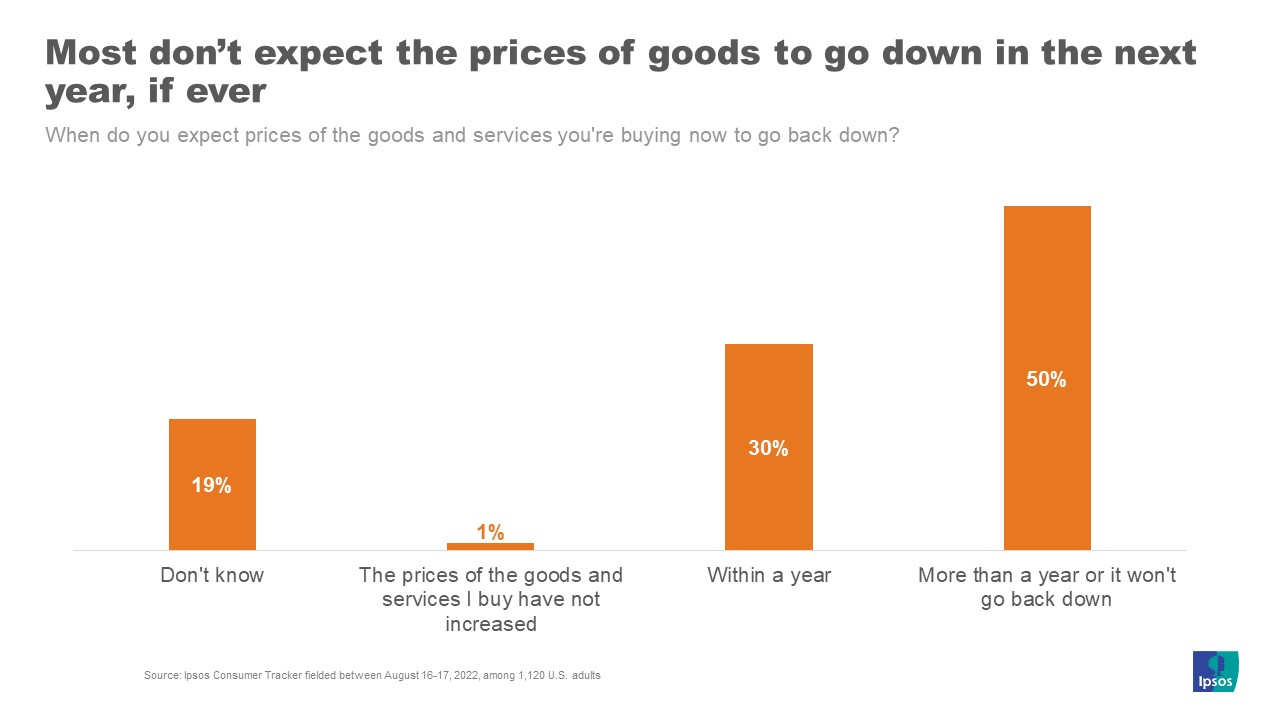
- Hope for the future? Since consumers believe that this inflationary pressure won’t let up in the near-term, people are pricing that into their outlook on the economy Expectations have been falling and are down relative to the pandemic average. People are bracing for what’s next.
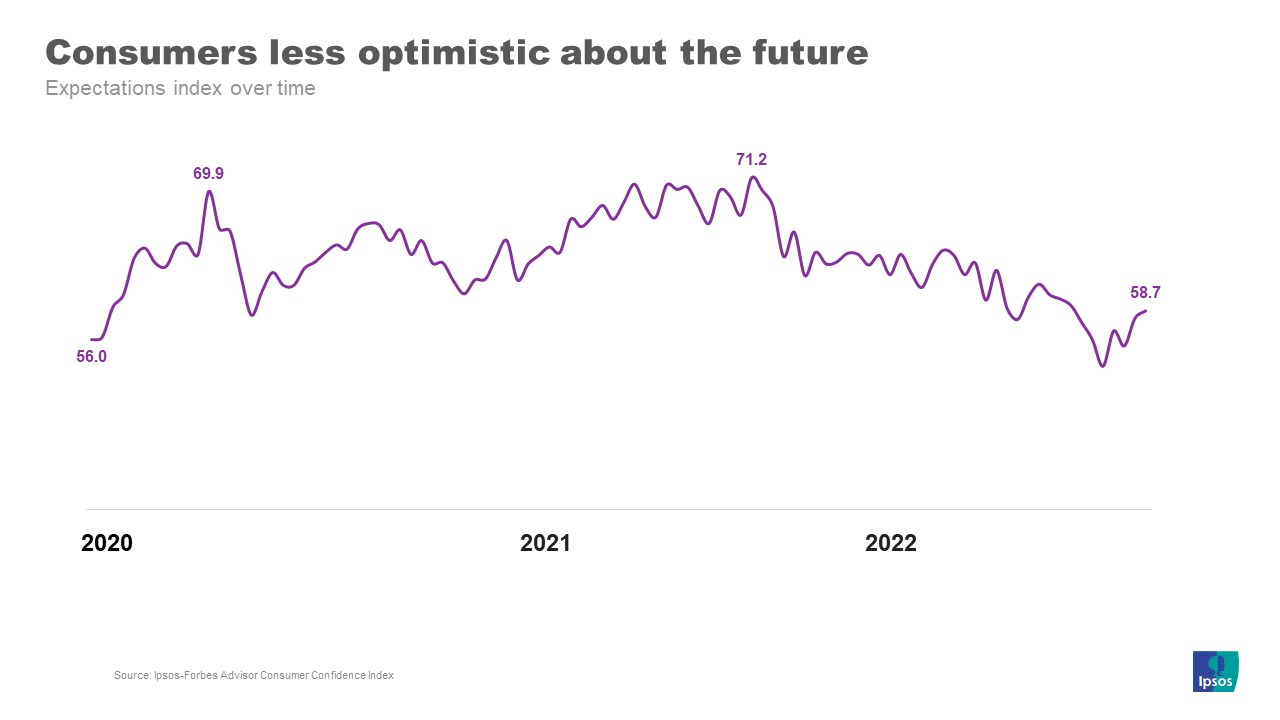
Most Americans, along with Jerome Powell, believe that we will be dealing with inflation and the fallout from that for some time. This outlook doesn’t make the present pain people are feeling any better. The combination of price pressures and economic worry will likely continue to inform how consumers choose to spend.
This is the space to watch as Americans shift in reaction to whatever happens next in the economy. Ugly signals for the midterms.