
Novartis Insights Innovation Unlocks the Online Ecosystem
It’s the age-old question: Where do patients and HCPs seek out information? So often the approach to get the answer has been a grab bag of survey responses and qualitative data that relies on stated responses and the memory of the respondents. In contrast, Ipsos Healthcare team and the Novartis lead for portfolio insights and market research innovation, Janie Vitlina, approached the question in a different way: How can we understand the interconnected web of information flow, who influences information flow, and how can we leverage this network to elevate our content? This new perspective on the traditional question opened the door to an innovative approach—online ecosystem mapping.
Novartis paves the way to unlocking the online renal landscape through ecosystem mapping
Introduction
Ipsos Healthcare’s Digital Readiness & Social Intelligence team in a recent collaboration with Janie Vitlina, the Novartis lead for portfolio insights and market research innovation, sought to understand the rare renal disease online landscape (IgAN, C3G) and determine which persons and entities influence the flow of information and online narrative in the category.
The process, known as online ecosystem mapping, is an advanced multi-tenet analytical research approach that Ipsos Healthcare developed to give pharma brands, therapy franchises, and medical device companies an understanding of how information flows to the patient online, which persons or entities control and shape the online information flow, what impact information (and misinformation) has on the end patient, and, importantly, what Healthcare should do to most effectively position the brand or company in what is often a crowded and noisy digital space.
Did you know that every therapeutic category has its own unique online ecosystem, and the flow of information (and misinformation) can be mapped to drive online content, engagement, and channel strategies?
Mapping was done by harnessing a vast, two-year historical, multi-source digital dataset representative of both IgAN (Berger’s Disease) and C3G (Complement 3 Glomerulopathy), as well as broader renal disease to add context to subcategories IgAN and C3G.
As part of the project, Ipsos sought to provide insights on four key objectives:
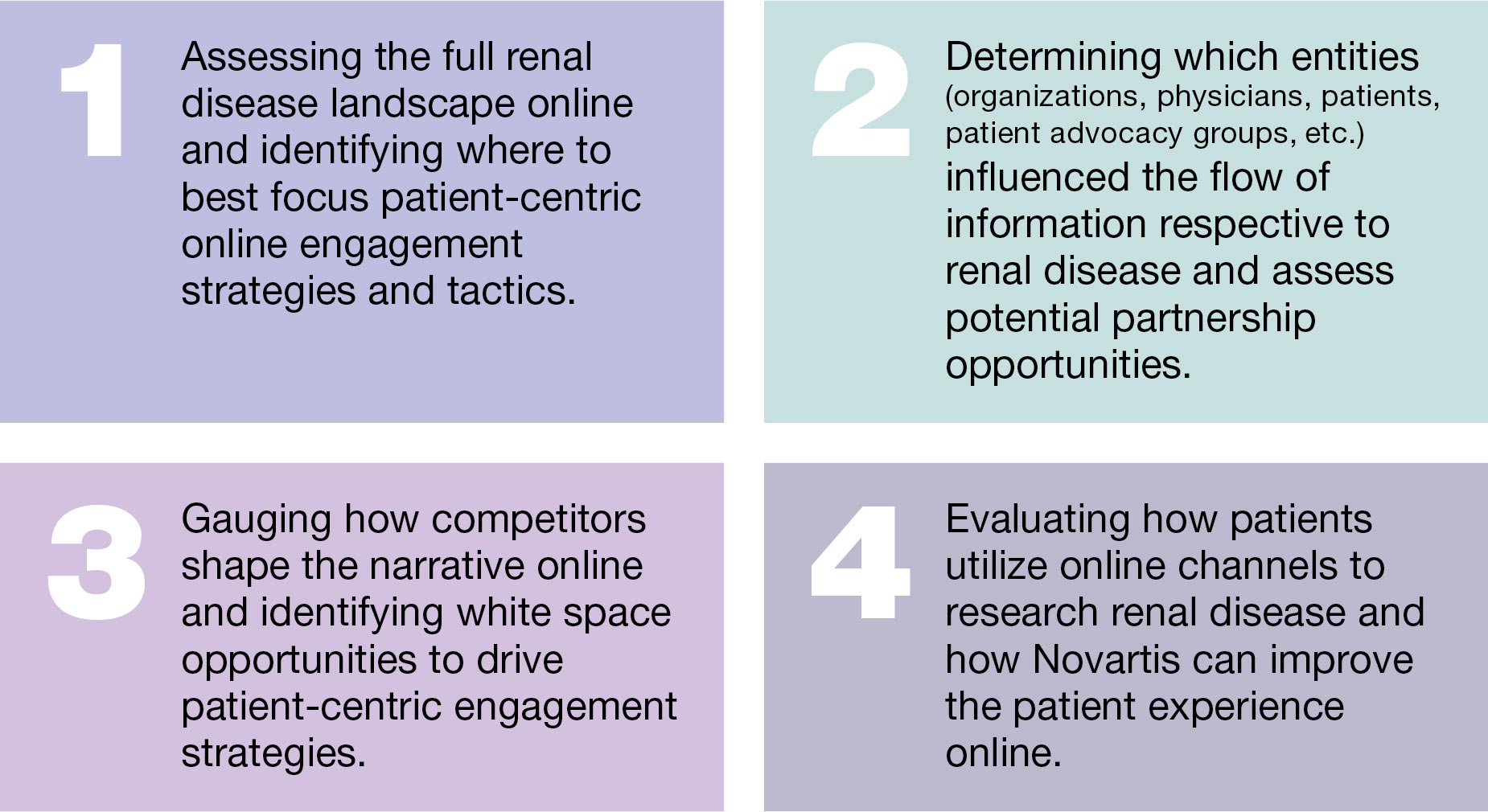
To do this, Ipsos Healthcare leveraged a mix of proprietary web analytics & social data collection software tools, advanced analytical frameworks, and a team of expert healthcare analysts in processing and mapping of the ecosystem.
By mapping the ecosystem, Novartis was able to establish a baseline understanding of renal disease online, the informational flow (both clinical and non-clinical) to the patient, and a robust scoring mechanism to determine the role and influence of these different informational sources on patients throughout their digital journey.
As individual characteristics and initiatives of each of these entities were established, a holistic view of the renal disease landscape manifested, and the connections between stakeholders became apparent.
Mapping Under the Surface of the Web—There’s a Lot We Can Learn
Imagine a neural network. A complex system of interactions where everything is interconnected.
To engage the network successfully, you must understand how nodes signal to one another, each node’s weight and threshold, and how to activate the next layer of the network. Online ecosystem mapping does exactly this, enabling innovation in how to build more effective online marketing, drive customer-centric communication and engagement strategies, lay the groundwork for personalization in healthcare, and deliver an impactful competitive advantage. It is analogous to getting under the surface of the web to understand what is truly going on a few levels down.

A New Perspective
The organic renal disease ecosystem is flourishing
The findings were impressive. The analysis showed that the renal ecosystem was flourishing with activity driven by several distinct groups, all trying to fill education and resource gaps for patients. By first understanding how information within the therapeutic landscape had evolved over time, Ipsos Healthcare was able to clearly determine the most important entities within the ecosystem. The results may surprise you.
Understanding what patients need
The patient information pathway is fraught with twists and turns, a lack of viable educational content, and of the content that does exist, much of it is written with a clinical audience in mind, not in the voice of the patient.
In the ultra-rare renal space, Ipsos Healthcare uncovered a significant amount of white space and unmet patient needs to be filled. “The way patients use online resources is so complex. They’re not traveling in a straight line going from one place to another, but rather looping back to resources at different points in their journey and different stages of their disease. One resource may be valuable and engaging during the first stage of their journey, then they’ll drop it, only to come back to it at a later stage. That has an impact on how we think about content creation. And finding that a handful of influencers are driving 50% of the conversation adds extra layers to our content strategy,” said Vitlina.

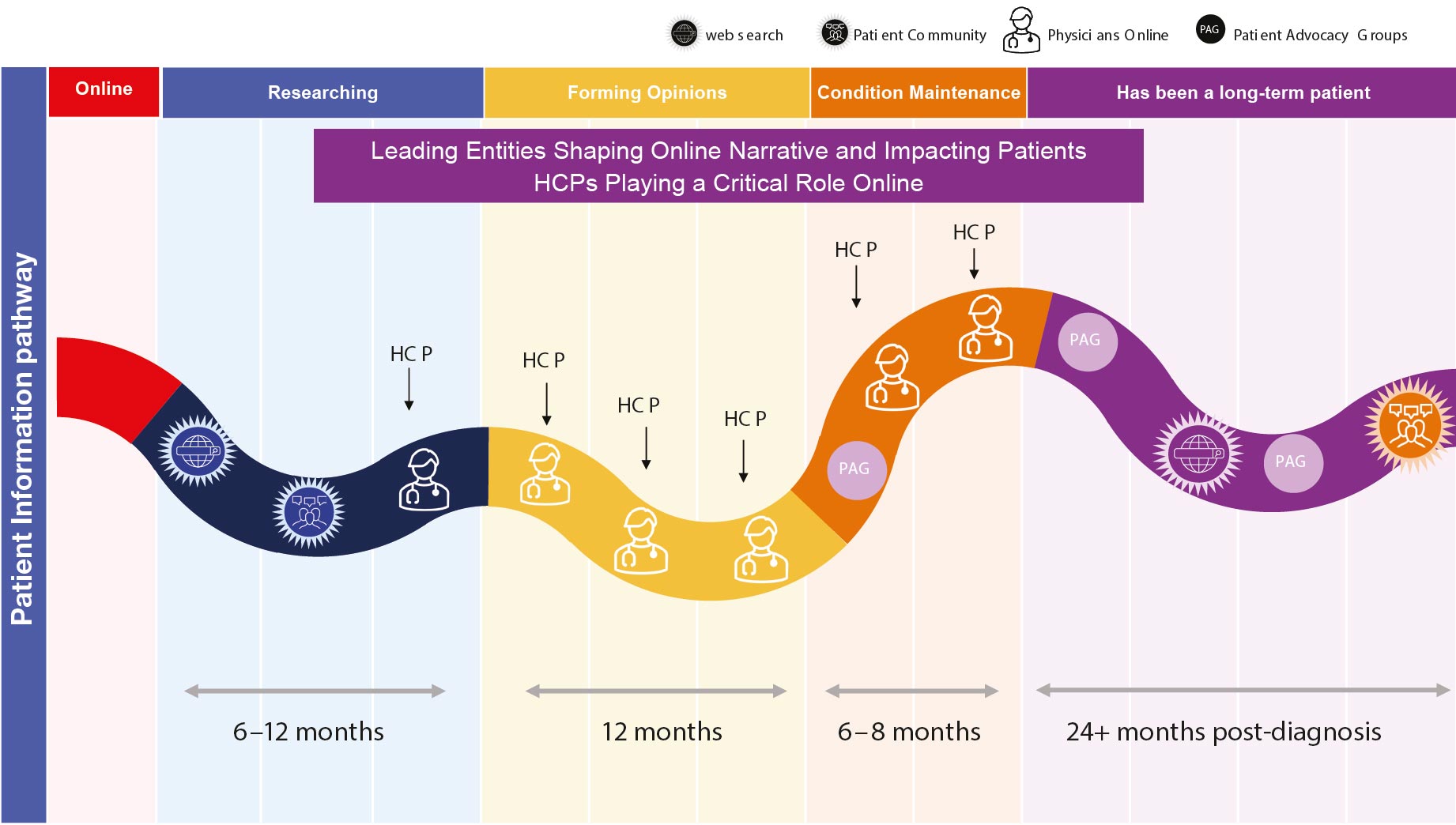
Figure 2: Depiction (blinded) of patient information pathway and key entities shaping narrative of therapeutic category as patient moves through their digital journey. In instance of rare renal disease, HCPs played the most vital role in the shaping of information and narrative.
Patients found to have several unmet needs and questions—their journey to finding relevant information is fraught with disappointment
In the ultra-rare renal space, Ipsos Healthcare uncovered a significant amount of white space and unmet patient needs waiting to be filled.

A project that began out of need to understand information-seeking behavior for an upcoming launch subsequently laid the groundwork for a future framework to map therapeutic area-specific information flow characteristics and drive customer-centric content creation, engagement, and partnerships.

The Important role physicians play in the renal ecosystem online
For context, the rare renal disease online ecosystem does not look like many of the other ecosystems we’ve developed. In most cases, the key entities that shape the online narrative tend to be patient advocacy groups, in part because they own the “trust relationship” with the patient, followed by brands/competitors, and, finally, patients themselves. While there are a handful of active patients working to shape the flow of renal information online, it is the physician in this case, and specifically, a defined group of nephrologists who are working together to increase awareness. This “aha” moment emerged as the analysis entered week 6 of a 10-week program.
Of the many unique findings, perhaps the most unique was the discovery of the role of nephrologists online. As the team began to peel back the layers of the renal online ecosystem, it became apparent that a small group of nephrologists were working collectively to shape the narrative, increase awareness among patients, and, in some cases, even engage directly with patients in a compliant fashion, answering questions and pointing patients to informational resources.
In fact, this group of HCPs displayed a sophisticated understanding and utilization of Twitter. This begged the question: What increasing role will Twitter play among physicians across all therapeutic categories in the near future, and why do physicians appear to be embracing this channel in higher frequency over the last two years? More so, what does it mean when patient-physician dialogue moves online like it was observed in this case and how can physicians actually build meaningful relationships with the patients they serve in a digital setting?
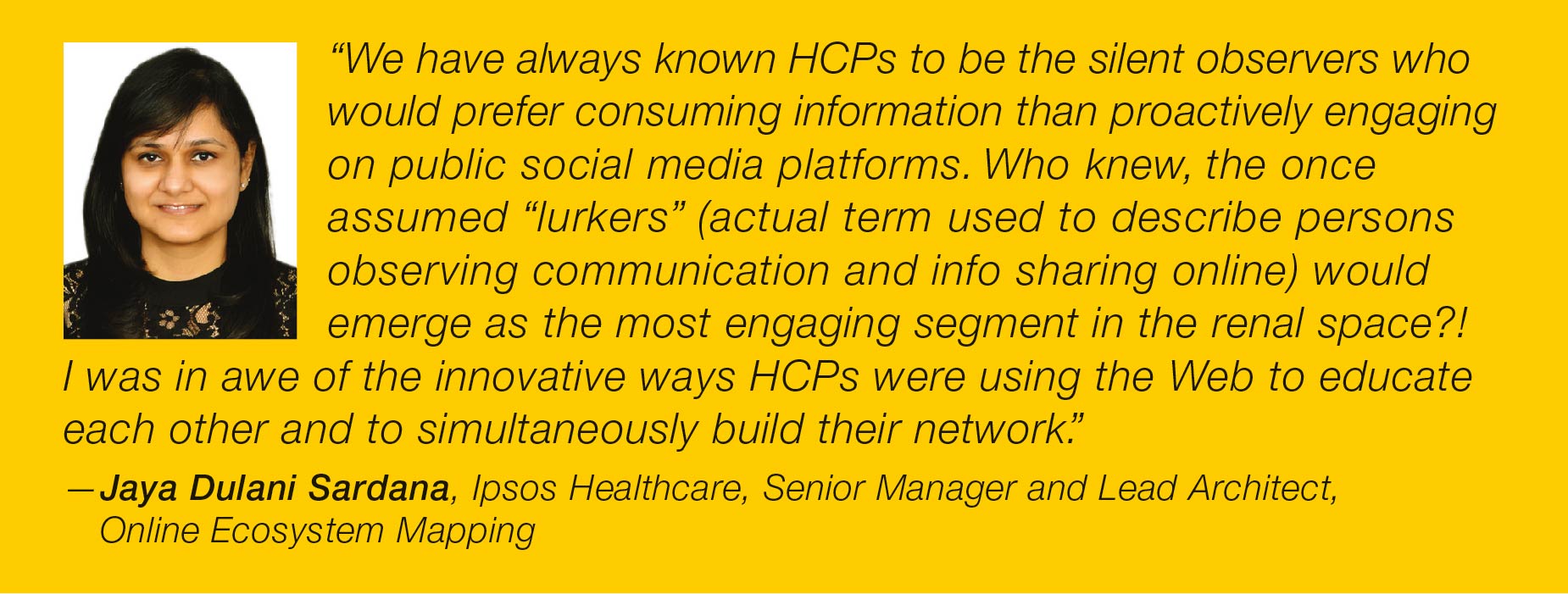
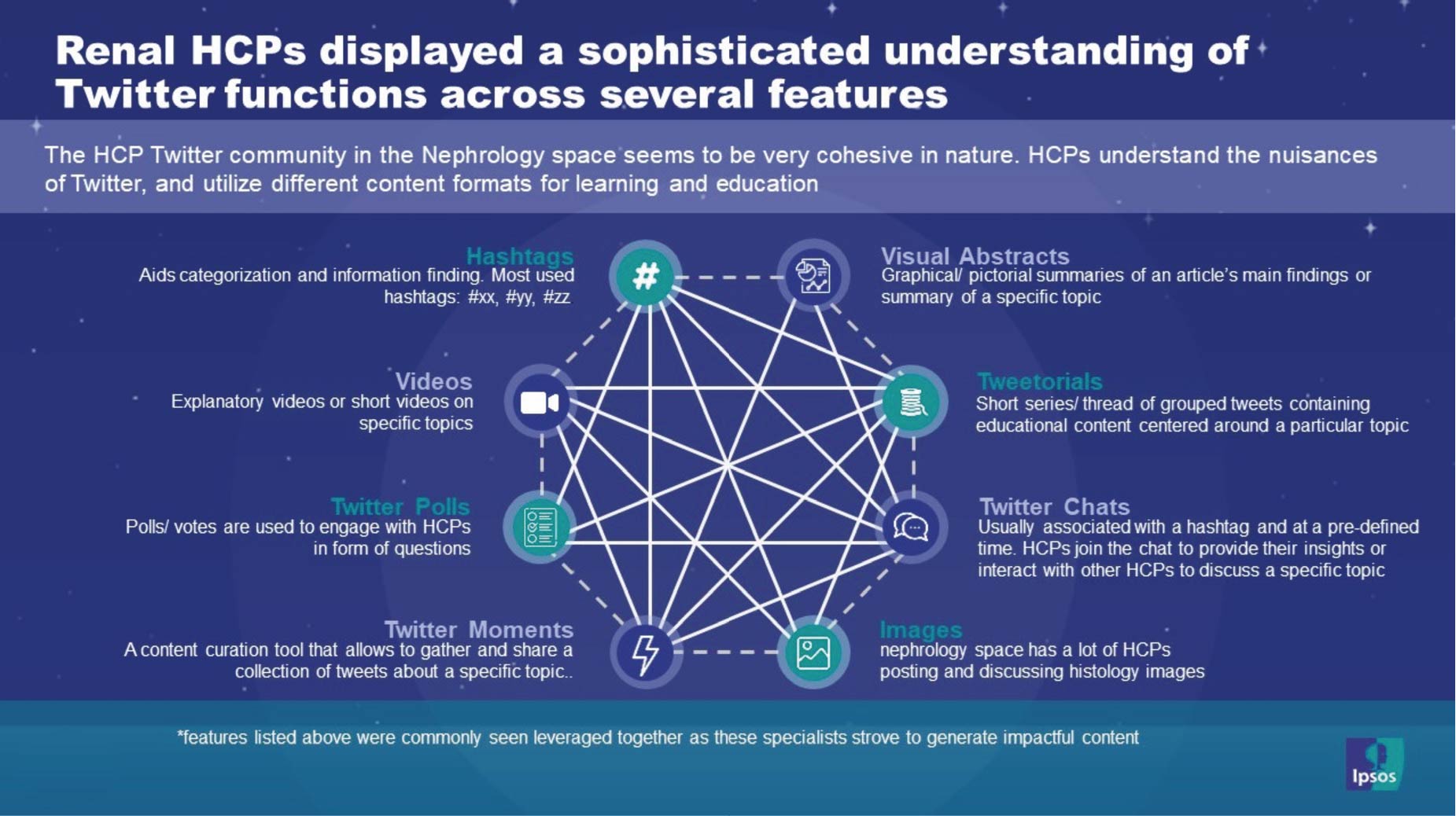
Figure 3: Online ecosystem analysis yielded rich findings in how renal HCPs were utilizing Twitter to shape the online narrative and impact patient awareness. Ipsos Healthcare discovered a highly sophisticated use of Twitter amongst these HCPs.
Mapping the future
As usage and influence of digital resources continues to increase among both patients and HCPs, opportunities to message effectively to a target audience are more prevalent than ever with an appropriate marketing strategy in place. Understanding the dynamics of communication that take place within the digital sphere provides unique insights for strategic integration of pharma initiatives.
With this understanding, messaging can become as broad or as targeted as needed to match an engagement plan. The clarity provided by online ecosystem mapping allows for content to be strategically placed where and with whom in the digital ecosystem will best optimize organic dissemination.

Understanding best practices within a competitive landscape will inform where resources are better allocated to improve digital presence in the right areas that matter to the audience. When the needs of patients and physicians are known, messaging of an asset’s strengths or a company’s initiatives which address or reflect these issues are seen as impactful to the online community rather than promotional. This “finger on the pulse” approach lends an authenticity and relevancy to pharma communications and a roadmap to seamless integration into the ecosystem. Breaking down the wall between pharma and the end customers means no longer “listening” in the social realm for insights. This methodology allows for effective two-way engagement as a part of ecosystem itself. If social intelligence was a key to understanding a therapy area from the outside, online ecosystem mapping has reimagined the process as true digital engagement from within.

Our method at a glance
Our online ecosystem mapping framework brings the market research rigor Ipsos is known for to digital strategy and ecosystem design. We have an expert team of digital marketing and therapy area experts who use signals from web and app performance data, social media, and search data streams, and advanced text analytics to create meaning and build robust digital stories. We then identify opportunities to differentiate and optimize strategy in key areas: brand/company level communication and messaging, owned digital properties (websites, portals, social channels, apps), and channel outreach planning. Our analysis is designed to generate insights that inform pre-launch, commercialization and ongoing marketing strategies and tactics to optimize return on investment.
If you haven’t yet mapped the online ecosystem of the therapeutic category you’re working in, Ipsos Healthcare can build it for you in as little as six weeks.
For more about this research, join us at IIEX or listen to this recent podcast episode.


