
President Trump’s so-far-stable wartime approval rating
It’s been roughly four weeks since the U.S. and Israel launched their first airstrikes on Iran.
Since then, U.S. airstrikes have continued, Iran has blocked the Strait of Hormuz, oil prices have skyrocketed, and the conflict has continued with no clear off-ramp in sight.
But even amid this uncertainty, President Donald Trump’s rating has been largely stable.
Below are five charts on where Trump’s approval rating stands, why Trump’s approval rating has been so stable, and where Trump’s supporters stand on the war.
1. Has the war in Iran affected Trump’s approval rating? Let’s look at the average of the averages. There have been enough polls conducted after multiple waves of U.S. strikes to be able to evaluate whether it has affected Trump’s approval rating. The evidence so far says no.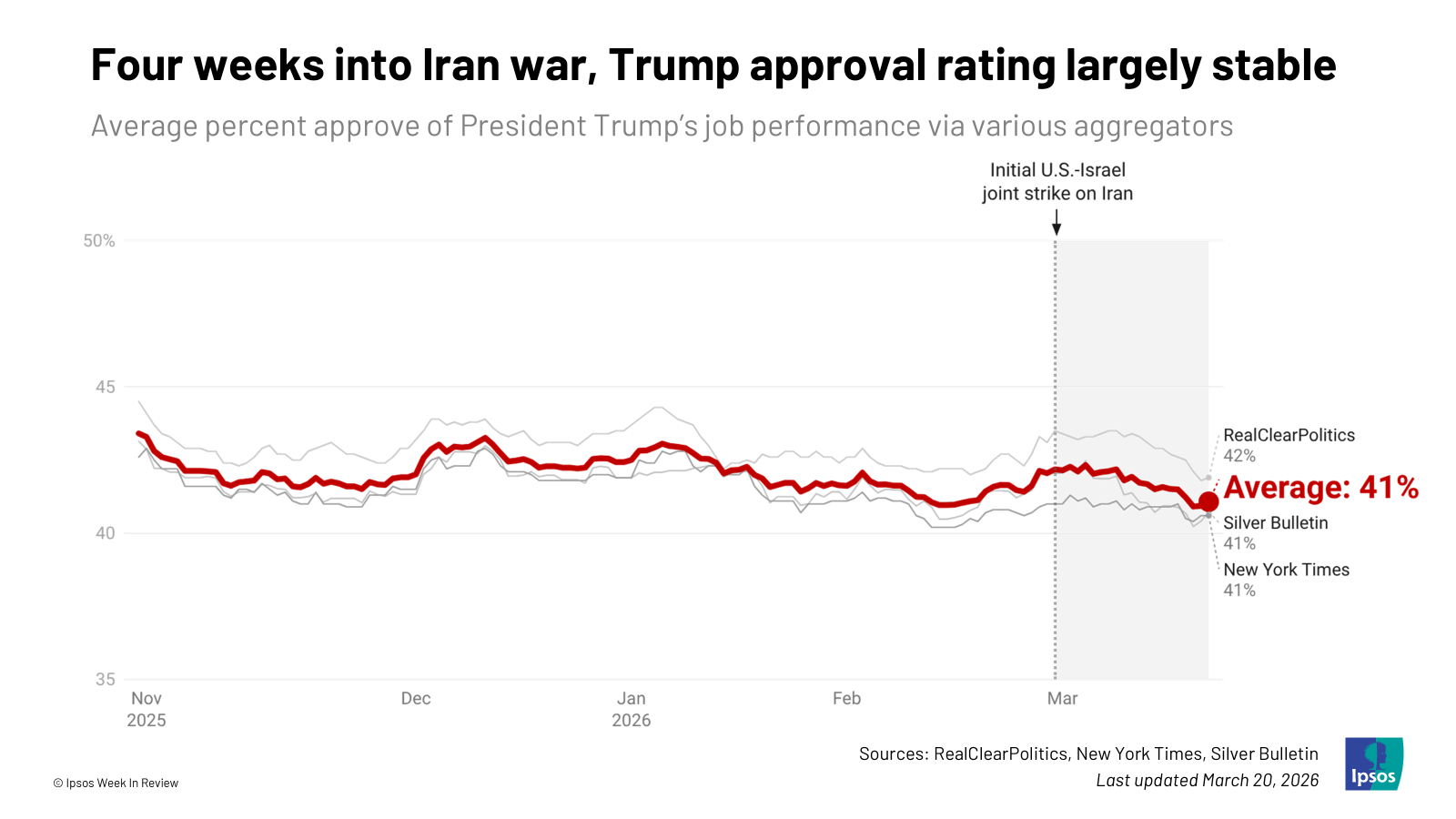
2. This holds across various demographics. Looking at three different Reuters/Ipsos polls – one conducted before the war, one conducted immediately after the first U.S. strikes, and one conducted around three weeks into the war – there has been no significant movement among various demographic groups, either for or against Trump.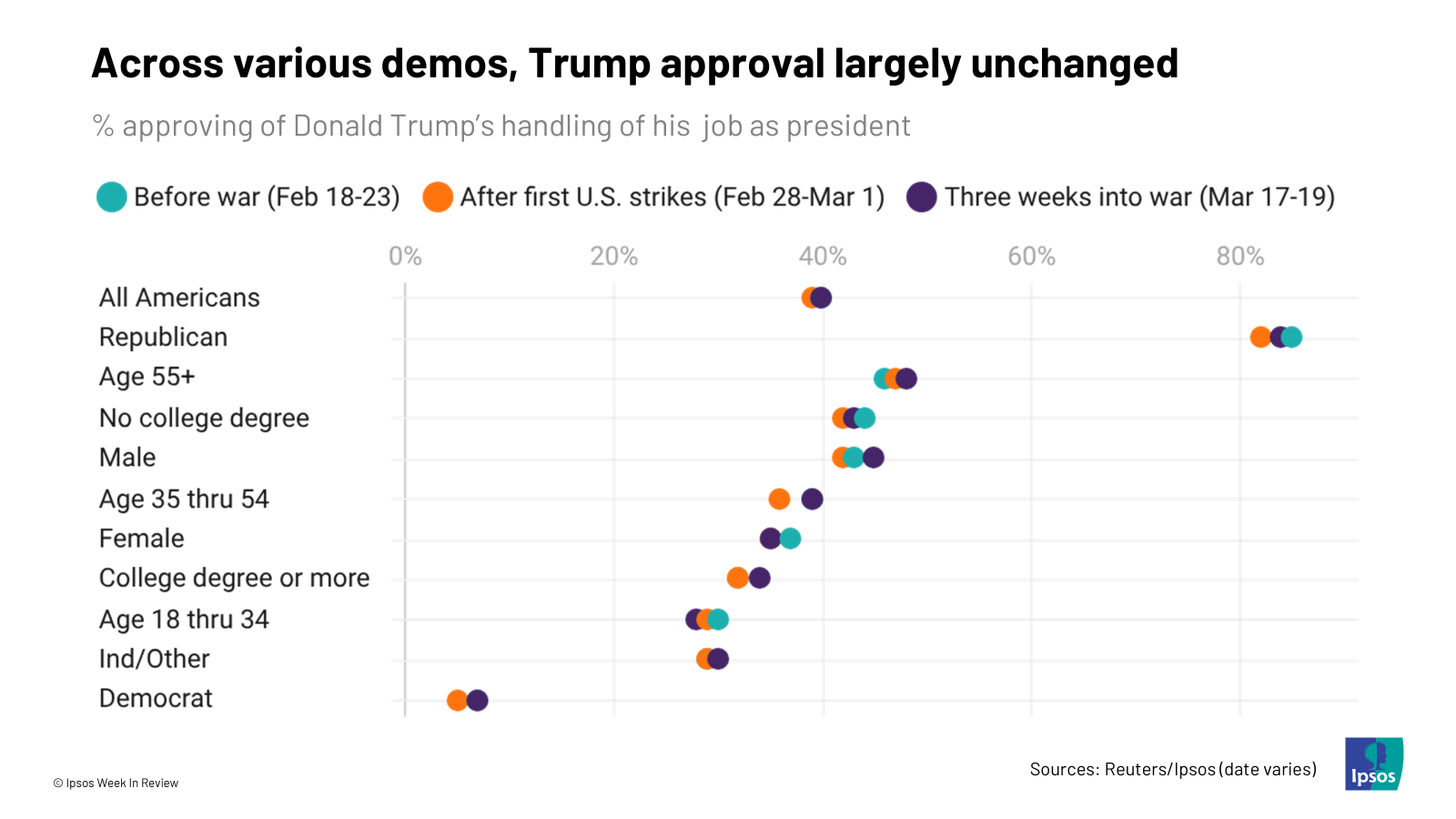
3. High floor, low ceiling. Trump’s largely stable approval rating reflects a pattern that has characterized presidential approval ratings for the past three administrations: presidents are buoyed by a loyal base but anchored by firm opposition. Right now, Trump is closer to his floor than his ceiling. Barring a seismic change in the political landscape, Trump’s approval rating will continue to hover in the low 40s and high 30s.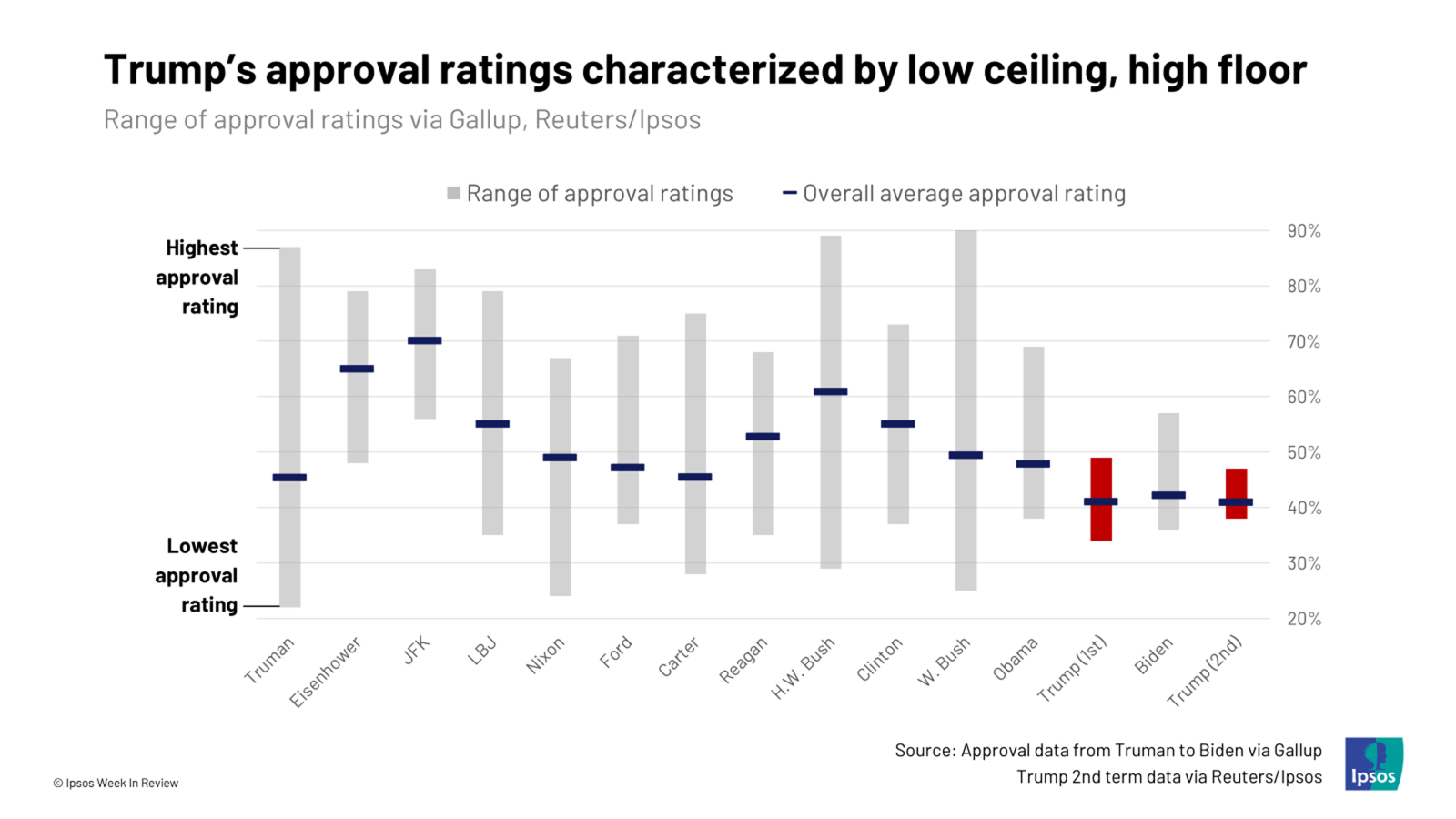
4. Would the deployment of ground troops affect Trump’s approval rating? Opposition to using ground troops in Iran largely comes from those who already disapprove of Trump. But there is a sizable minority (roughly a fifth) of Trump supporters who oppose any ground troops in Iran. If troops are deployed, Trump may lose some support on the edges, although it likely wouldn’t be a major blow – a majority of Trump’s base currently supports deploying a small number of troops.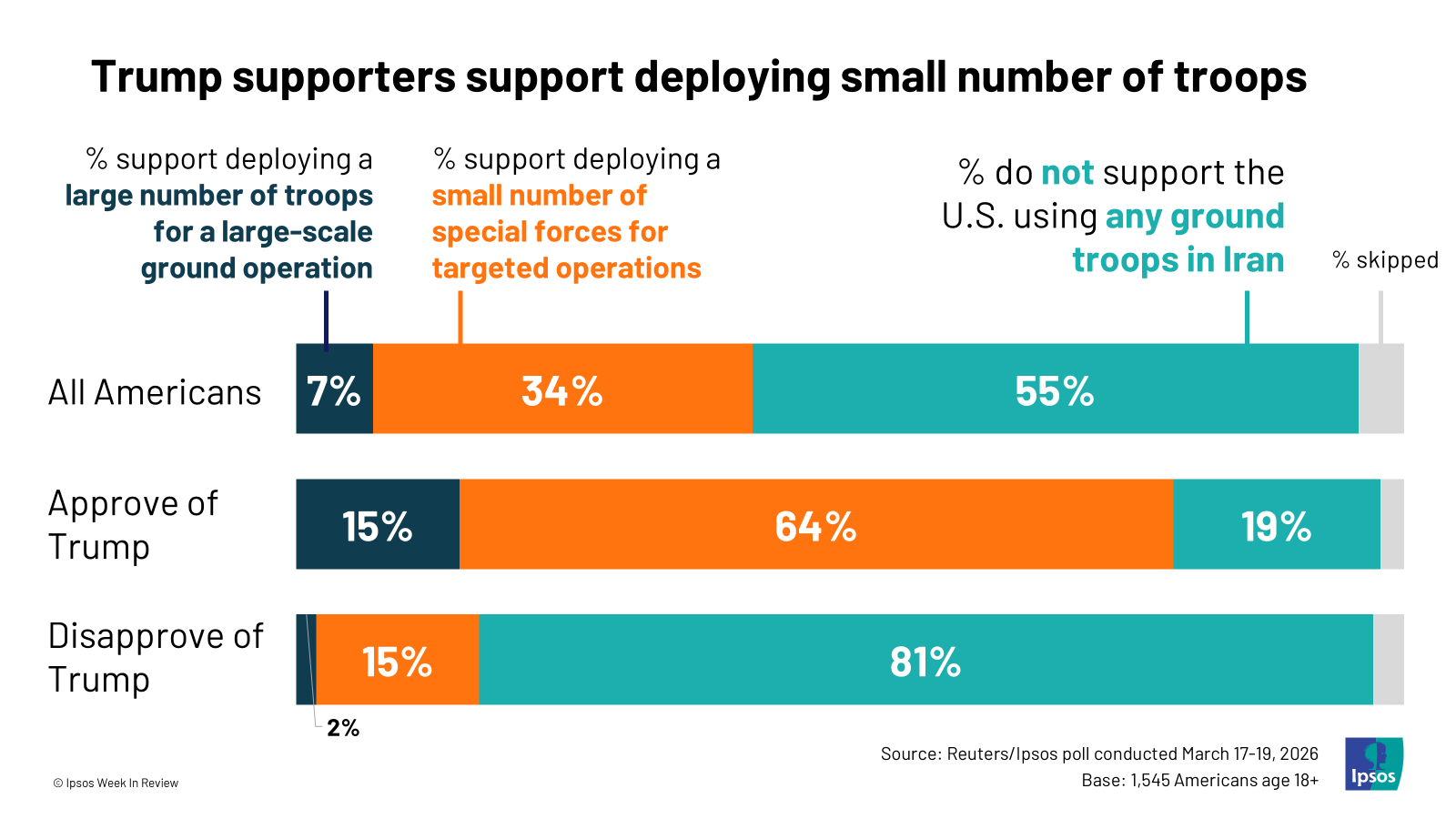
5. Support for an off-ramp. Polling of 2024 Trump voters shows that, even as Trump’s supporters back the war, they would simultaneously support Trump taking a quick off-ramp. Support for the war doesn't mean appetite for prolonged engagement.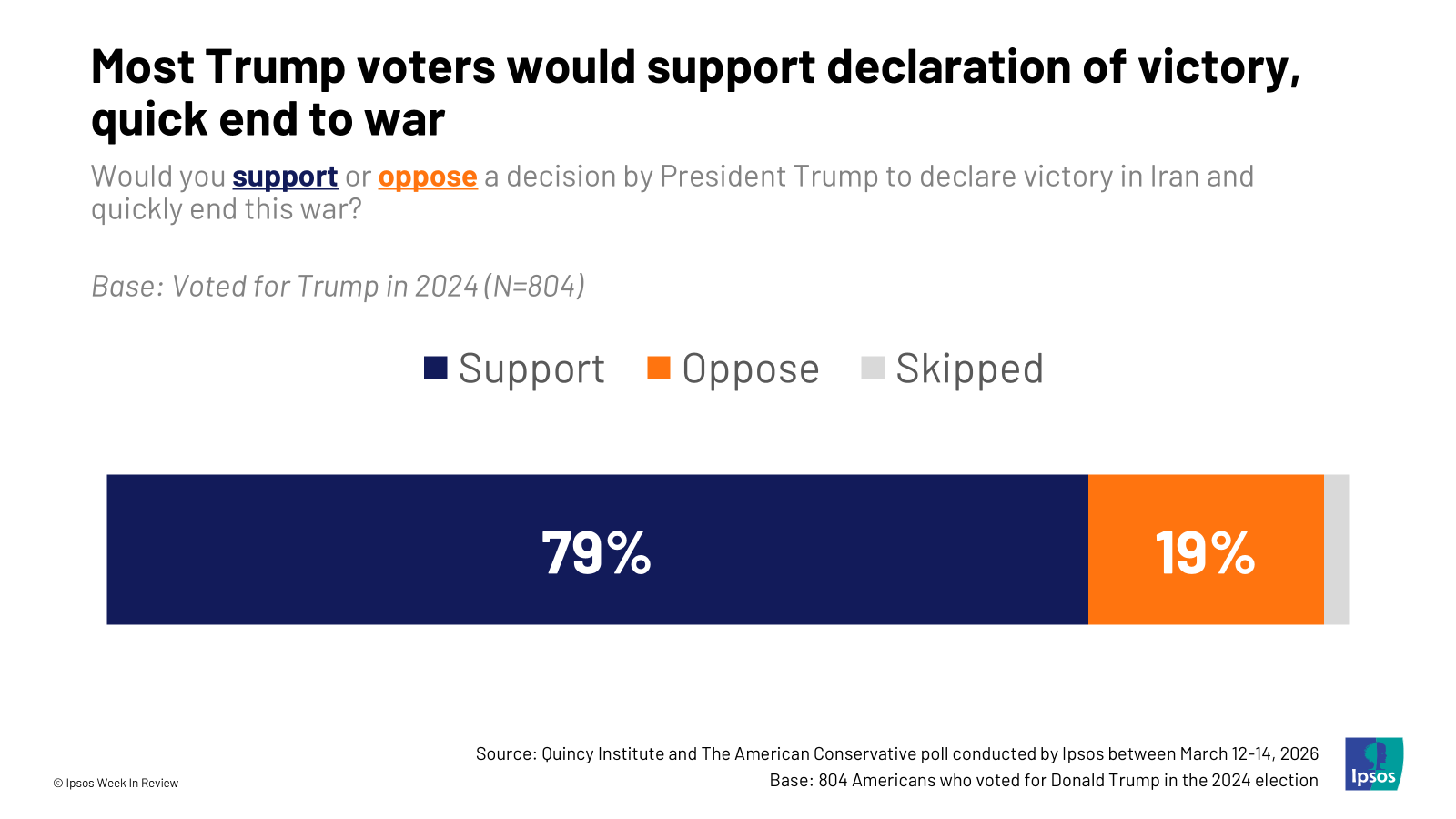
Even as a number of high-profile conservative elites have publicly voiced opposition to the war in Iran, the polls show that, on a wider scale, Trump’s supporters have not turned on Trump.
This broad stability in Trump’s approval rating is yet another reminder that in the MAGA movement, public opinion is swayed most by the voices with the most gravity.
And in that world, there’s one voice that carries the most weight.
That voice belongs to the President.


