Work Life Balance


More workers are back in the office, at least sometimes

The number of workers who commute five days a week or more has risen to half (49%), according to the Ipsos Consumer Tracker
Consumers Survey

Americans are getting less happy with their commutes

The number of Americans who say they're satisfied with their commute has dropped 13 percentage points in just one year, according to the Ipsos Consumer Tracker
Consumers Survey

More Americans say their employer aligns with their political beliefs

More Americans now say their employer aligns with their personal political beliefs than last year, a 12-point jump to 61%, according to the Ipsos Consumer Tracker

Home, office or hybrid? How Americans want to work is slowly shifting

The number of employed Americans who want to work an office has risen, while the number of people who want to work from home has remained steady. On the outs? People who want an even split, according to the Ipsos Consumer Tracker.

Fewer Americans say they have flexibility in where they work

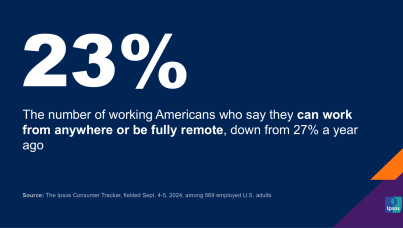
Fewer employed people say they can always work remotely and more people say they are required to always be at their office, despite the fact that they could do the work from elsewhere vs. a year ago, according to new data from the Ipsos Consumer Tracker

When it comes to retirement, people are dreaming small

Employed Americans' top priorities for retirement are day-to-day mundane things like living expenses (43%), paying down debt (31%) and medical bills (28%), according to new data from the Ipsos Consume Tracker.
Consumers Survey

Women have less desire to advance their careers. Why?

Three-quarters of men (73%) say it's important to advance in their career, compared to only 58% of women. Key among the reasons why: Work-life balance, according to the Ipsos Consumer Tracker.

Hybrid work (and commuting) really seem here to stay

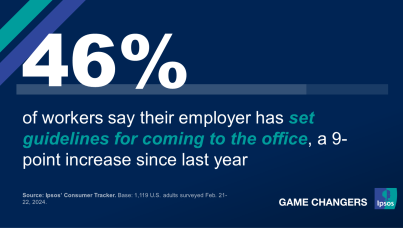
The number of employees who say their employers have set hybrid work guidelines has increased 9 percentage points in the last year, according to new data from the Ipsos Consumer Tracker.
Polling Survey

How and why to prioritize mental health in the workplace

Below are five charts on why talking about mental health is so hard, why it’s worth paying attention to worker mental health, and what companies can do to make workers feel heard