What Americans agree on about AI
AI has not yet caused mass unemployment. It has not yet led to a major spike in productivity. It has not yet caused any major environmental disasters, nor has it cured any major disease.
Even as most Americans acknowledge that AI is one of today’s most important technologies, Silicon Valley’s most extreme predictions about the impact AI could have on society have yet to materialize.
Similarly, the politics of AI is still in a formative period. But early signals suggest that Americans share common ground on how they feel about AI and how they want the government to respond.
Below are five charts on where Americans stand on AI, where partisans agree, where partisan rifts could emerge, and why AI populism could be on the horizon.
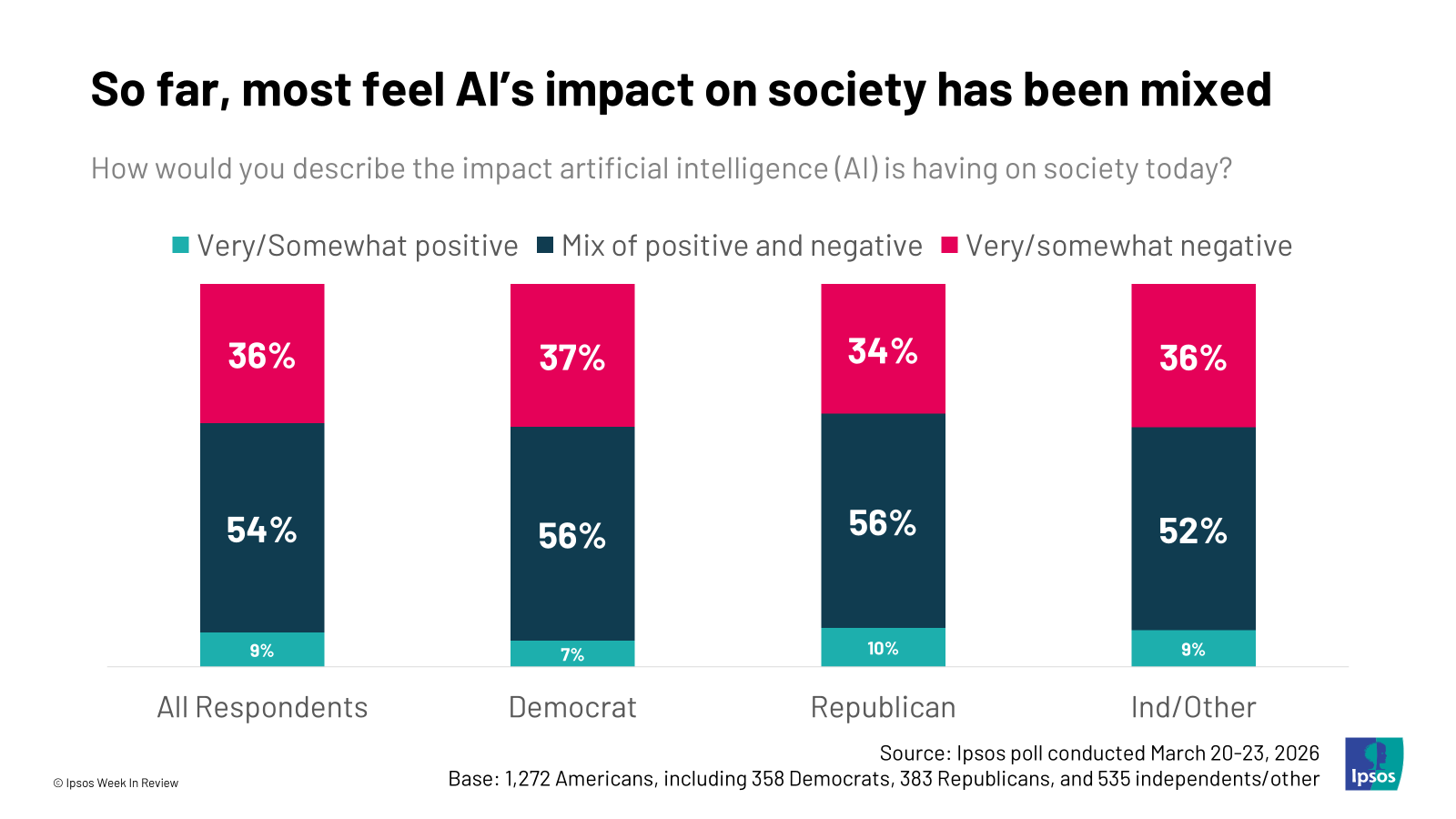
- Mixed impact. Even if the vibe on AI leans negative, neither party's base has reached a strong verdict yet. Public opinion is still somewhat up for grabs, to be shaped by how AI ends up affecting Americans personally.
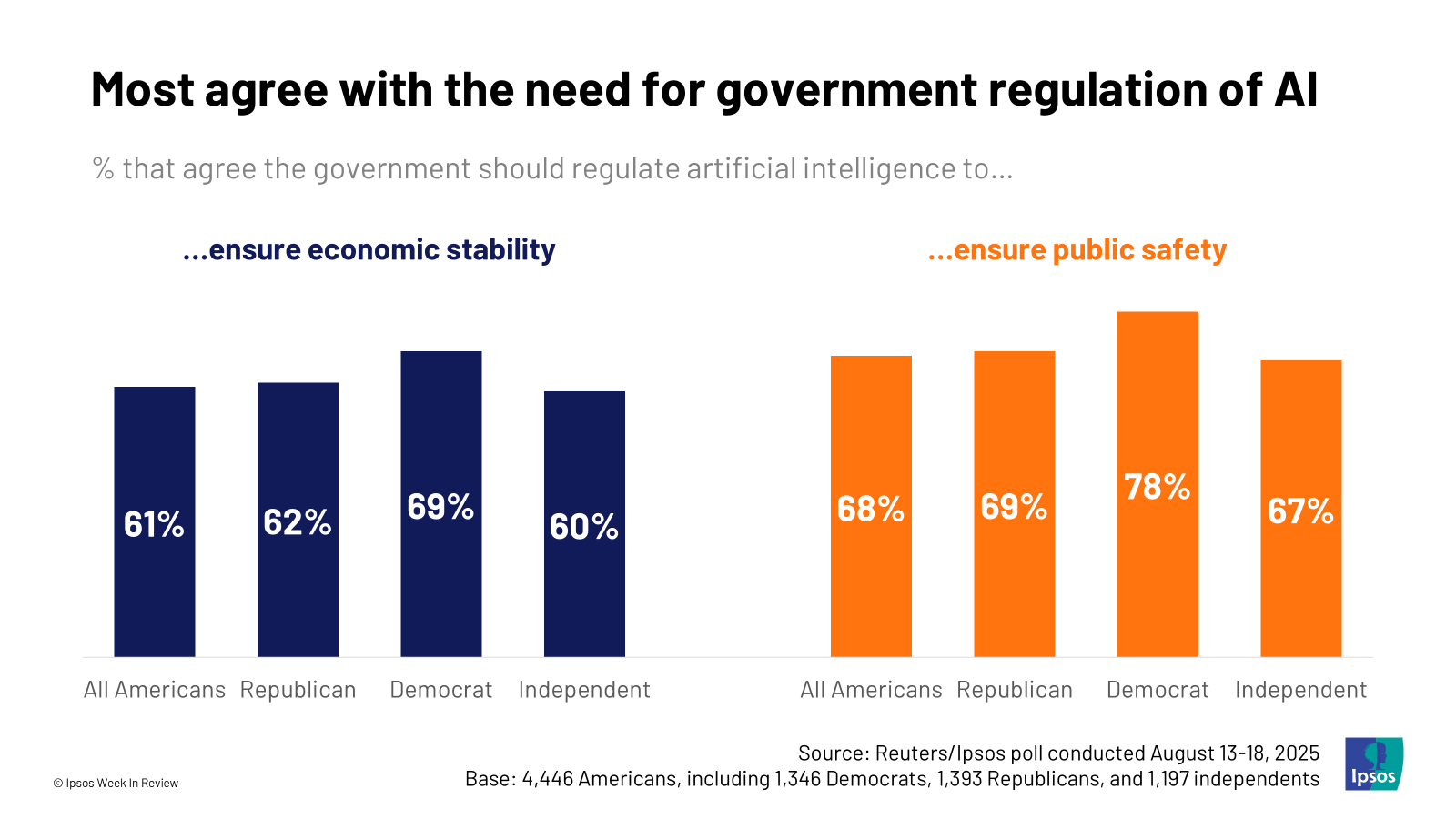
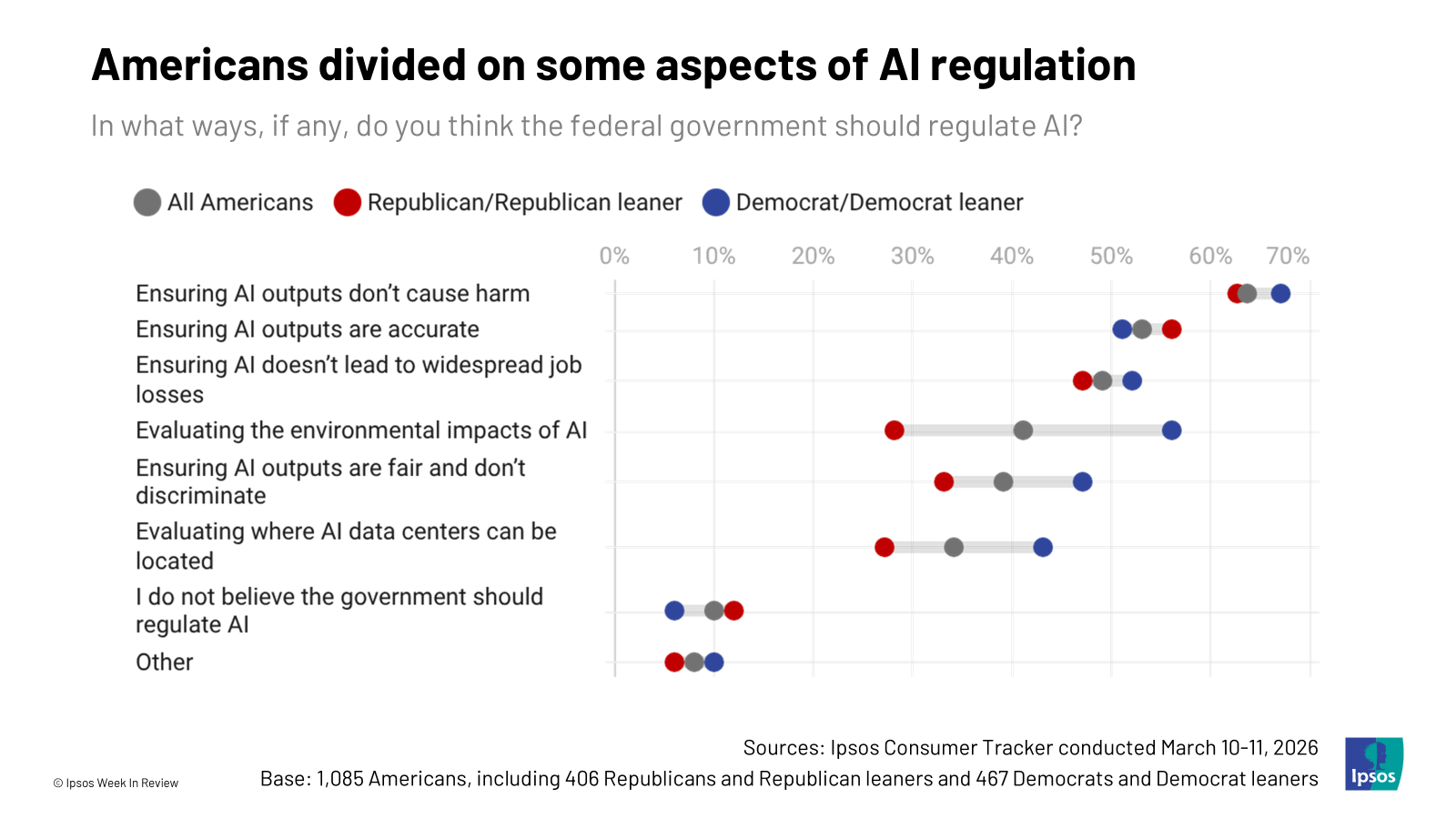
- Bipartisan appetite for regulation. Republicans and Democrats support government regulation of AI to ensure both economic stability and public safety. In a political era defined by division, the desire for AI oversight is a rare point of common ground.
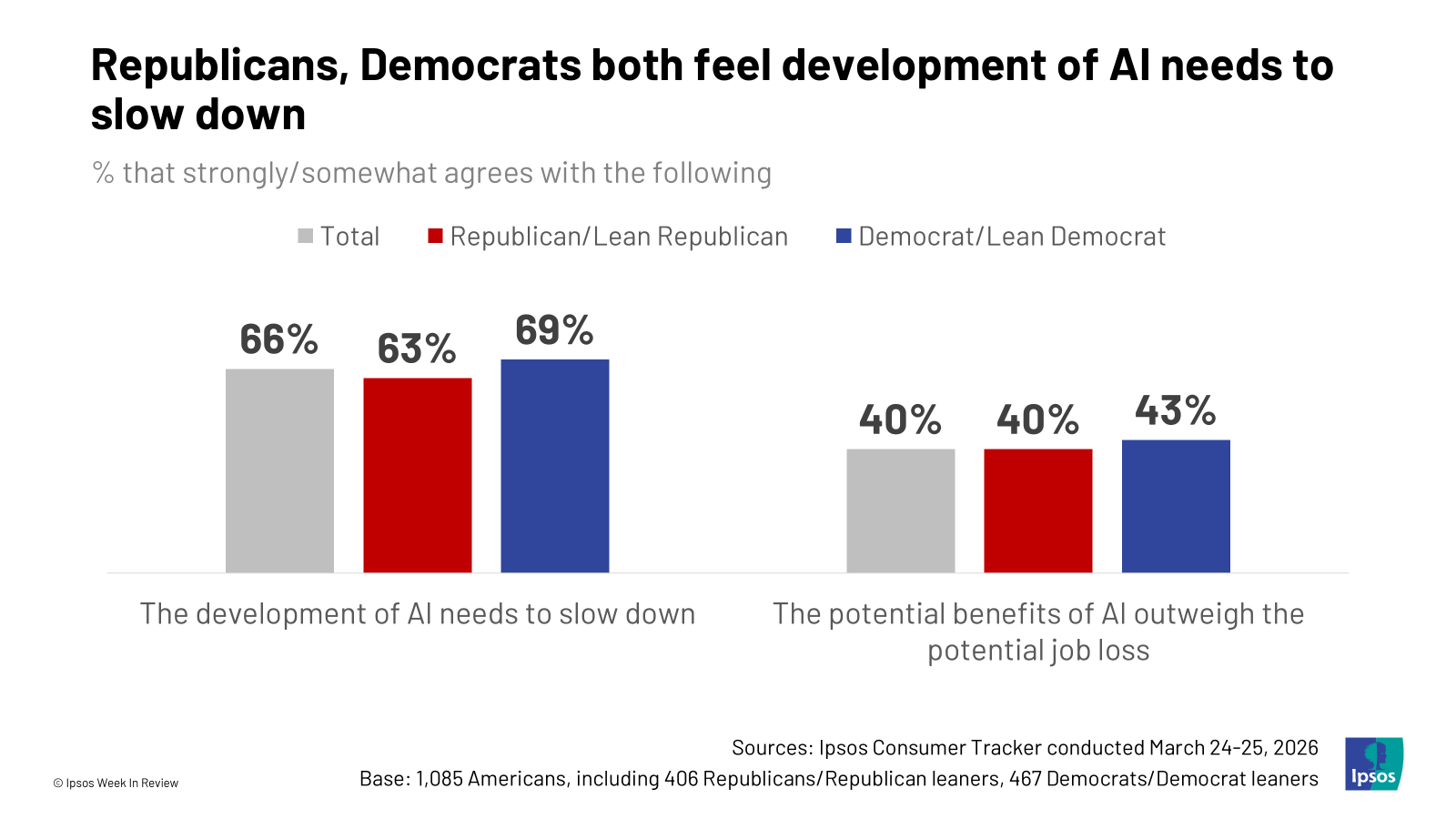
- Both sides also favor restraint in development. Most Americans don’t align with the Silicon Valley mantra of “move fast and break things.” Instead, they favor more restraint in the development of AI and are unsure whether AI’s potential benefits will offset its impact on jobs.
- Where the rifts may emerge. Americans largely agree on the need for government regulation of AI. But they are more divided on some aspects of AI regulation, especially those that involve existing partisan flashpoints like combating discrimination and the environmental impact of AI.
- If the dominoes start to fall, expect AI populism to follow. Job losses driven by a handful of large companies strikes at the heart of the world’s growing distaste for the elite. Indeed, some of today’s populist lawmakers on both sides of the political spectrum have been among the first to embrace populist stances on AI. If AI begins to have a major impact on the economy and Americans feel left behind, there will be an opening for politicians who effectively channel America’s widespread populist sentiment against AI.
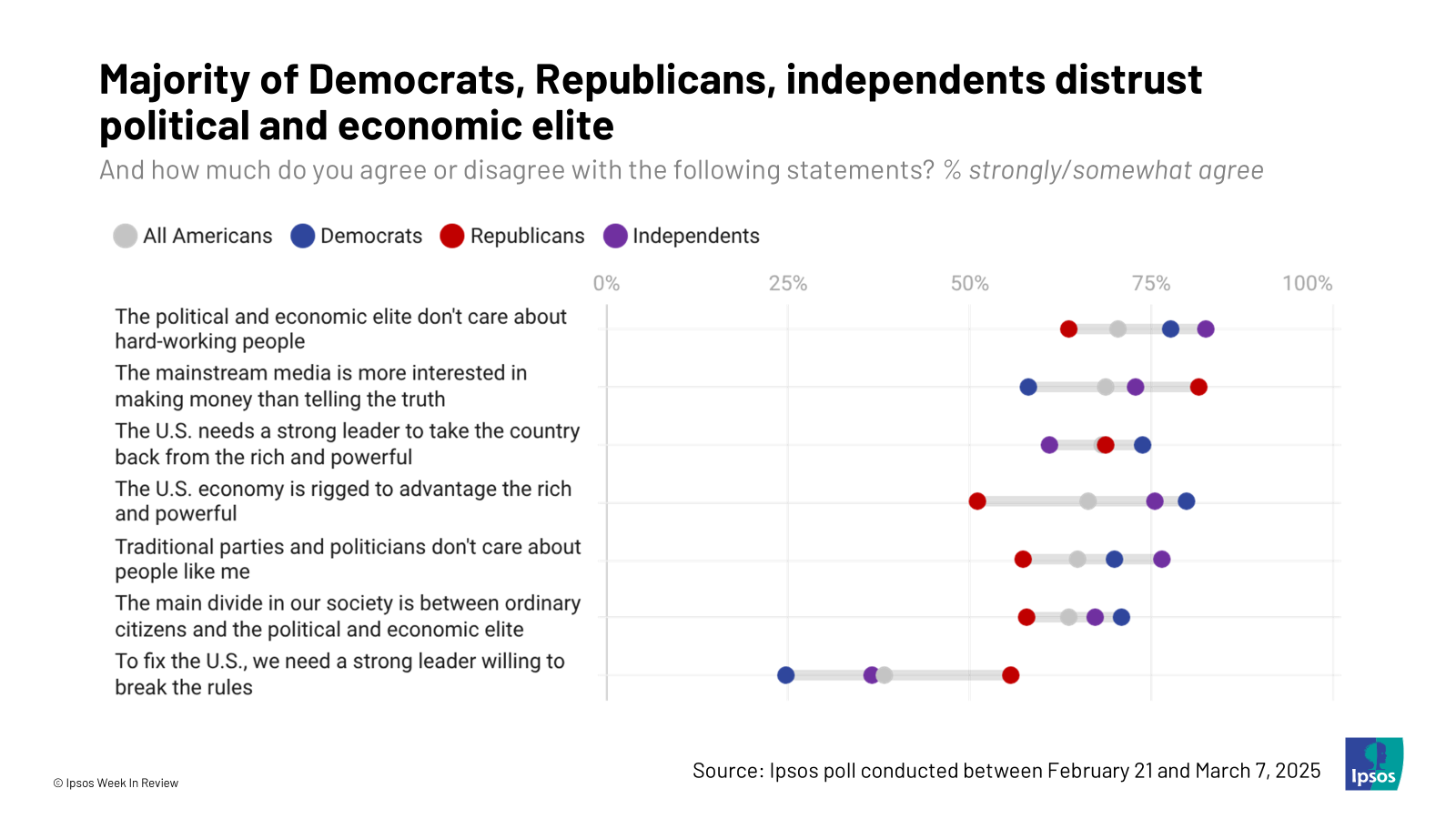
When the dominoes truly start to fall, understanding the public’s view on AI policy will be critical. The early signals we have now suggest that if and when the tidal wave comes, Americans across the political spectrum will look to the government to protect them from the fallout.
And while signals also suggest that some partisan disagreements in the AI debate could emerge, Americans may also be united by their fierce populist streak. If there’s anything that could unite a nation as divided as the U.S., it may be a disruption as sweeping as AI.