
Where Americans stand on immigration
Immigration policy has been the dominant story of 2026 so far.
Recent shootings in Minneapolis have been described as a “tipping point” in the nation’s views towards immigration.
In reality, the polling shows that the softening sentiment on immigration is real. But it didn’t happen overnight.
Below are five charts on how Americans feel about immigration and how the landscape on immigration has shifted over the first year of President Donald Trump’s second administration.
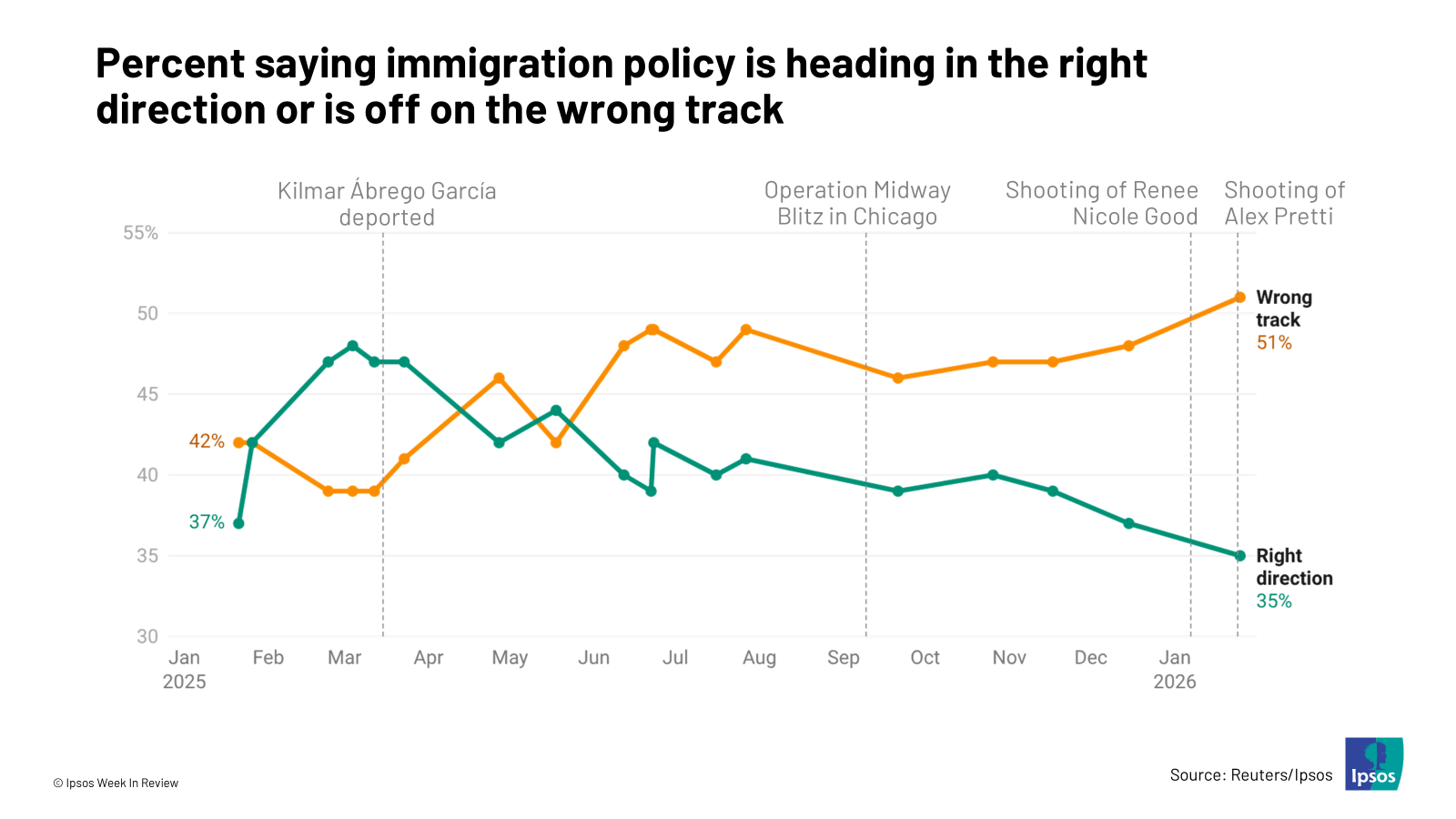
- Initial optimism on immigration declines. After the events in Minneapolis, a slim majority now feel immigration policy in the U.S. is headed in the wrong direction. This is the most pessimistic Americans have been about immigration policy in the second Trump administration.
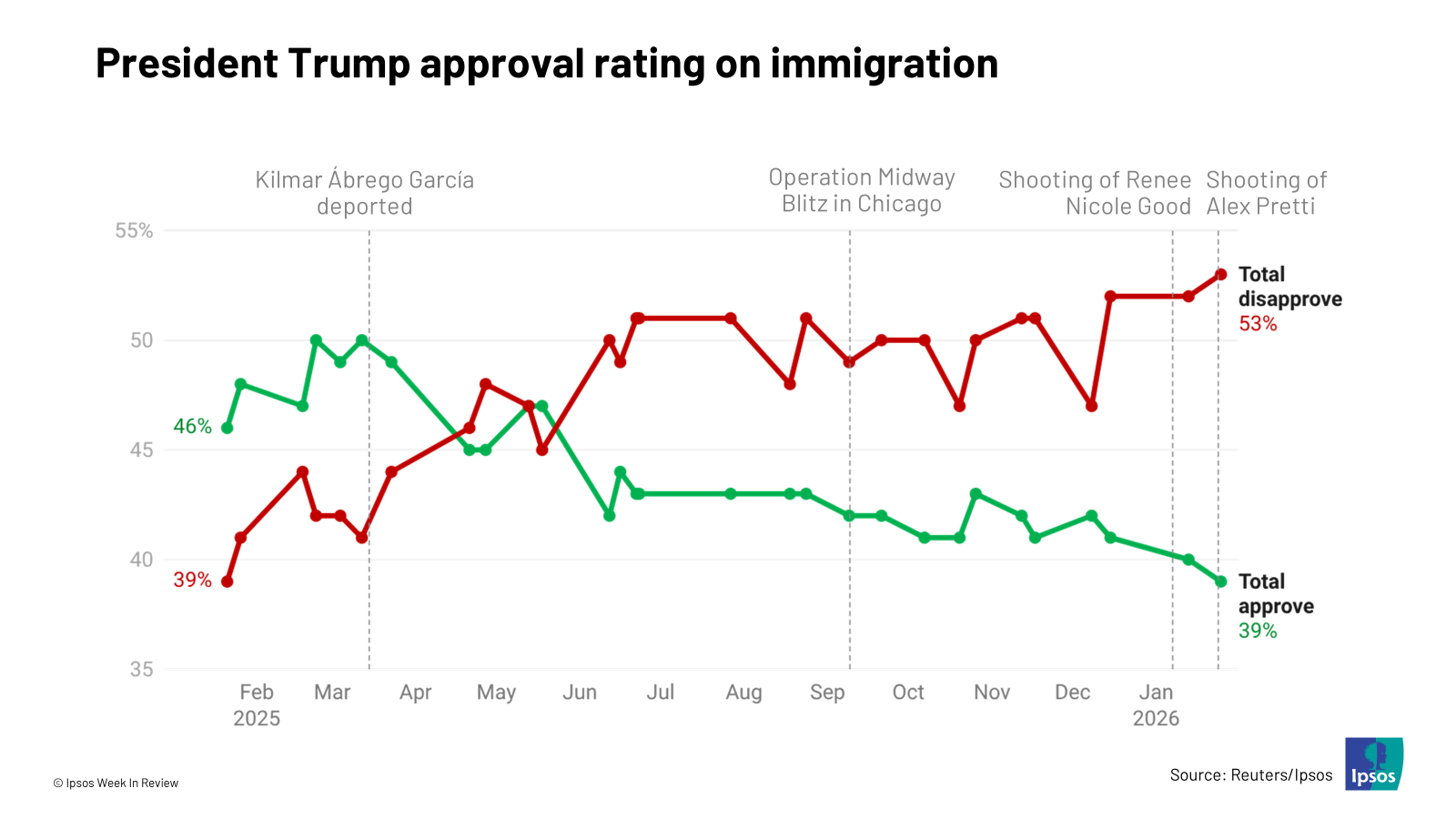
- Trump losing support outside the base. Views of Trump’s handling of immigration follow the same pattern. Initially, Americans were optimistic, but views began to shift at the start of the summer.
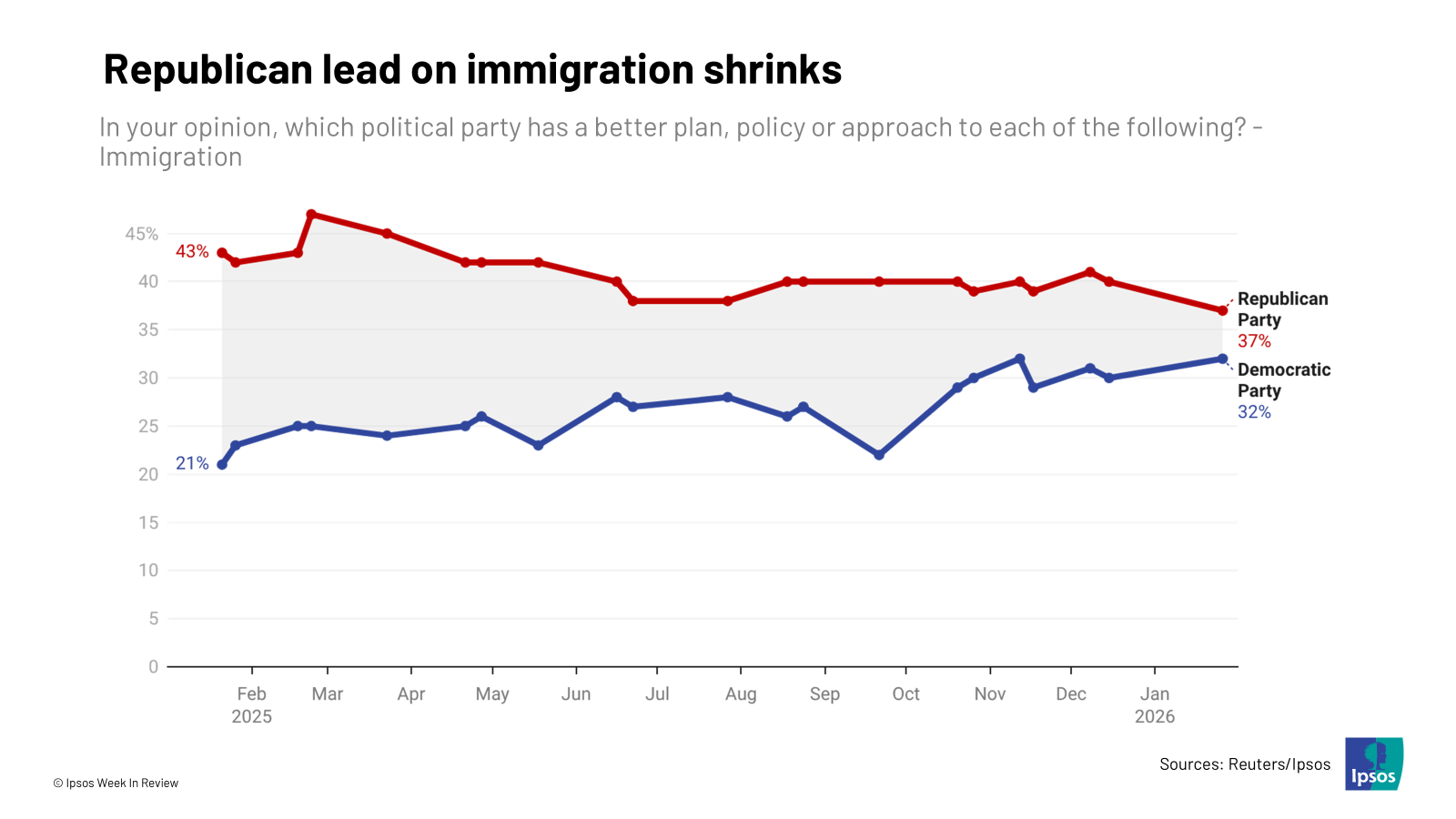
- Republicans also take a hit. In the 2024 election, immigration was a clear advantage for the Republican Party. It remains a Republican advantage. But the wide margin Republicans held has more than halved.
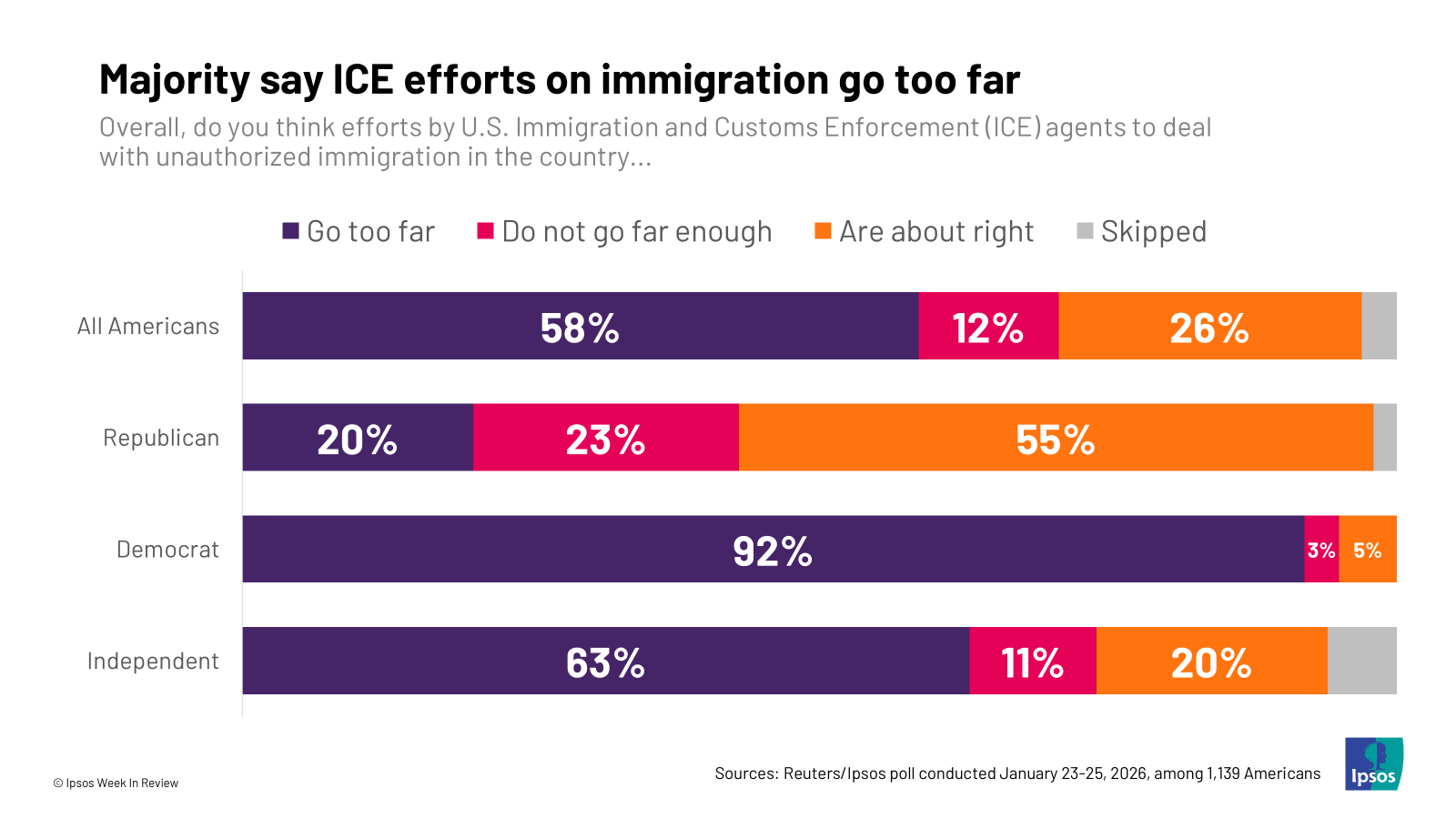
- Going too far? In polling conducted after the shooting of Renee Good but mostly before the shooting of Alex Pretti, a majority of Americans said they felt efforts by ICE have gone too far.
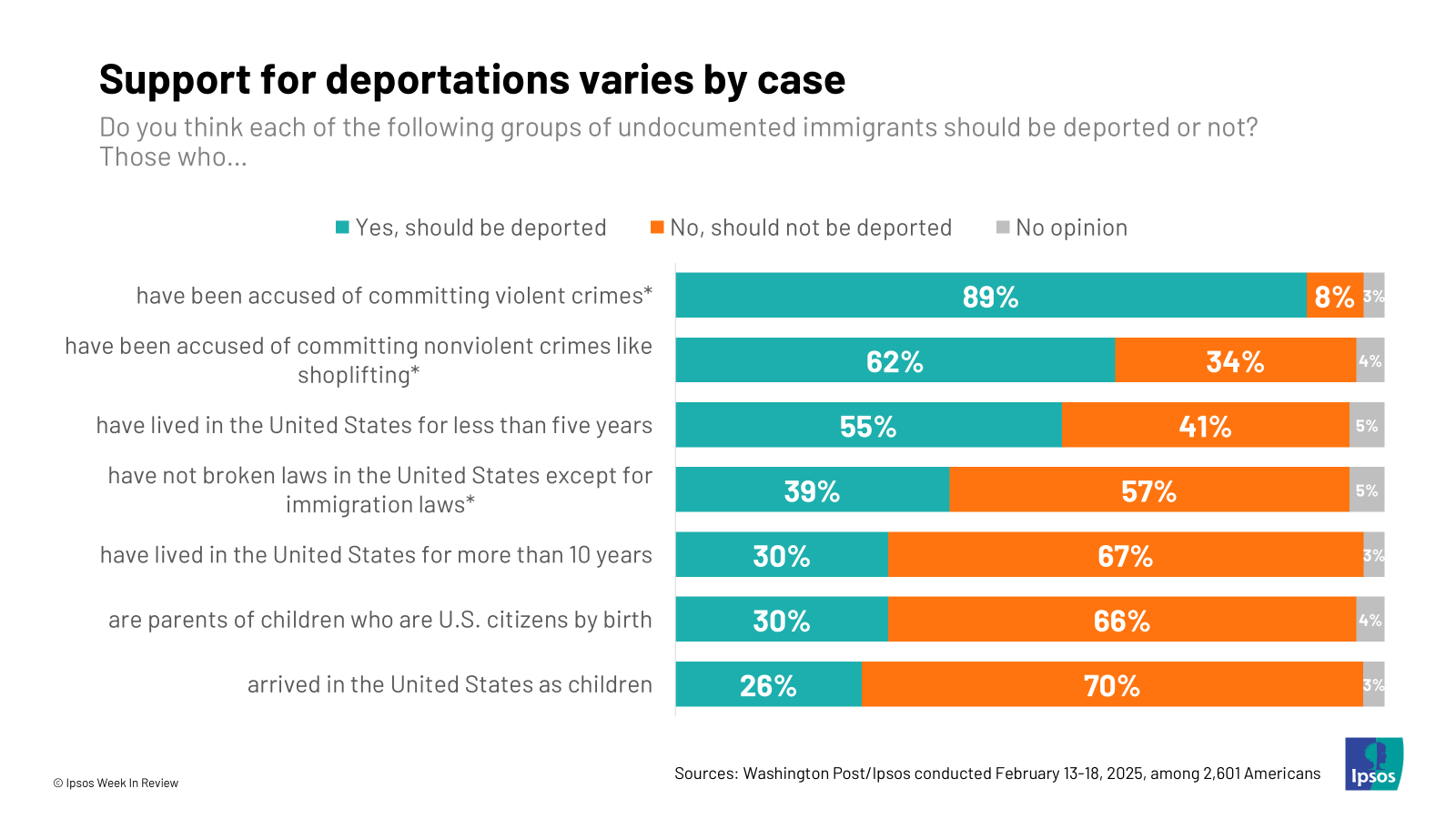
- There were signs from the start. Trump’s plans to deport immigrants in the country illegally who have committed crimes had resonance initially. But Americans were always wary of a deportation policy that was more expansive.
The first three charts all paint the same picture: Broad views of immigration policy, views towards Trump’s approach to immigration, and the margin between the Democratic and Republican Parties on immigration suggest that the softening sentiment on immigration is real.
It grew following the two January shootings in Minneapolis, but started far before it. Polls show that there is some agreement on deportations, at least in general terms. But how it is done matters.