War returns to Europe

Check out our latest review of the year, visit
Russia’s invasion of Ukraine on 24th February marked a dramatic escalation of the Russia-Ukraine conflict and a profound shock to the world.
The return of war to Europe presented a sudden set of humanitarian, geopolitical and economic challenges.
We’ve been reviewing the international public’s reactions to the tragic events in Ukraine and their wider implications.
Support for Ukraine and its people
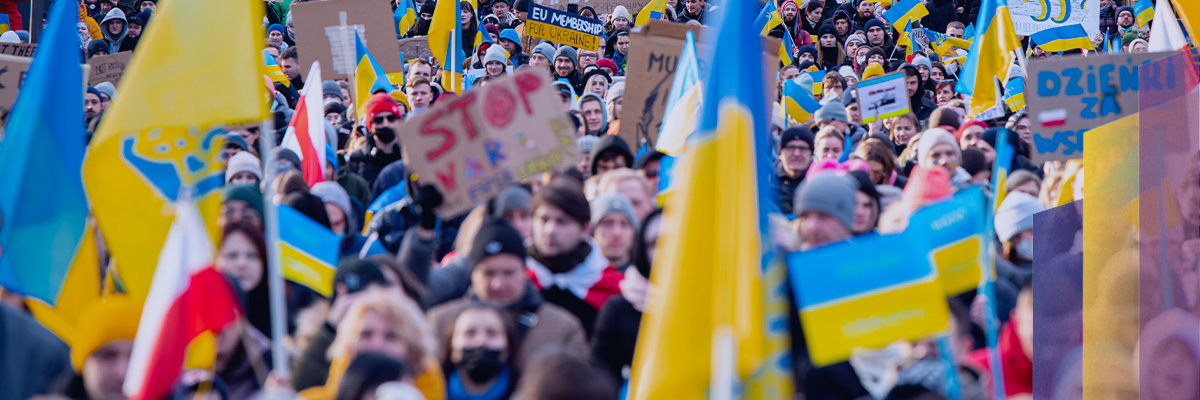
Across the world, the global public responded with a wave of support for Ukrainian citizens. In April, our 27-country survey found that 70% on average were following news stories about the invasion closely.
Majorities in every one of the 27 countries surveyed agreed that their country should take in Ukrainian refugees with support particularly high in Sweden (89%), the Netherlands (86%) and in Spain (85%). In France, this support cut across party lines, with a majority of supporters among each of the main political parties – even the right and extreme-right parties – in favour of welcoming refugees.

A risk to my country?
Beyond immediate concern for Ukrainian people, many countries also worried more broadly about the risk of war. In Britain, the March edition of the Issues Index saw defence and foreign affairs jump 26 points to become the number one concern for Britons. Eight in ten Italians (83%) worried about a second cold war, while nine in ten Americans (87%) worried about the war’s impact on global stability. War also became the number one concern in Denmark.
‘Military conflict between nations’ was introduced to Ipsos’ global What Worries the World survey in April 2022 and immediately ranked 11th globally out of 18 issues. On average across 27 countries, 14% selected it as a top issue facing their country, but worry was significantly higher in European countries like Poland (38%), Germany (35%), Sweden (30%), Great Britain (28%) and Italy (26%).
The November wave of What Worries the World finds that military conflict remains one of the top five biggest worries in Poland (34%), Germany (29%) and South Korea (17%). While military conflict still remains outside the top 10 in November’s rankings of world worries, concern is only down 4pp from April, in a tie with concern about coronavirus (both 10%).
Russia’s reputation in freefall
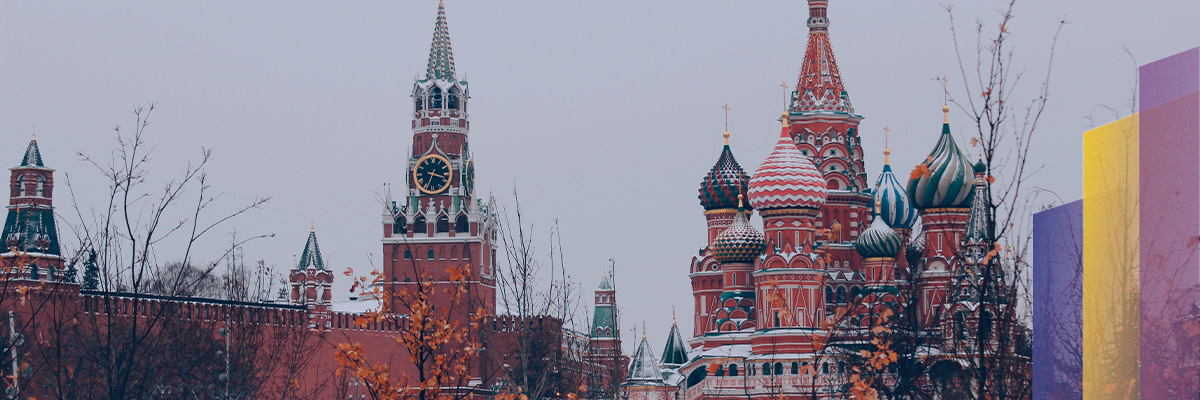
One of the most easily measured consequences has been the drop to Russia’s global reputation. The 2022 edition of the Anholt-Ipsos Nation Brands Index gathers global perceptions of countries around the world. This year sees Russia drop 31 places from 27th in 2021 down to 58th place out of 60 countries.

Cost of living concerns
But with war also came economic disruption, turning rising prices into a cost-of-living crisis. While people across the world worried for the safety of Ukrainians and the risk of the war expanding, fears also turned financial.
More than nine in ten (92%) in France worried about the economic consequences, 73% of Britons saw the war as driving up the rising cost of living and 80% of Americans worried about the Russian invasion resulting in higher gas prices and the continued growth of inflation.
More than one in four Germans (27%) began stockpiling groceries out of fear of war-related supply chain issues and in Australia uncertainty about how the war might affect future fuel led 24% of Australians to say that petrol prices were a top issue facing the country – the highest ever recorded level of worry for this issues. Read more about initial international reactions to the Ukraine war here.
While people across the world worried for the safety of Ukrainians and the risk of the war expanding, fears also turned financial

Energy security
Nine months on, the rise in energy prices across the world as a result of the war is creating tension.
Across 30 countries, one in two people say they have been very impacted by the rising prices of gasoline (51%) and electricity (48%) while four in ten say the same about rising prices of gas (40%).
In Britain, one in two agree (52%) that economic sanctions on Russia are necessary to support Ukraine and encourage Russia to end the war, even if it means energy and food prices will remain higher for a while.
Americans are similarly divided, with 48% in favour of supporting Ukraine for as long as it takes, even if American households have to pay higher gas and food prices as a consequence, while 47% say the US should urge Ukraine to settle for peace as soon as possible so that the costs aren’t so great for American households, even if that means that Ukraine will lose some territory.
Similar tensions arise around Canada’s role as both an energy supplier and a country tackling climate change. Four in ten Canadians (41%) say that Canada should increase its natural gas exports to Europe, even if it means the country will miss its targets for reducing greenhouse gas emissions at home. On the other hand, four in ten (44%) believe that Canada should stick to its current targets for reducing greenhouse gas emissions, even if it means other countries are impacted by a shortage of oil and natural gas.
On a global level, only one in four (40%) support their country banning imports of oil and gas from Russia if it were to risk further price increases. Fewer than a quarter of people support this in Turkey (15%), Hungary (18%) and Malaysia (24%).
Through the eyes of Ukrainians
What of Ukrainians themselves? Around three million Ukrainians now live in Poland, and they have become the country’s largest minority. While some moved to Poland before the Russian invasion, 70% were forced to move through necessity. For new arrivals, fatigue (52%), solitude (38%) and constant tension (36%) are common emotions. But so too are feelings of security (43%) and support (28%).
Despite signs that Ukrainians are somewhat adapting to life in Poland – 60% are employed and 83% of parents say they plan for their children to attend Polish schools – for most, Poland is not a new home. Only 35% of Ukrainians who relocated before the Russian invasion and 20% of those who moved to flee the war plan to stay in Poland for more than two years.

Table of content
- January - A third year begins
- February - War returns to Europe
- March - Antarctic heatwave
- April - A populist year?
- May - Cost of living crisis
- June - Women's rights
- July - A cruel summer
- August - A new Cold War?
- September - National identities
- October - Green Transport
- November - Peak population
- December - World in motion
|
|
|