Know the New America & Beyond: September 2026
As the world deals with the fallout from the hottest summer on record, there’s a real financial impact that the world has been coping with. But Americans tend to be less concerned about climate change than the rest of the world — so how are they thinking about the ways major weather events are impacting their wallets? The answer: Most aren’t, according to new data from the Ipsos Consumer Tracker. Less than half of Americans (39%) say they think extreme weather affects their personal finances — though younger Americans are more likely to believe it compared to their older peers (45% of 18- to 34-year-old Americans).
It’s not for lack of concern about their money overall: Americans are very concerned about their finances right now. Three in five Americans, and half of those with incomes over $100,000, say they’re only spending on daily necessities right now. To hold their market share and gain more, the global brands that win will be the ones who recognize they’re in a zero-sum battle for American consumers’ dollars — competing not just against private-label competitors in the aisle, but also with coffee shops, entertainment options and beyond. Learn more in our new report, “Winning the wallet war.”
Read on to discover the latest insights on America from Ipsos — please contact us to help you navigate this uncertain environment.

25 years later, the impact of 9/11 continues to resonate with Americans
As the 25th anniversary of the Sept. 11, 2001, attacks approaches, a new Ipsos poll finds most Americans feel the attacks had a major impact on both the U.S. (88%) and the world (71%). These five charts show how they feel about the attacks and their legacy across the globe.

Winning the wallet war
Brands are locked in a zero-sum battle with each other as consumers face a financial crunch. Here’s how to win in America.

Food illnesses are leading two in three Americans to change buying behavior
One in three Americans said they bought less produce at the grocer this summer during the outbreak of a parasitic infection that was eventually tied to fresh lettuce — a major change in behavior that affected brands across categories.
Trump’s approval rating remains low as midterm elections approach

President Trump’s approval rating has dropped to 32%, lower than any other point in his first or second term. It also is lower than any president in the 21st century faced two months before the midterm elections — which, on Nov. 3, will determine control of the legislative branch in the U.S.
While the president isn’t on the ballot, his popularity is a signal to how his party will perform in the midterms — and if the Republican Party performs poorly and loses control of Congress, Trump could face major headwinds for the remainder of his term.
Consumer confidence ticks up, but remains below last year
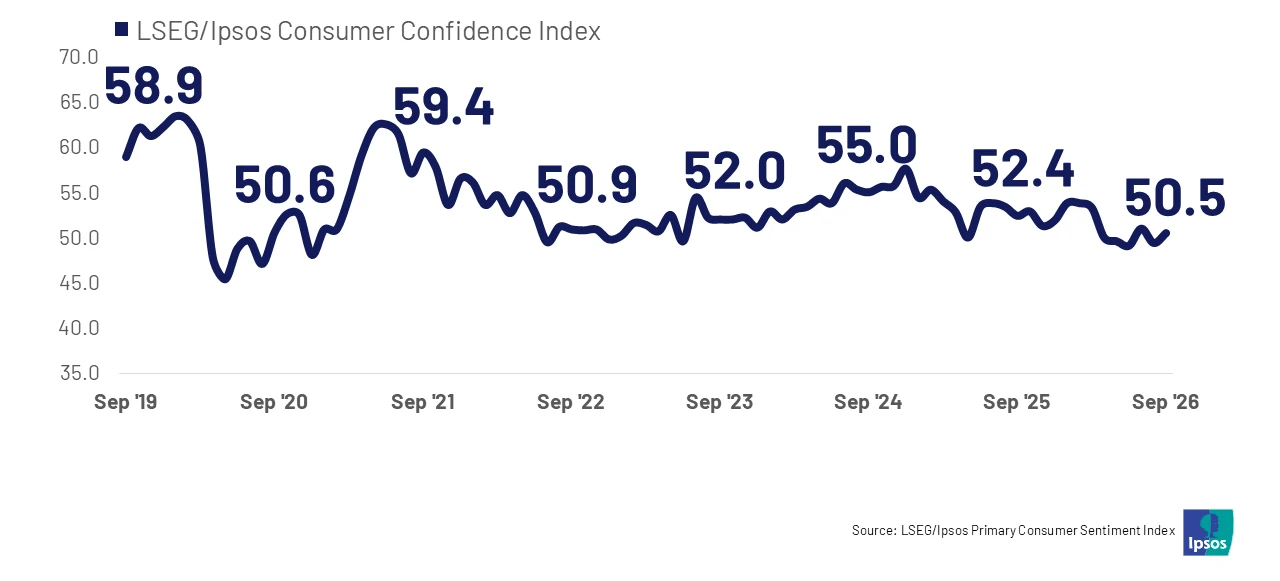
Americans’ confidence in the economy has ticked up slightly, but remains lower than this time last year, according to the LSEG/Ipsos Primary Consumer Sentiment Index. The index continues to hover around the mark to which it dropped when the Iran war began.
What the rest of the world thinks
The view from Canada
Despite our geographic proximity, common language and closely intertwined cultures, Canada and the United States have always had an uncomfortable relationship. Canadians understood the imbalance in terms of size and power, and felt it was a price worth paying.
Donald Trump has changed that calculation. His musings about making Canada the 51st state may seem like juvenile trolling, but Canadians aren't laughing. This helps explain Canadians’ enthusiasm for Prime Minister Mark Carney's efforts to develop alternative trading relationships, including rebuilding economic ties with China or even some form of associate membership with the European Union.
The problem is that geography matters, as do decades of investment in supply chains designed around a largely open North American market. Canada cannot simply redirect its exports to Europe or Asia and expect everything to carry on as before.
For now, many Canadians have experienced the dispute more as an affront to their national pride than as a direct blow to their livelihoods. But workers and businesses in industries already facing American tariffs have a very different perspective.
For Carney, this presents a growing political challenge. He was elected in large part because Canadians believed his experience made him particularly well qualified to manage the confrontation with Trump, but they will eventually expect Carney to do something about it. If the economic pain spreads, the distinction between who caused the problem and who is responsible for dealing with it will become increasingly important.

Darrell Bricker
Chairman, Ipsos in Canada
Canada
- 67% of Canadians support a COVID-style program to protect workers in response to U.S. tariffs - Read more
United Kingdom
- Being “too close to President Trump” is increasingly prominent theme when Britons are asked what would be the negative aspects of the Reform UK party forming a government. It’s currently cited by 39%, up 5 points from a couple of months ago - Read more
Keep in touch with the latest Ipsos research and polling on the Iran conflict from around the world on our new web page.
And finally, other Ipsos global reports this month
- What Worries the World: Conducted monthly in 30 countries among around 20,000 adults for over a decade, the Ipsos What Worries the World study offers an exceptional snapshot of world opinion on pressing global issues.
- The long inflation impact of the Middle East conflict: The headlines may move on, but inflation won't. Discover why the economic effects of the Middle East conflict could continue reshaping consumer behavior, pricing pressures, and brand growth strategies well into 2027 and beyond.
- Modern Milestones: Generational labels can provide useful context, but they can also obscure a more important reality: Often it’s people’s life stages that play a bigger role in their needs, priorities, and behaviors.
- Why AI efficiency alone isn’t enough for great customer experience: As organizations invest heavily in AI to remove friction from customer journeys, Ipsos' latest global research reveals why efficiency alone doesn't create better experiences.
- Recognisably You: Why distinctive Brand Assets are a brand manager's powerful tool to capture attention, build memory, and support brand choice.
- Ipsos Global Trustworthiness Index 2026: Doctors are considered the most trustworthy profession, with 58% across 31 countries saying they find them trustworthy. Scientists (57%) and teachers (53%) are the second and third most trusted professions. Politicians, ad execs and social media influencers sit at the foot of the table.
- Can synthetic consumers help brands make better decisions? Consumers may welcome innovation, but they also expect their favorite products to taste exactly as they remember. That was the challenge facing Barilla as it explored potential changes to its flagship Ragù alla Bolognese pasta sauce.
- Ipsos Update: Our regular round-up of research from around the world features a poll digest alongside short summaries of the latest releases. Available in English, French, Spanish and Portuguese.