
Differential Diagnosis
In an era when technology and data are shaping every aspect of industry, synthetic data is going to play a key role in the future of healthcare market research.
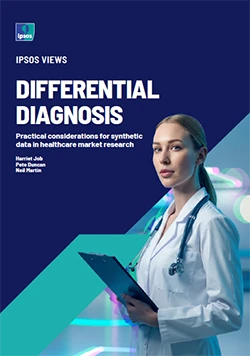
Written by our healthcare team, our Ipsos Views paper offers expert insights into the application of synthetic data methodologies in the life sciences. It explores the current practical applications of synthetic approaches, the areas where they remain experimental, and the reasons why the healthcare domain imposes stricter validity demands than consumer research.
 Key insights include:
- Strategic recommendations: Given the importance of maintaining empirical, human participant-based research as a foundation, synthetic tools should supplement, rather than replace, this research. This will ensure that AI methodologies complement the domain expertise of healthcare insights professionals.
- Promise and context: Synthetic data is touted for providing quicker insights, potentially increasing sample sizes for specific use cases and reducing costs. However, its success depends on specific use cases and precise application, particularly in healthcare, where stricter validation is required than in consumer research.
- Applications and insights: Current applications delivering value in healthcare include the use of Healthcare PersonaBot and synthetic data augmentation. These tools address specific challenges, including boosting sample sizes for low-incidence subgroups such as rare disease patients, enabling interactive dialogue with AI-powered personas tailored to healthcare professionals and patient segments.
- Differential demands of healthcare: Unlike consumer data, healthcare data requires rigorous validation due to its impact on treatment and resource allocation. Regulatory and compliance requirements also call for different methodologies, meaning that synthetic data tools that perform well in consumer research don’t always translate easily to healthcare.
Synthetic data tools, applied thoughtfully within appropriate boundaries, have the power to meaningfully enhance healthcare research.
By combining established methods of market research with synthetic data technology, organisations can gain access to new sources of insight that were previously unattainable due to sample constraints. While synthetic data is not a single answer, it is a powerful tool when used expertly.
Ipsos advocates for a responsible advancement that prioritises ethical standards, rigorous testing, and transparent validation. For those involved in healthcare market research or contemplating the integration of synthetic data, this paper offers valuable guidance on harnessing these technologies while preparing the landscape for future innovation.