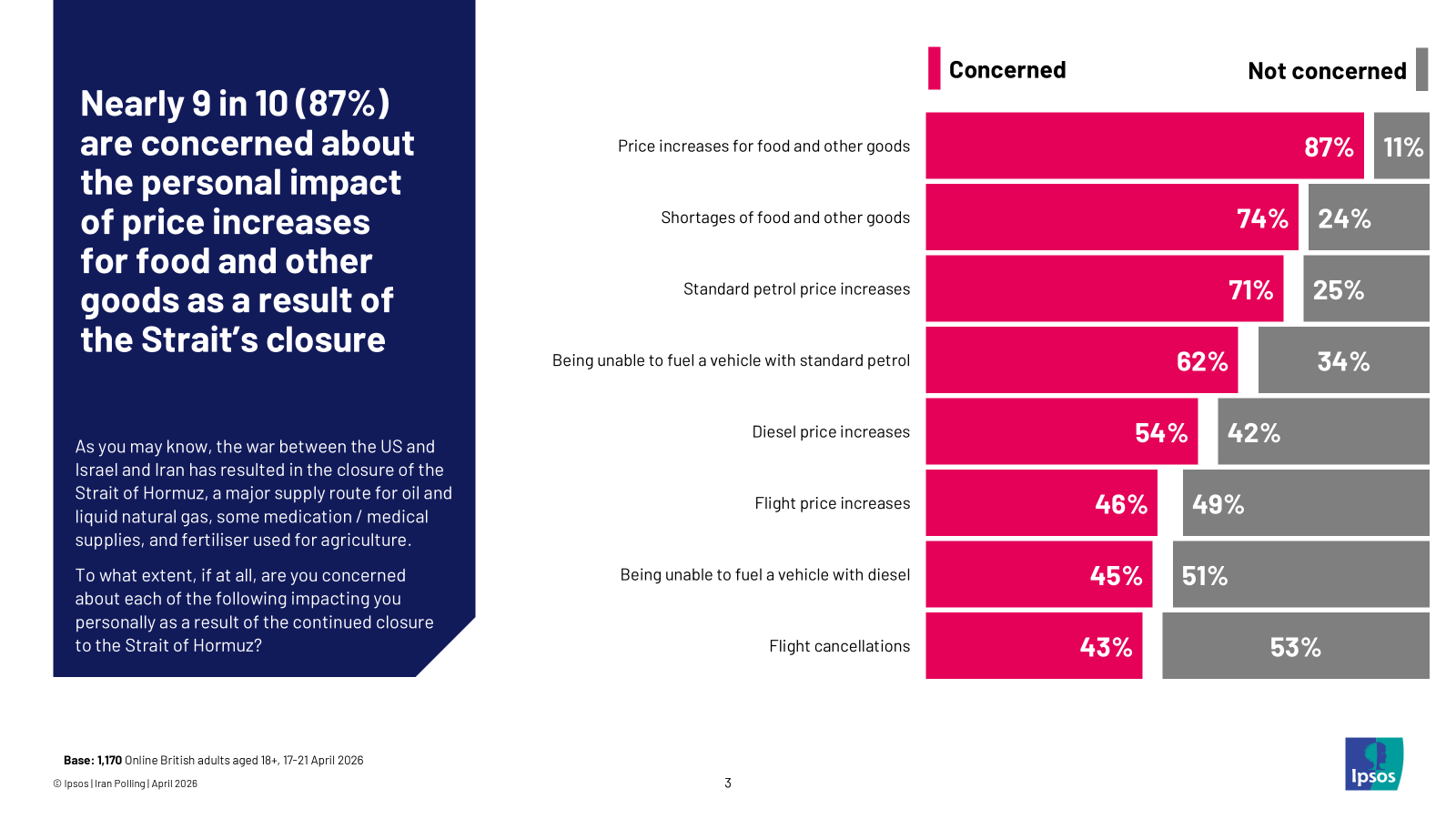
Nearly 9 in 10 (87%) Britons concerned over personal impact of Strait of Hormuz closure on the cost of food and other goods
Amidst the backdrop of rising inflation, economic worries lead Britons’ concerns
The research shows that a majority of the British public is now closely following the maritime crisis and its local repercussions:
- More than 7 in 10 (77%) Britons say they have heard a great deal or a fair amount about potential fuel shortages, with a further 6 in 10 (62%) aware of the potential for shortages of food and other essential goods
- Nearly 9 in 10 (87%) British adults expressed concern about the personal impact of price increases for food and goods, with 3 in 4 (74%) concerned about the potential of shortages
- 71% are concerned about the rising cost of petrol, with 62% expressing concern over the potential for fuel shortages
Dissatisfaction with Government response
As the crisis persists, public confidence in political leadership is under significant pressure:
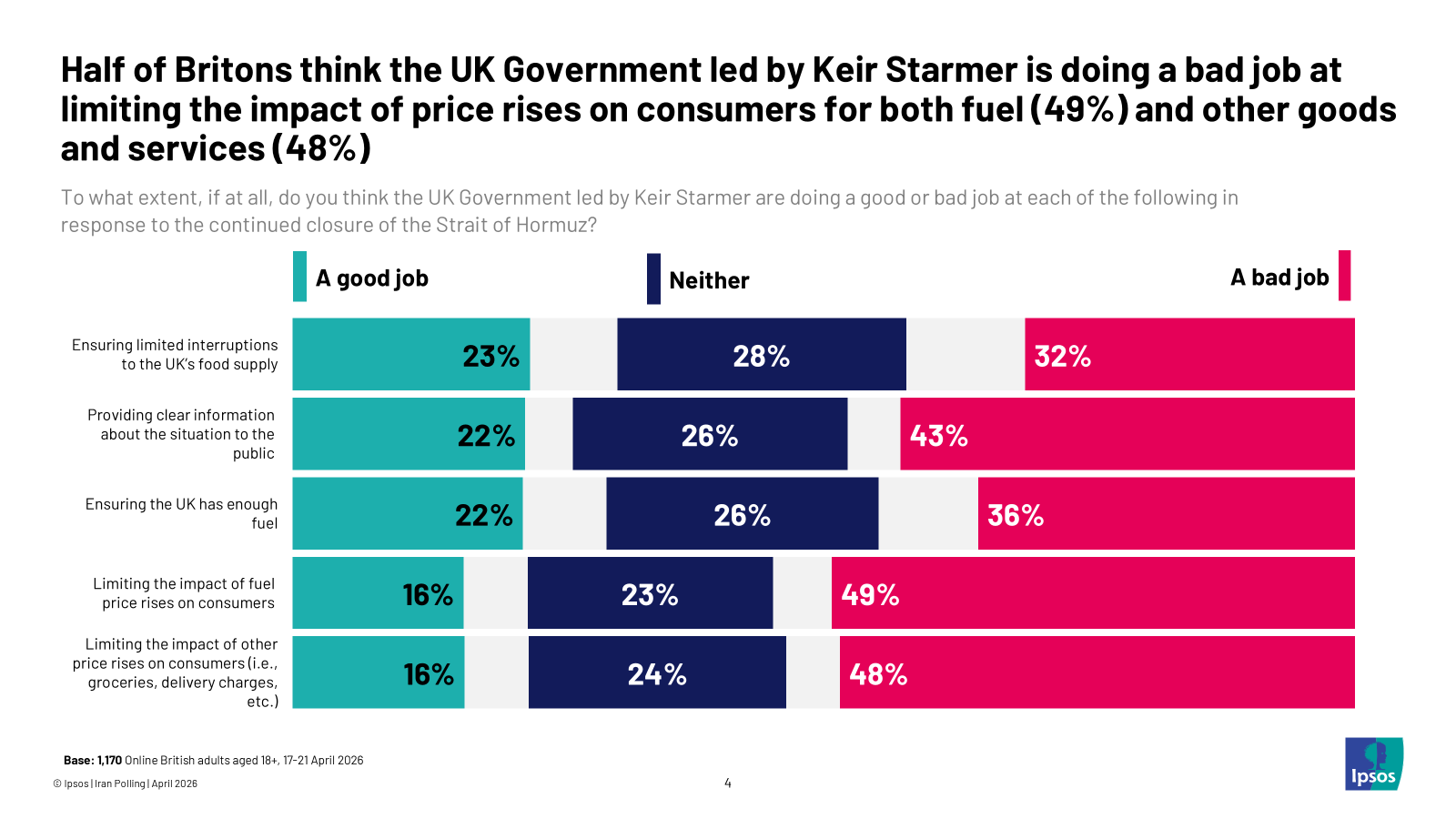
- Half of Britons believe the UK Government, led by Keir Starmer, is doing a "bad job" at limiting the impact of price rises on fuel (49%) as well as food and other goods (48%)
- Less than 1 in 5 (16%) feel the government is doing a "good job" of protecting consumers from the inflationary shocks of the closure
- A further 4 in 10 (43%) think the Government is doing a bad job when it comes to communicating clearly about the situation with the public
Early behavioural shifts in response to the Strait’s closure
In response to the crisis, some Britons are beginning to change – or think about changing – some daily habits:
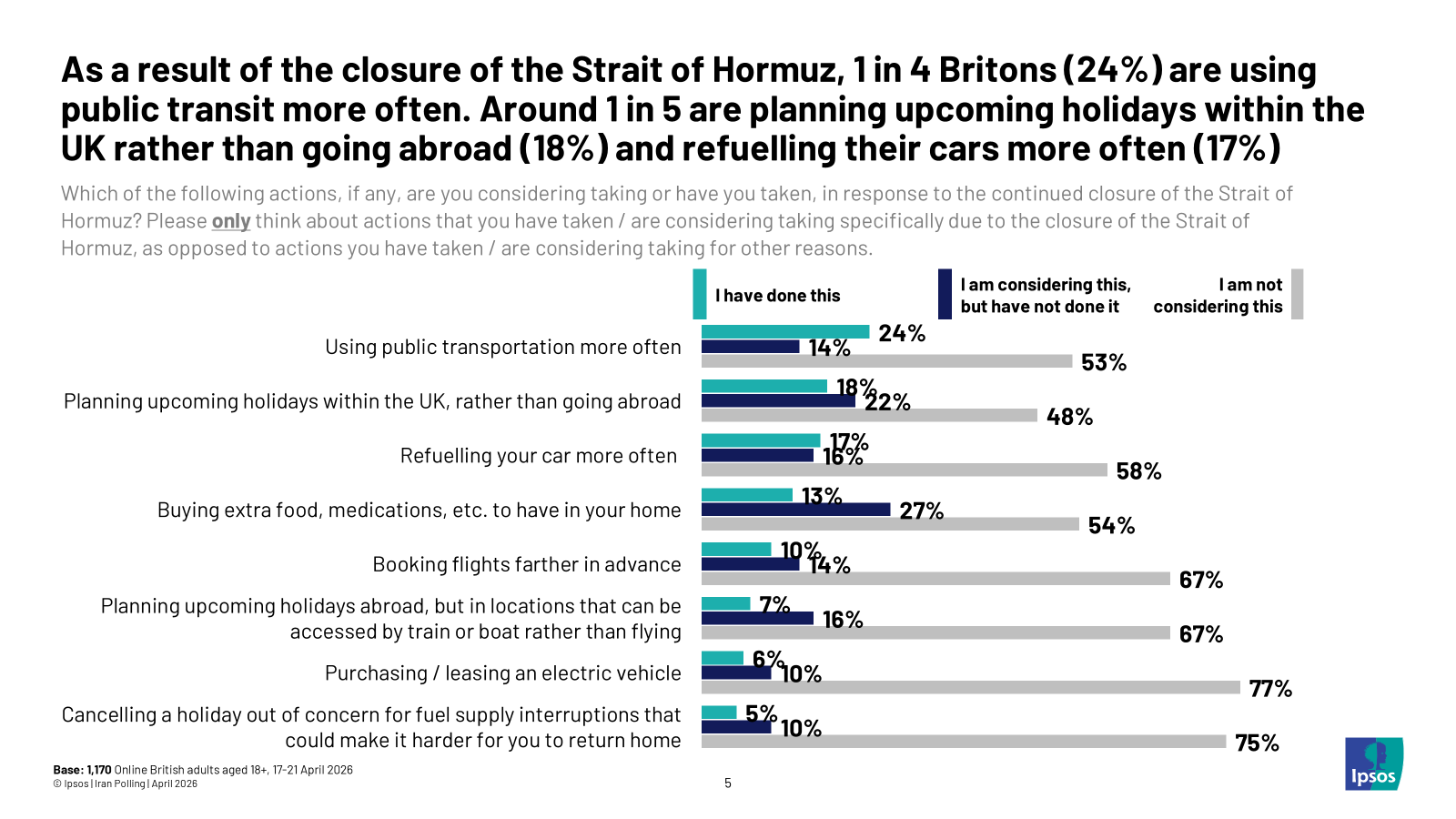
- A quarter (24%) report using public transport more often due to the closure.
- Nearly 1 in 5 (18%) are planning to stay in the UK for upcoming holidays, rather than go abroad
- Precautionary measures are also on the rise, with 17% refuelling their cars more frequently, and around 1 in 4 (27%) considering stocking up on additional food and medications
Commenting on the findings, Gideon Skinner, Senior Director of UK Politics at Ipsos said:
From early on, Britons were seeing the conflict in Iran not as a distant geopolitical event, but as the latest threat to their household budgets – and the closure of the Strait of Hormuz is doing nothing to shake these perceptions. With nearly nine in ten people concerned about the personal impact of rising prices due to the closure, and rising concerns over the cost of living borne out in the latest ONS inflation figures, we are seeing a level of general economic anxiety that rivals any period in Ipsos’ nearly 50 years of trends.
This anxiety is also translating into a sense of frustration with the government’s response. While at least some of the public are already starting to take their own steps to adapt, whether that’s switching to public transport, refuelling more often or planning domestic holidays, they are not yet seeing the decisive intervention they expect from Westminster. Particularly in light of economists’ expectations of further rises in inflation, the challenge for the Government will be to mitigate the very tangible impact of the climbing price of a tank of petrol or the weekly food shop – and communicate clearly over their plans for doing so - as tensions in the Strait continue.
Notes:
- Ipsos interviewed a representative sample of 1,1170 adults aged 18+ across Great Britain. Polling was conducted online between 17-21 April 2026.
- Data are weighted to match the profile of the population. All polls are subject to a wide range of potential sources of error.