Over a third of Britons back getting people into work as top welfare priority, as public point to systemic ease and cheating for rise in disability claims
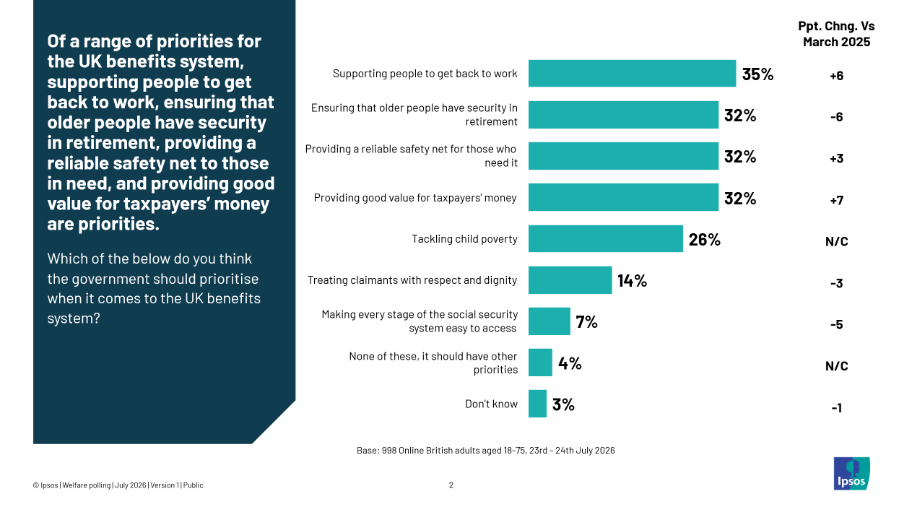
- 35% of British adults say supporting people to get back to work should be a top priority for the UK benefits system, up 6 percentage points since March 2025
- Nearly half (47%) believe society seeing more conditions as valid reasons for not working is driving the rise in working-age disability claimants
- 43% of the public feel health benefits are given out too easily to people who do not really need them, an 8-percentage point increase from last year
New polling data from Ipsos in the UK, conducted 23–24 July 2026, reveals shifting public attitudes towards the UK welfare system. As Andy Burnham and Work and Pensions Secretary Pat McFadden have shown intent to reform the welfare system, particularly with relation to health benefits, the public prioritise employment support.
Shift in welfare priorities towards employment and taxpayer value
When asked what the government should prioritise regarding the UK benefits system, supporting people to get back to work emerged as the leading choice.
- 35% of Britons view supporting people to return to work as a primary priority, reflecting a 6-percentage point increase since March 2025
- 32% of British adults each prioritise providing good value for taxpayers' money (+7ppts since March 2025), ensuring security in retirement (-6ppts) and providing a reliable safety net (+3ppts)
- 1 in 4 (26%) say tackling child poverty should be a priority, unchanged from March 2025
- 14% focus on treating claimants with respect and dignity (-3ppts)
To tackle the number of working-age people not working:
- 46% of Britons advocate for retraining support (+3ppts)
- 44% prioritise working with employers to create more flexible roles (+5ppts).
- 36% prioritise providing tailored support for people with health conditions and disabilities to enter work
- 1 in 3 (33%) prioritise financial incentives for employers to recruit (a 6 percentage point rise)
- 31% prioritise reducing benefits for those not looking for work
Perceived causes of rising disability benefit claims
Public perceptions surrounding the growth in working-age disability and health benefit claims highlight growing scepticism regarding system administration.
- 47% of the public attribute the increase to society viewing more conditions (such as mental health) as valid reasons for not working (+4ppts since March 2025)
- 46% of British adults believe more people are trying to cheat the system by claiming false health conditions
- 43% state that health benefits are given out too easily to individuals who do not truly need them, marking a notable 8 percentage point jump since March 2025
- 36% of Britons cite delayed medical treatment as a key factor (-5ppts)
- 28% attribute it to GPs assessing people unfit to work too easily (+4ppts)
Commenting on the findings, Joanna Crossfield, Research Director at Ipsos in the UK, said:
Our latest polling demonstrates a clear shift in public priorities for the welfare system, with significantly more thinking the system should focus toward getting individuals back into employment. Taxpayers are equally likely to want to ensure the benefits system provides a reliable safety net and delivers good value for the taxpayer, creating a challenge for government to deliver on both fronts.
These desires are met by a hardening of attitudes towards disability claimants, demonstrated by the rise in the proportion of Britons who believe the increase in number of people claiming disability benefits is because they are handed out too easily, alongside steady concerns over fraud.As Westminster seeks to reform the social security landscape, it’s clear that the public share the government’s focus on getting people back into work. When it comes to tackling the proportion of working age people claiming health and disability benefits, the challenge will be to provide reassurance to claimants and the wider general public that essential safety nets are there for people who really need them and that there is no room for fraud.
Notes:
- For media queries, please contact the Ipsos in the UK Press Office at [email protected]
- For the full findings, please visit the Ipsos website.
- Ipsos interviewed a representative sample of 998 online British adults aged 18–75. Polling was conducted online between 23rd–24th July 2026.
- Data are weighted to match the profile of the population. All polls are subject to a wide range of potential sources of error.