Amidst economic concern, U.S. consumers reshape food shopping habits
The Ipsos Consumer Tracker, fielded on Ipsos' Omnibus platform, asks Americans questions about culture, the economy and the forces that shape our lives. Here's one thing we learned this week.
Why we asked: A sense of pessimism continues to overwhelm the U.S. market, with inflation remaining the top concern for many Americans. In fact, a striking seven in ten people describe the current economic situation as “bad,” a sentiment that has driven a continuous slide in consumer confidence, particularly among Millennials and lower-income households. This economic anxiety is profoundly reshaping consumer behavior, especially in the grocery aisle.
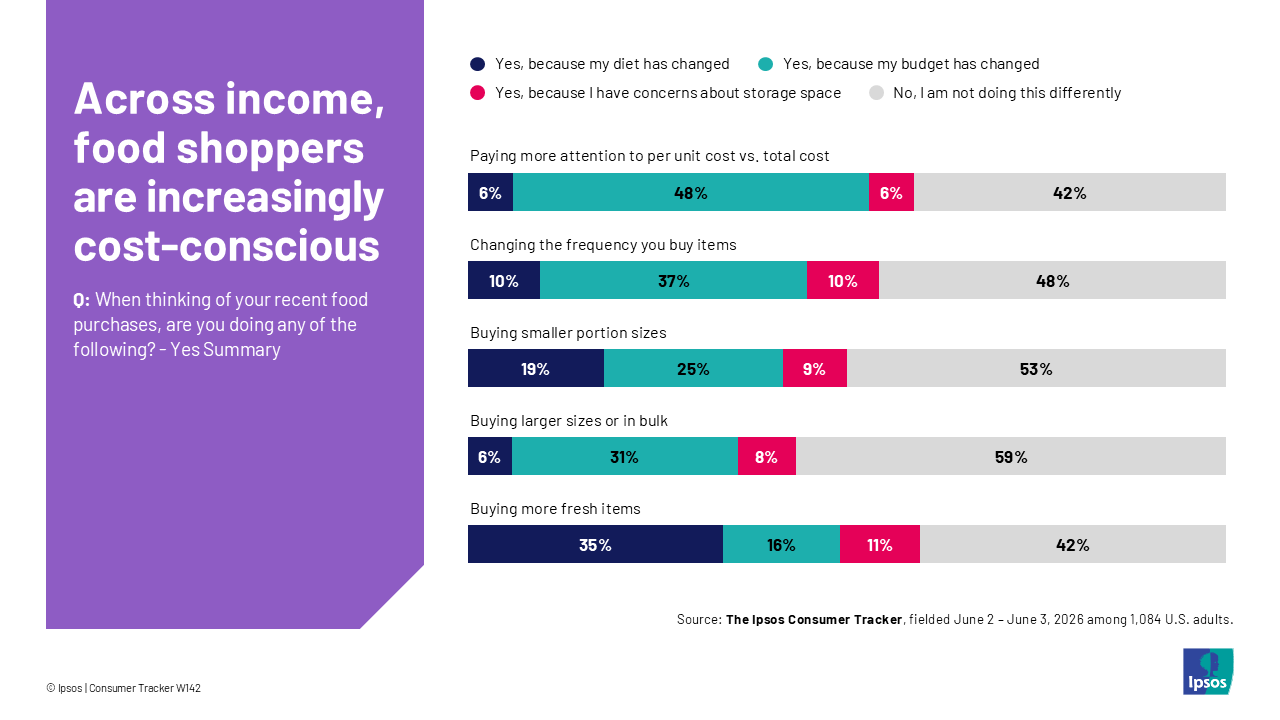
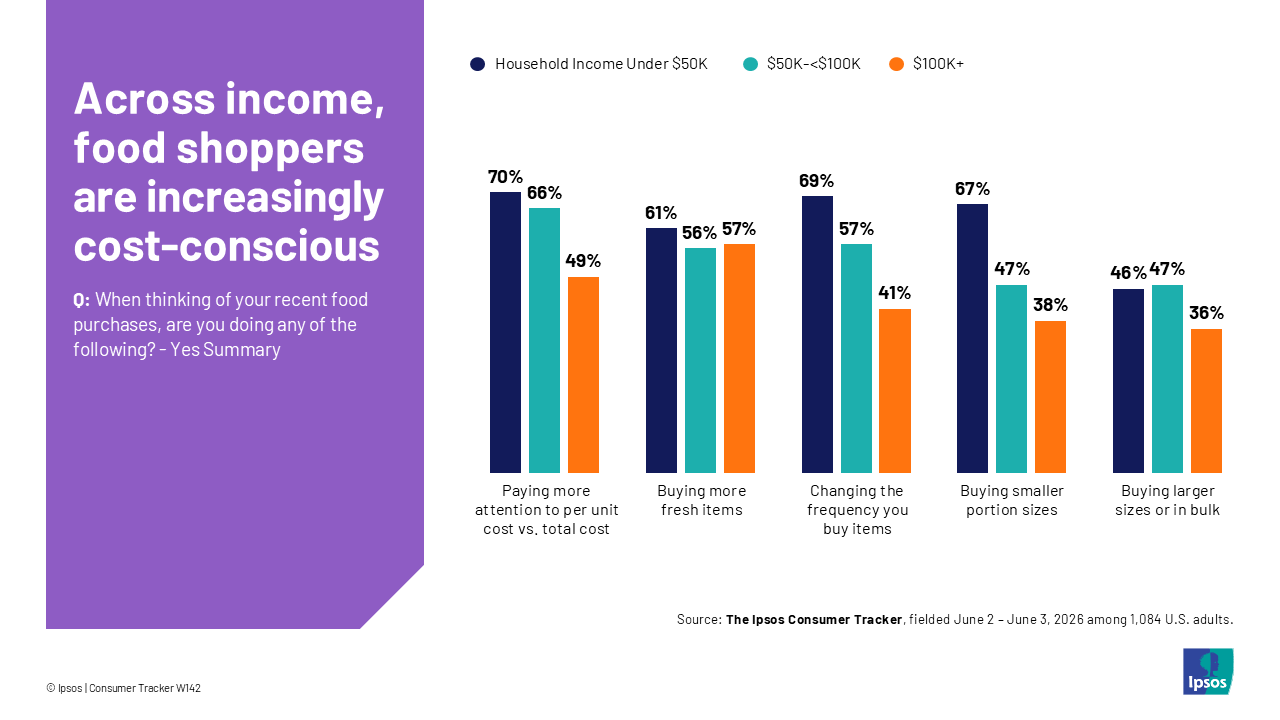
What we found: The most prominent change in behavior is a heightened attention to cost. Nearly six in ten respondents (58%) now report paying more attention to the per-unit cost versus the total cost of food items, a change largely driven by budget constraints. This behavior is even more pronounced among certain demographics, rising to 69% for consumers aged 35 to 54, 70% for lower-income consumers, and 68% for non-White consumers. This aligns with the broader dip in consumer confidence as captured in the latest LSEG/Ipsos Primary Consumer Sentiment Index.
Interestingly, about half (52%) of consumers have also altered how frequently they buy groceries, again primarily due to budget changes. This shift is most common among those aged 18 to 34 (64%), 35 to 54 (61%), lower-income households (69%), Hispanic consumers (76%), and households with children (69%).
In a further effort to manage spending, 41% of shoppers are now buying larger sizes or in bulk. This trend is particularly strong among younger consumers ages 18 to 34 (59%), those aged 35 to 54 (50%), Hispanic shoppers (61%), Asian shoppers (54%), and households with children (62%).
While budget is a major factor, a growing emphasis on well-being is also steering consumer choices. This long-standing Global Trend toward Conscientious Health is partly influenced in the U.S. by public health initiatives like "Make America Healthy Again" (MAHA), which advocate for healthier eating. Our data reveals that nearly six in ten consumers (58%) are purchasing more fresh items, with a change in diet being the primary motivator. This move toward freshness is especially prevalent among younger demographics (66% of those 18-34 and 67% of those 35-54), Hispanic (70%) and Asian (67%) consumers, and households with children (75%). This reflects a broader trend where Americans are increasingly seeking out functional foods with added health benefits.
The interplay between health and budget is also evident in the trend of buying smaller portion sizes. Almost half (47%) of U.S. respondents are now purchasing smaller packages. While this is driven by budget for 53% of these consumers, a significant 40% attribute it to a change in diet. This dietary motivation is particularly strong among White, college-educated respondents, with 58% citing a change in diet as the reason for buying smaller portions, compared to just 33% who point to their budget. This aligns with a growing focus on weight management and the increased use of GLP-1s.
As consumers continue to navigate the cross-currents of economic uncertainty and a desire for healthier lifestyles, their behavior at the grocery store provides a real-time indicator of their priorities and trade-offs. These findings underscore the complex decision-making process that is shaping the future of the food industry and the importance of refreshing your strategy.
More insights from this wave of the Ipsos Consumer Tracker:
When pressed for cash, Americans cut back, postpone and trade down
There’s no consensus on Americans’ use of AI at work
Younger Americans care more about brand, but not all categories are made the same
The Ipsos Care-o-Meter: What does America know about vs. what does America care about?