
What’s Next – Telecommunications New Consumer Mindsets
At the outset of the pandemic, telecom providers reacted quickly and have played a critical role in the adoption of new consumer habits for things that are at the core of daily life—staying in touch with family and friends, new ways of working, how students attend school, and the content people consume. As vaccinations increase and consumer confidence increases, what will this mean to the telecommunication industry?
In this paper, we share detailed data and insights illustrating ways to uncover the mindsets of your customers and prospects in order to tailor your offer, customer experience and messaging. Ensure that your portfolio and digital strategy are in sync with new market needs, and create seamless continuity for your consumers to continue their new (online) behaviors that helped them “survive” the pandemic.
Key Takeways:
- The Telecommunications industry has changed dramatically due to the expanded importance of data, connection, and content.
- U.S. consumers are increasingly uncertain, which suggests that they are more likely to make nonconscious (system 1) decisions, seek variety, and be open to new things.
- Consumer mindsets have become bifurcated in terms of world views. Some are more positive (Promotionoriented); some are more negative (Prevention-oriented). This will affect consumer decision making in a big way going forward.
- Understanding and leveraging these behavioral science-driven mindsets is more important than ever—look to update your segmentation, create engaging digital and brick and mortar experiences and connect 5G and other offers on an emotional level
As the U.S. enters the second year of the pandemic, the telecommunications industry has been hit by dramatic changes in how consumers view the importance of content, data speed, reliable connections, content and mobile services.
Telecom providers reacted quickly and have played a critical role in the adoption of new consumer habits for things that are at the core of daily life—staying in touch with family and friends, new ways of working, how students attend school, and the content people consume.
Within the first month of the lockdowns, half of American adults said that home Internet, wireless and TV/streaming were now significantly more important to their lives. A year later, importance has not waned: 70% say they’ve been spending more time online than ever before. The mobile phone is playing a greater role in life as consumers turn to their smartphones for stress relief and psychological comfort.
The result has been a massive and dramatic shift for the industry. Increased demand for speed, lower latency and security is coming from consumers, businesses and governments.
As vaccinations increase, consumer confidence is on the rise. Within this new context, Ipsos breaks down the implications for the telecommunications industry, what to expect and how to monitor and react to still-adapting consumer behaviors.
The Current State: Cautious Optimism
The recovery of the U.S. economy and the stabilization of consumer mindsets and behaviors is proving to be a gradual journey. However, even as immunizations increase, the repercussions of the pandemic are far from over. Consumers are uncertain, cautious, and anxious. Behavioral Science reveals that when consumers experience feelings of uncertainty, they are more likely to engage in nonconscious, or system 1, decision making, and to respond stronger to emotional messages. Additionally, disruption to the “predictable” can bring about an increased likelihood of trying new things, seeking variety, and making impulsive decisions. This has implications for the Telecommunications industry: How can service providers nudge customers in different mindsets to switch providers, upgrade phones or move to 5G?
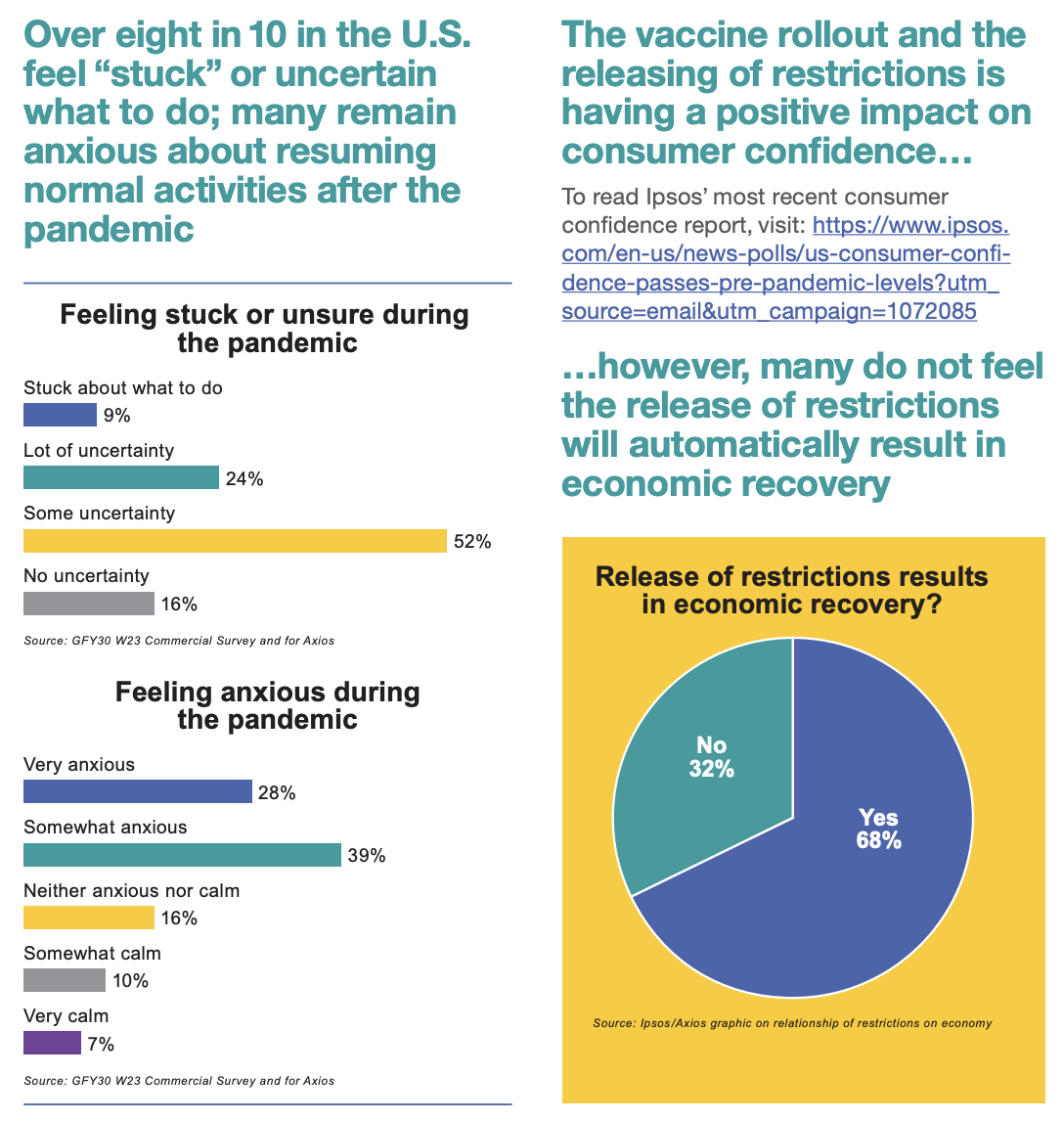
To read Ipsos’ most recent consumer confidence report, visit: https://www.ipsos. com/en-us/news-polls/us-consumer-confidence-passes-pre-pandemic-levels?utm_ source=email&utm_campaign=1072085
Consumer Mindsets: Divergent Views
The pandemic and recovery have split consumers into increasingly divergent segments. This may have implications for offer and product development, customer experience and marketing communications
Many voices in the U.S. are setting expectations for a massive spending and experience boom once restrictions loosen. Some openly celebrate the upcoming return to their previous behaviors, others want to make up for lost experiences, and still others are looking to publicly reject the limitations that were put on their lives. Right now, there are vast differences in what motivates people—these differences can be characterized by whether individuals are in a Prevention or Promotion mindset.
When consumers have a Prevention mindset they tend to focus on needs, duties, obligations and being safe (“how do I stop things from getting worse?”). These consumers will respond positively to appeals or offers that highlight simple solutions and align with the “tried and true.” Conversely, when consumers have a Promotion mindset, they pay attention to things that will help them succeed, achieve outcomes, and improve their lives (“how do I make this awesome?”). These customers are likely to be more receptive to learning about product benefits, innovations, or applications, and are looking for new, improved ways of doing things generally. Both mindsets will be more receptive to connections on an emotional rather than rational level.
The pandemic has deepened divisions in an already polarized society. Forward-thinking brands will consider how Prevention and Promotion mindsets shape their consumers’ very different viewpoints and attitudinal dimensions that impact:
- Increasingly polarized political viewpoints. These include social issues and personal freedoms vs. the public good.
- The vaccinated and non-vaccinated. From a psychological standpoint, getting vaccinated is a “temporal milestone” much like New Year’s Day. It marks a fresh start for Americans and indicates to them that the pandemic is effectively over.
- Financial haves and have-nots. The gaps have increased due to growth in investments, tax changes and high unemployment.
Telecom brands can navigate the intricacies of these polarized mindsets, nudge new, desired consumer behaviors and act on business issues now. For winning brands, it is time to gain a deeper understanding of your customers, innovate and lead your industry into and beyond the new normal. It is time to:
- Refresh your customer segmentation
- Improve the retail experience
- Keep the 5G momentum going
Refresh your customer segmentation— your current one is out of date
Traditional customer segmentation in telecommunications is typically centered around key criteria such as consumer needs, family dynamics, technology adoption and income. Given the need to understand consumers in this ever-evolving post-pandemic marketplace, forward-thinking brands will also consider Prevention vs. Promotion mindsets when marketing or optimizing touchpoints with customers.
For example, do you segment or profile your customers and prospects based on tolerance for risk, tendency to conform or their view of self? These classifications can help understand motivations or barriers for switching providers, impact what customers want from their retail experience and help nudge upgrades to 5G.
Consumer interactions with technology have also changed, not only in action but also in importance. There is a new home workplace in which the lines between home and work/school are blurred. New workstations and entertainment hubs have emerged in the home, changing the dynamics of “me” time and “we” time.
The value equation has also changed, with many controlling spending and making tough choices on tradeoffs based on budget, their need for speed and must-have content.
Retail Safety is Still Top of Mind
Retail locations are an important experience building touchpoint. Safety concerns in public places and retail will linger for a long time, even as cases of the virus decline. To be competitive, retailers will have to take steps to make consumers feel safe and to provide clear, consistent policies for ensuring safety long-term.
Differentiators for retailers that will drive the return to normalcy: providing safety equipment for employees, dedicated hours for high risk or highly concerned customers, social distance markers, store entrances that open automatically and all staff wearing masks properly.
Highlighting the right safety policies is a great way to build trust and create a positive in-store experience.
Don’t forget to train retail sales associates on ways to express empathy and leave customers satisfied while wearing a mask. More eye contact is important. Speak slower and louder while being more expressive; use visuals. Your customers in Prevention mindset will find comfort in the masks and distancing, while those in Promotion mindset may struggle or feel less inclined to make a big or impulsive decision.
Ipsos Consumer Health and Safety Research Highlights
- Customers want to see telecom stores visibly cleaning demo devices and providing consistent safety equipment to employees.
- In addition, curbside and in-store pickup, and scheduled appointments are highly desired.
Manage Traffic Flow
- Is the top driver of customer return
Actively Santizing High Touch Areas
-
Are among the Top 5 drivers of customer return
What 5G means for telecom post-pandemic
The telecom sector, due to the increased importance of the internet, mobile and video behaviors, was one of the fortunate industries that gained strength during the pandemic. Now is the time to dig deep, engage and understand customer behaviors which is key to retaining these more active users.
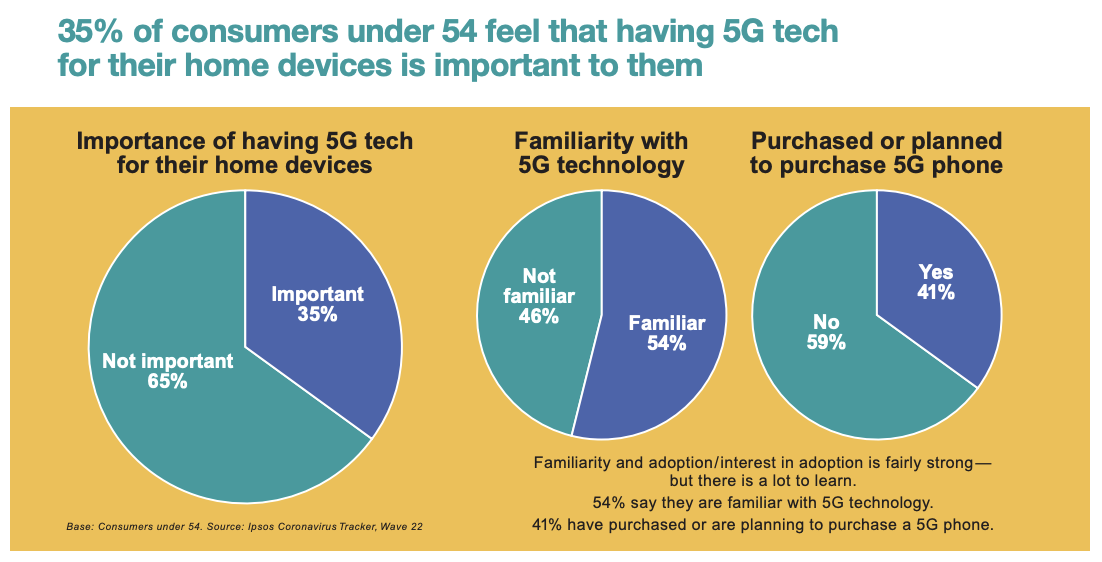
5G clearly changes the game and presents a clear and present opportunity for brands. Helping consumers better understand the benefits and use cases is key right now. The market is ripe to hear the message of better, faster, less latency that 5G delivers on—customer education is key and needs to be more comprehensive than “I heard it’s fast” or “ours is the best.” Understanding customer perceptions, and who the target of your messaging is, will be important. For example, those with a Promotion mindset will want to hear about all the great things 5G will enable them to do. In contrast, those with a Prevention mindset will want to know about how it will help them avoid annoyances (e.g., latency, buffering, etc.).

The effects of the pandemic on the Telecommunications sector will linger long after the virus is minimized. The sector has played an instrumental part in that change and, as we enter another inflection point, the stakes are high. Get to know the mindsets of your customers and prospects now to tailor your offer, customer experience and messaging. Ensure that your portfolio and digital strategy are in sync with new market needs, and create seamless continuity for your consumers to continue their new (online) behaviors that helped them “survive” the pandemic.


![[WEBINAR] TOAST 2026: Under Pressure - Fewer, Fragmented, Fought-For](/sites/default/files/styles/list_item_image/public/ct/event/2026-07/thumbnail-templates_1_0.png?itok=MxL-wPJW)
