
Food Forecast: Trends, Tensions and Macro Forces
Consumers are struggling to navigate an uncertain world, thanks to an ongoing pandemic, increasing prices, climate crises and geopolitical conflicts. Food and beverage brands are facing those same challenges and more, including unprecedented retention issues and ongoing supply chain disruptions.
Yet there is a way to turn all that uncertainty into real opportunities for growth: Trends and foresight help us understand and anticipate change so that brands can meet consumers’ emerging needs and desires.
Our Ipsos Strategy3 team has developed the Theory of Change to understand how and why change happens. We use it to define trends by analyzing change at multiple levels: macro forces which act across the world; shifts in society, markets and people; and signals of change that we can observe. In this POV, we’re highlighting a few trends we’ve developed to help our food and beverage clients stay ahead of the curve over the next 1–3 years and beyond.
KEY TOPICS:
- Consumers want to be healthy without sacrificing convenience. How can you combine the best of both worlds?
- People want to align with brands that share their values. Does brand purpose really matter for your category and product?
- How can you straddle the line between familiar and innovative to provide both comfort and excitement for consumers?
- Is your business prepared to anticipate future trends in consumer attitudes and behavior, in both the near-term and long-term?
Trend Tension #1: Healthy Convenience
After two years of stress and sedentary lifestyles, people are focusing on ways to improve their health and well-being—which means they’re looking for healthier options and ingredients and are more conscious about what they consume and where it comes from. In fact, most consumers are so focused on healthy products they say they’re willing to sacrifice convenience to get them.
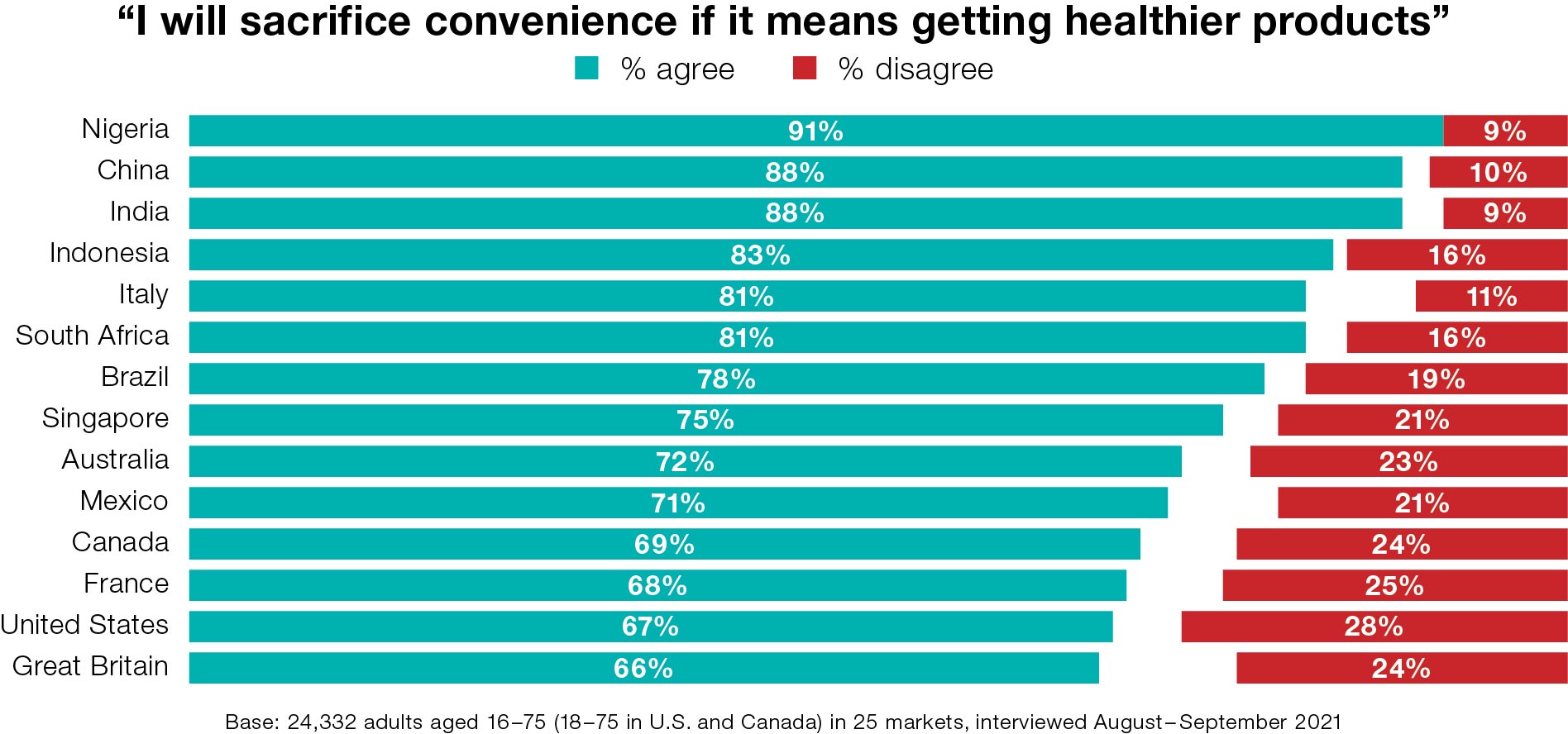
Yet at the same time we also know that consumers are returning to routines that require more convenient options, which creates a tension with food and beverage specifically: the convenient choice versus the healthy choice. Whether this plays out in grocery stores, restaurants, gas stations or coffee shops, it’s a tension that’s likely to continue given that only 32% of U.S. consumers think their access to healthy food will get much better in the future [Ipsos What the Future Study, fielded April 19–20, 2022].
So while globally we hear from most consumers that they’re willing to forgo convenience in the pursuit of health, we know that it really depends on the moment, their mood, the situation and who they’re with—and this is a balance that we expect to continue to play out in the next few years.
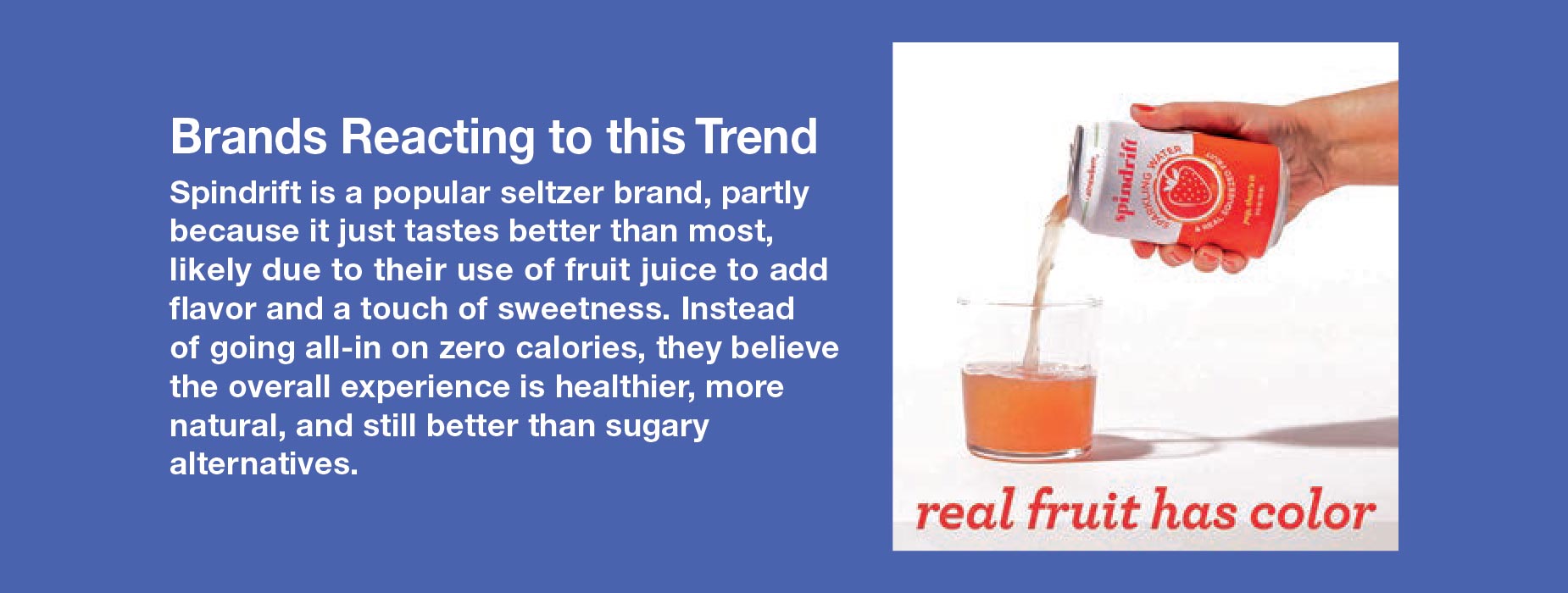 Think about: How can your brand capitalize on opportunities along this spectrum, to meet consumers where they are in any given moment along that health-convenience continuum? How can you combine the best of both worlds?
Trend Tension #2: Meaningful Consumption
Companies can no longer afford to sit on the sidelines of social issues. Case in point? The long list of brands who were celebrated for or pressured to pull out of Russia after its invasion of the Ukraine. And it’s not just political values that consumers care about: everything from product ingredients to the history of the company, the diversity of its workforce, and impact on the environment is under scrutiny.
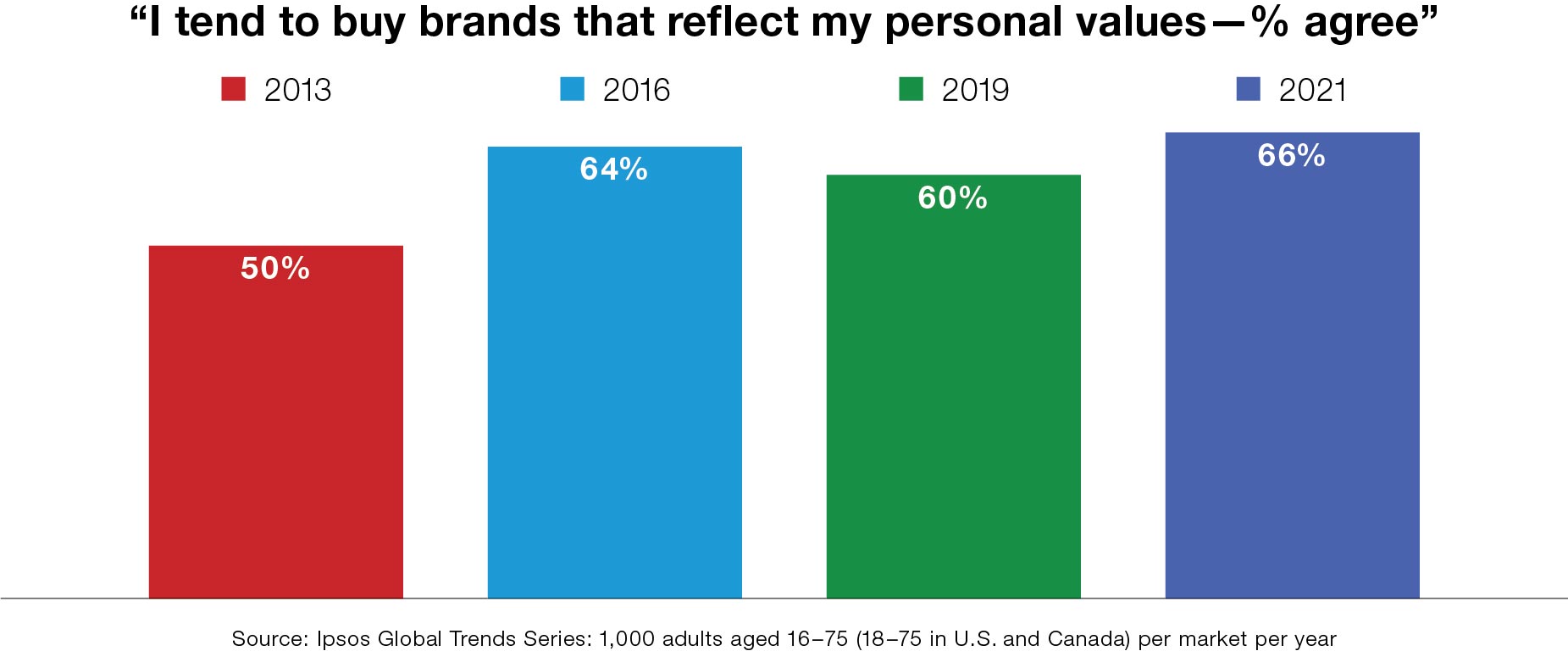
At a macro level, nearly two thirds of North American consumers said they tend to buy brands that reflect their personal values—a significant increase from 2013 when only half of consumers felt this way [Ipsos Global Trends Survey, graphic below]. And social justice issues have taken center stage: 41% of U.S. consumers are more likely to purchase from a company that has taken a public stand against racism [Ipsos What The Future Study, Fielded April 26th, 2022].
How much does meaningful consumption matter for your brand, in your category? It’s a question that requires a deep understanding of what motivates consumers in your category and the role that brand purpose plays in determining choice. And the reality is that consumers don’t research every purchase for every occasion—imagine trying to do so for every single grocery item on your list! Brands need to know whether and how they should dial up purpose, and then must ensure values and causes are at the forefront of products, packaging and promotion as well as advertising.
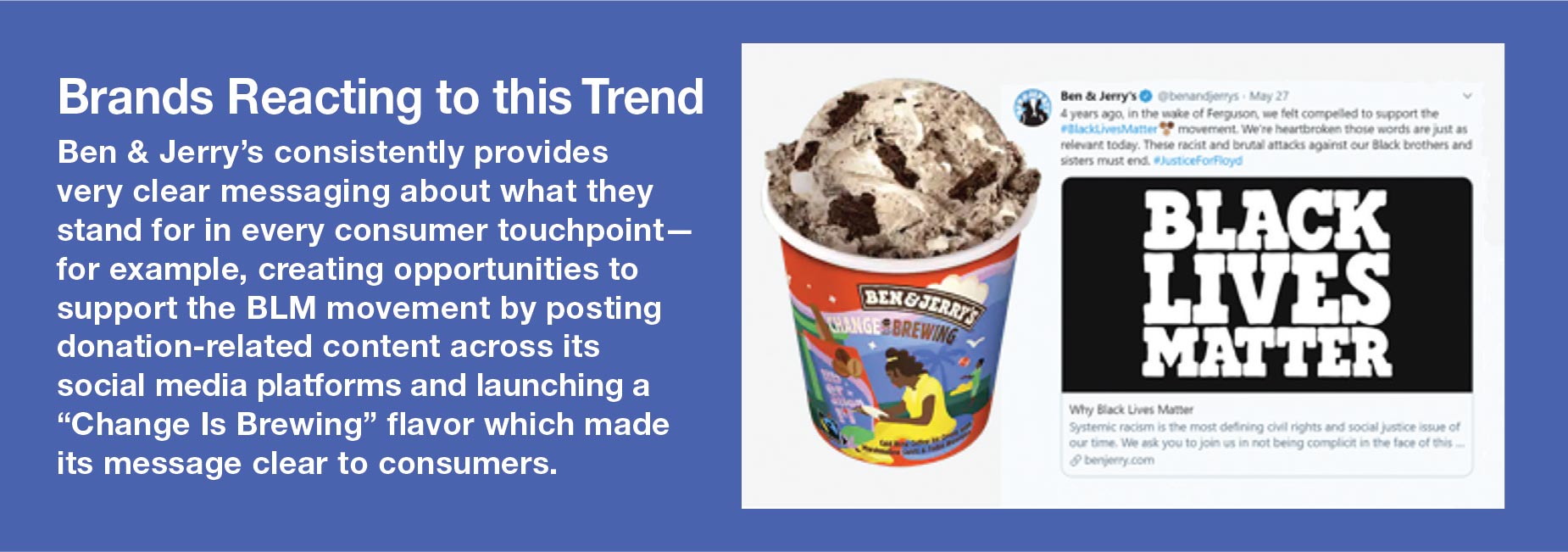
Think about: How much is your brand purpose shining through? Is it a differentiating factor for remaining top of mind in your category? How are your corporate values coming through on each consumer touchpoint?
Trend Tension #3: Novel and Familiar
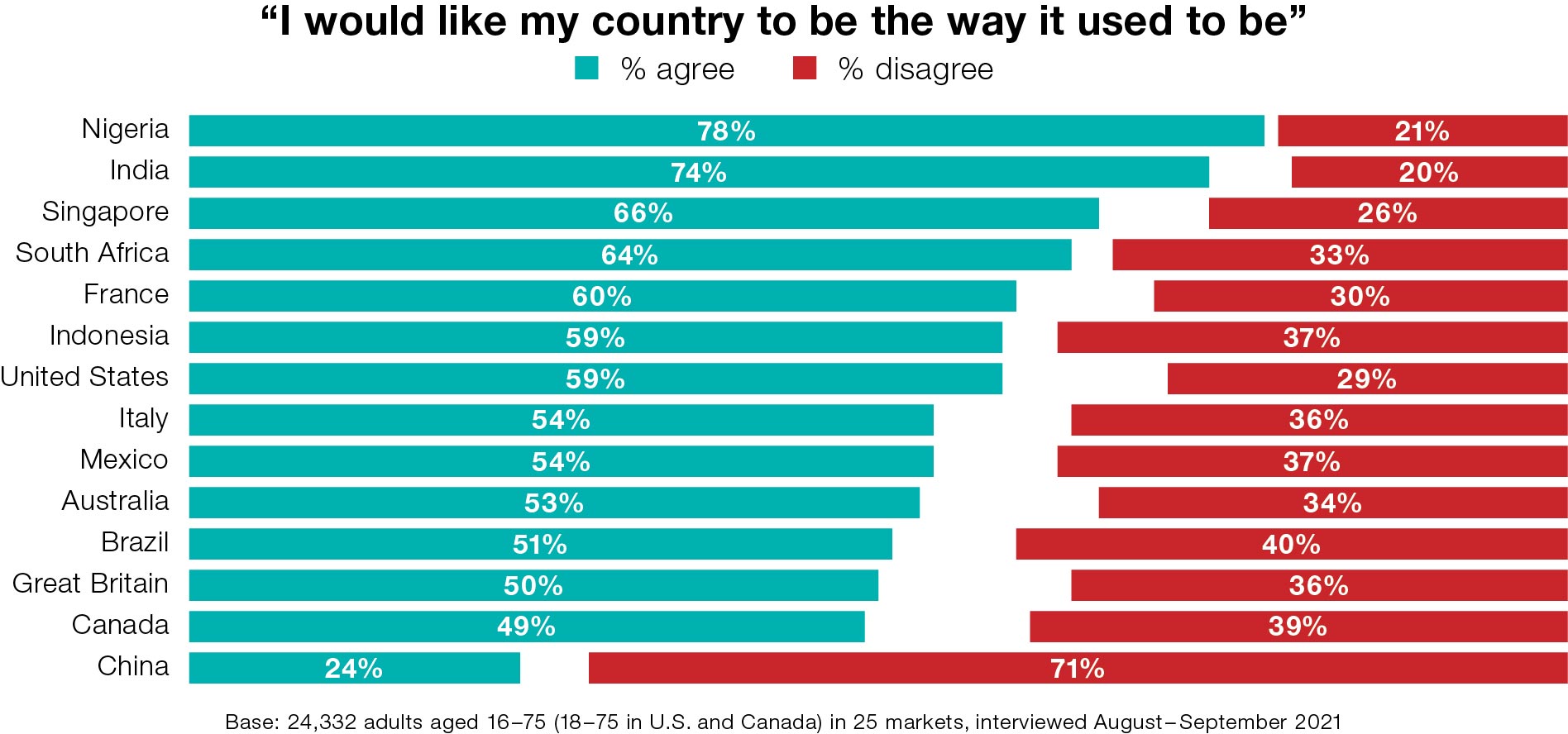
The disruption of the past two years has left consumers feeling vulnerable, seeking comfort, and thinking about the past. Whether that means foods which represent nostalgic flavors or beverages with vintage packaging, people appreciate references to a happier time for a momentary escape. While nostalgia has always appealed, it comes to the forefront particularly in unsettling times—as evidenced by consumers around the world wishing their country could be “be the way it used to be.” [see chart below]
However, we also know that consumers crave the new, the innovative, the fresh—particularly in foods. At first glance, consumers’ interest in nostalgia may seem to be at odds with a parallel consumer hunger for innovation and novelty. Yet they can be linked successfully: Brands who can balance the old and the new have an opportunity to tap into nostalgia while still delivering on the excitement of new flavors, formats and products—including mashups like the recently announced Oreo x Ritz collaboration.
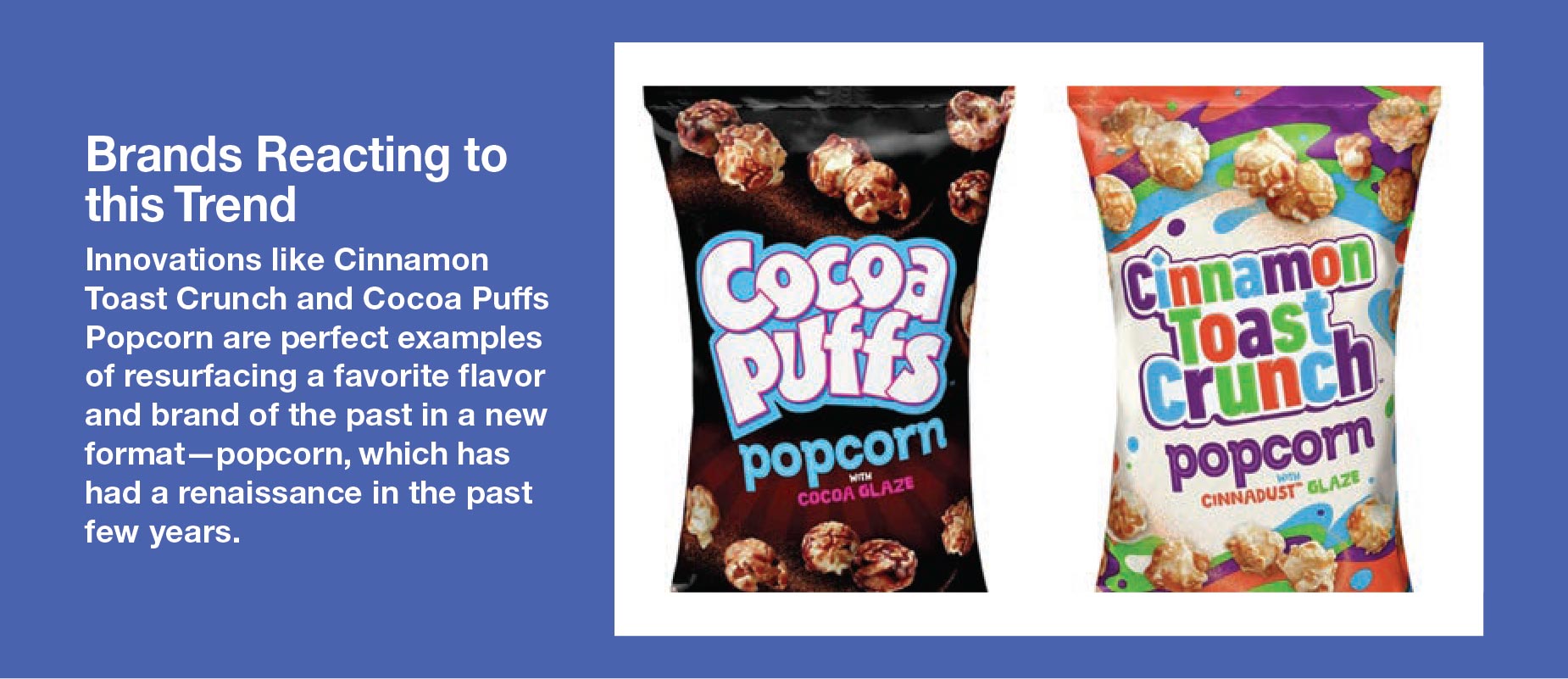
Think about: How can you lean into familiar flavors, recipes, and ingredients from your portfolio’s history, or that of your partners, while innovating on format, size, texture, or other aspects? What core elements of a past favorite are important to retain when innovating in this manner?
WHAT’S NEXT:
- It’s not enough for brands to ensure brand and products match the preferences of target consumers. They must identify, track, and anticipate trends like these to meet future consumer needs—and the three tensions here are just scratching the surface.
- Consumer attitudes and desires will vary by socio-economic circumstances, generational values, the cultural nuance of the country and region, and many more factors. We recommend that brands pay attention to broader macro forces such as inflation rates, consumer price increases, environmental crises, and geo-political conflict, as we know that forces such as these will impact consumer behavior as well.
- If brands embrace the unknown, proactively track trends, and use them to identify commonalities among the complexity, they’ll be much more likely to anticipate and capitalize on areas of growth.

![[WEBINAR] TOAST 2026: Under Pressure - Fewer, Fragmented, Fought-For](/sites/default/files/styles/list_item_image/public/ct/event/2026-07/thumbnail-templates_1_0.png?itok=MxL-wPJW)
