How will our food preparations change?

Does our food come to us, do we go out, or do we cook at home?
Group of people toasting

These are big questions with broad implications. Ipsos asked people to predict the short-term future to see how things might change for themselves. The global results are in the spread on pages 18 and 19.

In the U.S., younger Americans think, to Rick Bayless’ point, that they’re likely to cook as many (48%) ormore (39%) meals at home than they do now. They’re also the most likely age group to say they’ll increase the number of meals and groceries they get delivered, and to eat out more. The future can be summed up in one word: choice.
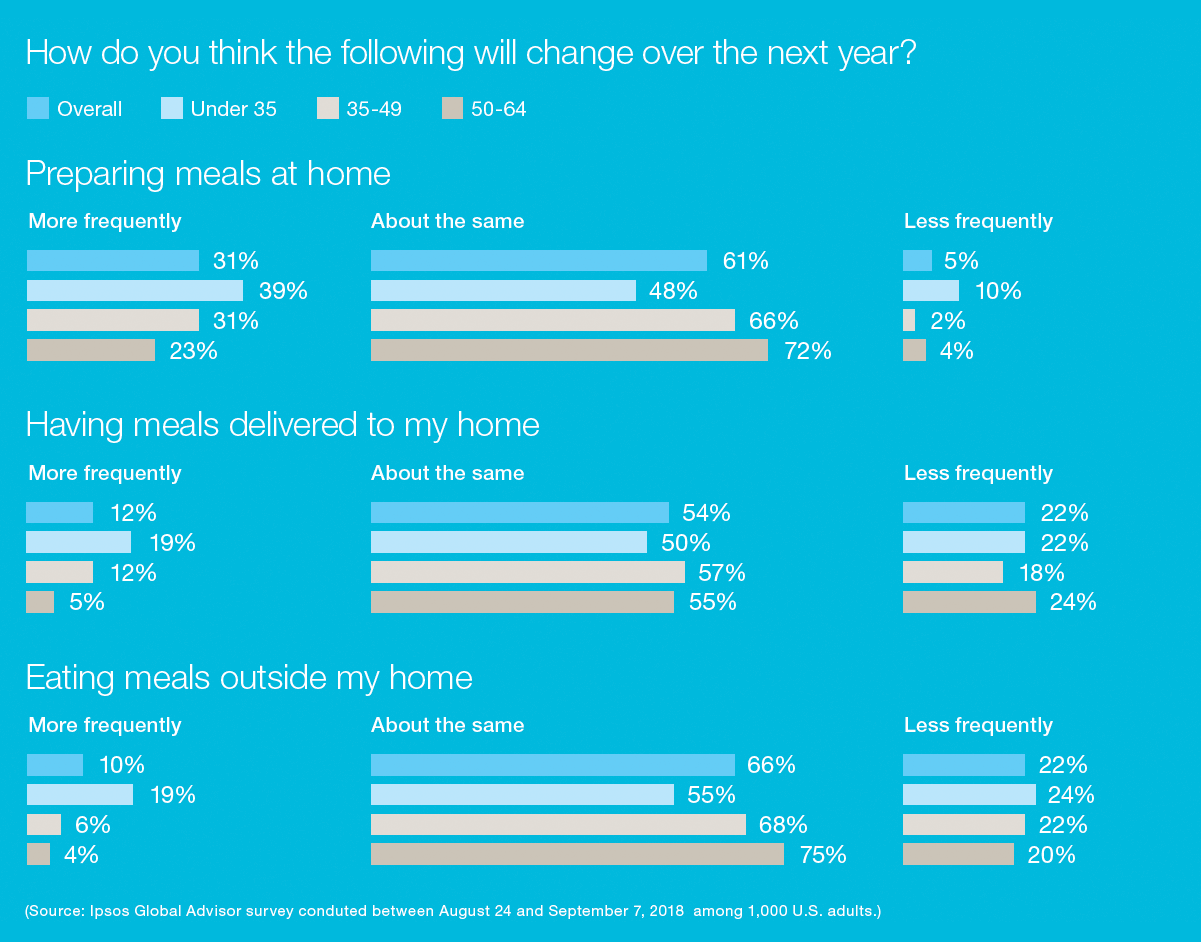
How do you think the following will change over the next year


This and related food topics are further explored in our quarterly magazine, What The Future. Click here to download our fall Food edition featuring exclusive new research from Ipsos.

The author(s)

Related news

  • What the Future: Shopping
    Foresight Webinar

    What the Future: Shopping

    What are the new brand rules as AI helps drive the shopping cart?
  • What Drives Affluents to Spend?
    Affluent Event

    What Drives Affluents to Spend?

    Join us to discover new research from Ipsos on how affluent consumers are redefining value, luxury, and premium experiences. Explore the trends shaping spending decisions today and the opportunities they will create for brands tomorrow.
  • State of the Nation: Heading into the Holiday Season
    Consumers Webinar

    [WEBINAR] State of the Nation: Heading into the Holiday Season

    We'll examine consumer sentiment and future outlook, unpack evolving U.S.-Canada tensions amid economic policy announcements and tariff threats, and look at how shopping behaviours are changing as consumers balance value, confidence, and spending priorities.