
Environmental Sustainability: Setting the context
With an increase in the frequency and intensity of weather events across the world, it is hard to ignore the effects of climate change. Two-thirds of the global population say they have experienced these effects in their region (this figure being as high as nine in ten in parts of the global south),[1] with 83% of people saying that we are heading for environmental disaster unless we change our habits quickly.[2] Corrective activity is viewed as a shared responsibility between government, industry, and citizens.[3]
So, awareness and concern about climate change is growing. However, urgent and immediate issues of day-to-day survival can take priority over important “long-term” matters such as climate change. This is illustrated in Ipsos’ What Worries the World survey[4] where issues such as inflation, poverty & social inequality, unemployment, and healthcare take precedence over climate change. However, as global temperatures continue to rise, and significant weather events increase in frequency and impact, these two issues are expected to become increasingly intertwined. Our ability to thrive on this planet will be increasingly linked in our minds to our care of the planet. Ultimately, sustainability is about people, planet, and prosperity.
This view of sustainability is reflected in the expectations that citizens have of multinational companies not just to protect the environment (E) but also to improve society (S) and practice good governance (G).[5] And there are in-market examples that illustrate the dangers of treating these pillars of ESG in silos.[6]
83% of people say that we are heading for environmental disaster unless we change our habits quickly.
It cannot be assumed though that citizen concern, attitudes, priorities, and actions are homogenous when it comes to the environment and social issues. If government and businesses are to engage citizens and consumers with planet-friendly legislation or services and instigate positive behaviour change, it is necessary to understand different citizen views and actions across the globe.
It is also useful to keep in mind that prior Ipsos research has already highlighted that most citizens expect sustainability to be delivered as a co-benefit rather than “the benefit”.[7] We also see that there is often a gap between what people believe to be true and what is reality when it comes to sustainability, so there is a real need to inform and educate.[8]
It cannot be assumed that citizen concern, attitudes, priorities, and actions are homogenous when it comes to the environment and social issues.
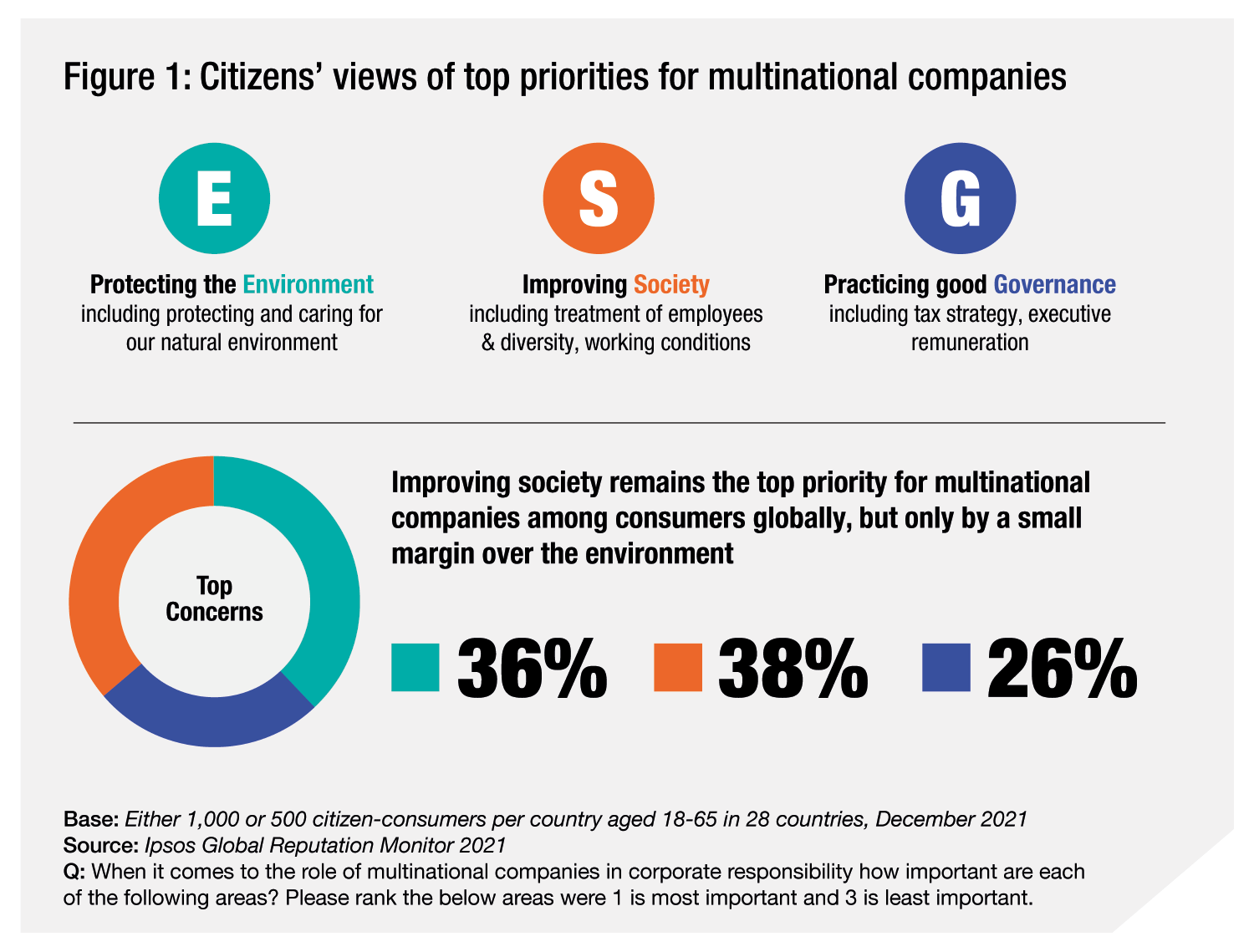
Table of content
- Five key takeaways
- The context
- The segmentation of sustainability
- Geo-diversity in environmental concern
- Shifting dimensions
- From understanding to activation
Notes
[1] EDF & Ipsos. 2021. “Obs’COP 2021 Climate and Public Opinions International Observatory”.
[2] Ipsos. 2021. “Global Trends 2021: Aftershocks and continuity”.
[3] Ipsos. 2022. “Earth Day 2022”. Global Advisor ".
[4] Ipsos. 2022. “What Worries the World - October 2022”.
[5] Ipsos. 2021. “How Multinational Corporations Can Lead the Way on Sustainability”.
[6] Sustainability Magazine. “The Road to Sustainability - Citizen Understanding at the Core | Pippa Bailey - Ipsos, UK”. 13 September, 2022. Video
[8] Ipsos. 2022. “Earth Day 2022: Perils of Perception”. Global Advisor.


