
Attitudes of the Affluent Towards Wealth and the Ultra-Rich
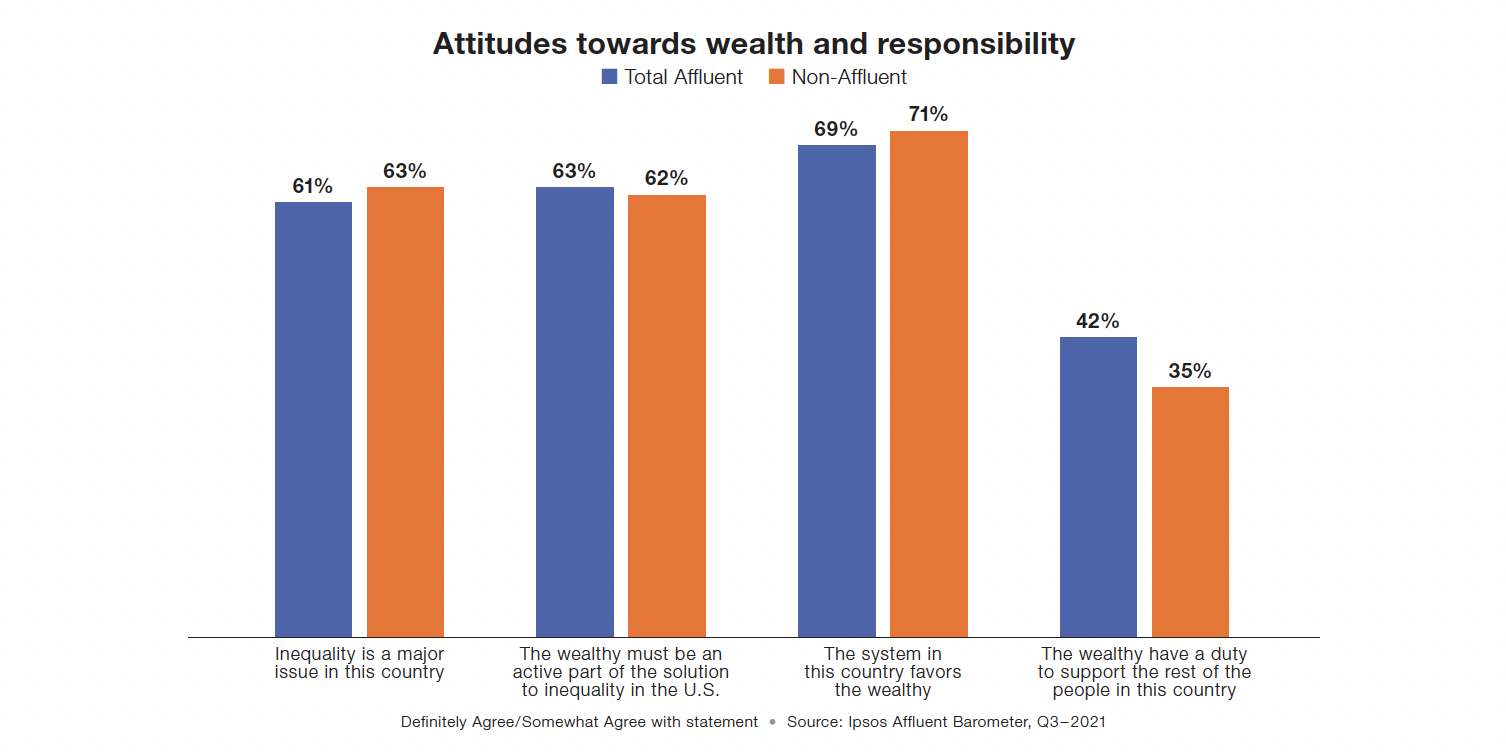
The majority of Affluents (adults in households with income of $125,000 plus) believe that inequality is a major issue in the U.S., according to data from a recent Ipsos Affluent Barometer, and that the wealthy must be an active part of a solution to the problem moving forward. This mirrors the sentiments of non-affluent Americans in this regard as they think about wealth and power. In fact, more than two-thirds of both the Affluent and the non-affluent feel that the system favors the wealthy. It is interesting to note that Affluents are more likely than non-affluents to believe the wealthy have a duty to support the rest of the country.
An image problem for the ultra-rich
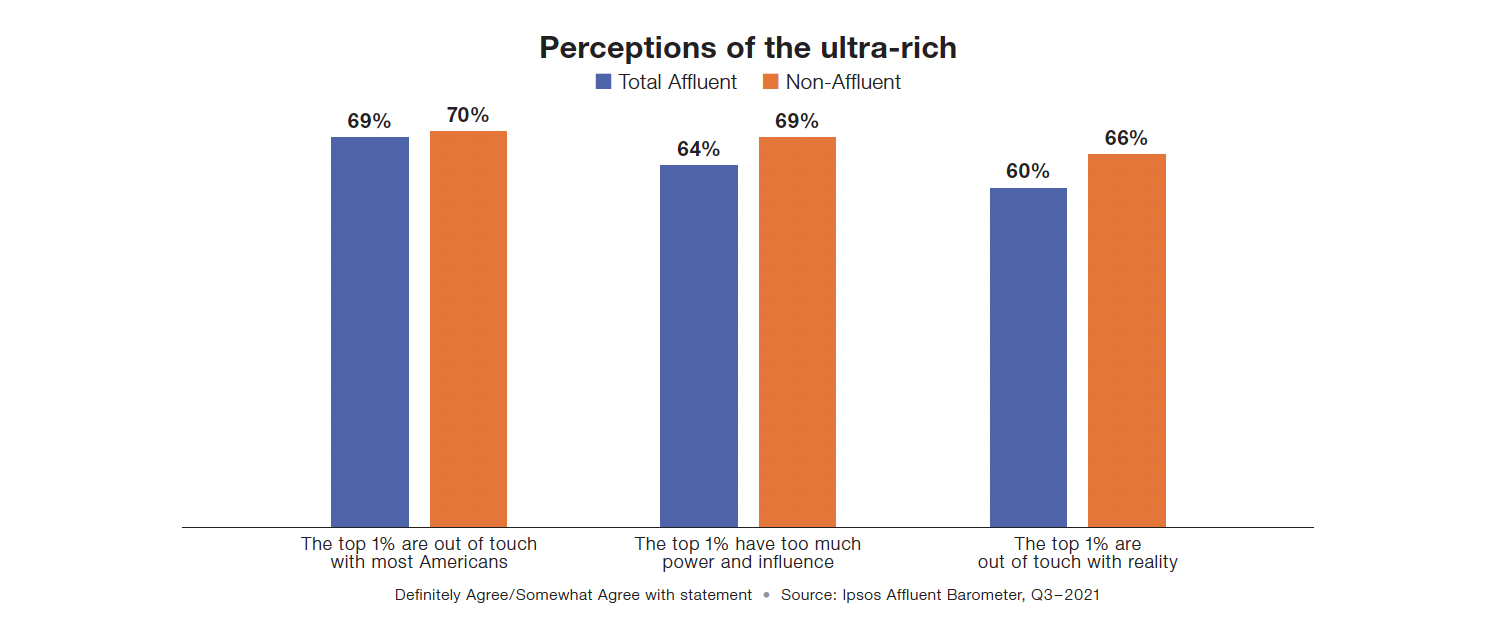
In general, Affluents have concerns about the power and attitudes of the top 1%. These concerns are found in nearly equal measure among non-affluent adults as well. Two-thirds of both groups (69% & 70% respectively) believe that the ultra-rich are out of touch with most Americans and an almost equal number feel that they wield too much power and influence. A significant majority of Affluents say that the top 1% are simply out of touch with reality.
However, the perceptions aren’t completely negative. Close to half of Affluents feel that the top 1% should be respected for their success, and almost 4 in 10 Affluents believe the ultra-rich are contributing their fair share to philanthropic causes. One in three Affluents (33%) feel that the top one-percenters are unfairly criticized, though far more (41%) believe the criticism is justified. These perceptions are not very different from those held by the general population.

Do as I say, not as I do
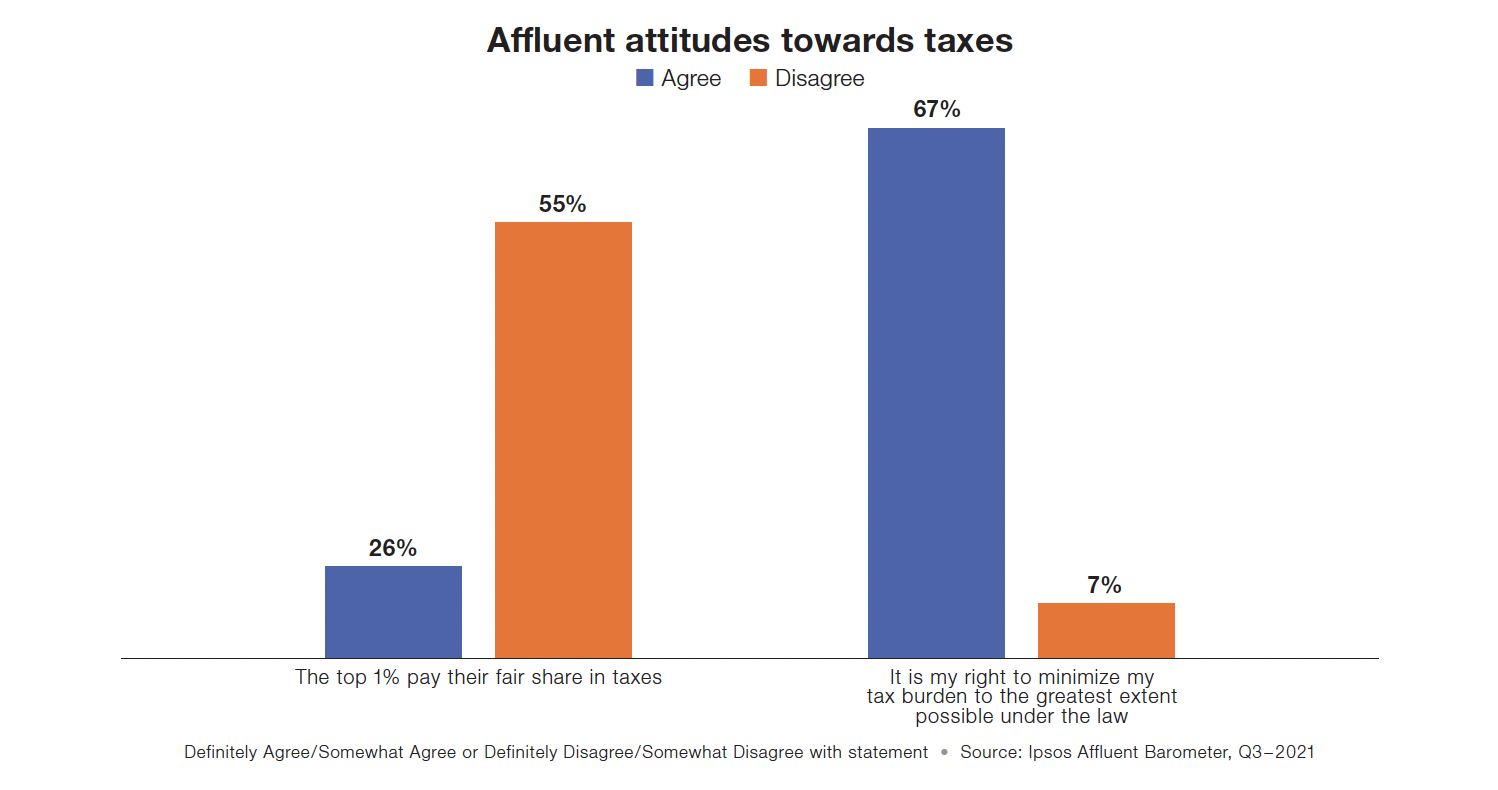
Only one in four affluent Americans feel that the ultra-rich, or top 1%, pay their fair share in taxes, yet almost three times that number (67% of total Affluents) believe that it is their personal right to minimize their own tax burden to the greatest extent possible under the law. Such is the ambiguous relationship of the Affluent towards wealth and the ultra-rich. Affluents, it seems, disapprove of the behavior of the ultra-rich while condoning the same behavior when they do it themselves.
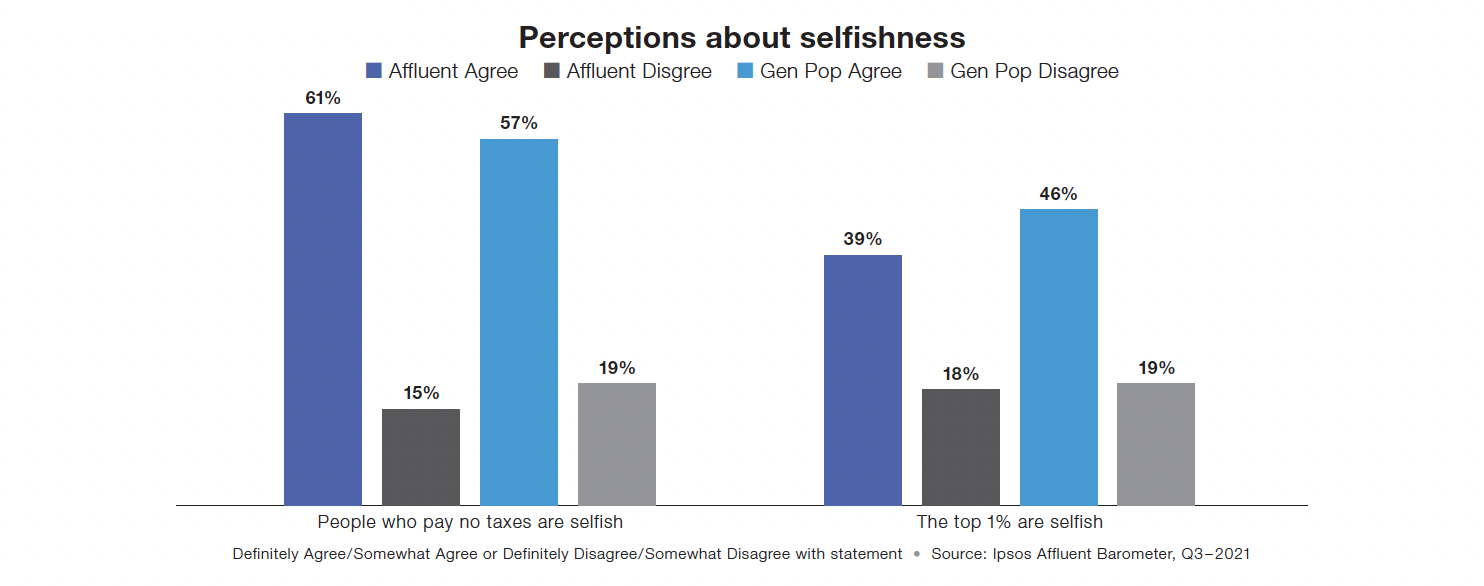
There is a difference, however, when the statement focuses on selfishness. The level of agreement flips, with 61% of the Affluent agreeing with the statement that people who pay no taxes are selfish, while only 39% agreed that the top 1% were selfish in general. A similar dichotomy exists among general population respondents as well.
Here, we see an apparent separation in perception from what behaviors are permissible by law versus what is socially responsible. As pointed out earlier, over two thirds of Affluents feel it is their “right to minimize my tax burden to the greatest extent possible under the law.” How this distinction plays out can be found in responses to statements concerning inequality. Over 60% of Affluents agree with the statements “inequality is a major issue in this country,” “the wealthy must be an active part of a solution to inequality in the U.S.” and “the system in this country favors the wealthy.”
At the same time, what scores highest is agreement among the Affluent in the statement, “my wealth is self-made” (73%). For the Affluent, there is little wrong with achieving wealth and financial success, as shown by the 49% agreement with the statement, “the top 1% should be respected for their success.” What seems to be wrong for Affluents is how the system unequally rewards and protects the ultra-rich. When we look again at the seeming ambiguity of the first two statements regarding taxes, we can infer what Affluents want: a tax code that is fair, where everyone pays their fair share and where using every available means to reduce one’s taxes is within a system of taxation that is not distorted to excessively benefit the ultra-rich.
The issue of fairness is key to Affluent attitudes. While Affluents believe their own wealth was fairly acquired, the data implies that they also believe that the power accrued by excessive wealth goes against their notion of fairness, distorting the system, and isolating the ultra-rich from everyone else’s reality. What could be a corrective? For the Affluent, one could infer that fairness comes from external intervention, not from individual restraint unevenly exercised. It is the “system” that bears the most responsibility and it is the “system” that must provide the remedy.
![[WEBINAR] How winning brands are making themselves essential in a tight economy](/sites/default/files/styles/list_item_image/public/ct/publication/2026-09/thumbnail-templates%20demo_3.png?itok=0YmowUKN)

