
The Experience of Race for Affluent African Americans
One might assume that greater wealth would reduce the experience of bias. The reality is that affluent African Americans experience bias at higher levels than non-affluent African Americans. An Ipsos Affluent Survey Barometer reveals that bias is never far from the minds of affluent African Americans, as it seemingly touches all aspects of their lives.
Recognizing this reality is essential to any marketer wanting to connect with the affluent African-American consumer. How do the attitudes towards race differ for the affluent subgroup as opposed to the non-affluent? Are these attitudinal differences based on a difference in perception or on a difference of lived experience? Ipsos data offers some surprising insights into both.
Let’s start with data from the Ipsos Affluent Survey Barometer on racial attitudes, looking at both affluent and non-affluent African Americans, where we define African Americans living in households with an income of $125,000 or more as affluent. Affluent African Americans who regularly interact with people of a different race are more likely than their non-affluent counterparts to agree that race relations are no better than they were ten years ago, and that anti-black sentiment has become more prevalent in the past four years. Affluent African Americans are more likely to agree that the Black Lives Matter protests have been positive for the country. In addition, more affluent African Americans agree with the statement, “I am afraid that my children will be in danger simply because of who they are” than the non-affluent.
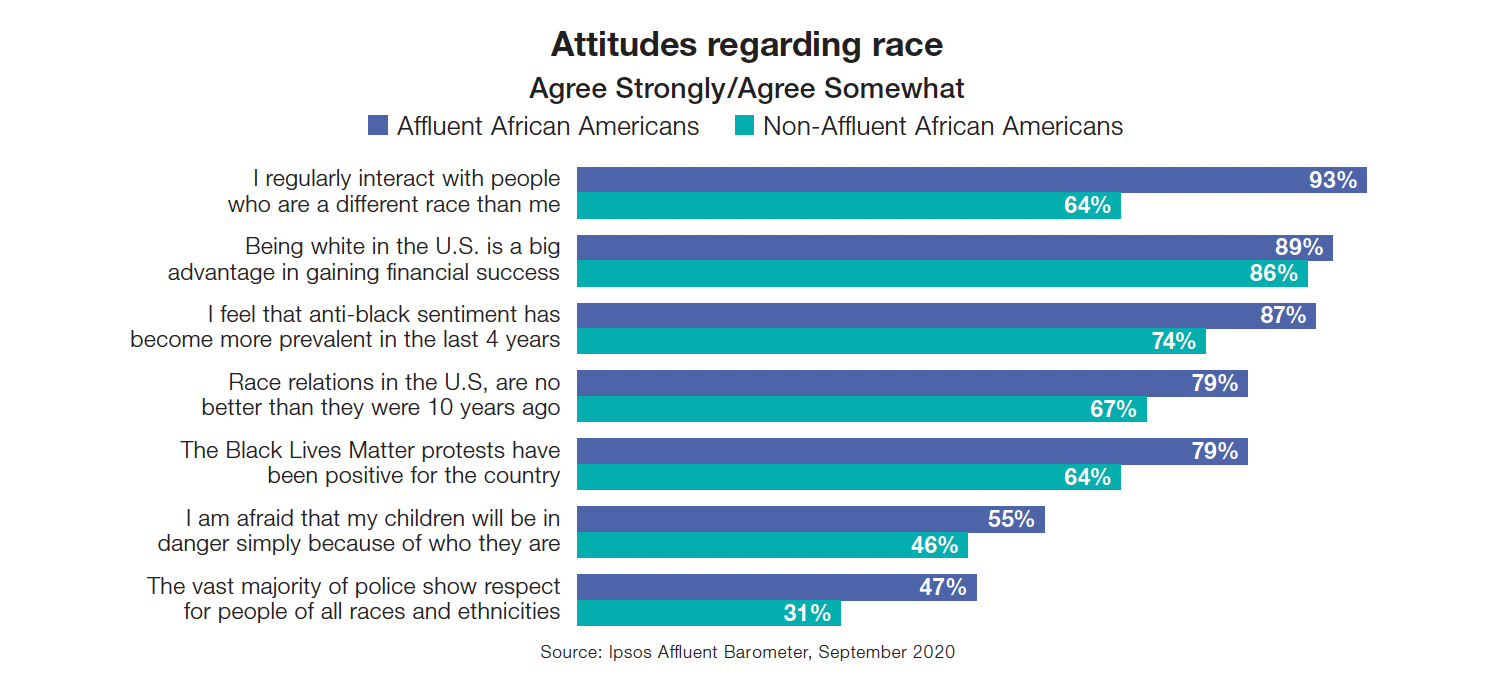
Not all the attitudes are dissimilar. An equal percentage of affluent and non-affluent African Americans agree that being white in the U.S. is a big advantage in gaining financial success and that racial equality begins with ensuring education opportunities for everyone. These two groups have a third similarity: Their circle of friends is mostly of the same race.
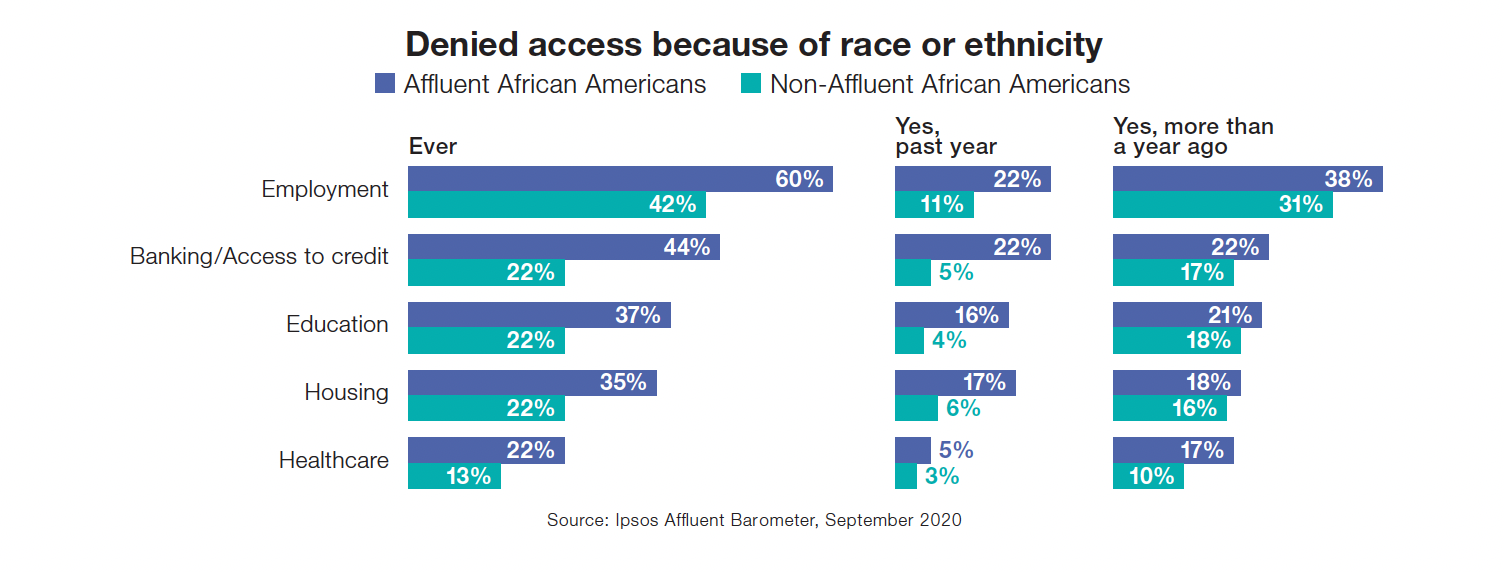
What is behind both the similarities and differences in these attitudes? Data from the Barometer and the Axios-Ipsos poll (which breaks out those in households earning $100,000 per year or more) provide some of the answers. In the Barometer study, more than one in three affluent African Americans reported being denied housing, including 17% who experienced housing discrimination in the past year. Being denied access to employment (whether in one’s current job or when seeking a new one) registers the highest incidence for both affluent and non-affluent African Americans. When asked about facing employment discrimination in the past year, affluent African Americans are twice as likely to report that experience. Access to educational opportunities and banking/access to credit in the past year show a four- to five-times differential between affluent African Americans and non-affluent.
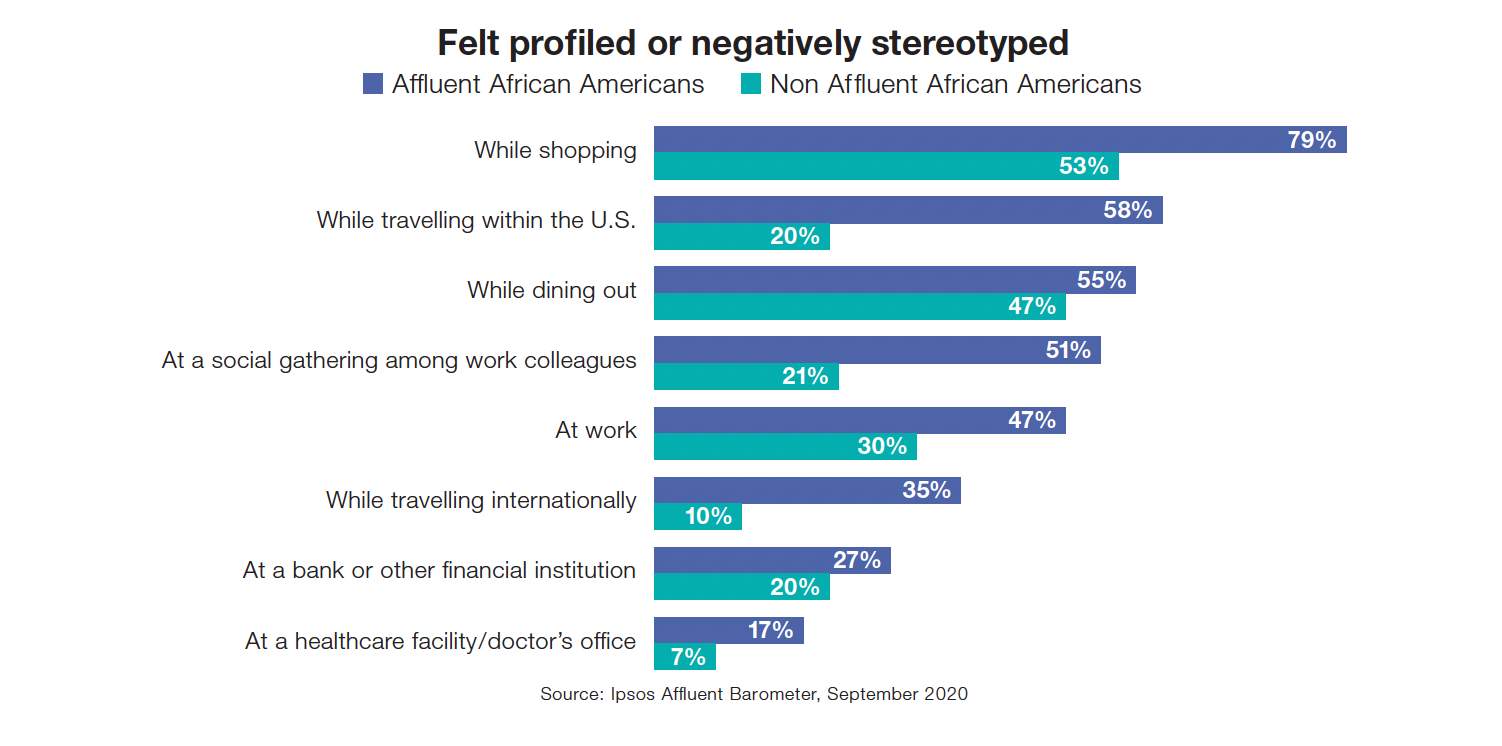
Affluent African Americans also report higher instances of racial profiling and stereotyping than non-Affluents.
The disparity in treatment is most acute for affluent African Americans while shopping. The Axios-Ipsos poll provides an even more detailed portrait of the shopping experience for affluent and non-affluent African-American consumers. When asked, “have you ever experienced being followed or watched by a store employee?” over three quarters of Black respondents with a household income of $100,000 or more said yes. That compares to just under two thirds of Blacks under that threshold and just over one third of the total. When asked if they have ever been treated rudely or poorly by store employees, nearly three quarters of $100K+ African Americans said yes, as opposed to 57% and 58% respectively. One-fifth of African Americans, regardless of income, respond yes when asked if they have been mistakenly accused of shoplifting or stealing. That percentage is twice that of the total, and most tellingly, more than three times that of whites with a household income of $100,000 or more.
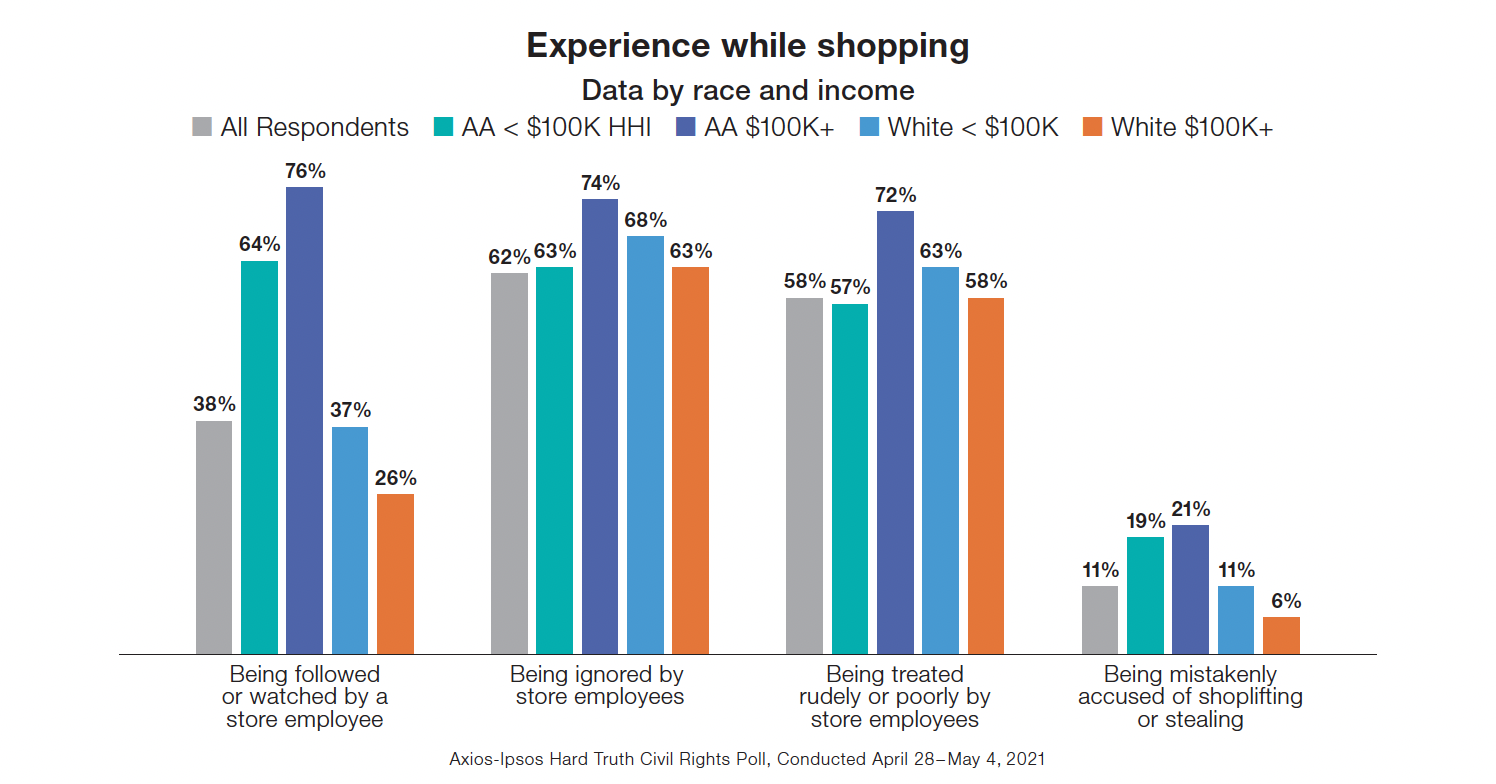
The differences in the shopping experience between $100K+ African Americans and their $100K+ white counterparts highlight a key factor concerning perception. When we look at data on affluent consumer attitudes from the 2021 Fall Release of the Ipsos Affluent Survey USA, which uses the same affluent definition as the Barometer, we see that the shopping expectations of affluent African Americans are on par with or exceed those of Affluents as a whole.
Forty-nine percent of affluent African Americans and 61% of affluent African-American Millennials agree or tend to agree with the statement, “I look for superior service when I shop,” compared to 48% of total Affluents. Thirty-seven percent of affluent African Americans and half of affluent African-American Millennials agree or tend to agree with the statement, “it is important for me to shop at stores that provide a high level of personalized attention.” Here, we see the tension between the levels of service affluent African Americans believe they deserve and their lived experience.
When looking at the experience of race and racial attitudes among Affluent African Americans, we find that two of the basic assumptions around race are in error. Increased wealth is associated with an increase, rather than a decrease, in experiences of bias. Increased interaction with people of a different race for affluent African Americans does not create a more positive view of race relations, and in conjunction with their negative experiences, it may, in fact, heighten their negative perceptions. There’s no evidence that either their wealth or their increased interaction with other groups has brought about any greater likelihood of friendships across racial lines for affluent African Americans. The disconnect between the reality of Blackness and the expectations of what affluence should deliver creates a sense of more bias and stereotyping rather than less. The reality is that bias seemingly touches all aspects of their lives. Recognizing this reality and building a relationship strategy based on this fact is essential to any marketer wanting to connect with the affluent African-American consumer.
So, what are the implications of this contradiction for marketers? One is that the Affluent African-American consumer is a hyper-conscious consumer, who is aware of the gap between the treatment they believe they deserve and what they receive. As a result, they closely monitor personal interactions. Life experience has shown them that they are undervalued as a customer because of their race. Brands and those who represent them, must go into any interaction with the African-American consumer with that knowledge. Overcoming previous negative experiences by providing superior customer service must be the goal. Achieving that goal and being known as an equity champion will create ongoing relationships with a loyal and active part of the affluent consumer landscape.
![[WEBINAR] How winning brands are making themselves essential in a tight economy](/sites/default/files/styles/list_item_image/public/ct/publication/2026-09/thumbnail-templates%20demo_3.png?itok=0YmowUKN)

