
Reaching and Researching the Changing Viewer
What is the future of TV content and how can brands leverage it to reach consumers and audiences? Even before the pandemic, our viewing habits were changing. Quarantine helped drive us back to TV content. As we “go back” into the real world, Ipsos research suggests that we will keep a foot in this world, embracing the new convenience and variety of entertainment and shopping we are now accustomed to. And we will push forward into the metaverse.
In this new reality, creators, platforms, companies, brands and even our cars are competing for the audience’s attention. Time is currency, but it’s converted into cash as we buy goods through social media, or into virtual currency and spent on virtual sneakers for our avatars.
Revisit and share our on demand presentations featuring insights exploring what new behaviors are going to stick, what’s coming next and how to capture, captivate and capitalize the finite resource that is the audience. Over 20 Ipsos and industry experts come together to take on the following questions:
- Will the cord-cutting unbundlers re-bundle?
- How can brands work in the new creator-driven ecosystem and measure success?
- Has brand creative evolved enough to take advantage of digital formats?
- And how will the metaverse reshape the way we are entertained?
Revisit the recordings here, or read our report on what we learned now.
Subscriptions, streaming and IP have changed the consumer mindset. A metaverse strategy needs a long-term view. And when it comes to Gen Z, the way they consume entertainment is so different it’ll make your head spin.
Those were some of the insights at Ipsos’ October 13 summit on the future of media content, an expansive discussion offering clients an exclusive look at reaching audiences in an unprecedented era. Attendees learned which consumer behaviors are going to stick, what’s coming next and how to capture and captivate the finite resource that is the viewer.
A panel of all-star experts and creators joined Ipsos hosts Audra Priluck, senior vice president of media development, and Christie Kawada, executive vice president, U.S., media development, and other Ipsos experts. Here are six takeaways from the day.
- Generation Z doesn’t care how polished your content is, as long as it’s entertaining—and authentic. In a panel discussion with a group of Gen Z teens, Ipsos tried to get to the bottom of what they want from creators. One referred to the group as “the guinea pig generation,” as they are the first generation “raised on screens” and, as she said, we won’t know how that experiment turns out until they are adults. The group all agreed that they “don’t care at all” if the entertainment they’re watching is amateur content or something produced professionally—but time is very much a factor in their spur-of-the-moment choices. “If I have five minutes, I’ll go on TikTok. If I have half an hour, I’ll go on Netflix,” a panelist told Ipsos qualitative research strategist Elizabeth Jarosz.
 As for brands trying to reach these viewers, authenticity is key. “Don’t fake anything. That’s how you lose our support real quickly,” one Gen Z teen warned. “Be real as a company. Just be open and honest.”
- Individual creators can grab a bigger audience than prime-time network TV. These superstar creators are usurping the traditional creator relationships with the studios or on their own platforms through YouTube, Patreon and more. Robin Fontaine, head of product marketing at Patreon, says that as creators gain more ownership over their own creative outputs, they’re going to want more ownership over their audience. “They’re going to be less willing to live and work at the whim of big platforms who ultimately are serving advertisers. They’re going to want ad-free spaces where they can build community with their biggest fans.”
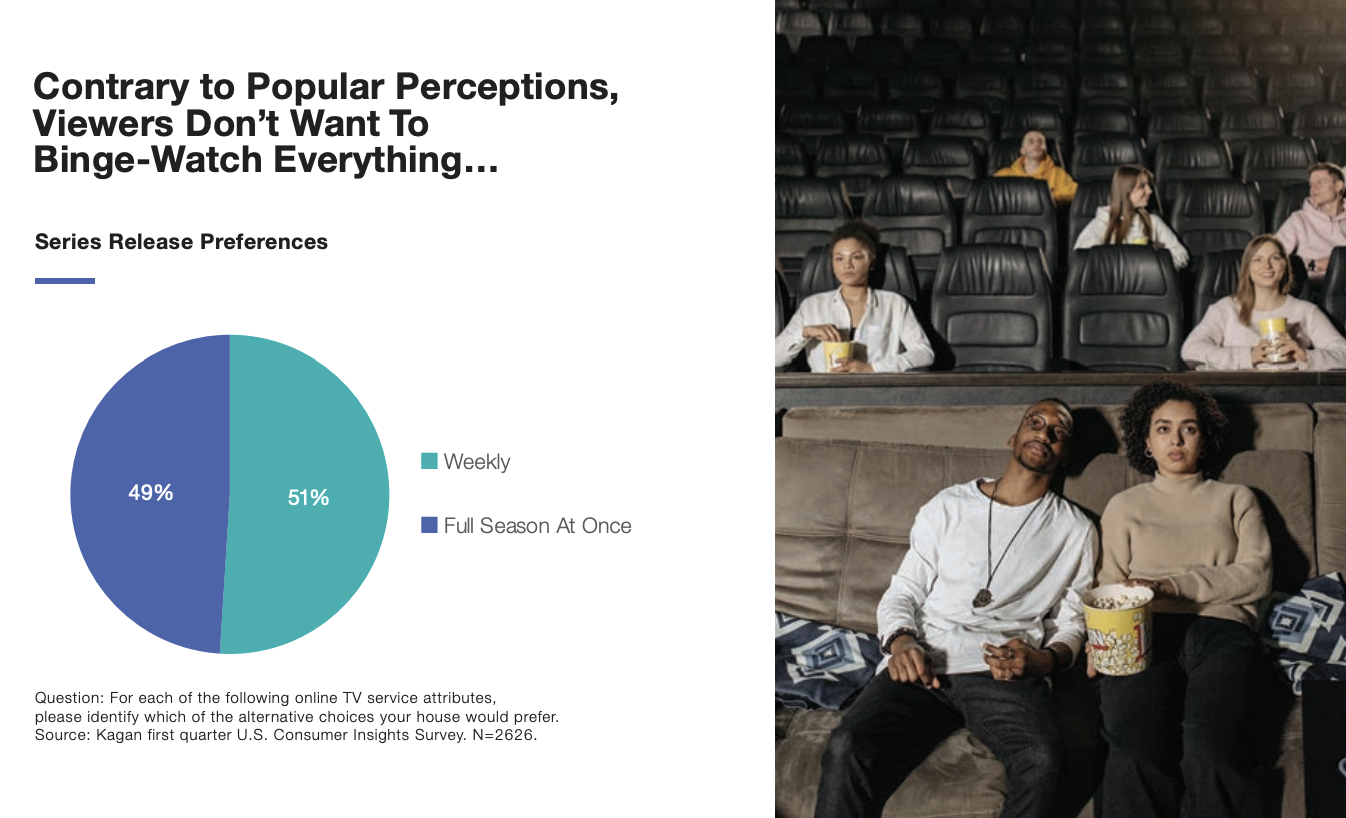
- Just because streaming exists doesn’t mean linear TV is dead. Nkechi Okoro Carroll, showrunner and executive producer of “All-American,” said she is still a “huge network broadcast TV fan,” noting wryly, “I still watch ‘General Hospital’ every day.” And the shows she is creating still live in the linear world, she continued, even as they’ve had “amazing second windows” on streaming services. “I think it’s something about the way I grew up. There’s something about the anticipation of having to wait another week for that ‘Dawson’s Creek’ episode to drop.”
- Gamification is changing how entertainment is made and consumed. Lori Schwartz, a nationally recognized technology catalyst and CNN Technology contributor, says gamification of entertainment can be found everywhere—from VR headsets to exercise machines that gamify the experience of working out. Some exercise machines now offer the experience of “literally being a character in a game while you row, which is motivating folks to get their fitness on,” said Schwartz.
- There’s no one-size-fits all strategy for digital advertising. Creators can’t go on with a monolithic attitude to communication that appears in digital media. Digital channels and placements are very diverse and demand a more nuanced approach, and there is a need for brands to grow up in the digital advertising space. “We have really evolved and grown over even the last few years in how we think about our briefing process,” said Barb Williams, the head of brand marketing and regional activation at Sonic. “Specifically, who our core targets are and where we speak to them—which channel, which medium?” That’s a big change, she said, from “taking linear TV creative and just cutting it down into a sizable fit for a different platform (like digital).

- The metaverse—interactive spaces in digital environments like games—will reshape the way we’re entertained, and brands should be prepared to do it right. Brands can’t afford to ignore it, but they need to be deliberate and come in with a well-thought-out plan, said Jeff Roach, president and chief strategy officer at SCS. “You’ve got to do it for the right reasons,” said Rubin. “This is a community. You have to be organic and tell a story that is true to who you are.
- Just checking the box—‘hey, I did something in the metaverse’—is really short-sighted.” But ignore it and you risk missing the bus, as many brands did with TikTok. Metaverse expert Cathy Hackl noted “it’s still very early” when it comes to the metaverse, and that “we’re using words of today to describe the future. If things seem strange, don’t feel stupid—we’re all in this together. I want people to feel comfortable with the term.”
![[WEBINAR] How winning brands are making themselves essential in a tight economy](/sites/default/files/styles/list_item_image/public/ct/publication/2026-09/thumbnail-templates%20demo_3.png?itok=0YmowUKN)

