
Where do luxury brands fit in the metaverse?
Across the metaverse and Web 3.0, digital communities are springing up around things like bored apes, nouns and digital dumpling pets. In other words, NFT studios are building followings of collectors eager to get in on the latest internet-based, blockchain-built trend with the goal of building value and wealth in a newfound market.
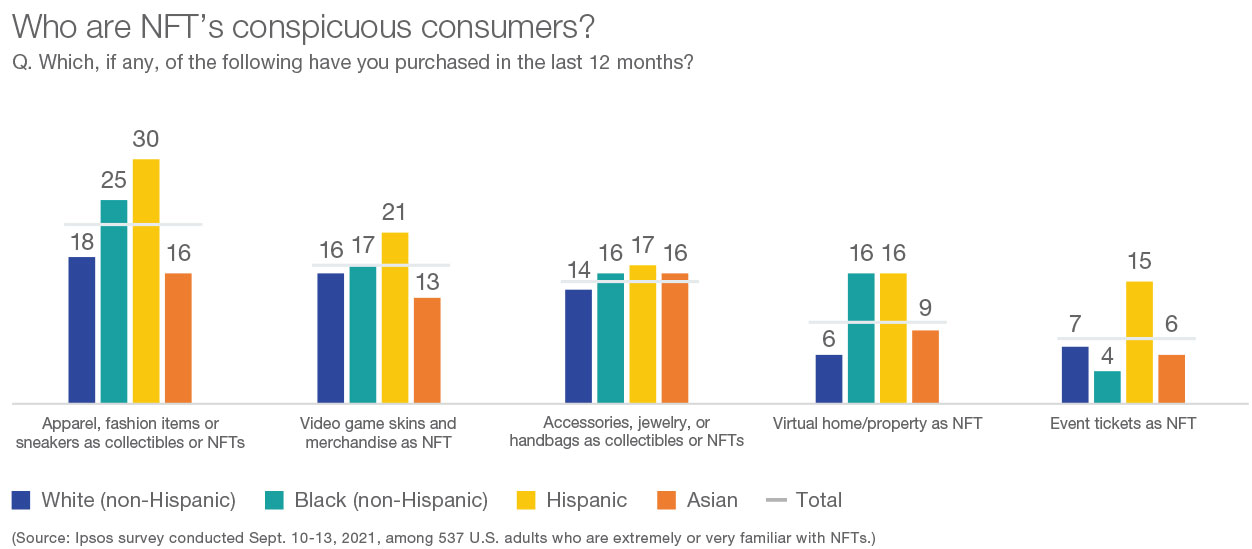
Adoption today is low, but those who are buying NFTs are doing so for a mix of “investment” and “fun.” Ipsos data shows that Black and Hispanic communities, who are often early adopters of tech and bellwethers of cultural shifts, are buying at higher rates in categories like apparel and fashion NFTs.
So far, many of these communities are super clubhouses for the ultra-wealthy. To join the Noun community, for instance, all you have to do is purchase one of the Noun NFTs in a daily auction. The typical price, however, for the NFT of an 8-bit avatar with distinctive eyeglasses, is currently much more than the median price of a U.S. home. While it may sound odd, virtual real estate in some corners of the metaverse is selling for staggering sums.
Meanwhile, traditional luxury brands like Balenciaga, Gucci and Ralph Lauren are finding that they can sell virtual versions of their analog goods in the metaverse for higher price points. Digital is becoming just another sales channel, but virtual is a new world altogether.
Acquiring virtual goods in the metaverse can be straightforward on a gaming platform like Roblox or Fortnite. Buying an NFT today, however, isn’t easy for most. It’s a complex web of accounts, currencies, conversions and acronyms. As with the internet in the early- to mid-’90s, assume, then, that the NFT experience will likely get better, and fast.
In the short term, there is upside, perhaps significant, for luxury brands to start setting up their virtual shops. That is, if they can do so authentically and in partnership with the nascent communities in these spaces. Longer term, some brands will likely exist only virtually, some only in the analog world. Some partnerships will emerge to help span the two. And legacy brands will need to determine where the balance lies for them. But consumers will likely move seamlessly between them, and plausibly even do more of their spending in the metaverse.
This article was originally published in What the Future Wealth, a research magazine by Ipsos highlighting Americans’ unique view of wealth and the influence that digital, diversity and the Great Wealth Transfer will have on how we pass, share, spend and invest it. Download the magazine here.
![[WEBINAR] How winning brands are making themselves essential in a tight economy](/sites/default/files/styles/list_item_image/public/ct/publication/2026-09/thumbnail-templates%20demo_3.png?itok=0YmowUKN)

