
Why All Companies Need To Care About Misinformation
KEY TAKEAWAYS:
- Misinformation is among the top societal concerns in the U.S. today, and along with potential broad societal harms, fake news has the potential to directly harm individual businesses.
- People are more likely to believe misinformation if it aligns with their pre-existing sentiments, meaning that some industries are more susceptible than others based on consumer’s readiness to believe negative news about them.
- Social media is the industry most at risk in this regard, with the highest proportion predisposed to believing negative news, and the lowest portion predisposed to believing positive news.
- All industries face some risk from misinformation—understanding the underlying drivers of trust and working to strengthen performance against these items can build benefit of the doubt and mitigate this risk.
Why misinformation matters
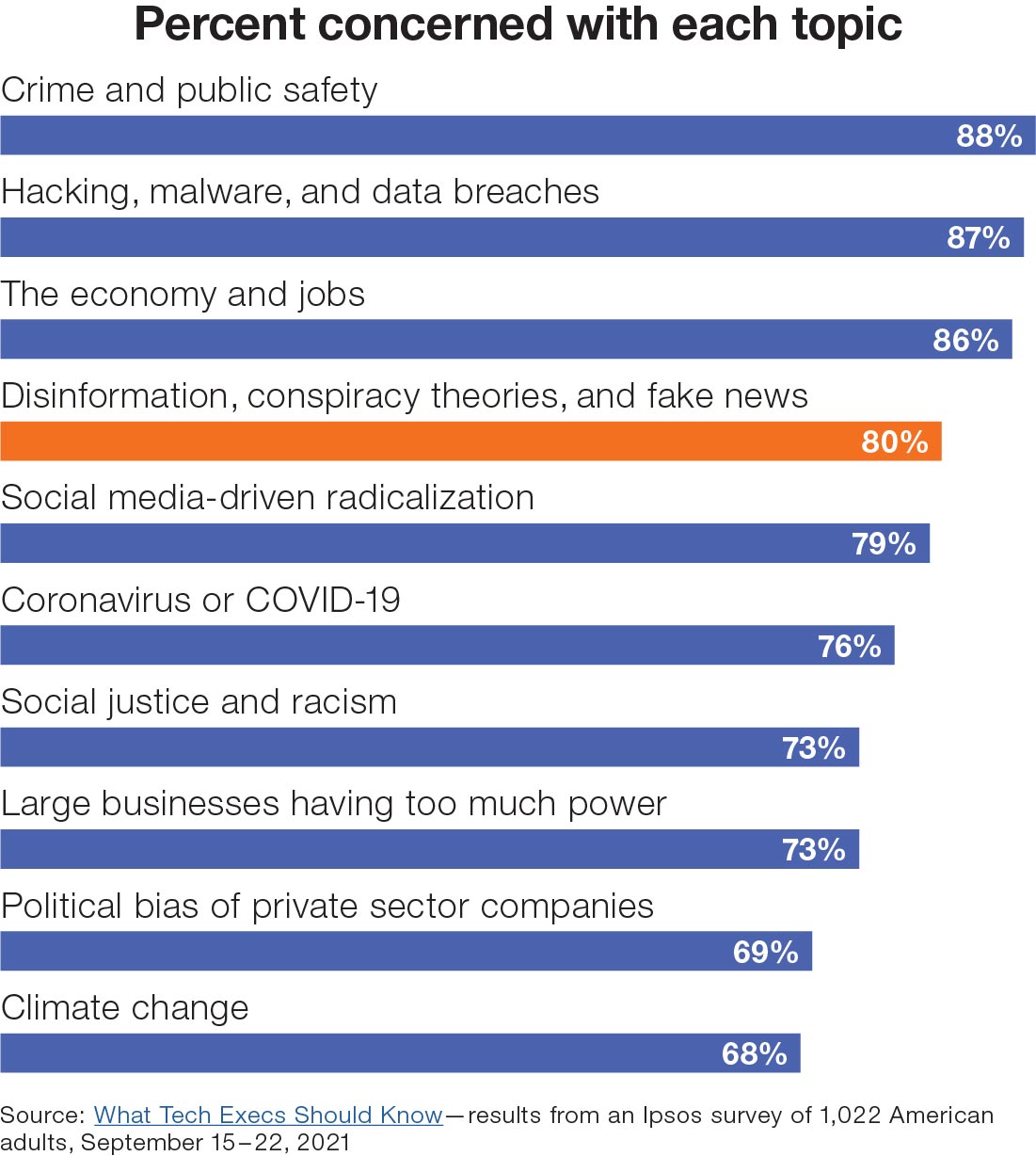
Disinformation, fake news, and conspiracy theories rank among the top societal concerns for Americans. In the hierarchy of concerns this is behind only crime, hacking, and the economy, and is a worry to a higher proportion of Americans than COVID-19, social justice and racism, and climate change.
Aside from the well-documented broad societal and political impacts of misinformation, individual businesses can be targeted and harmed by misinformation as well. Companies are increasingly worried about the potential for negative fake news to hit their stock prices, as happened when a story went viral purportedly showing a Tesla self-driving car crashing into a robot at a consumer electronics show.
A more extreme impact was seen back in 2013, when a single fake tweet reporting that then-President Barack Obama had been injured in an explosion led to a $130 billion dip in the value of the stock market. And of course, the past few years have seen a steady stream of COVID-19 vaccine misinformation fueling vaccine hesitancy and distrust of the companies behind the vaccines.
Two factors which can further exacerbate the impact of misinformation relate to people’s own inherent biases.
- Firstly, an Ipsos study found that people have a far higher opinion of their own ability to identify fake news than they do of the public overall.

- Political outlook is also a factor in overconfidence when it comes to spotting fake news, with partisans believing that their own party is less susceptible to false information than the other is.
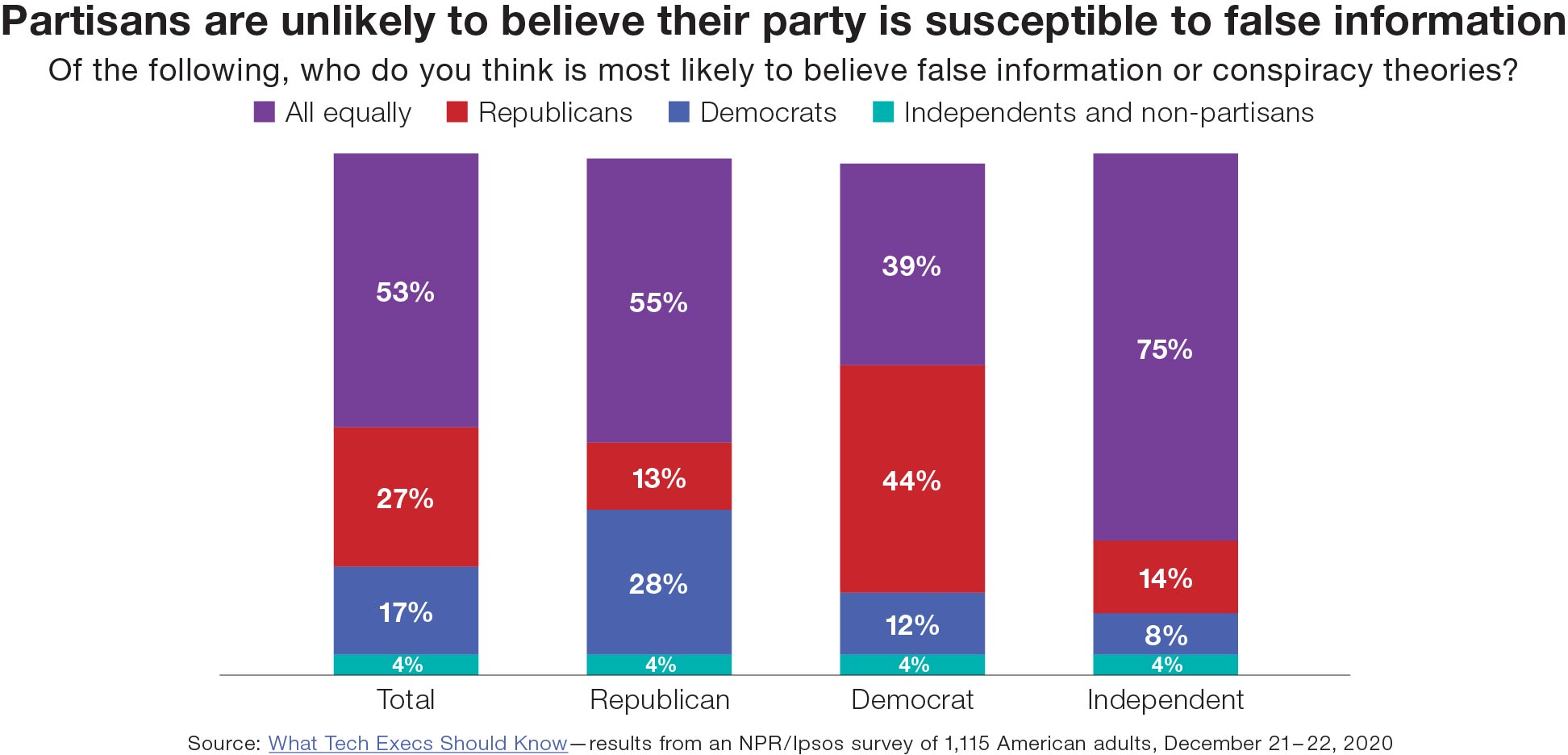
This faith in one’s own ability to identify fake news, coupled with the impact of an individual’s pre-existing worldview, leads to a more ready acceptance of news that aligns with a person’s expectations: people are predisposed to believe misinformation when it conforms to their views on a topic.
Which industries are most at risk?
For businesses then, the risk of experiencing a negative impact from misinformation is linked to how predisposed people are to believe negative stories about that business as opposed to giving them the benefit of the doubt.
This is bad news for social media companies in particular, as an Ipsos survey has found that this is the sector where people are least predisposed to believe positive news stories, and most predisposed to believe negative ones.
However, with more than four in ten saying that they would be likely to believe negative news stories about companies in any of the sectors covered, it’s clear that all businesses face some potential for harm as a result of misinformation spread about them.

Interestingly, despite high profile accusations from prominent Republicans of a liberal bias in social media, Democrats are more likely than Republicans to say they would believe negative news about the sector (59% vs 51%). It’s also interesting to see that the technology sector overall fares considerably better than social media, with a higher proportion likely to believe positive stories than negative ones when it comes to tech companies.
Ipsos’ Global Trustworthiness Monitor, an in-depth analysis of trust worldwide, shows a similar pattern in trust to what is seen with predisposition towards believing positive or negative news, with social media again the poorest performing sector covered. Technology is the most trusted sector in this study, although it has experienced a decline over the past few years.

What does this mean for businesses?
Social media companies (as well as the tech sector as a whole and traditional media companies) are not just at risk from misinformation, but are implicated in the dissemination of misinformation in the first place. Therefore, as well as taking action to protect themselves from fake news about them, companies in these sectors are expected to take an active role in combating misinformation.
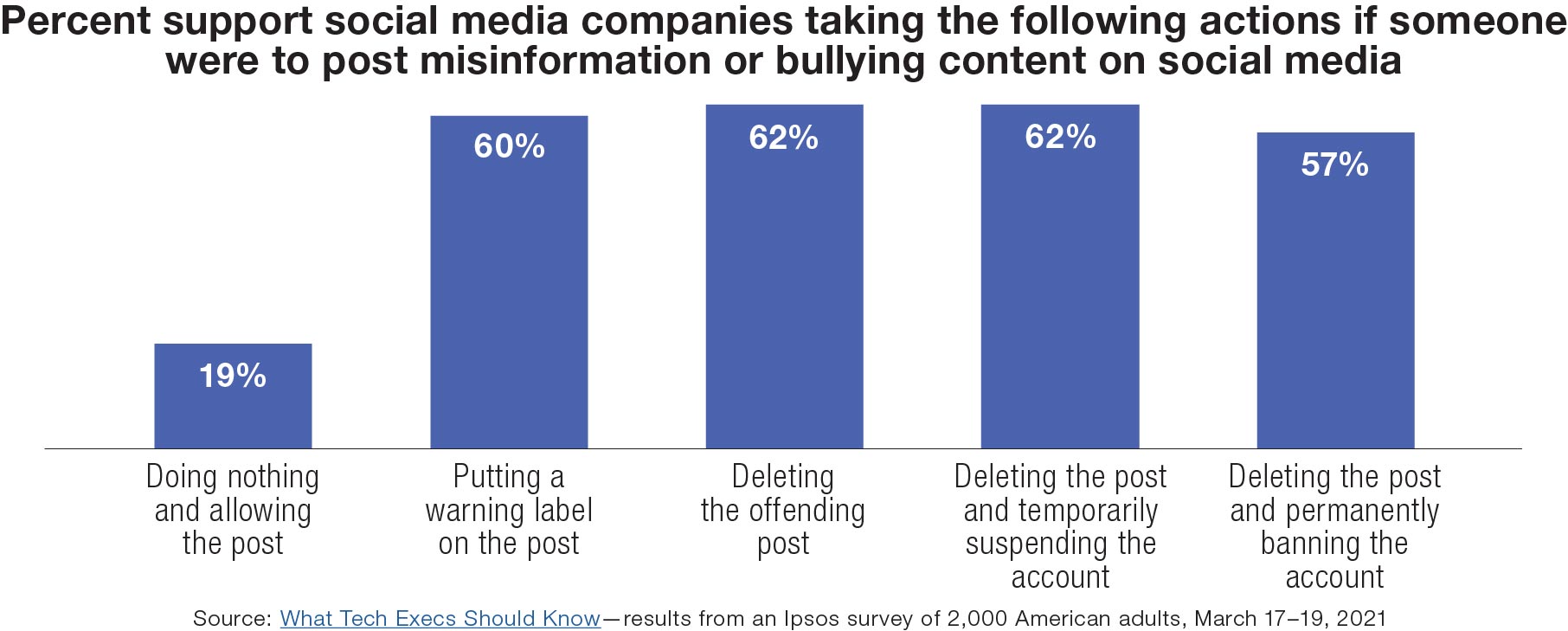
Combatting misinformation is a tricky needle to thread however, with the need to balance actions taken against protecting freedom of speech. This is made even more difficult given how political polarization drives different views of what constitutes harmful misinformation in the first place. The public do feel this is a responsibility of the companies involved though, as there is relatively little support for government intervention and regulation and stronger support for social media companies taking actions to limit or remove misinformation or bullying from their platforms.

What about the other companies, those that may not be implicated in the spread of misinformation, but are still concerned about the potential for harm to their business from misinformation? For these companies, the key is growing trust to help increase the likelihood that they will be given the benefit of the doubt in the face of misinformation spreading about their business.
Understanding reputational strengths and weaknesses can help to identify areas where action can be taken to strengthen perceptions and build benefit of the doubt. It’s important to understand these factors not just amongst the broad general population, but among key stakeholder groups like investors, employees, journalists, policymakers, etc.
Better understanding not only the overarching drivers for trust in your sector, but the specific drivers of trust for your firm, can make the difference between communications that get lost in the crowd and communications that are authentic, align with your company’s values, showcase the initiatives and actions your firm is taking, and break through the noise. Creating a strong, tailored, business and communications plan needs to be navigated carefully and thoughtfully, and Ipsos can help.
![[WEBINAR] AI in Higher Education: How AI Is Reshaping Teaching and Learning](/sites/default/files/styles/list_item_image/public/ct/event/2026-10/How%20AI%20Is%20Reshaping%20Teaching%20and%20Learning.png?itok=XYdLaI-4)

![[WEBINAR] Winning B2B Buyers: AI Gets You Considered; Trust Gets You Selected](/sites/default/files/styles/list_item_image/public/ct/event/2026-10/Winning%20B2B%20Buyers%20AI%20Gets%20You%20Considered%20Trust%20Gets%20You%20Selected.png?itok=Q4kElwY2)