A last-minute study guide to understand the 2026 midterms
If there’s one thing you need to know about the 2026 midterm elections, it’s that a wide range of factors – election polling, prediction markets, and historical trends – all point to a favorable year for the Democratic Party.
But how did we get here, and what else will matter on Election Day?
Below are the trends you need to know heading into the 2026 midterms.
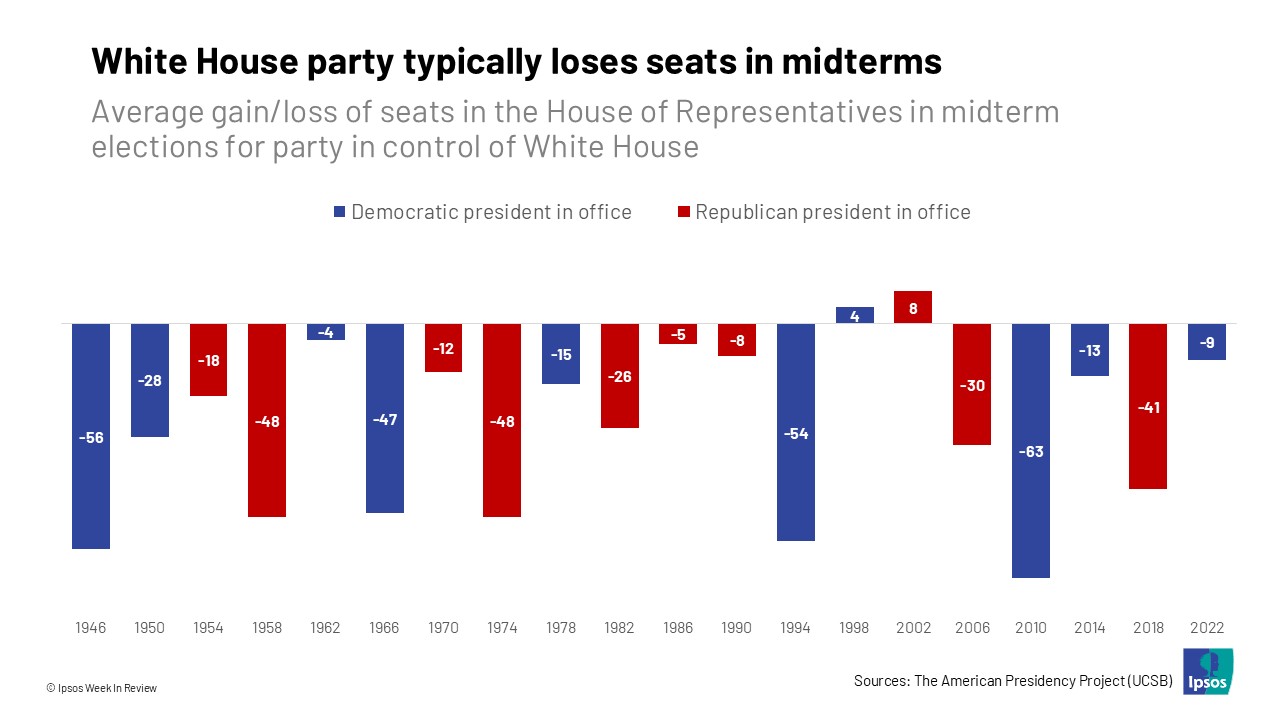
1. History doesn’t favor the White House. Republicans were facing an uphill battle from the outset. Since 1946, the party in charge of the White House loses an average of roughly 25 seats in the House in midterm elections. Redistricting complicates things, but a swing in line with the historical average would be more than enough to flip the House from Republican to Democratic control.
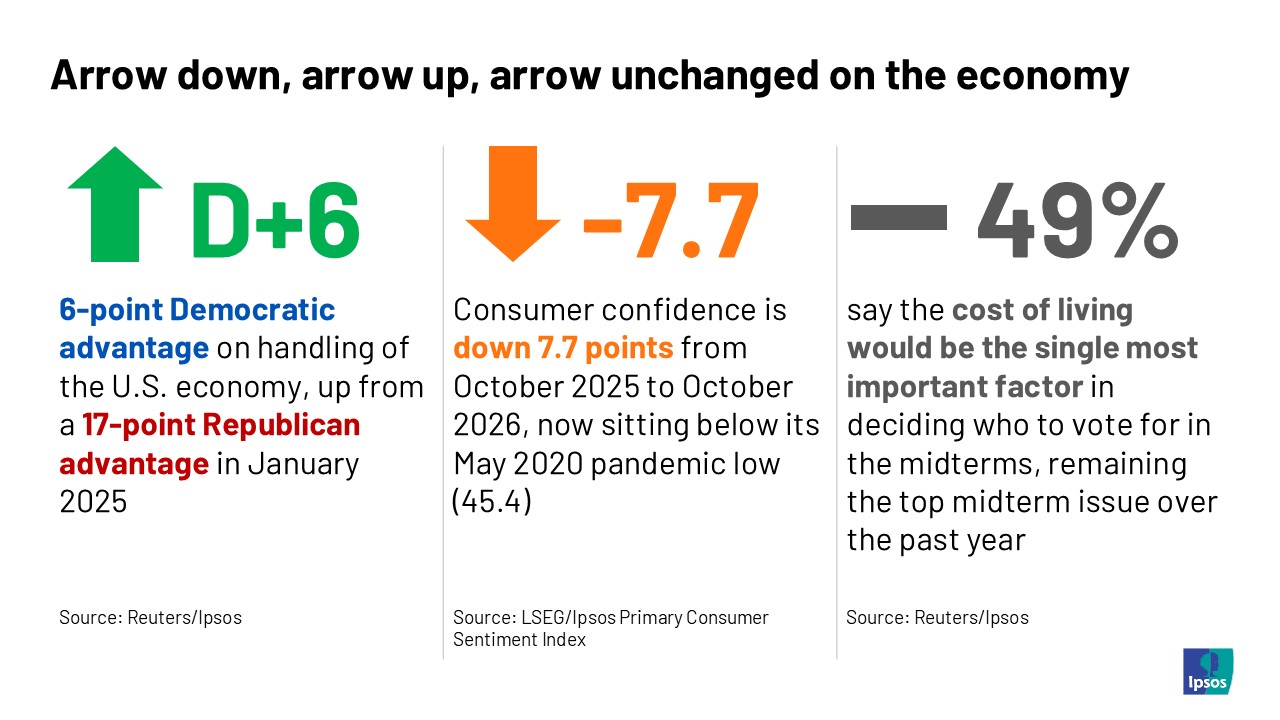
2. Arrow down, arrow up, arrow unchanged on the most important issue of the midterms. Arrow down: the economic vibes. Consumer confidence has declined sharply in recent months, while a rising share say the U.S. economy and their cost of living are on the wrong track. Arrow up: the nation’s level of trust in the Democratic Party’s handling of the economy and the cost of living. Unchanged: the importance of the economy and the cost of living in voters’ minds.
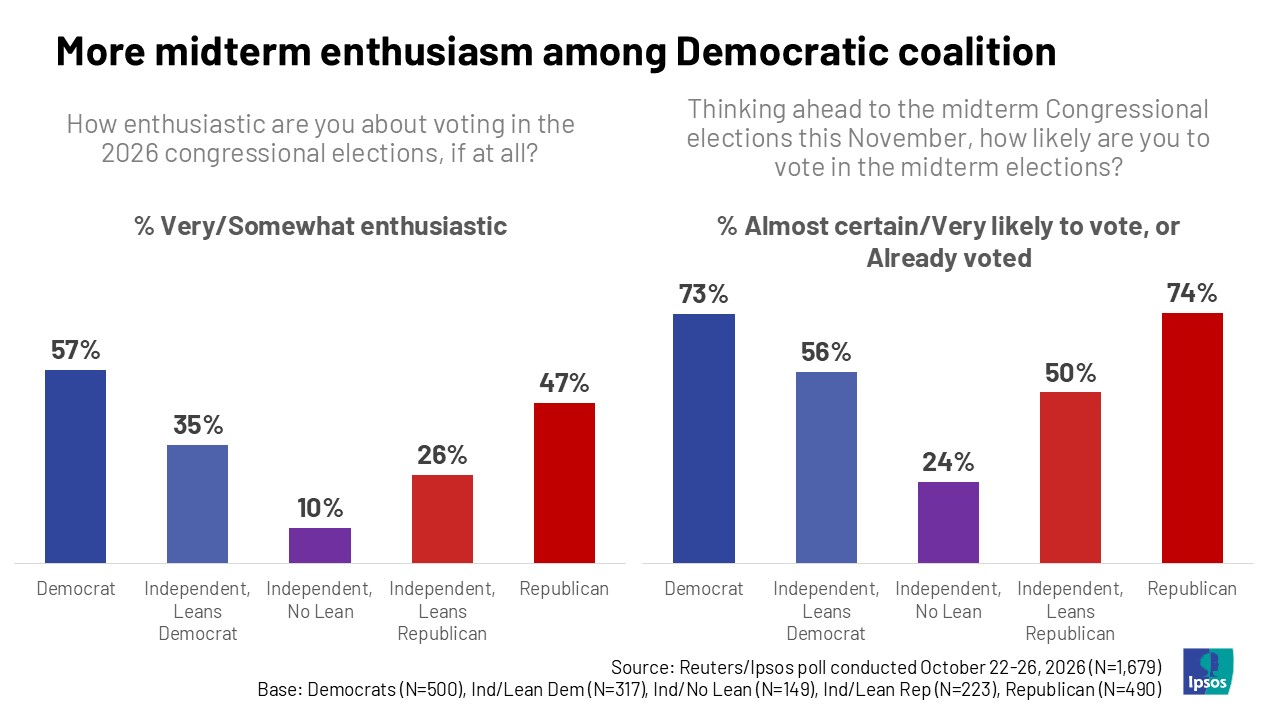
3. Voter enthusiasm favors Democrats. In midterm elections, voter turnout is king, and enthusiasm is a vital aspect of turnout. Right now, Republicans lag in enthusiasm, but not in self-reported likelihood to vote. The key question for Republicans is whether they can end up mobilizing these less enthusiastic voters.
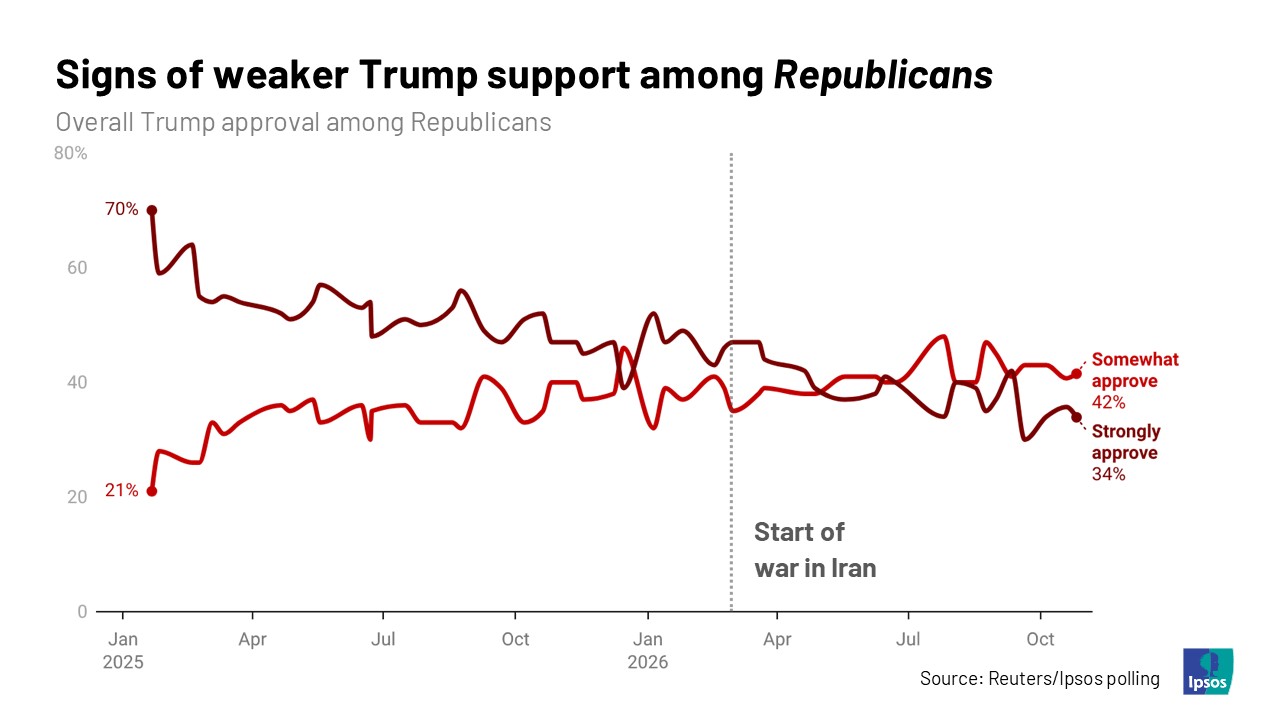
4. Softening Republican support for Trump. Trump’s overall approval rating has declined a little more than 10 points since his inauguration. At a macro level, the partisan pattern in Trump's support looks about the same as it did at the start of his presidency: Democratic support remains low, Republican support remains high, and independents remain somewhere in the middle. But dig one layer deeper, and it’s clear that Republican support is not as intense as it once was. This is one factor behind the relative lack of Republican enthusiasm.
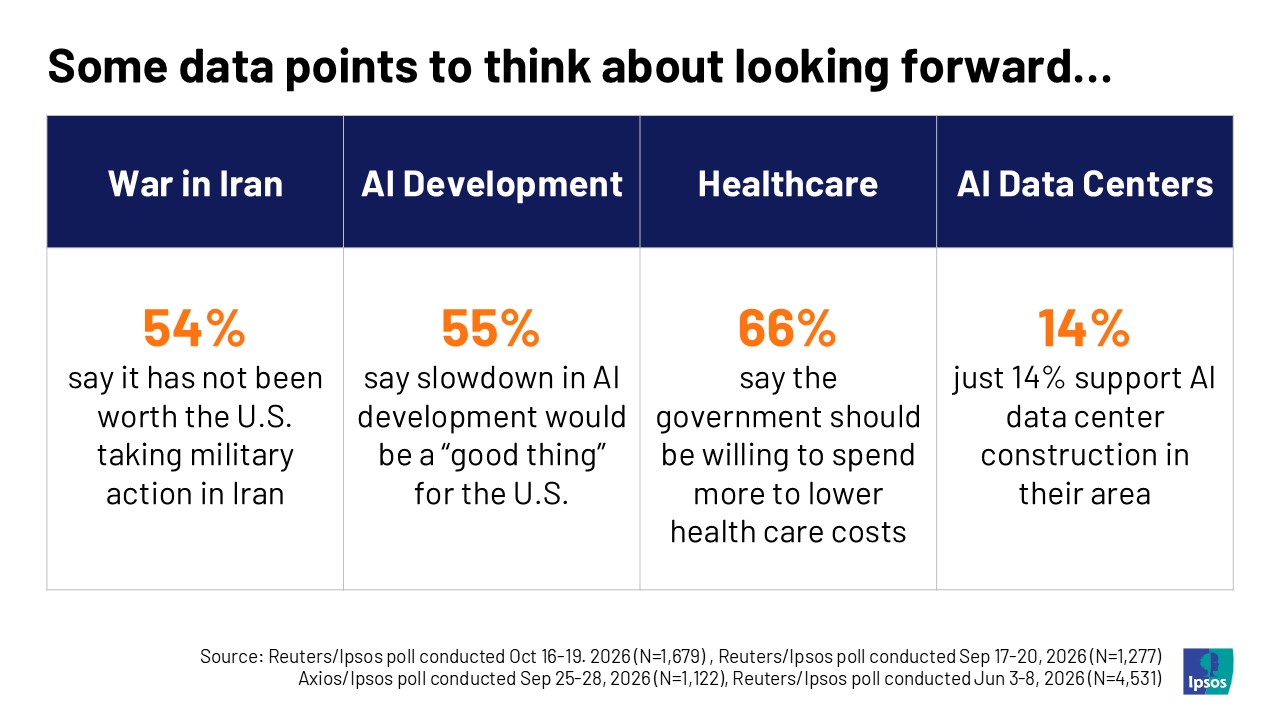
5. The other issues on voters’ minds. Pollsters often ask respondents what we call a generic congressional ballot: if the election were held today, would you vote for a Republican or a Democrat? However, Americans won’t see a generic ballot when they cast their votes. They’ll see the names of candidates running to represent their area. Remember that the midterms are a vast medley of local elections, where local factors and candidate quality can shift individual races. The economy and the cost of living remain the top issues of the midterms, but voters will also be balancing a number of other issues while casting their ballots – issues that will matter beyond November.
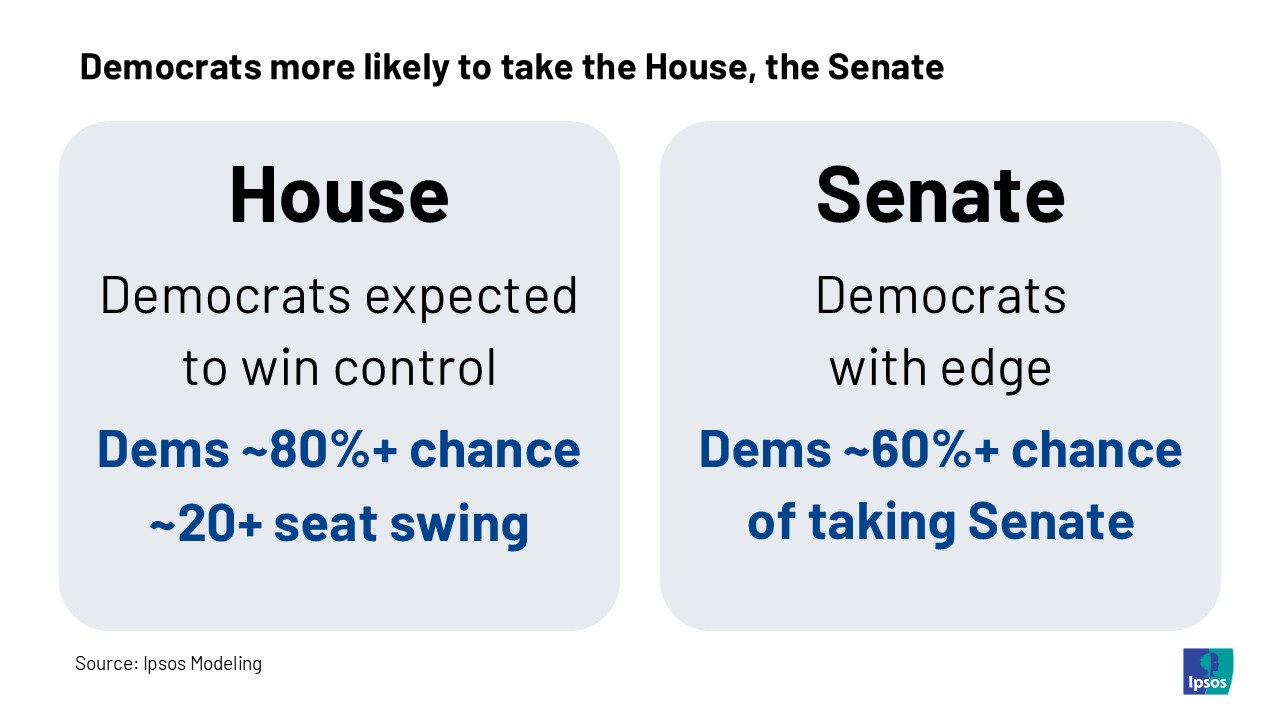
Bonus: Most likely outcomes. Democrats are heavily favored to take control of the House. The Senate, by design, is harder to flip in just one election by any party, but the odds of Democratic control are now slightly better than a coin flip. Of course, probabilities are not certainties. Watch this space.
As pollsters, we can use data to make educated guesses. But fortune-tellers, we are not. While election polling has been reasonably accurate in recent midterm elections, nothing guarantees it will hit the bullseye this year. Even a minor miss could drastically shift the balance of power.
Ultimately, the only poll that will matter in shaping the 120th Congress is the one on Election Day. But regardless of how the 2026 midterms pan out, perhaps the biggest takeaway is already clear. It was clear two years ago, too: It’s the economy, stupid.
Americans are frustrated with how the U.S. economy is working for them. The cost of living has become overwhelming for many. And until morale improves, Americans will continue to carry that frustration to the voting booth.