
It’s beginning to look a lot like… an economic mess
The past year brought huge changes for the economy and American consumers. Inflation stuck around, reaching highs the country hasn't seen in decades, along with geopolitical headwinds and war to Europe, sending markets and supply chains into turmoil. Even as some signs seem to be indicating that inflation might be easing, the road ahead is still long.
These economic forces didn’t just begin and end with the economy—their reverberations were felt throughout society. Inflation, among many other things, shaped elections all around the world. But, on a smaller scale, how are everyday Americans getting by and responding to these economic effects?
In the five charts below, we explore how consumers are coping with where we are right now in the economy.
- Feeling low. Consumer confidence is down by six points compared to this time last year. Sentiment softened by two points relative to earlier this month. Many Americans felt lukewarm about the economy this year as prices continued to rise. However, low unemployment put people in this stalemate of sentiment. Are the halcyon days of recovery a thing of the past? It is looking more and more like it.

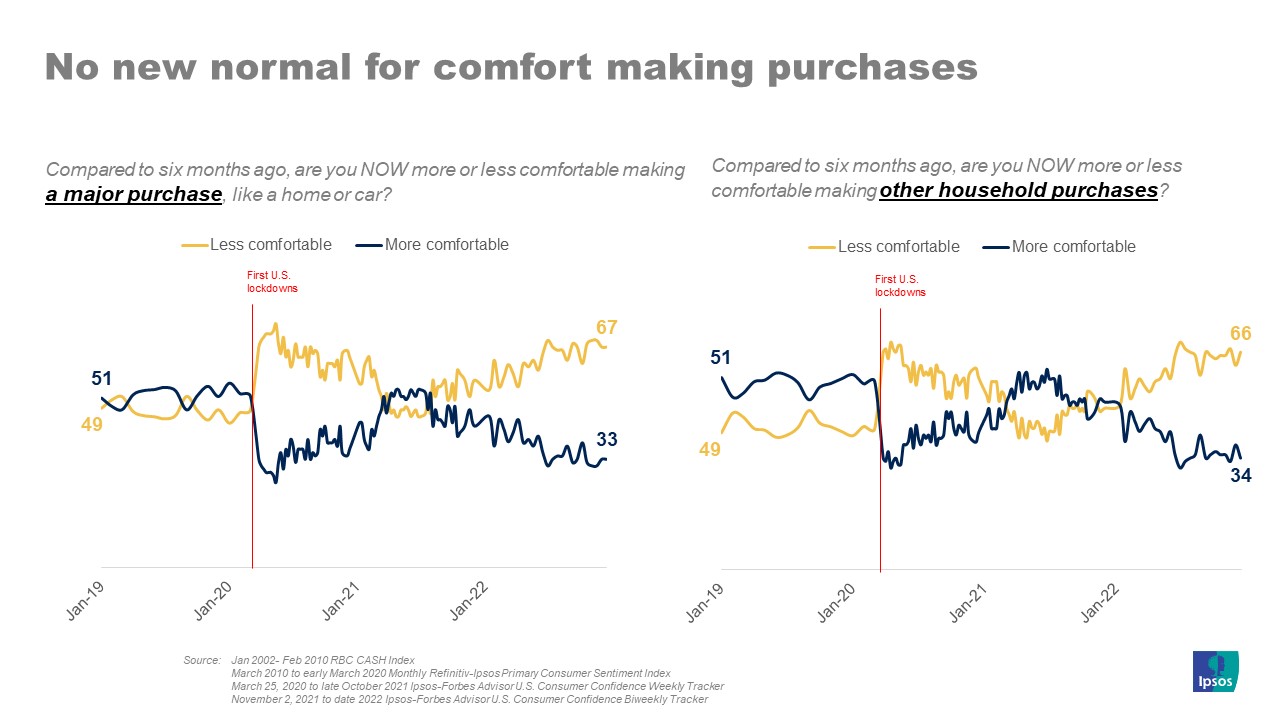
- Leaner times. Consumers are also feeling less comfortable making big ticket purchases, including everything from a home or car to everyday needs. Relative to January 2022, there’s a 10-point uptick in the number of people who feel less comfortable buying goods. With rising prices, how are Americans keeping up?
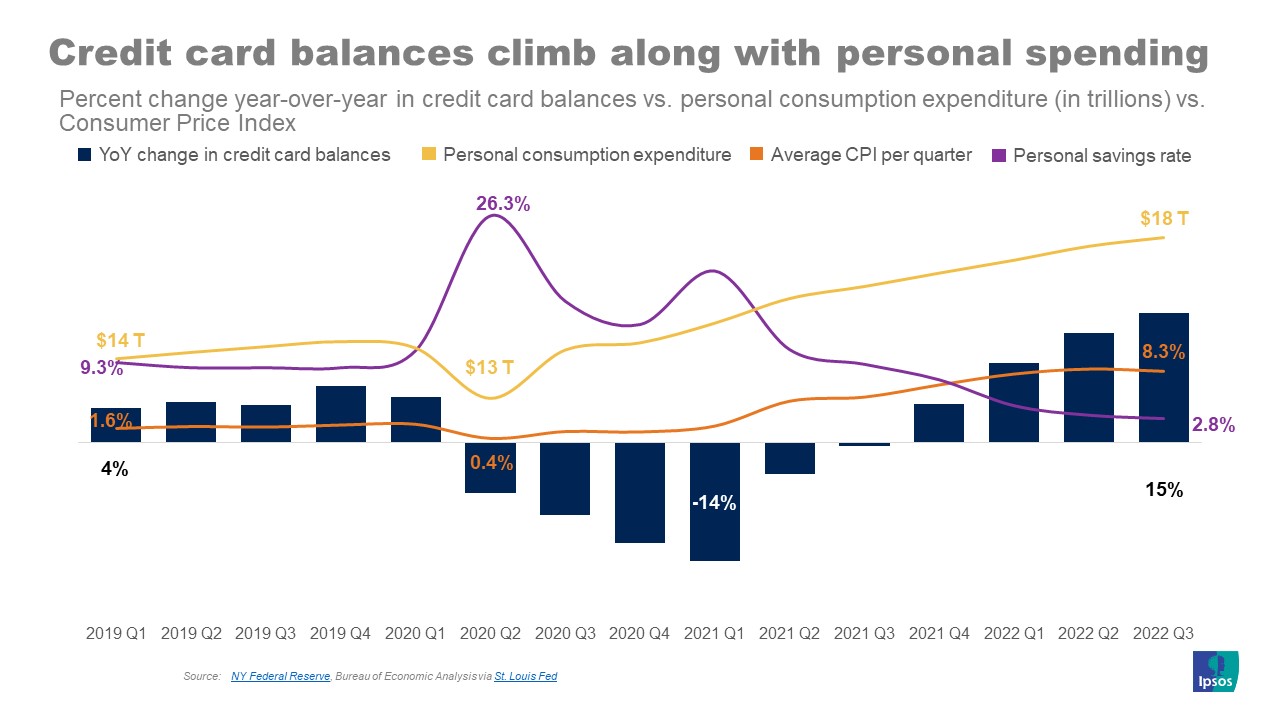
- Borrowed time. Inflation is a huge concern for Americans. But even as inflation is hanging over the heads of many, consumer spending has not slowed down. To make up for higher prices and depleted personal savings, credit card balances are rising, even as interest rates continue to climb. Debt might be harder to pay off, given higher interest rates. In the new year, some Americans may find themselves in a financially precarious position.
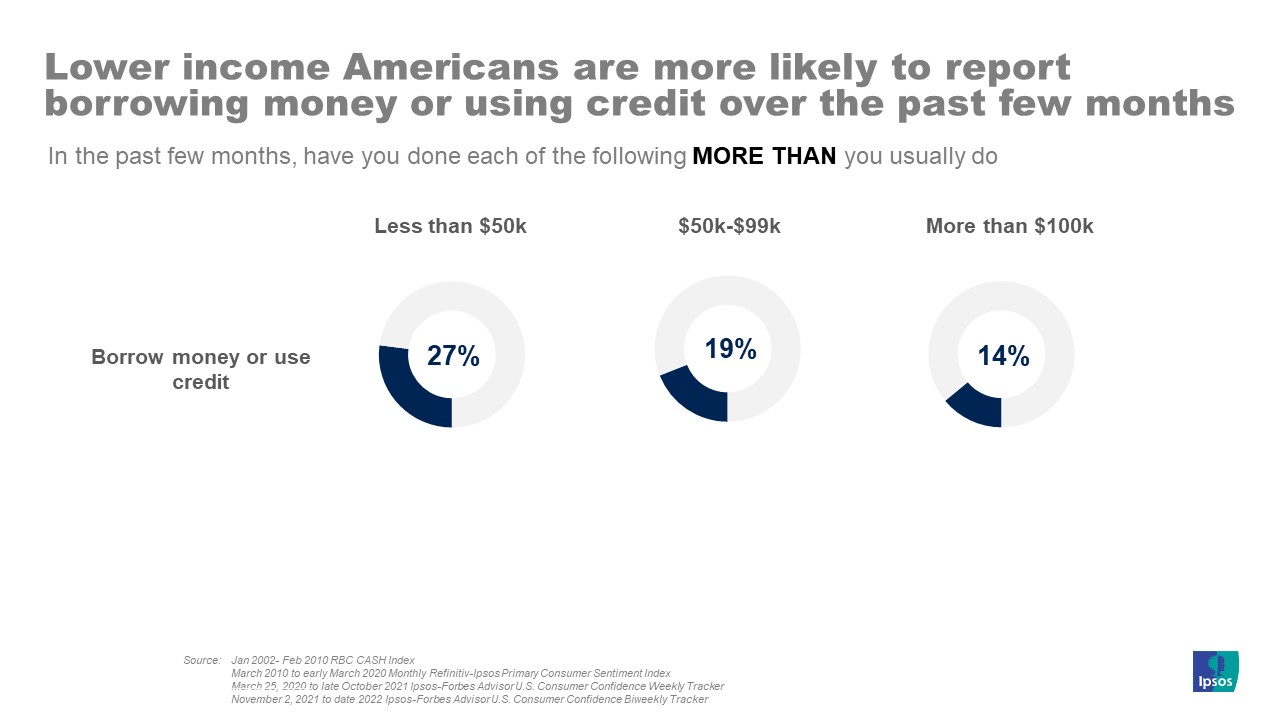
- Regressive tax. The rising cost of living does not impact all Americans equally. Inflation acts as a regressive tax: lower-income Americans suffer the most from inflation. Lower income Americans report borrowing more money or using credit more than they usually do over the past few months compared to higher income Americans. With higher interest rates, this new level of debt will be harder to pay off. 2023 looks rough.
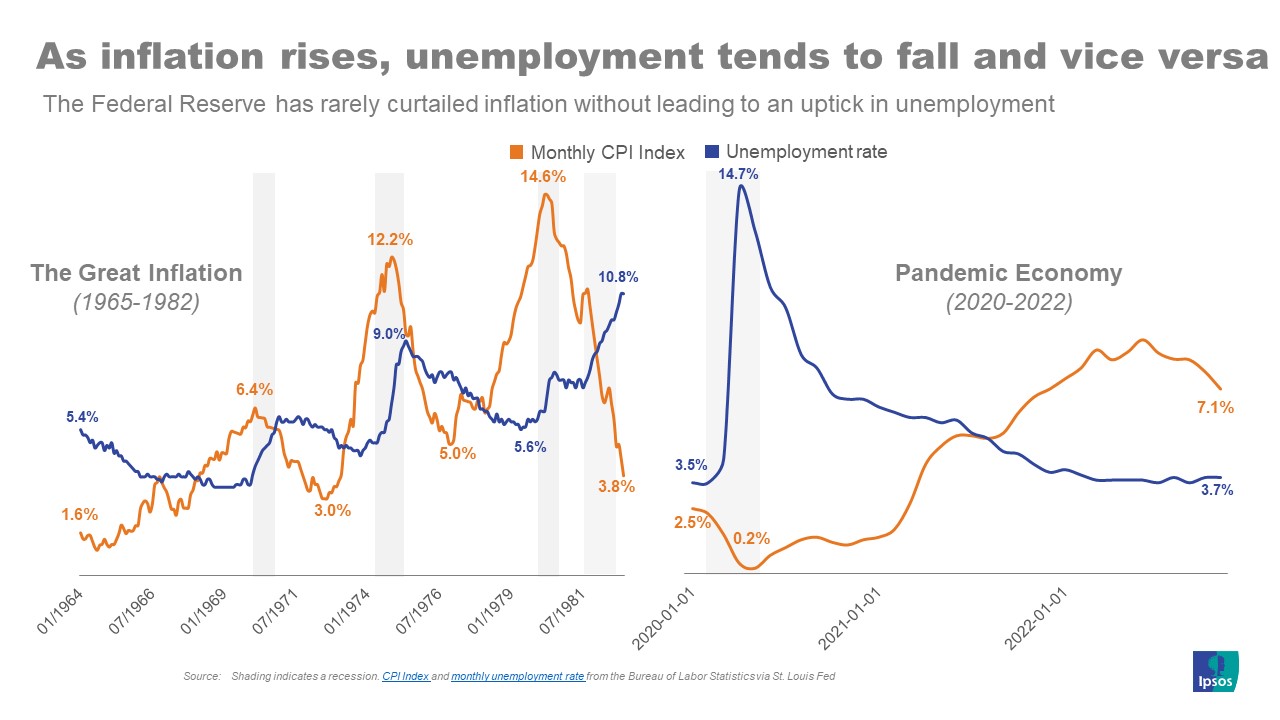
- Where we’ve been. The price of everything—from groceries to gas—climbed quickly this year, making the cost of living harder to afford for many. However, American hiring has remained robust, cushioning any economic blowback from the Fed’s tightening monetary policy. But will that continue into the new year as the Federal Reserve keeps chipping away at high inflation? Since the 1960s, unemployment has generally risen whenever the Fed tries to aggressively cool inflation. Unprecedented times.
As Americans reach the end of 2022 and turn to the new year, the economic turbulence of the past 12 months won’t change as easily as the year.
Consumers have been contending with higher prices and the fallout from these economic conditions for months now. Many are using credit and borrowing money, a tough thing to do during times of high interest rates. We will have to wait and see where that will leave the economy and the people trying to navigate it. Prepare for rough waters ahead.

