A climate change retrospective
Today is Earth Day, the 50th time that we, as a global collective, have celebrated our planet. It’s a time to appreciate the ground on which we stand and the skies above us. And ponder our own role in ensuring that future generations can enjoy them too.
As multiple reports have warned, the earth is rapidly warming. 2021 was one of the hottest years on record. In the US, annual wildfires out West have grown so intense the smoke spans the continent. The time to act on climate change is now. But will we?
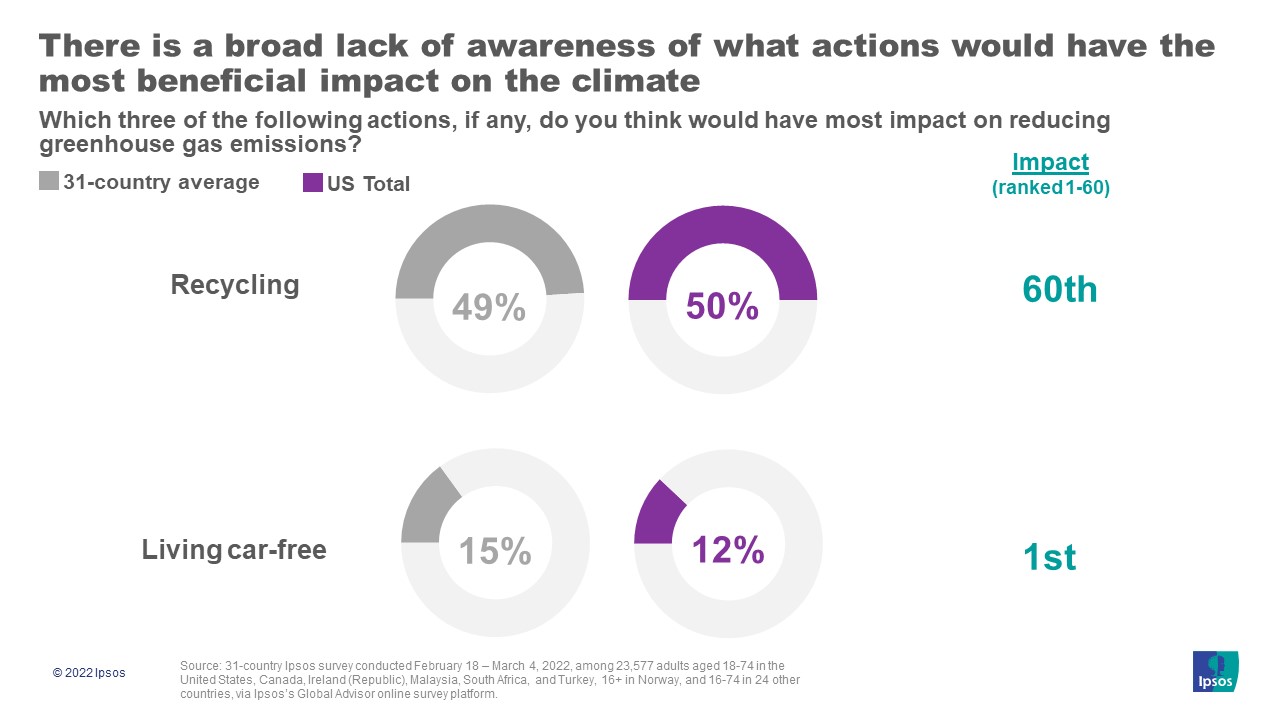
Unfortunately, our polling shows that while people are willing to make changes, they generally aren’t opting for the most meaningful solutions. Part of this comes down to a lack of knowledge about what steps are most effective.
But in America, we also see stark differences across partisan lines in terms of the actions people are willing to take. It’s no secret that climate change is yet another issue that has fallen victim to our polarized sense of reality.
Below is a snapshot of where we collectively stand on climate change.
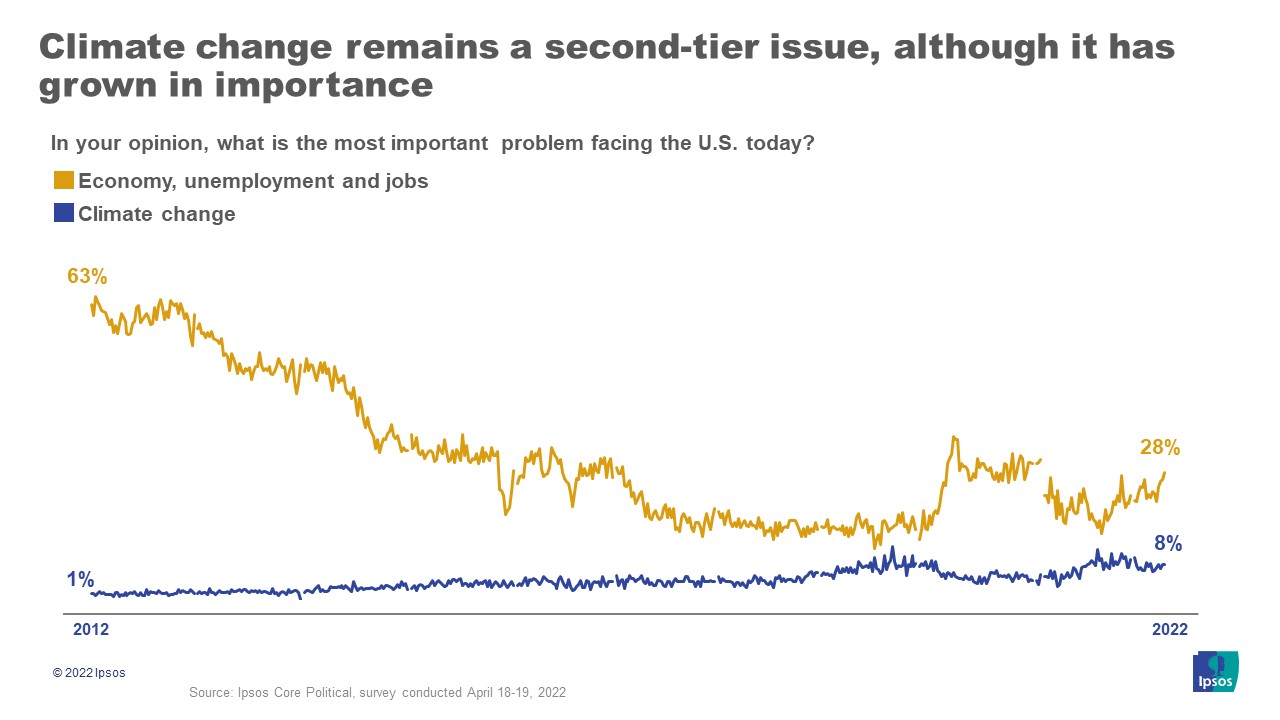
- Creeping up. Americans are increasingly concerned about climate change and are more likely to acknowledge it is caused by human activity. As we’ve noted previously, concern tends to spike during wildfire season and other disasters. But it still remains a second-tier issue, particularly compared to economic issues or inflation. Climate change yes; but bread and butter more.
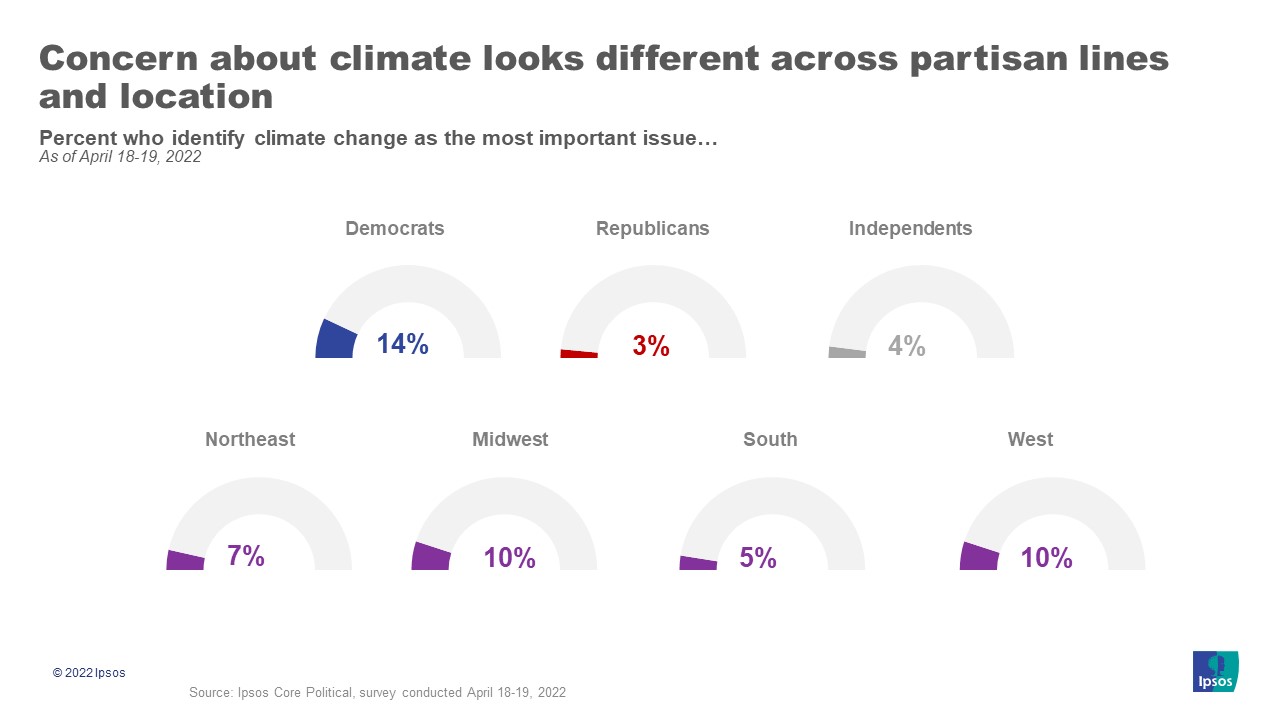
- Demographics of climate change. Demographics and location matter when it comes to concern – Democrats are most concerned, while people living in the parts of the country hardest hit by drought, fire, tornadoes and hurricanes are more likely to see it as a major problem. What do they say? Location, Location, Location. Here it is not good thing.
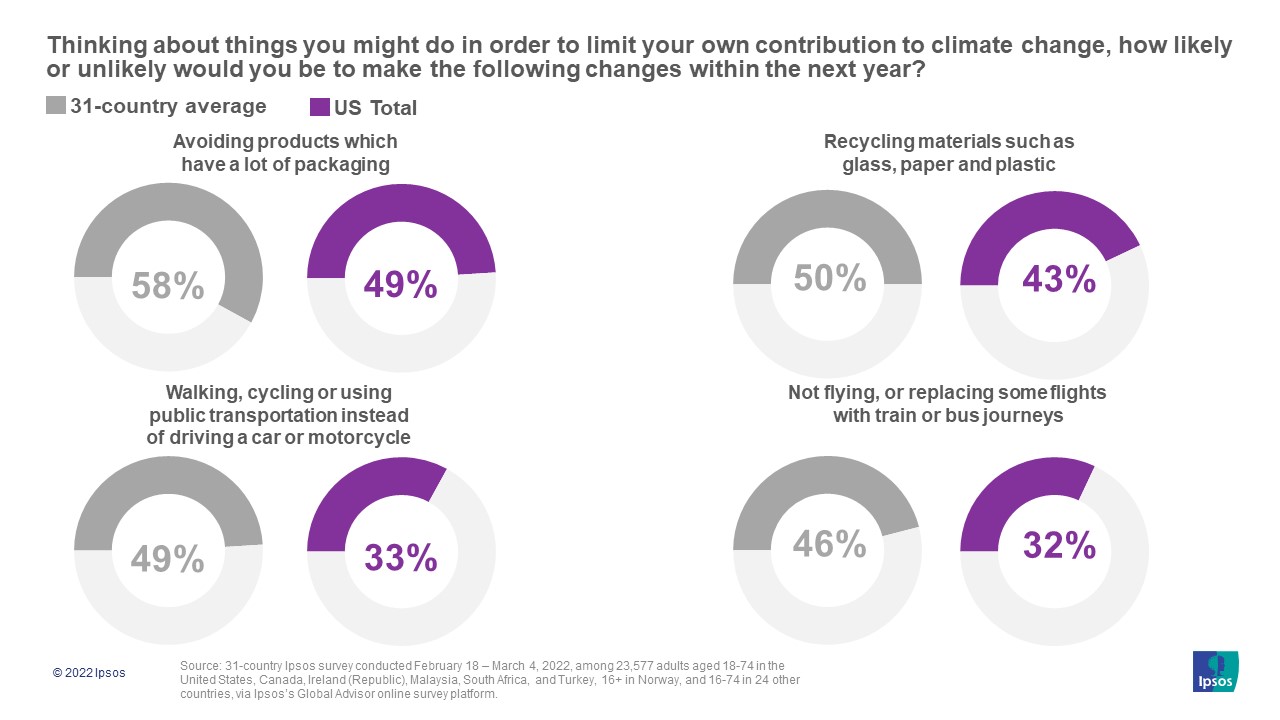
- Theory is not practice. Despite the growing concern about climate change in the US, Americans are still less likely than other nationalities to take active steps to combat it, such as changing their transit or consumption habits. Wanting to do good, in theory, is different than putting it into practice.
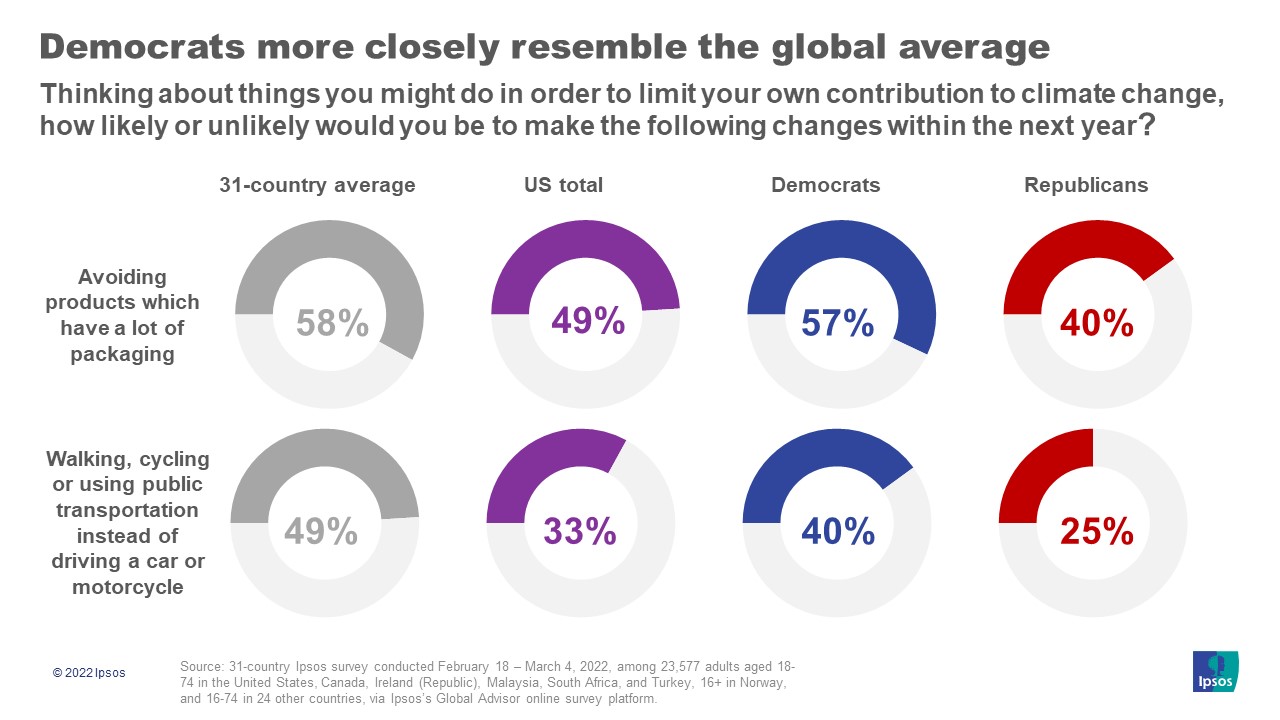
- Partisan conditioning. In some cases, the rationale for not taking action on climate change is structural. In the US, for instance, where public transit options are so limited, few have any choice in how they get around – the answer is a car, or nothing. But, partisanship is another key driver. Democrats look a lot more like their global peers, Republicans the outliers. Again, our tale of two Americas.
- Impact is not frequency. While every effort is meaningful when it comes to combatting climate change, there is a lack of awareness about which actions make the greatest difference. To really move the needle, people should rid themselves of their cars and turn to renewable electricity or public transit. But few, globally or in the US, can identify living car-free as the most impactful step to take.
The public generally recognizes that action on climate change must be a collective effort, calling on government, business and individuals. But have governments laid out a clear roadmap for everyone to work together? A plurality surveyed across 31 countries say yes. Americans, unfortunately, are more doubtful. The solution to our collective problems rests in nudging the un-nudgeables.