
Our warming world
All-consuming fires in Europe, disappearing lakes out West, and sweltering temperatures in DC; heat waves are breaking records, disrupting life, and killing many across the world.
Climate scientists have warned repeatedly that the earth is warming at an unprecedented speed. These events are starting to assume a new normal: intense wildfires, prolonged droughts, and record-breaking highs. Climate change is here, but is that a shared reality for Americans?
Below is our warming world and the public’s reaction to it in five charts.
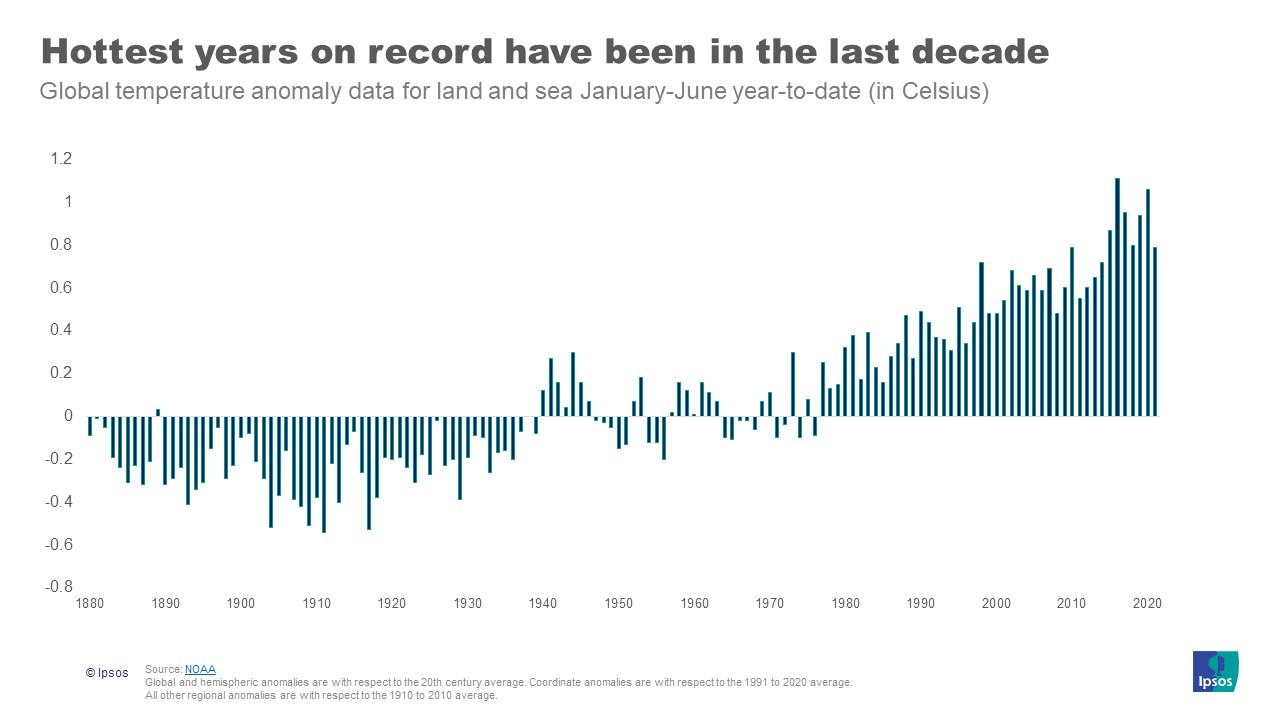
- Record highs. Global temperatures, on average, are getting hotter. Look at the data. All the record highs have been in the past ten years. Over that same time, average temperatures have been hotter than the average temperatures during the entirety of the 20th. Hard to spin the un-spinnable.
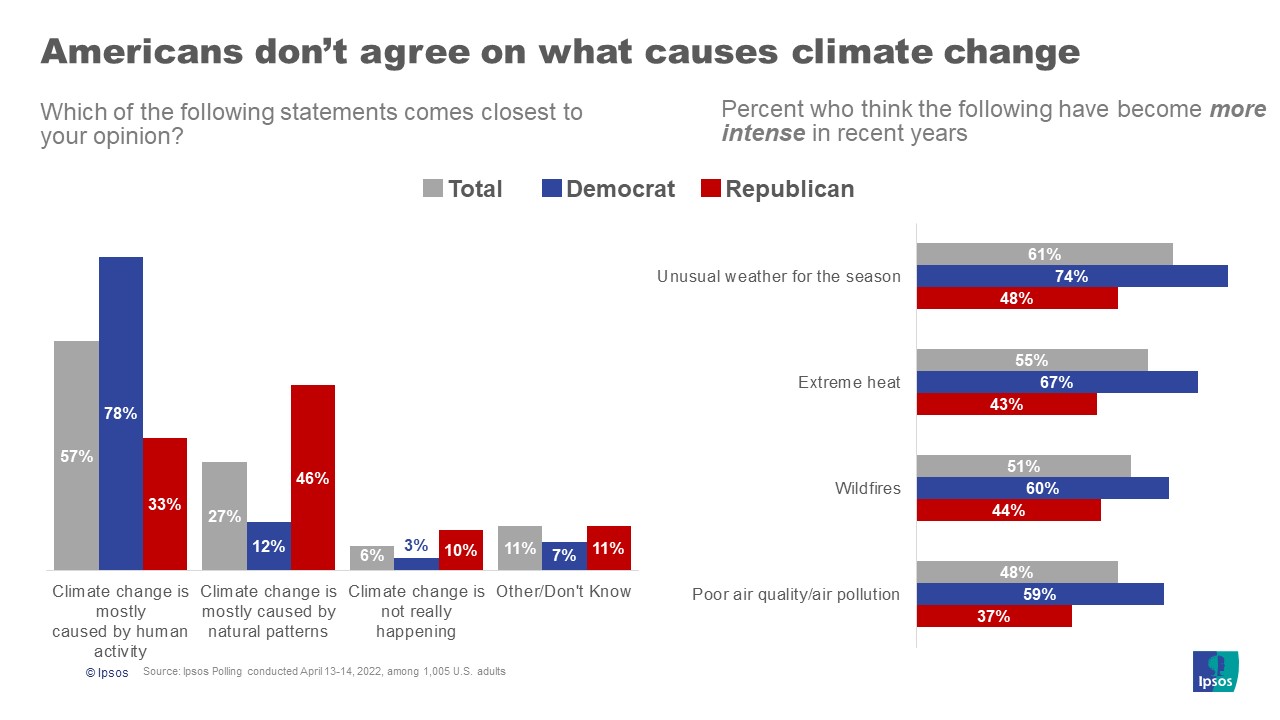
- Human Causes. Most Americans agree that the climate is changing. But why it is changing is a significant source of division. More Democrats feel that climate change is mostly caused by human activity, while more Republicans feel it is mostly the result of natural patterns. Partisanship even colors whether people think extreme weather events—like extreme heat, wildfires, or unusual seasonal weather—has become more intense in recent years. Once again, a tale of two nations—one red and the other blue.
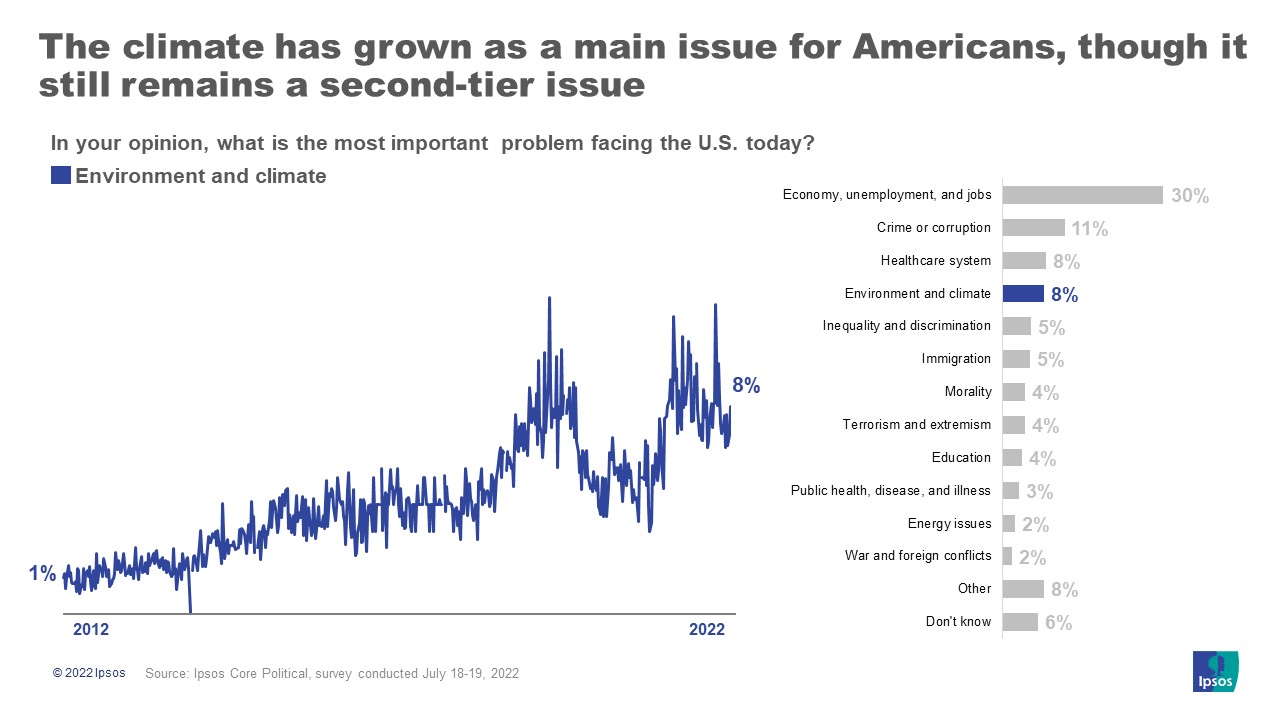
- On America’s Mind. Over the past decade, the climate has been growing as a concern for Americans. Yet, it still ranks below other main issues, like the economy and crime. Will political action happen if this isn’t a pressing concern for Americans? Probably not, but we will see.
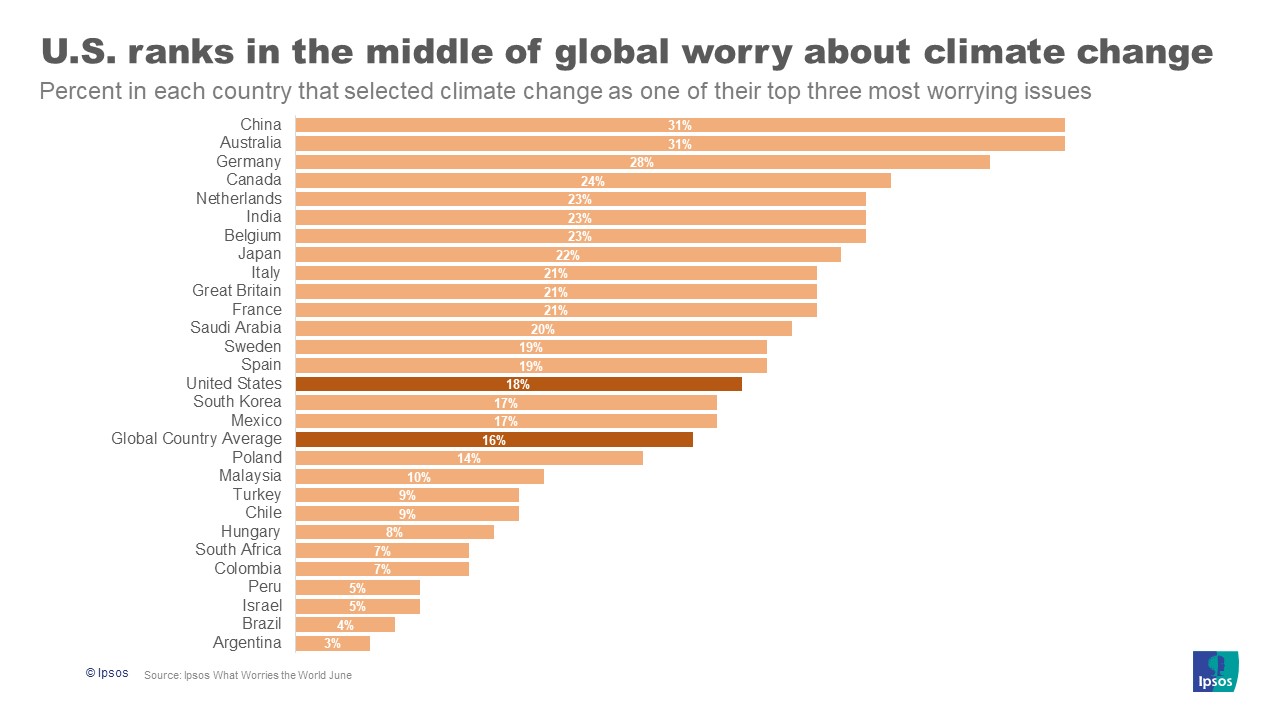
- America’s Non-Exceptionalism. As things heat up, not everyone is feeling stressed about the climate. In particular, Americans aren’t quite as worried or indifferent, for that matter, about climate change compared to other countries. It is hard to be a world leader on an issue your own people find less than urgent.
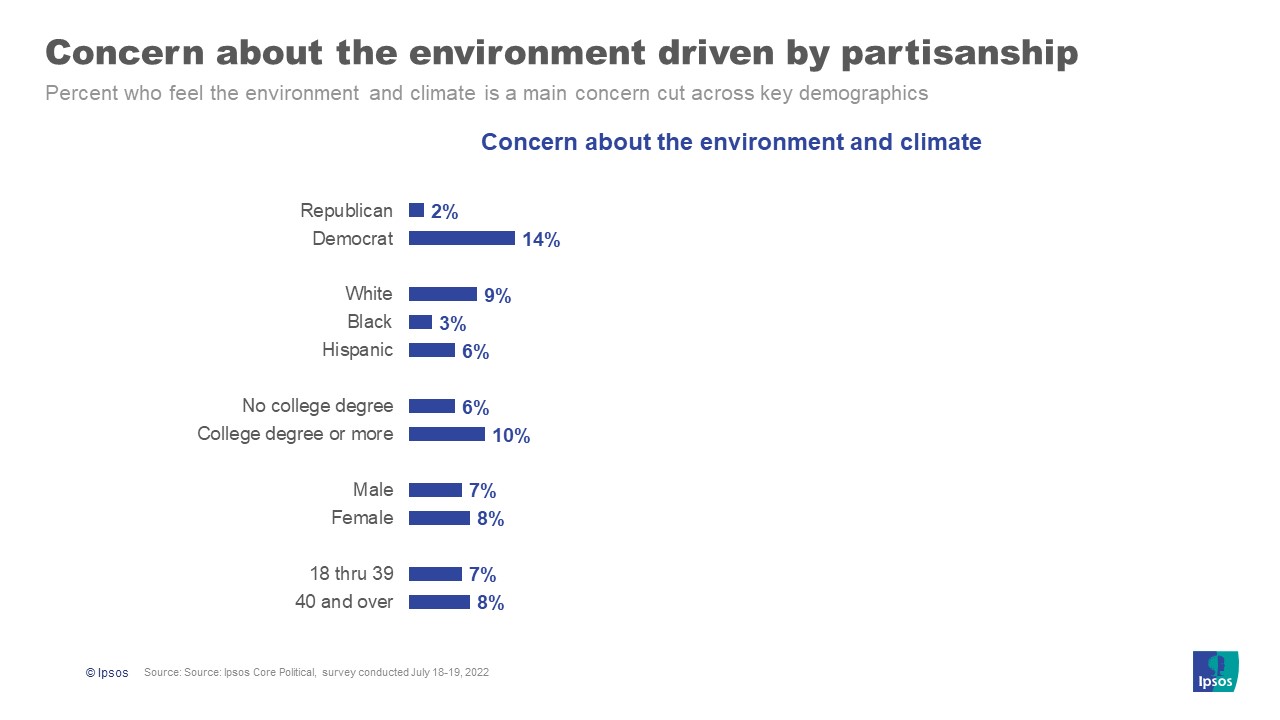
- It’s all Political. By far, partisanship is the most significant fault line for concern about the environment. It beats out other key demographics, like gender or age. At its core, the environment is a political issue for Americans. And one that brings out the tribal signals. Two Americas; one problem.
Americans do not inhabit the same reality when it comes to climate change. How intense these extreme weather events are, what’s driving them, and whether to be concerned are all points of contention.
As the world heats up, those divisions may as well.


