

Americans show we care by… texting
The Ipsos Consumer Tracker, fielded on Ipsos' Omnibus platform, asks Americans questions about culture, the economy and the forces that shape our lives. Here's one thing we learned this week.
Why we asked: We got a client question that prompted a line of thinking about generational differences. Also having just dropped a global POV about Modern Milestones and why it’s important to think more about life stages than generations, it was good to put together some things that are actually different between one age group and the rest just based on when they were born and what tech was available at the time.
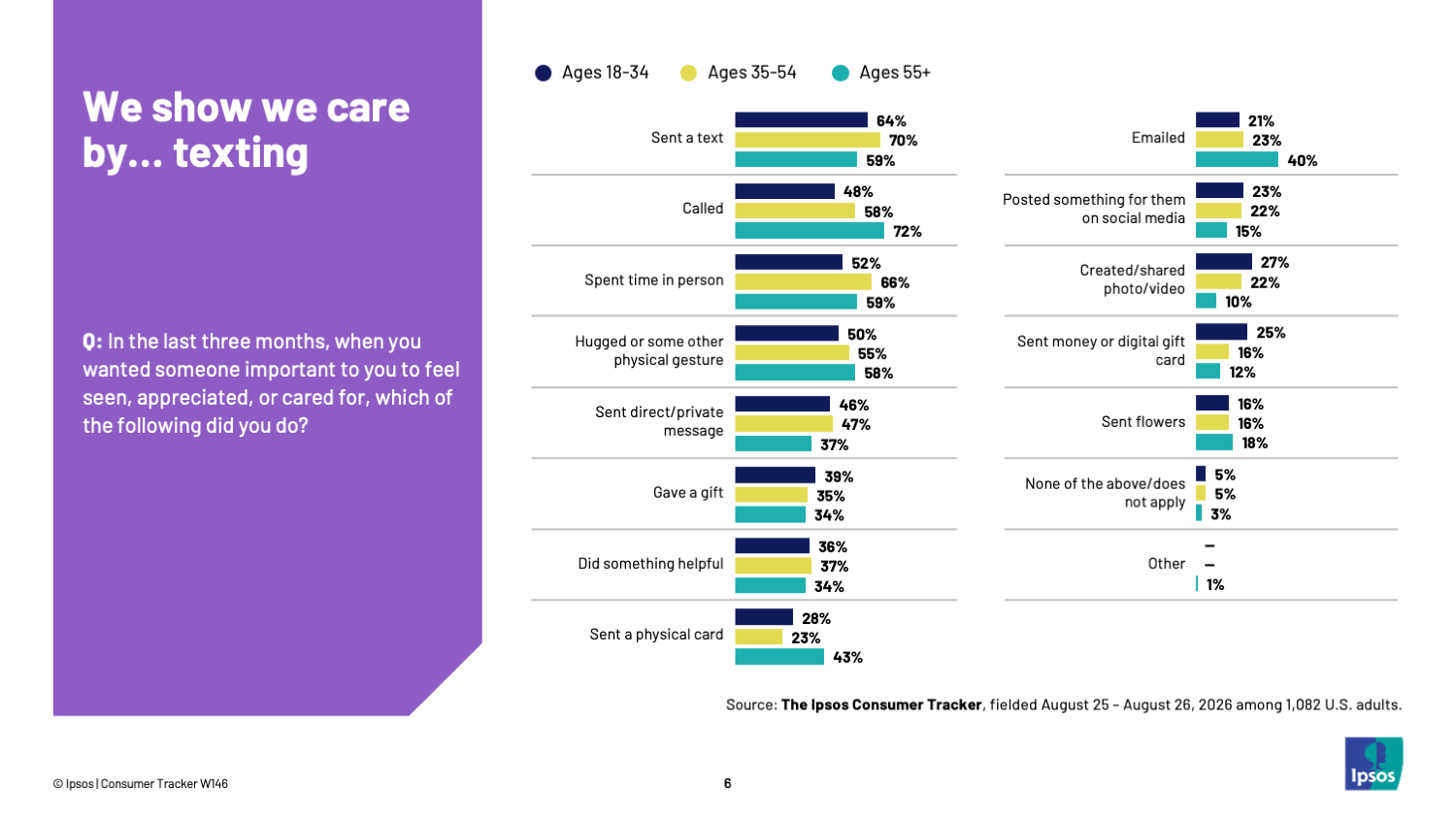
What we found: When it comes to showing people we see, appreciate and care for them, most Americans across all age bands will … send a text.
Calling is still popular, as is showing up in person, and hugging or some other physical gesture. So, we’re not totally digital yet. Interestingly, sending a physical card is at least as popular with each age group as sending an email. I’m a little worried, however, about the 5% of people who said the question doesn’t apply. Maybe we should all reach out to them?
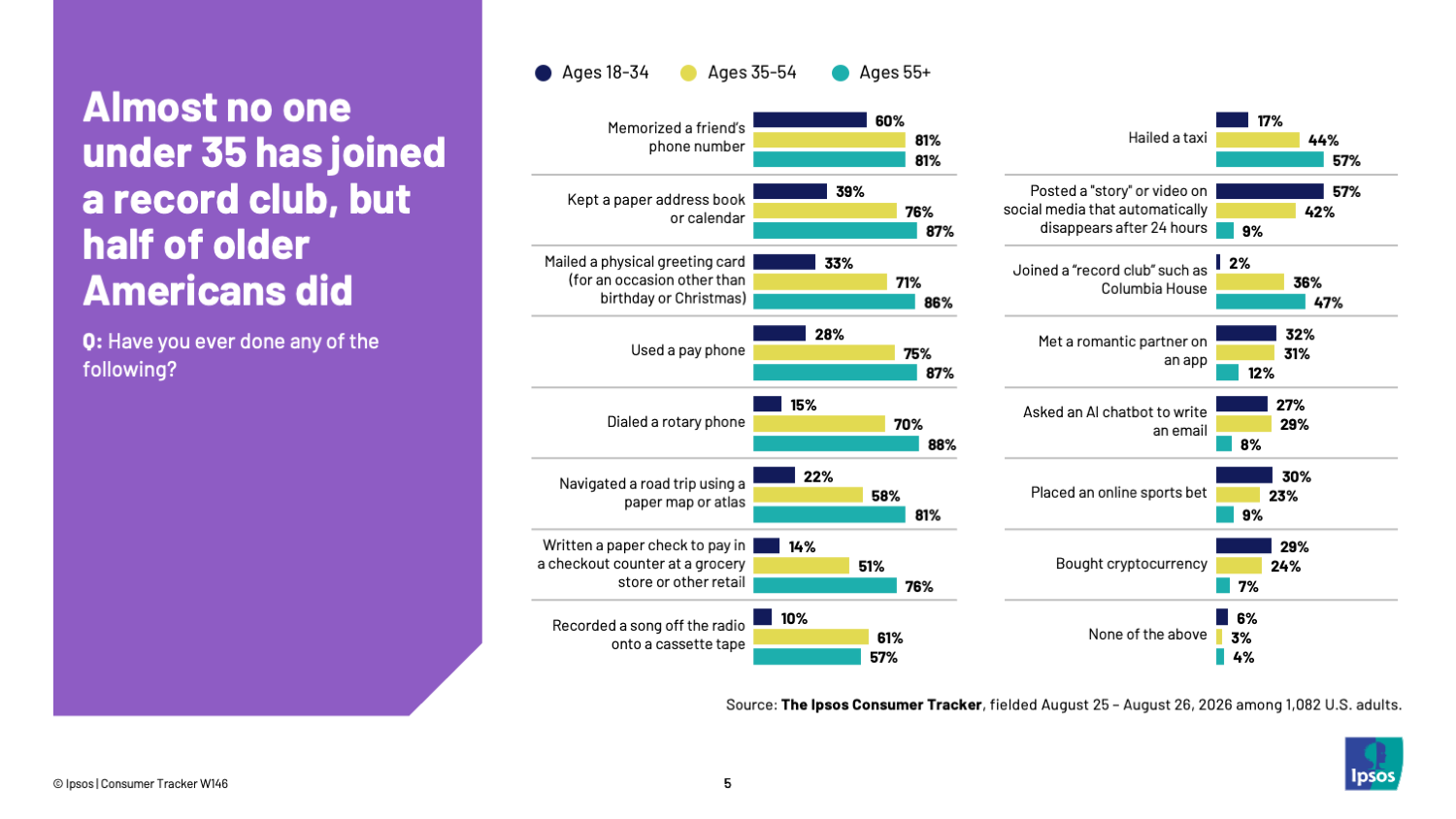
Anyway, that led to a longer mental thread we also surveyed on about what kinds of technology people have used. For instance, 88% of older Americans have used a rotary phone but only 15% of younger Americans have (likely while visiting their grandparents). Similar numbers are seen for using a pay phone or writing a physical check. And only 33% of younger Americans have mailed a greeting card for something other than a birthday or Christmas.
But as the current iteration of Columbia House goes bankrupt (prompting everyone who read that to say, “it was still around?!?”) almost half of older American said they had at some point belonged to a record club, but only 2% of younger Americans had.
Younger folks were much more likely to have done things like buy cryptocurrency or place an online sports bet. About the same number of 18- to 34- and 35- to 54-year-olds met a romantic partner on an app (32% and 31%, respectively), showing how long that technology has been around, compared to just 12% of those over 55.

![Latest U.S. opinion polls [2024/2025]](/sites/default/files/styles/list_item_image/public/ct/news_and_polls/2026-01/3.png?itok=VAL0dHIN)
