
How COVID-19 changes the holidays: More online and local shopping, gifts for fewer people
Two-thirds of Americans say they’re doing more of their holiday shopping online this year during our first COVID-19 holiday season, according to new data from the Ipsos Coronavirus Consumer Tracker. But that’s not the only way the pandemic is shaking up holiday celebrations: Americans are also planning to shop locally more, give gifts to fewer people, buy more decorations and spend more time putting them up.
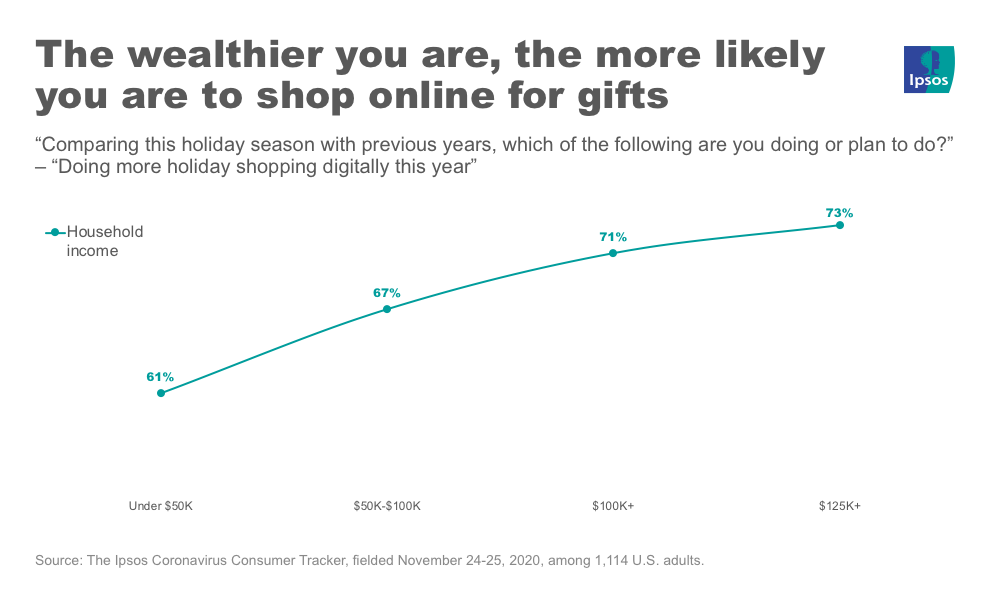
66% of Americans say they’re doing more online shopping this year, part of a longstanding trend toward ecommerce for the holidays. But the trend is even more pronounced as you move up income brackets: 61% of households with incomes under $50,000 say they’re doing more online shopping, while 71% of households above $100,000 say they’re shopping more online – and 73% of those with income over $125,000.
- 75% of households with children say they’re doing more online shopping this year, compared to 63% of households without children
- 74% of Hispanic families say they’re doing more online shopping, compared to 64% of white families and 57% of Black families
That doesn’t mean people are abandoning small businesses: 41% of Americans say they’re planning to buy more gifts from local businesses this year. Younger adults and parents are even more enthusiastic about shopping locally: 51% of 18-to-34-year-olds are buying more gifts locally, and 50% of people with children in their household.
Overall, a majority of people – 54% – say they’re buying gifts for fewer people this year.
- 62% of Democrats are buying gifts for fewer people, compared to 45% of Republicans and 50% of independents
- 60% of people with children in their household are buying presents for fewer people, compared to 52% of people without children
- 62% of people who are only working part time are buying presents for fewer people, compared to 56% of people working full time or 51% of unemployed people
- 62% of Black Americans and 58% of Hispanic Americans are buying presents for fewer people, compared to 50% of white people
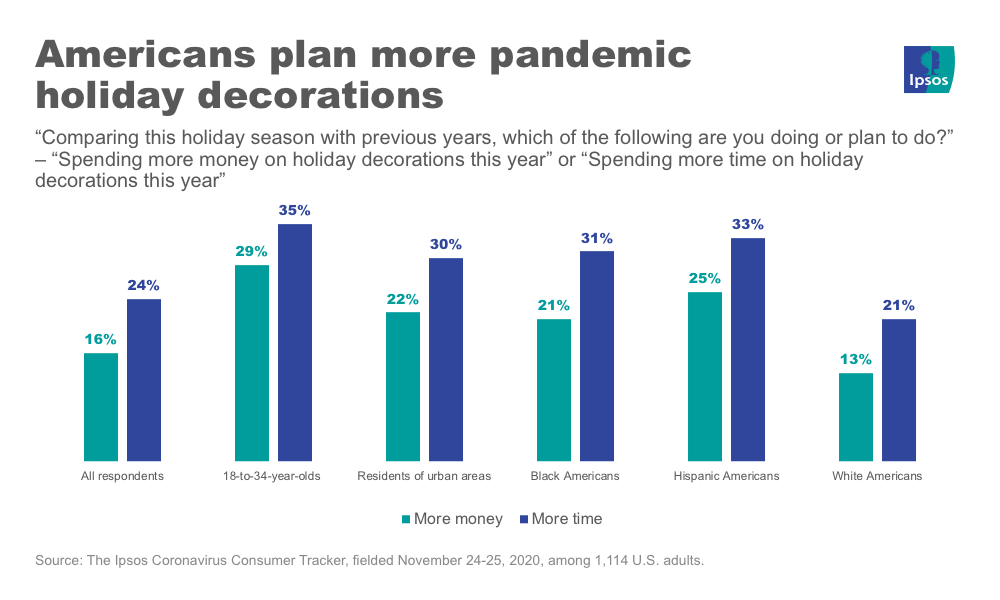 A decent portion of Americans are also planning to spend more time – and money – on holiday decorations this year. 16% are planning to spend more money on decorations and 24% are planning to spend more time. The trend is even stronger among young adults, urban residents and people of color.
- 29% of 18-to-34-year-olds say they’re planning to spend more money on decorations and 35% say they’re planning to spend more time
- 22% of urban residents plan to spend more money and 30% spend more time
- 21% of Black Americans and 25% of Hispanic Americans plan to spend more money on decorations, compared to only 13% of white Americans. 31% of Black Americans and 33% of Hispanic Americans plan to spend more time on decorations, compared to only 21% of white Americans.
With several weeks to go before Christmas and the experts warning the pandemic is set to surge, things may change before the season is through – but people will continue to adjust, as they have throughout this unpredictable year.


