
Trust in research
 Trust is critical to any business sector, just as it is essential for society to function. But it has a special significance within market research that centres around respondents. The individuals that offer up their personal opinions and data for market research purposes need to trust that it will be protected and used appropriately. They must also be engaged and motivated to participate.
We believe that securing respondent trust is a cornerstone of delivering reliable and trustworthy research insights. So, this paper explores the essential elements of trust, how to establish trust with respondents and panellists – as well as motivate ongoing engagement – and consider what is important when building long-term trust and advocacy in market research.
We share the experiences of Ipsos panelists and bring in knowledge and experience from across our Corporate Reputation, Brand Health Tracking and Social Intelligence Analytics capabilities to gather the wider view on trust.
Some key points include:
- A public presence (gained through participation in global and local polling, for example) provides a sense of familiarity and a base level of trust for potential participants.
- Continued commitment to participant data security across all modes of data collection.
- Reinforce the sense that each participant’s opinion is important and that, through their involvement in market research, they are participating in something bigger.
- As the market research industry continues to evolve, offering panelists the opportunity to participate in a variety of research activities can build and sustain their interest.
THE ROLE OF TRUST
Trust is integral to the successful running of market research activities, as is the case with any industry. On one hand, it is critical to secure clients’ trust. On the other, research agencies need to build respondent trust so that the individuals who complete research activities are willing to share their personal information, opinions and behaviours.
The market research industry has now evolved beyond gathering data through simple surveys, focus groups and indepth interviews. Research activities not only gather opinion but can also capture personal behaviours and data through various advanced techniques such as passive measurement of digital behaviours, facial coding and eye tracking. This continued evolution, along with the ongoing shift to online research, requires respondents to not only hold trust in the organisation they are working with but also be engaged and motivated to participate. Otherwise severe limits are placed on the project’s success.
At Ipsos, our aspiration is that by operating as a full-service company owned by market researchers and its own data collection, we create a sense of security in the quality and the rigour of the insights that we provide.
As discussed in a recent Ipsos paper The Power of Research Panels1, research participants have a contract with Ipsos that establishes the rules of engagement: their data and privacy will be protected (especially in the post-GDPR digital ecosystem), the answers provided will be anonymised and only be used for the purposes of the research study, and their data will be deleted after a specified period.
We have found that the public would be more comfortable sharing personal data with a company that is clear about how it will use it and that promises not to share it with third parties.
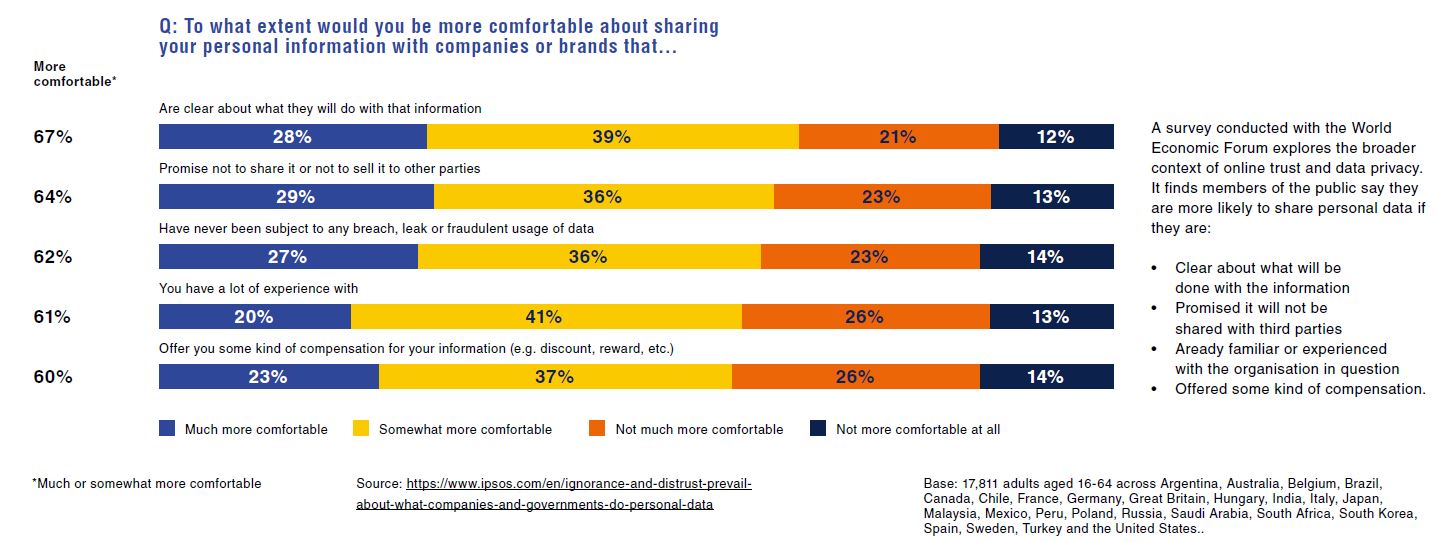
This paper shares the view from Ipsos panelists on their experiences and ongoing participation in research. We also bring in knowledge and experience from across our Corporate Reputation, Brand Health Tracking and Social Intelligence Analytics capabilities to present the wider view around trust and engagement in research studies.
We explore the essential elements of trust, how to establish trust with respondents or panelists – as well as motivate their ongoing engagement – and consider what is important when building long-term trust and advocacy in market research.
Ipsos’ 2019 report on trust5 interrogates the idea that trust is in terminal decline in society today. It doesn’t find evidence for this stark conclusion, instead suggesting that there is a more nuanced conversation to be had – one that is less about trust per se, and more about what organisations and individuals can do to be trustworthy in a particular context.
TRUST IN PANELS: THE IPSOS EXPERIENCE
To have real value as an insights provider, respondent trust is essential. The first building block is for respondents to believe their data is protected and secure, and that their opinion is important. With this understanding in place, they are more willing to provide more sensitive and personal information, and to enter a long-term, reciprocal relationship with a research company that leads to continued participation in research over time. As set out in Corporate Reputation: The key questions answered6, trust drives reputation because it reflects how people think about an organisation. Trust is also earned.
For Ipsos panels, it is critical to maintain trust so that panelists remain engaged and motivated to participate. As more than half of Ipsos panelists participate in more than one research panel (see Figure 1), it is especially important to keep to high standards and consistently meet respondent expectations.


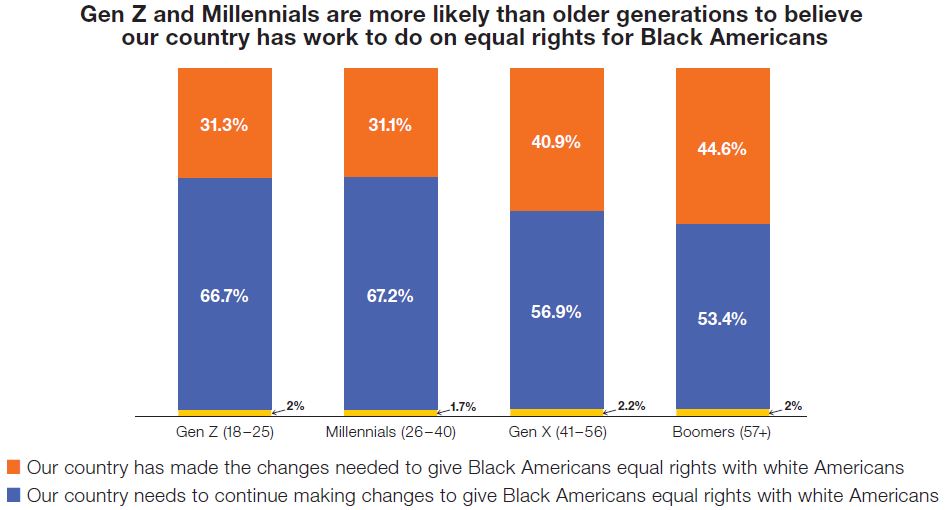
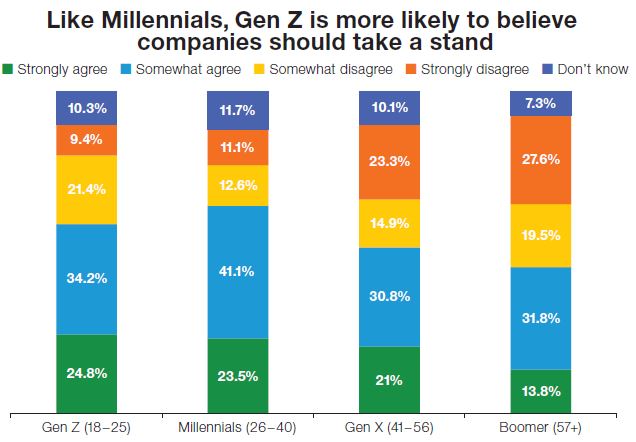
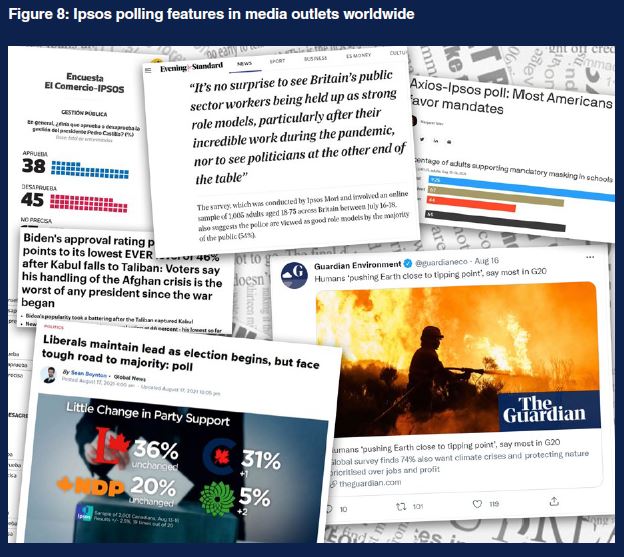
Reputational equity brings benefits for attracting and maintaining engagement with respondents. We have found that, across all regions, Ipsos shows a strong, established reputation with its panelists, as well as high levels of advocacy (see Figure 2). Brand name awareness and respect plays a part in this. In markets where Ipsos has a strong presence in polling and in public media releases, resulting in a strong share of voice, Ipsos is as reputable as its associated panel brand (see Figure 3).
The reasons for trusting Ipsos, given spontaneously by panelists, often refer to the organisation’s reputation. This shows that in addition to gaining trust in Ipsos panel brands through their experiences, panelists also trust Ipsos where the Ipsos public presence is well-established and its face and name is known locally.

MOTIVATING ONGOING ENGAGEMENT
Within the online and social ecosystem, there are channels, feeds and pages instructing individuals to make money through joining online panels. These posts often review the panels available to inform potential followers if the panel is trustworthy or willing and able to fulfill their side of the market research contract.
As per the Stereotype Content Model by Fiske, individuals assess trustworthiness along two dimensions:
- Warmth: perceived intent
- Competence: perceived ability to act on their intent
While it is important to be seen as trustworthy, to support ongoing research participation, panelists also need to be motivated. According to the Job Characteristics Model9, motivation requires at least one of the following: skill variety, task identity and/or task significance; together with autonomy and feedback.
When reviewing the factors that underscore trustworthiness and motivate ongoing motivation, we can see that panelists do not merely want to receive compensation/rewards for their work; these rewards must also be worth their effort, relevant to them, and attached to tasks that they enjoyed doing.
Just as important is the desire to be a part of a mutually beneficial relationship in which the individual is treated with respect and equitability, feels that their opinion is important, and can participate in interesting research activities for which they understand the core purpose. Additionally, given that globally individuals are increasing their digital footprint, there is an expectation that their privacy and personal information will be protected.
As Ipsos carries out work for clients across many sectors which explore different topics and questions, there is a variety of research activities available to panelists. This choice further bolsters ongoing motivation and engagement.
BUILDING LONG-TERM TRUST AND ADVOCACY
To truly understand which elements are most critical for Ipsos and its panels and use this to support continued trust and advocacy, a drivers analysis was conducted to determine the factors that would have the most impact.
The analyses demonstrate that panelists take their job contract seriously and expect it to be reciprocated. So, while panelists expect rewards for their time and effort, they will trust Ipsos and its panels when they (and their personal data) are treated with the utmost respect and consideration.
It is also important to them that, through participation in research projects that they care about and understand the core purpose of, they can influence future decisions.
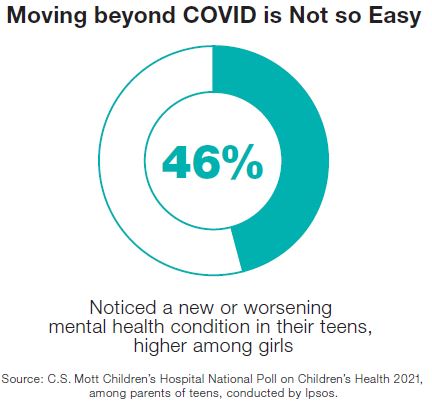
Investing in a long-term relationship with panelists further supports brand advocacy.
Interesting nuances appear when reviewing the key drivers in developed and developing markets. In developed markets, panelists want to be treated like an important consultant, to know how they influence decisions and to receive rewards that are worth their effort.
We also find that trust and advocacy in developed markets is supported by Ipsos being a brand with which panelists are proud to be associated, supported in many markets by our polling presence.
Furthermore, there is the power of personal identity: it is critical that an individual’s opinion is considered important. Offering a variety of research activities is also key as people in those developed markets are likely to be more accustomed to online surveys and therefore may respond well to the variety.
In developing markets, we find a stronger sense that panelists value our panels having a positive impact on society through their everyday business. Receiving answers to any questions or concerns and, not unexpectedly, being rewarded in a timely fashion is also key. In certain developing markets where there is a tendency for individuals to define themselves against others, the key drivers for panelists include:
- Feeling like you are part of something bigger.
- Knowing how your answers compare to others’ answers.
- Understanding that the purpose of the research will have a positive impact on others’ lives.
A TRUSTED PUBLIC IMAGE
As discussed in Opinion Polls: a tour of the territory10, polling puts a face to the market research industry and provides a brand name for people to recognise through media releases. In various markets around the world, Ipsos is a household name because of its investments in polling practice and continued advancements in this area. Although polls are most typically linked with elections, Ipsos’ practice is wider than this. Individuals have an opportunity to see how their opinions input into broader decision-making, both for governments and companies alike.
A review of social media data illustrates the benefits for a research organisation having a recognised position among the public as a polling company. To take the case of Ipsos, even though polling is a small part of our overall business, the social media data skews heavily towards news posts, including those from national and regional news, TV and radio, news agencies, and so on. The top words used and the semantics surrounding them (the what and how of a social conversation) appear to exclusively relate to polls that Ipsos has released. With a face and a name to Ipsos, consumers and citizens can establish a sense of trust in its data collection capabilities, whether online or offline.

THE BUILDING BLOCKS OF TRUST
Trust is critical to any business sector, just as it is essential for society to function. It has a special significance within market research that centres around respondents. The individuals that offer up their personal opinions and data for market research purposes need to trust that it will be protected and used appropriately.
Each organisation needs to find its own way of establishing a trusted relationship with respondents. But reflecting on our experience at Ipsos, we would highlight the following four factors as being particularly important when it comes to trust, advocacy and motivation:
- A public presence (gained through participation in global and local polling, for example) provides a sense of familiarity and a base level of trust for potential participants.
- A continued commitment to participant data security, across all modes of data collection.
- Reinforcing the sense that each panelist’s opinion is important and they are an integral part of the market research industry, and through their involvement they are participating in something bigger.
- As the market research industry continues to evolve, offering panelists the opportunity to participate in a variety of research activities that can build and sustain their interest. We believe that securing respondent trust is a cornerstone of delivering reliable and trustworthy research insights. By staying close to participants’ motivations, preferences, and real-life contexts, we are able to adapt our approaches and meet evolving expectations.
The quality of market research data is inextricably linked to the strength of engagement with individual participants, and so investing in activities that foster trust and advocacy must be a priority.
![[WEBINAR] AI in Higher Education: How AI Is Reshaping Teaching and Learning](/sites/default/files/styles/list_item_image/public/ct/event/2026-10/How%20AI%20Is%20Reshaping%20Teaching%20and%20Learning.png?itok=XYdLaI-4)

![[WEBINAR] Winning B2B Buyers: AI Gets You Considered; Trust Gets You Selected](/sites/default/files/styles/list_item_image/public/ct/event/2026-10/Winning%20B2B%20Buyers%20AI%20Gets%20You%20Considered%20Trust%20Gets%20You%20Selected.png?itok=Q4kElwY2)