
COVID’s Worrying Impact on Americans’ Relationship with Food & Body Image
In this paper, we share detailed research exploring the pervasiveness of disordered eating and body image issues among adults, and how Americans are grappling with their own perceptions of what they see in the mirror.
One of the most striking themes to emerge from this research are the acute implications for women and younger generations, who as our research shows, are disproportionately likely to be vulnerable to eating disorders. But the issue goes beyond clinical diagnoses— people can, and do, still link their self-worth to their weight and struggle with feelings of guilt or shame around eating, even if they have not been diagnosed with an eating disorder.
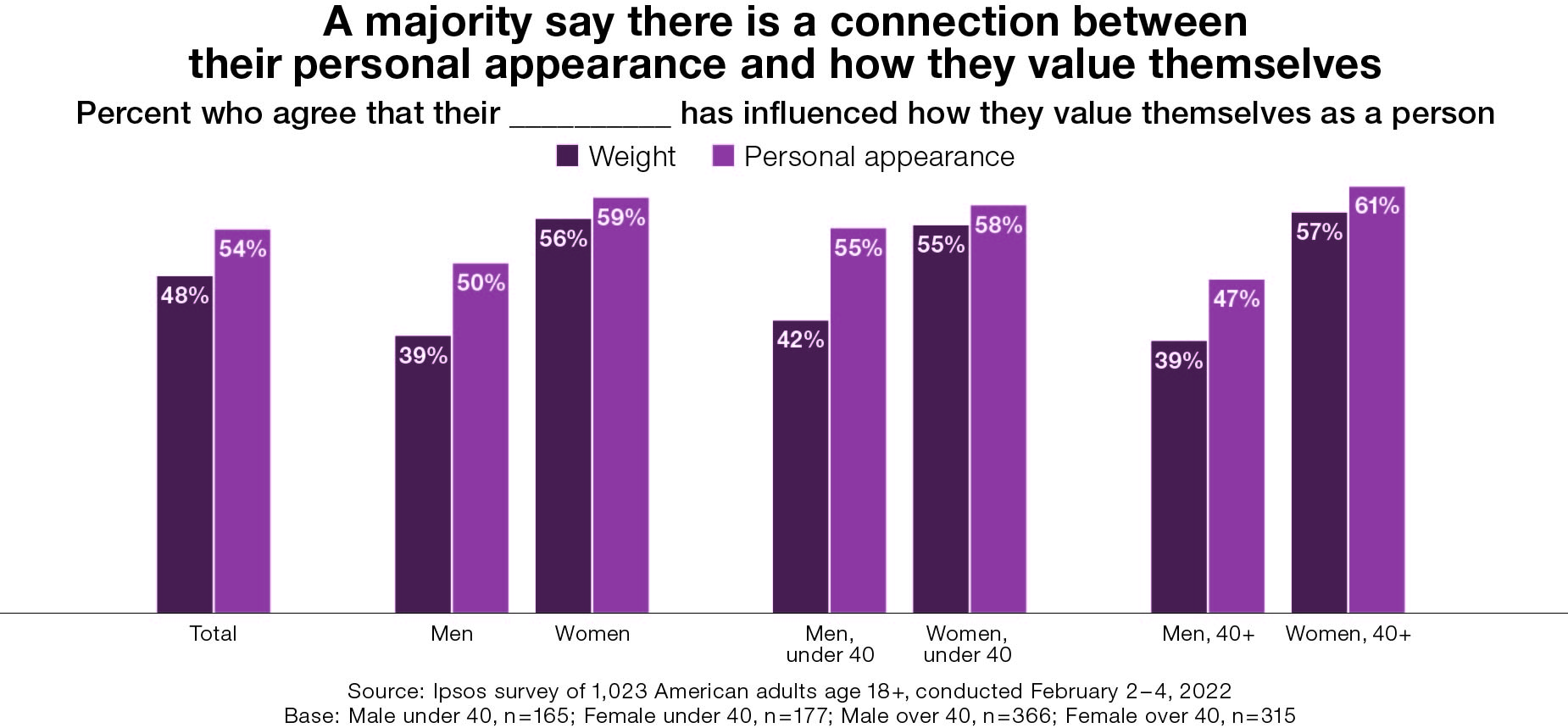
While worries about weight might fall disproportionately on women, many Americans, regardless of gender, age, or socioeconomic status feel that their personal appearance influences how they value themselves. In other words, while weight might be a particularly acute concern for many women, self-image and personal appearance are complex issues for everyone. Further, as our research shows, the influence of social media and the isolation brought on by the pandemic have had a profound effect on millions, fueling anxieties about weight, self-image, and potentially harmful eating habits.
Read on to access the detailed results here.
Executive Summary
- As we start to re-enter society after COVID-induced isolation, Ipsos research shines a light on America’s complicated relationship with food and body image.
- The coronavirus pandemic disrupted routines and lives, pushing people into isolation and amping up stress levels.
- Given these factors, it is small surprise that experts have sounded the alarm about a pandemic-driven spike in eating disorders.
Proximity to eating disorders
An estimated 9%—or 28.8 million—Americans will suffer from an eating disorder in their lifetime. Our research underlines just how far-reaching eating disorders can be—27% of adults say they either know someone who has been formally diagnosed or have themselves been diagnosed with an eating disorder. Even more (32%) say they know someone who they suspect had an eating disorder but were never formally diagnosed.
The groups who self-report as having had an eating disorder—either diagnosed or suspected—are small, at 3% and 4% respectively. But the proportion who believe they have had one is particularly high among younger generations and women, climbing even higher when age and gender are factored together. Women under 40 are most likely to report being diagnosed with an eating disorder (6%), and roughly one in eight believe they had an eating disorder that was never diagnosed.
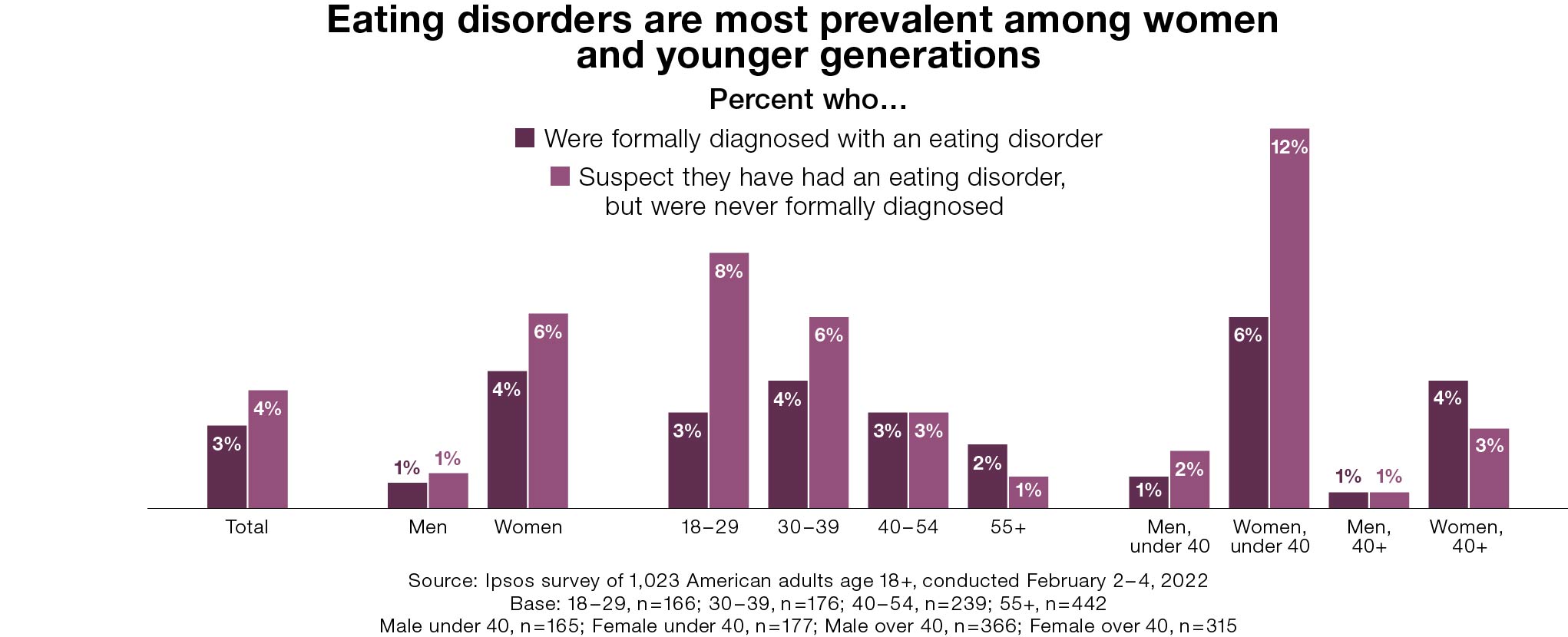
However, simply asking people whether they have been clinically diagnosed or think they have an eating disorder masks more systemic problems. Individuals can still suffer from disordered eating or negative feelings about their weight, even without acknowledging a clinical or self-diagnosis. Our research shows that even those who do not identify as having had a clinically diagnosed eating disorder (or suspect they have had one) still report engaging in potentially unhealthy eating or exercise habits.
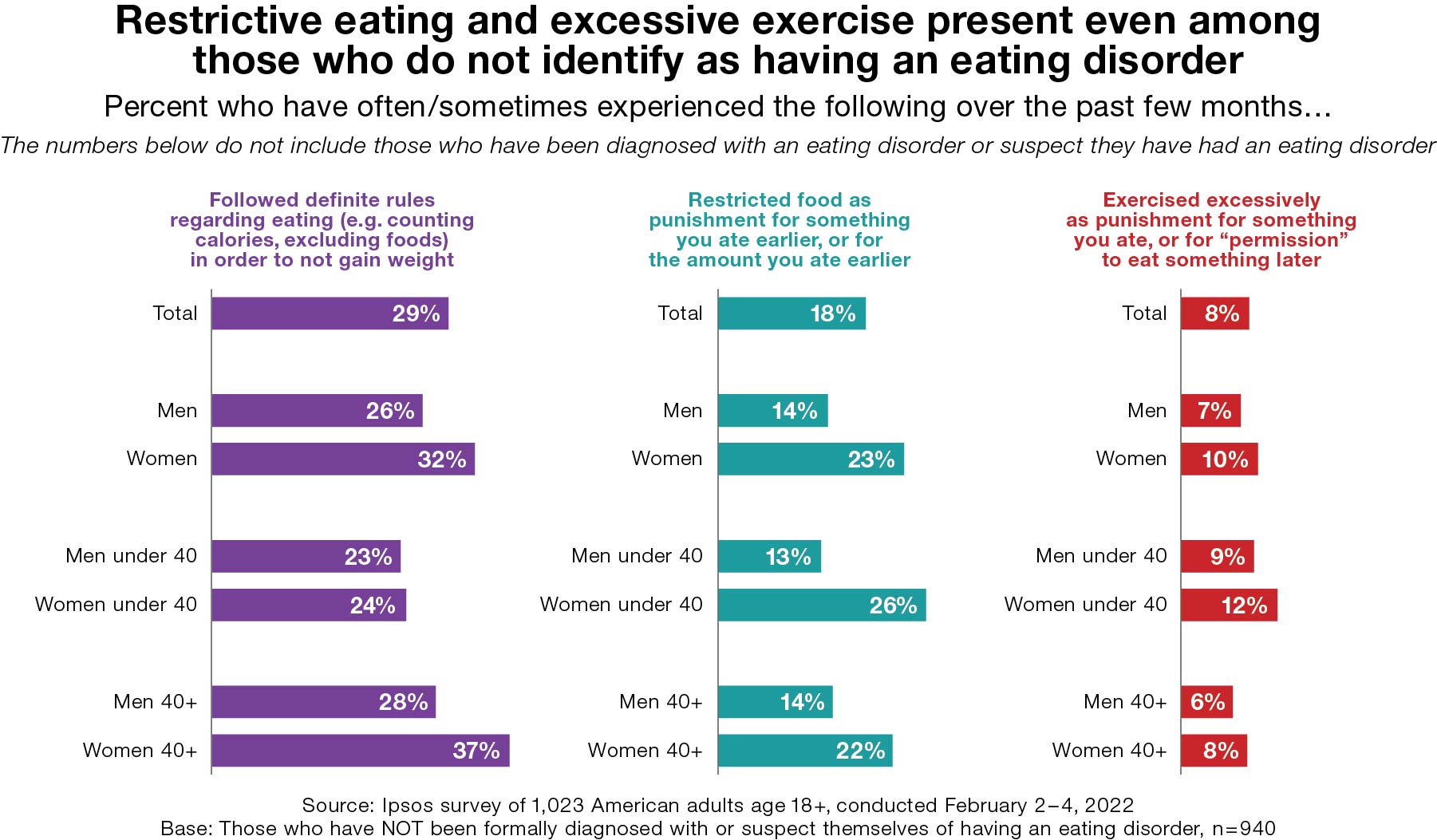
Most commonly, 29% say they followed specific rules around eating—such as counting calories or excluding certain foods—in order to not gain weight. Just under one in five (18%) said they restricted their food intake as “punishment” for something they had eaten earlier. Close to one in ten (8%) admitted to excessive exercise to counteract something they had eaten earlier, or to give themselves “permission” to eat something later. As the chart above shows, women are particularly likely to follow restrictive eating patterns. Again, these responses are all the more striking considering that they reflect the behaviors of people who do not identify as having an eating disorder.
These findings underline that individuals can still have a complicated relationship with food, even without a clinical diagnosis or realizing that their relationship with their weight might be harmful. It is also the case that eating disorders among certain groups (e.g. men, racial and ethnic minorities, LGBTQ+ individuals, low-income individual) have historically been under-diagnosed. Society paints eating disorders as primarily affecting thin, white and affluent women. In reality, relationships with food and weight can be complex for people representing a diverse range of body types and identities.
Our complicated relationship with weight and self-image
Although the pandemic fueled a concerning spike in eating disorders, our research shows that for many Americans, a preoccupation with their weight and personal appearance began early in life, pre-dating the pandemic. Weight and personal appearance have a direct impact on how Americans value themselves, something that holds true even among those who have not been clinically diagnosed with an eating disorder or suspect they have one. In other words, body image is a broader societal issue than the official statistics on the prevalence of eating disorders alone would suggest.
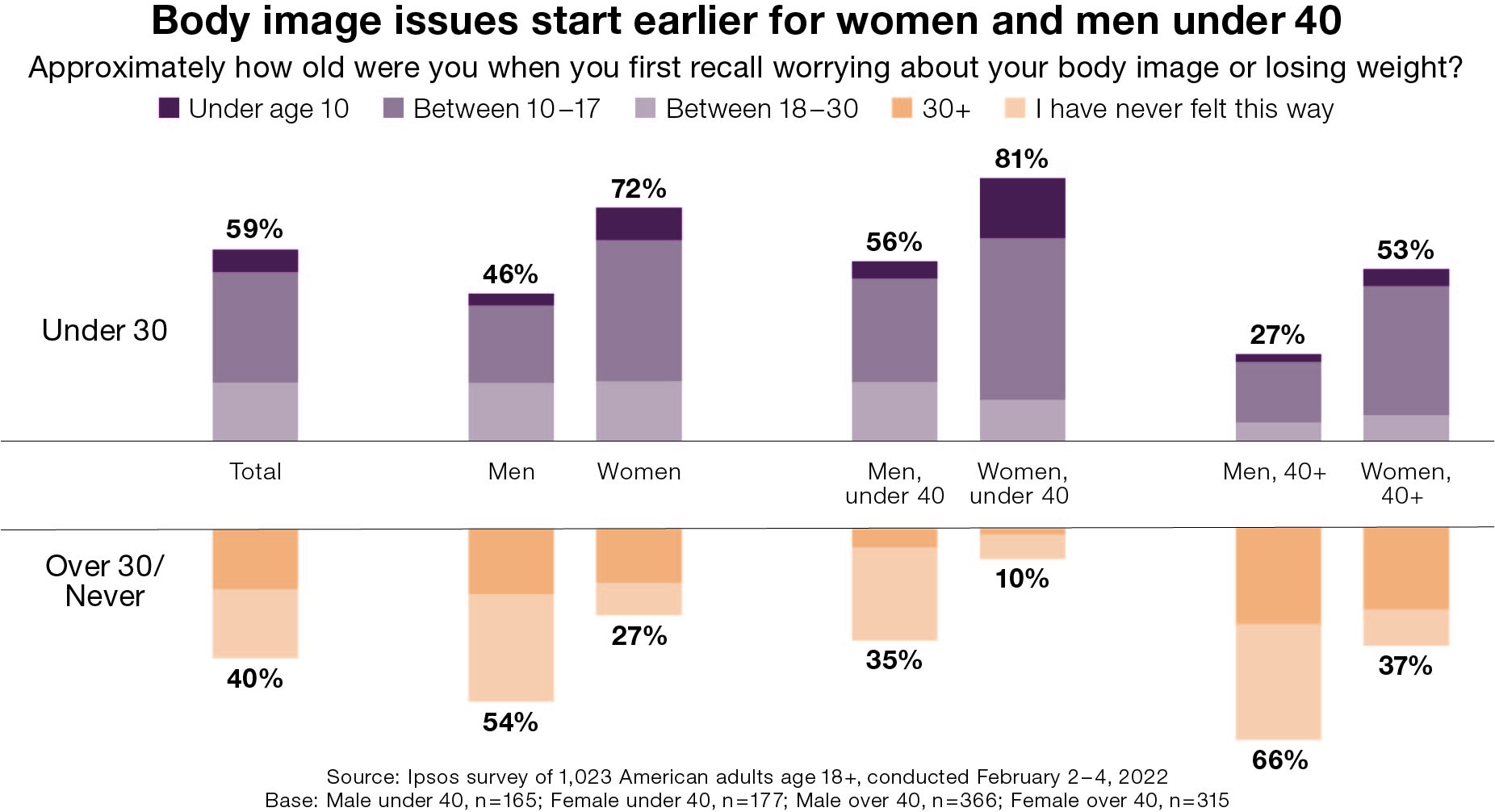
For women, the connection between weight, personal appearance and self-worth is particularly strong. And these feelings start early on. In fact, 44% of women report that they first recall worrying about their body image or losing weight in their pre-teen and teen years, or between the ages of 10 and 17. For men, these concerns are more likely to start later in life, if at all—54% say that they began worrying about their weight and body over the age of 30 or have never worried about them at all.
When comparing the difference between the number of Americans under 40 versus those 40 and up who report “never” worrying about body image and weight loss, the difference in attitudes across generations becomes even more striking. These findings underline the extent to which younger generations, and particularly younger women, may have been most vulnerable to deepening an unhealthy relationship with food and body image during the pandemic—but the seed was planted long before our collective isolation began.
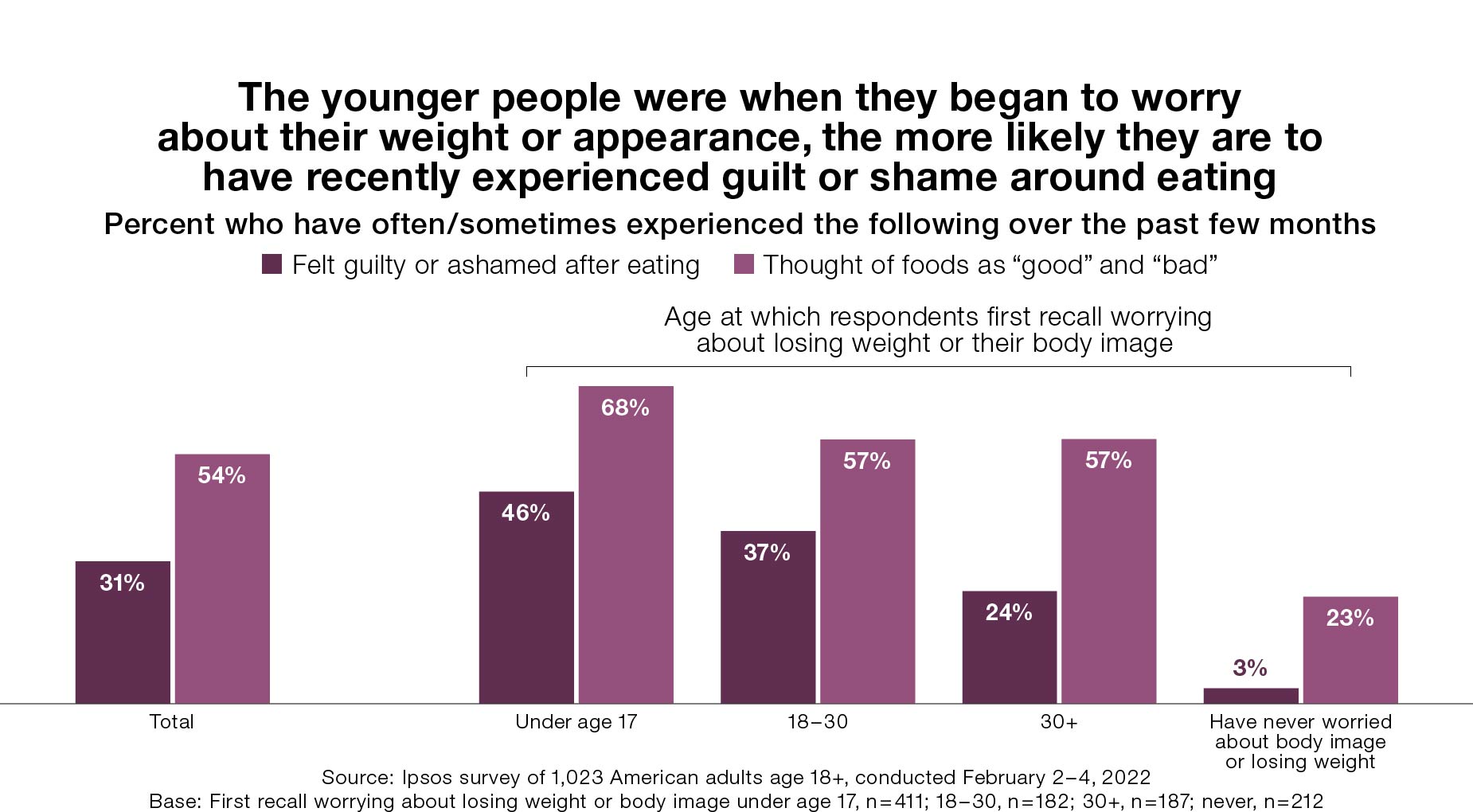
The repercussions of Americans’ complicated relationship with their weight and appearance are reflected throughout Ipsos research. One of the more telling examples is the 31% of Americans who say they have felt guilty or ashamed after eating at least sometimes in the past few months. Even more (54%) say they have thought about food in a binary way, labeling it “good” or “bad.”
Women are particularly likely to have felt shame or guilt after eating—40%, making them twice as likely as men to feel this way. However, women under 40 are most prone to these feelings, with 51% saying they’ve felt guilt or shame about eating over the past few months. The earlier Americans start worrying about their weight and body image, the more likely they are to say that they have felt guilty or ashamed about food, or to label different foods as “good” or “bad.”
Among those who say they began worrying about their weight as teens or younger, 46% say they have felt guilty or ashamed about eating at least sometimes in the past few months, and 68% say they’ve thought about food in a binary way. These findings illustrate how difficult it can be to change negative thought patterns about food and body image, once established, and how long-lasting they can be.
The pandemic heightened shame and guilt around eating
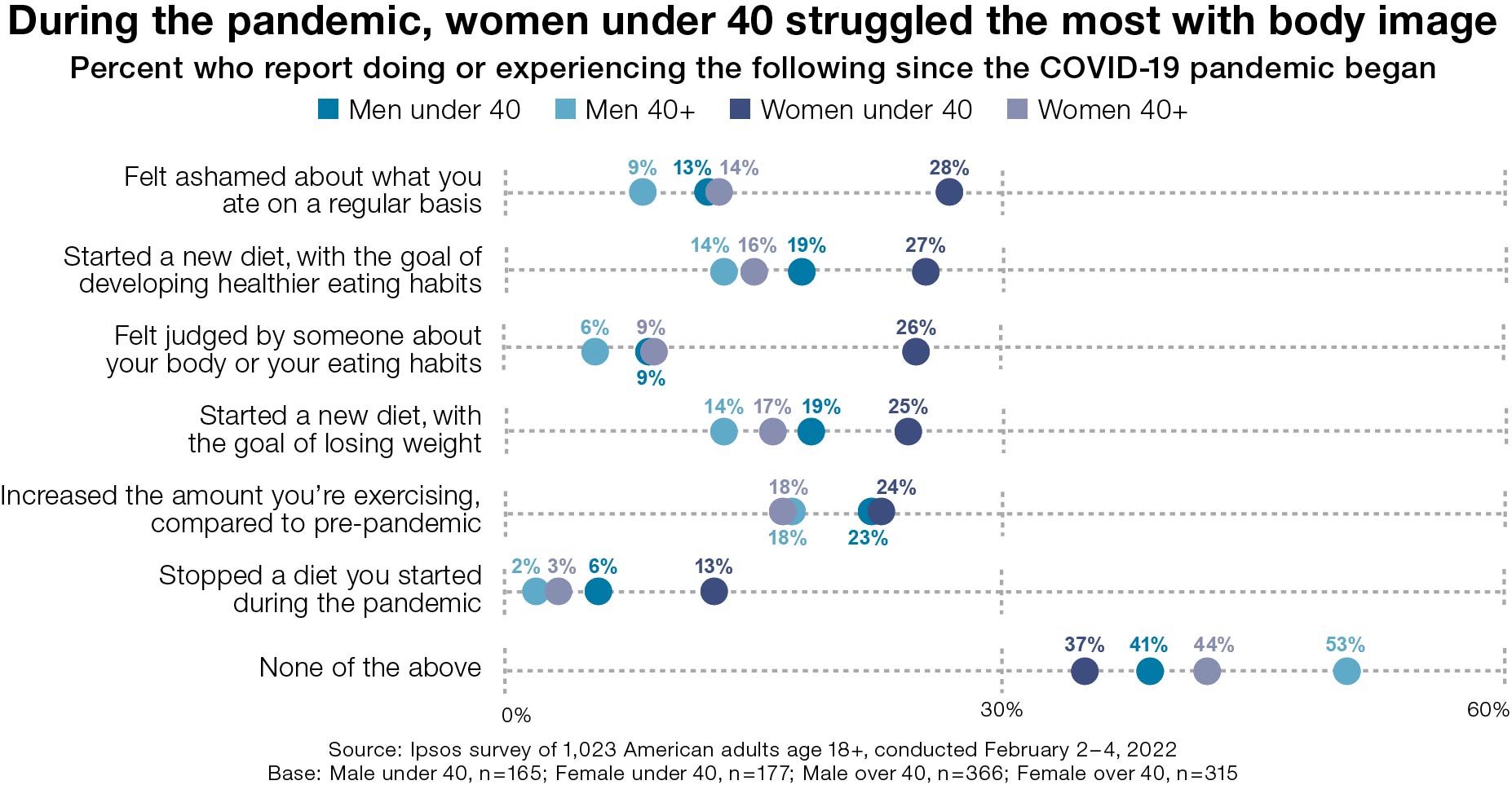
For some, the pandemic recalibrated how they relate to their body, eating, and exercise. In particular, Ipsos polling finds women under 40 are the most likely to report changing their diet or exercise routine since the pandemic began.
And while the pandemic has changed some people’s eating and exercise habits in benign ways, for others, the abrupt change in routine, plus social isolation, and increased stress all collided to drive an epidemic of eating disorders. Experts have noted that pandemic conditions—stress, loss of control, social isolation, and immense change—exacerbate or put people at greater risk of developing eating disorders. In fact, since the pandemic began, calls to eating disorder hotlines and hospitalizations for eating disorders surged. Many of these patients have been younger women and teenagers.
Ipsos polling hints at some of these larger, more dangerous changes. Since the beginning of the pandemic, 28% of women under 40 reported feeling ashamed about what they ate on a regular basis. Women under 40 are significantly more likely to report that the pandemic triggered new guilt or shame about what they eat when compared with women over 40 (14%), men under 40 (13%), and men over 40 (9%).
Relatedly, over the past two years, about one in four women under 40 also report feeling judged by someone about their body or eating habits. Fewer than one in ten women over 40 or men, regardless of age, report feeling that same level of scrutiny over their bodies in the past two years.
Impact of social media
The pandemic isn’t the only macro force exacerbating negative relationships with food and body image. In our increasingly digital, overly filtered society, social media is highly influential in how people feel about their personal appearance. Social media use ramped up during the pandemic, as social distancing measures pushed people online to stay in touch with friends and family, making its effects even more ubiquitous.
Previous Ipsos global research conducted on behalf of The Body Shop has found that more active social media users have lower self-love scores, falling behind on their self-worth and how they relate to their body image compared to their peers who don’t use social media as frequently.
These results align with the public’s perception of social media. Our recent research finds a decisive majority of Americans, regardless of gender, feel that social media is a strong factor in people developing unhealthy relationships with food. Men and women under 40 are closely aligned in feeling this way (73% and 74%, respectively), as are women over 40 (78%). However, men over 40 (62%) are slightly less likely than younger men or women of any age to see the perilous impacts of social media on body image.
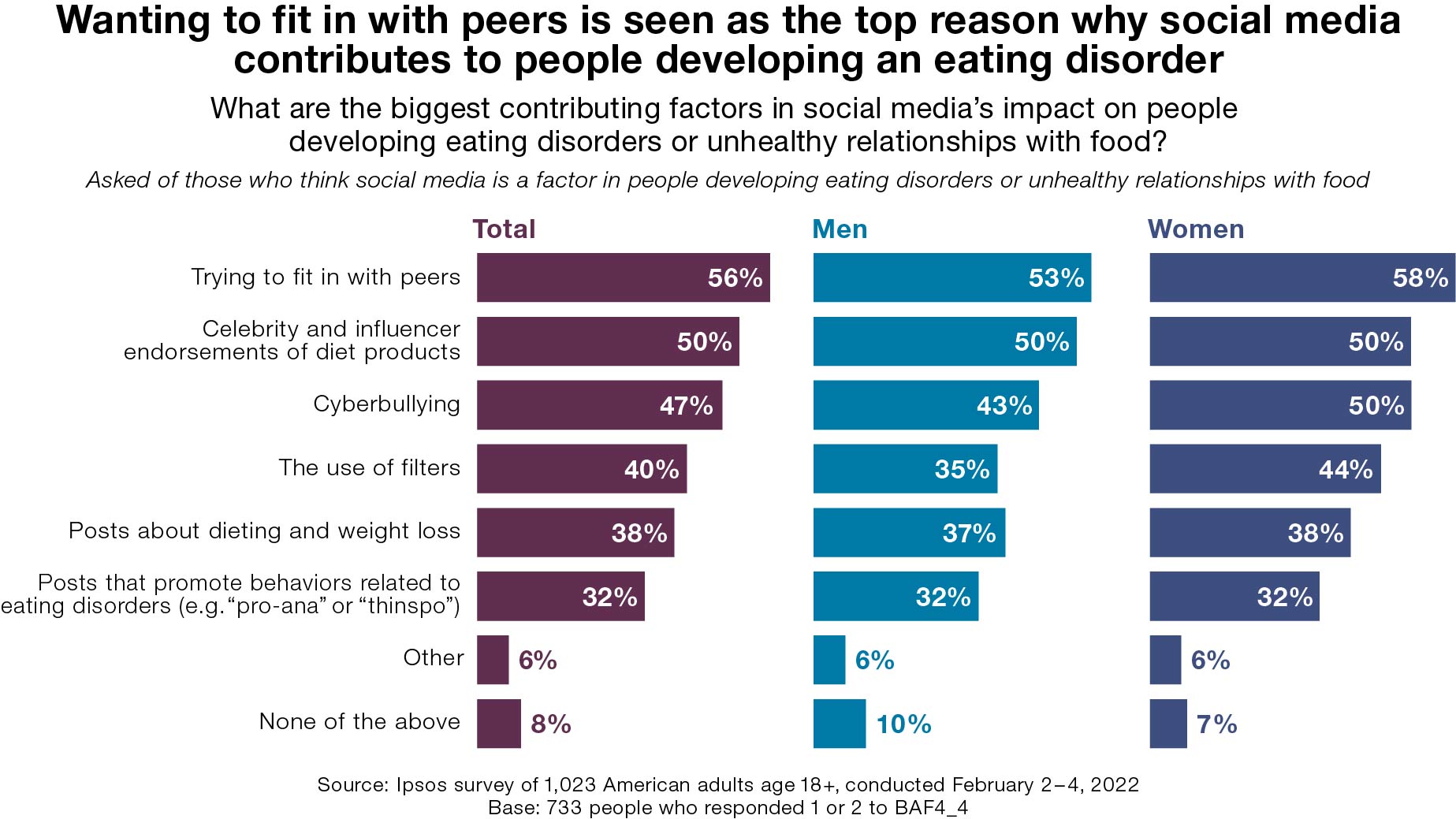
When it comes to the specific ways that social media can become a strong factor in people developing eating disorders or unhealthy relationship with food, the public feels there are many reasons for this, ranging from interpersonal dynamics online to tools on social media sites. When looking more closely at feelings among the group who believe that social media has a strong impact on people developing an unhealthy relationship with food, certain core themes emerge.
For example, above any other reason, 56% among this group feel that to fit in with peers is the biggest factor social media plays in people’s unhealthy relationship with food. Other interpersonal dynamics online, like cyberbullying (47%), also factor heavily here. Other perceived problems with social media center around the type of content and tools offered on the sites. Many feel that celebrity and influencer endorsement of dieting products (50%) and the use of filters (40%) are the biggest problem with social media’s role in people forming unhealthy relationships with food.
Across all of these factors, women under 40 who feel social media influences people’s relationship with food were more likely to cite each problem as a bigger issue than any other gender or age group.
Moving forward
Sadly, the pandemic created the perfect conditions for an eating disorder pandemic—pushing people into isolation during a time of intense stress, and increasingly looking for connection in our curated online world. Although the conditions that created this perfect storm won’t be with us forever, we can still expect the pandemic to leave its imprint for a while to come. For one, the pandemic accelerated the trend towards increased digitization, something that is unlikely to revert back, even in a post-COVID environment. Given the link between social media and lower levels of self-love, the basic contours of daily life may continue to inadvertently fuel eating disorders or negative self-perception. As we move through an increasingly digital world—it’s still an open question how we can reframe the narrative around body image.

![[WEBINAR] Winning B2B Buyers: AI Gets You Considered; Trust Gets You Selected](/sites/default/files/styles/list_item_image/public/ct/event/2026-10/Winning%20B2B%20Buyers%20AI%20Gets%20You%20Considered%20Trust%20Gets%20You%20Selected.png?itok=Q4kElwY2)
![[WEBINAR] Accelerating Innovation Development with Synthetic Data](/sites/default/files/styles/list_item_image/public/ct/event/2026-08/thumbnail-templates%20demo_1.png?itok=nao0XJ7q)