Equity and Inclusion in Healthcare
In order for the healthcare system to meet the new demands presented not just by COVID but by an increasingly aging and diverse population, the system and those who work within it will need a human-first approach. That approach will have to listen to the voice of the patient and consumer, respect their stories and experiences, and learn its cues from them.
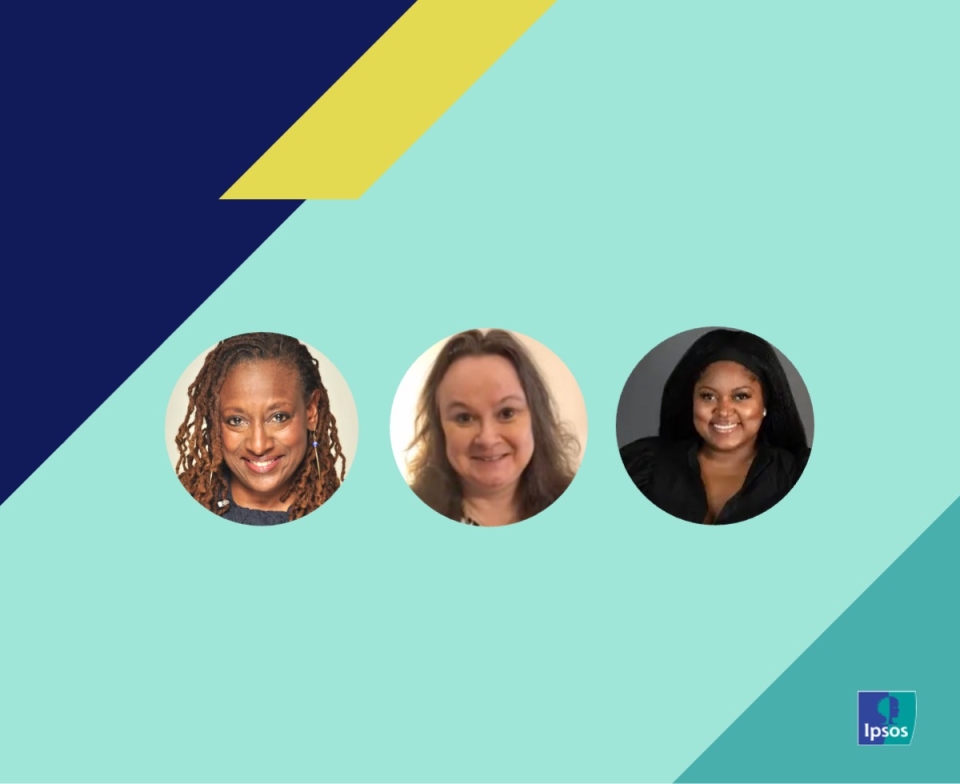
Listen in as April Jeffries, the chair of Ipsos’ Bridge employee resource group, moderates a dynamic and candid discussion about how to better empower diverse patients toward better health and wellness. Hear more about research design considerations for an optimal experience for everyone equally and examples of how to give voice to those under-represented in our communities and bring an inclusive and equitable lens to our healthcare initiatives.
As Global President of Ethnography and Immersive research at IUU, the qualitative service line of Ipsos, April provides vision and strategic leadership to researchers around the world. She is known in the industry as an “Empathy Activist” and her team is charged to heighten the understanding of the human behind critical data. April is a co-leader of Ipsos’ Anti-Racism Employee Resource Group. She sits on the IDEA Council of the Insights Association, a special council designed to address Inclusion, Diversity, Equity and Access within the Insights industry.
For more data behind racism in healthcare, please read our detailed paper or check out our recent article in The Hill highlighting why we must make Black and Hispanic communities a priority.
Speakers:
- April Jeffries – Global President at Ipsos Understanding Unlimited
- Maureen O’Brien Pott – Strategy Department Mayo Clinic
- Cynthia Harris – Founder/ Managing Director 8:28 Insights
Today’s AI-generated audio transcript is offered below. Apologies in advance for inconsistencies that have been included.
0:05
Thank you for joining us for today's Ipsos webinar featuring tips for optimizing Inclusion in Your Health Care Research.
0:14
Today's discussion will feature guest panelists from Mayo Clinic and the 828 insights, and you can read more about them on the slide in front of you.
0:25
Throughout today's session, you will remain in listen only mode, however, throughout the webinar, you may submit questions online using the Q&A feature.
0:36
Time permitting, we'll answer questions at the end of today's session, however, if time runs short than your question, will be answered by e-mail.
0:46
Today's webinar is also being recorded and will be directly e-mailed to you.
0:52
So now, without further ado, it is my pleasure to introduce today's first speaker, April Jeffries, IUU, Global precedent of Ethnography and Immersive Research. April, you have the floor.
1:07
Well, thank you so much Elen. So welcome everyone to this magnificent panel that we've got. We've got a wonderful interactive discussion for you that I'm hoping will really open open your eyes to some things that are happening within the healthcare industry.
1:22
As as Elen mentioned my name is April Jefferies and I also am co leading our ERG here at Ipsos which is all about anti racism and about how to bring inclusion into the work that we do. So I'm excited to have two very special guests here with me. I have to say upfront, we had a third guest evict the yacht who is not going to be here today. She actually has a new mom, so we've given her the day off to be able to tend to her new family, but I do have here with me, some very powerful women that I'm just thrilled to introduce.
2:02
We're gonna start with Cynthia Harris, who is the founder and managing director of 8 28 insights. And Cynthia, would you mind just talking to us a little bit about how you started this company, and what exactly does 8 28 mean?
2:17
Yeah, certainly well, first of all, thank you for inviting me to be a part of this panel, but honored to have the opportunity to have this discussion about something near and dear to my heart, and that is health care, and equity and health care. So, so why did I start the company? Man, there's so many reasons why I started the company, but I think the chief of, which is, you know, they're just, when I was a buyer of research, I couldn't find a whole lot of people that looked like me to help tell stories of other people that looked like me.
2:43
And so, combining both my background from a marketing perspective, with my breathing as a researcher, I thought it was the right time, a couple of years back to start having these conversations and helping brands speak authentically to consumers. And therefore, you know, be able to extract insights that could actually lead towards authentic action, So that's a little bit about the why.
3:04
In terms of the company name, my father was the first entrepreneur. I ever knew that. He passed when I was younger and his favorite Bible verse was Romans 8 28. So, I needed a name really quickly, and named the company after his favorite Bible verse and thought it sounded cool. At the time, you know, I was familiar with 8 8451 kroger's agency that, well, I have a number name.
3:27
I can have a number name in, name a company, 28. So that's a little bit about the company name. Now, I did not know that. So what is, what is that? What is 828? What is it? What does it say? Bible verse. And I know, forgive me for those that know it word for word, but it talks about how all things work together for good.
3:44
And interesting, because, you know, I do believe that I think that that's kind of a core ethos and how I tried to show up in the world that, you know, the good and the bad somehow, and coalesces to turn together for good things. And I try to create the same type of experiences for clients on, you know, we take the good and the bad on a regular basis, from what consumers tell us. And we try to coalesce it for something that is ultimately good.
4:07
So that's diverse.
4:09
Wonderful. That's new stuff that I didn't know about to even though we have talked several times in the past. And our other esteemed guest is Maureen O'Brian. She's actually one of my clients right now. We're working on a very important project for her at the Mayo Clinic. But Maureen runs the strategy part of the Mayo Clinic and she is really trying to make sure that we are inclusive and how we address people within the system that she is so intimately a part of. So, Maureen, do you want to just give us a few a few sentences about who you are and what you do and why do it?
4:47
Sure. So, yes.
4:49
So as April mentioned, I've been at Mayo Clinic, I actually just had my work anniversary last week, 14 years at Mayo Clinic, Oregon, the Department of Strategy, in the Division of Strategic Intelligence, and at, ha, have the privilege of leading.
5:13
uh, this research effort that April referenced, looking at the customer, consumer, and patient experience in Healthcare, four as part of our larger Mayo Clinic wide Enterprise Initiative related to E END.
5:37
So, that's what we've been working on, and have just lots and lots of very, I think, powerful data coming back, and sort of talk about, kind of what that means.
5:50
What kind of changes we need to implement to improve, elevate the patient experience.
5:55
Yeah, and we're going to talk a lot about that as we, as we move forward, But, But So, just for the sake of the audience, I know, for those of you who have been attending several of these webinars across the week here, we've had a lot of discussion about how to design and test and launch products, right? By taking a patient centric approach, that's what we've been talking about. And we've talked about how to empower patients, so that they can have better health and wellness, as we move forward. The question today with this panel, is about, how do we make sure that those experiences include and are available to everyone equally? And I'm hoping that what we can bring to life is, is some of the barriers that keep that from happening, as well as some of the, the successful initiatives that we've used to kind of break through those barriers.
6:46
So, so first, I'm going to ask you guys to a question.
6:53
We all have sort of come to this place and this kind of work from different places.
6:58
I'd love to hear your story about the why, behind what you did. Cynthia, I know you mentioned a little bit about not, you know, in the work context, you know, not seeing people like yourself but but what is it that draws you personally into this kind of work?
7:15
Yeah, so, you know, I'd be happy to share a little bit of my background. I said a little bit about my father passing when I was young. He actually pass from pancreatic cancer in 19 97. It's hard to believe. It's been that long but that was before there was much research at all around pancreatic cancer. If you have heard, pancreatic cancer is not the type you want to get, You don't want any cancer. But you really don't want pancreatic cancer. And I just have very early memories of my family literally going around the country, trying to find somebody to listen, you know, trying to see what was going on before he had his official diagnosis.
7:49
And, I just kinda call so many times, when, you know, we've returned away, or, you know, we didn't feel like the doctors are really listening in, you know. Those were times that were hard for us as a family, but as I've gotten older, I realized there were some disparity don't, there's some disparity things happening right, from an equity standpoint. And, you know, it certainly, perhaps may not have saved my father's life, but could have you ...
8:14
his life and, you know, I now take health care work pretty seriously because I feel that I honor my father through the work, right? I am able to, you know, kind of help people be heard through this work.
8:27
And, you know, every time I have an opportunity to work on a project that's rooted within the healthcare system, and to closing the gap from an equity standpoint, I bring a different type of interview to it, particularly because I feel that I'm honoring my father through the work. So it's a very personal endeavor for me. I certainly am interested in it from a curiosity standpoint. But it's more than just curiosity. It Is that a calling almost to make sure that no other family ignore their child, has experienced some of that pain. I still experience when I think about those many doors that were set, or those conversations that were cut short. So, yeah, that's just a little bit about why I'm personally passionate about this work.
9:08
Yep, that makes perfect sense, and it really does, you know, draw us into certain spaces in areas, just based on our experience, Right. So, so, how about, Maureen, and you? This is Near and dear to your heart as well. What kind of got you in this space?
9:21
So like Cynthia, just a very, very, sort of, personal family, sort of story.
9:26
My, my mother, so this is something I've heard about my whole life. I've understood through our family story that racism, kills racism and health care, kills people, and her family story she has.
9:47
She has cousins that are indigenous, and one of her cousins was misdiagnosed with alcoholism.
9:59
This was in the 19 sixties, so he wasn't diagnosed with alcoholism, the Army, the US. Army told him that he was acting like because he was Iraq and his behavior is unpredictable told them that he was acting like a drunken. You gave them a dishonorable discharge from the Army.
10:16
He got to the airport in Rochester collapsed, and died or collapsed. Let's take the emergency room, and my mom was working there at the time, at saint Marys, and was told that he was going to die from a brain tumor.
10:31
So it was misdiagnosed treated very badly and died as a consequence.
10:37
So this is something that, you know, my mom's family has just lived with her in these decades, and it's it really colors, like you were saying, April.
10:47
It causes everything about how you interpret and what you understand about the world, and what makes a difference to people.
10:54
Yeah, you know, it's interesting because I know, Cynthia, you can relate to this. We've, we work in the qualitative space, so much, that sometimes. It's, that individual story that will just sort of make, it all makes sense, right? So I think it was important for you guys to share that. I am, I personally have had similar experiences my, my oldest daughter was born premature.
11:21
Very premature. She was £3 when she was born. And it was just such an interesting experience because Here I was thinking that things were equal, right, and that, um, you know, I would get the same treatment and then you realize even the questions that are being asked of you, or the assumptions that are being made.
11:38
It's like you almost had to go overboard with, you know, This is my education, or this is where I work, or this is who I know. Just because, you realize, there's an underlying, this might not be equal in terms of how people are looking at me and my family, and my husband and, and how that all kind of works. So, It is very interesting, those stories really start to touch you and places that, You don't often want to go to, but the real right?
12:07
So, let me ask you this. So, so, with that kind of talks about this journey, right. This patient journey, and I suspect, based on our stories, that that patient journey is very different for someone from an underrepresented group or from a marginalized community. Can you talk to me a little bit about what you've seen that's different about that patient journey for someone like that? Versus someone who's maybe in a power or privileged position?
12:38
Cynthia, about Jeffers, for sure.
12:40
The first thing that comes to mind for me, know, it's access, right? Access and education.
12:45
And, what I mean by that is, you know, so often, I'm listening to both of your stories, which thank you for sharing, but, lot of times, you don't realize that these things are happening from an equity standpoint until after it happens, right? And that's because you don't really have access to the data. When you're in some of these communities that are underrepresented in the healthcare industry, doesn't have access to the data Oftentimes, because, you know, we have not been doing equitable research right for decades on end, right? There's all types of history that we could spend the entire hour unpacking in terms of, you know, inclusion and exclusion in clinical trials, for example. But, yeah, I think the first thing that comes to mind is access, right? And so what that translates to, in this patient experiences, not being able to ask the right questions, are not knowing what questions to ask, or not having the additional support network that knows the questions we ask, Right? Sort of are a lot of these. In my experience, working qualitatively the patient, you know, they just don't know the questions asked. There's a will.
13:45
But they don't know the way to facilitate well. And so that's just some of the observation that I've seen it be super curious to hear Marines perspective as well.
13:55
Totally agree.
13:56
I think that those resources and health information are just a huge part of the equation, I think that I would add, that the sense of, because we've all talked in our stories about the sense of the perceptions and how behavior and diagnoses are, are, um, ARR provided. Misdiagnoses. People have, then don't, because they're misdiagnose, they have more trouble accessing specialists and getting the care that you need, Cynthia, I think that this those might be some of the things that you were talking about.
14:40
In your story, when you referenced your, your father. That you just can't get to the right specialist. You can't get to the right resources because there are these layers of miss misperceptions and assumptions that people sort of have to fight through.
14:58
And shouldn't have to.
15:00
Millimeter, hmm. I think if I could just add one more thing to what Marina saying that you know.
15:04
So often, I think we consider the patient journey to start when a person becomes a patient, but that's actually not where the patient journey begins, right?
15:12
It's what are you teaching people when they're young, what access to information do they have at a young age so that they can delay the patients and the patient experience?
15:19
I think when we think about the journey of a patient, we have to think beyond just their patient experience, and look at the depths of the road that lead up to them, becoming a patient, at whatever disease state they're in, right? So I think it's really, really critical to look beyond just the patient experience, and look at the holistic experience of a person.
15:41
Totally, agree, totally agree.
15:43
The only other thing, I guess I would add, is that the, the idea that It's OK to ask for second opinions, right?
15:51
The April, you said, You know, what's the difference?
15:54
Between sort of underrepresented and marginalized groups and people of privilege, people have privilege, feel completely comfortable asking those questions, saying, Yep, now it's, now, I need a second opinion, but how do you, how do you get to a place of feeling comfortable doing that? I think is something that people really, really wrestle with.
16:18
Yeah, that's very, very true.
16:19
And I think then, to your point, Cynthia, when you said they don't know the questions to ask me, Some of that is just based, even on your own experience. Right, so, I mean, we've been looking at some, some underrepresented groups where children go with their parent, who's sick or their grandparent Who sick, right, To be translators, or to be or to help them hear better. I remember taking my mom to this to the hospital, just, to be the other ear, because Lord knows she went pain, really attention to what they were really saying. But Then you see right.
16:55
You see how they're being treated and that then impacts how you might think about the whole system. So, you're right. It goes, It goes deeper than just, once You're there. It's a whole experience leading up to it.
17:11
So, I often talk about this grid, right, when it comes to this power and privilege difference, and on the grid, I kinda map out systemic issues versus an individual issue, right? Things you might deal with individually. And then on the other axis, I map out things that are conscious and things that are unconscious mm. Hmm.
17:34
So, let's talk about, you know, that upper box is stuff that I'm going to argue, is stuff that happened in the past. Let's hope, Right? This is very systemic, conscious things that were done, right, clinical trials, things like that, that we've all kind of heard about.
17:50
Let's hope that that's been sort of at least, that doesn't happen anymore. I would argue some of the impacts of those things probably continue to happen, right? But then there's stuff that's systemic and that's unconscious.
18:04
Right? There's stuff that happens in this journey, that, I don't know that anybody in particular would say, You know, I treated her that way, because she was brown, or she didn't speak English. But it happens because that's in there. What are some of those things, and as you're thinking about that?
18:24
Have you, have you ever seen any ways to overcome those? Right? So I'm talking unconscious biases that are baked into the system right now.
18:33
Thoughts on that?
18:36
Yeah, I would certainly say, you know, in my experience, asking the question and not being afraid to ask questions, as how you can kind of start to chip away at some of the unconscious bias. You know, I do believe that human beings, nobody wakes up thinking about how I'm going to ruin a patient's day, or how am I going to make somebody's life more difficult. That is not, I don't believe how people wake up, right? But, there is no such thing as availability bias, right? There is no such thing as making decisions based on the information that is available to you.
19:05
And if what is available to you does not look like a diverse group of people around you, you might make some assumptions about a group of people that it's not like you that are incorrect, right. And that's true for all of us, right?
19:18
So what I have found has been very effective, is just to ask the question. So instead of Compatibly, you know, addressing something head on or challenging coming from a more inquisitive space allows said, person said, leader said, client said, you know, whomever to kind of be in a state of receiving whatever the answer might be, it kind of opens them up.
19:39
So, I think, you know, not not making assumptions, but then also again, asking questions and keeping an inquisitive spirit as a great way to kind of get at some of those unconscious things. But, but assuming, give me some examples of those unconscious things that you've seen or, or even a patient story around. Yeah, I've personally seen things such as, you know, I was, speaking to a black patient wants a black woman patient who was terminally ill with a form of cancer. That was pretty aggressive.
20:09
And she said I kept going to the doctor and they didn't believe my pain was very high, right? Like, I, I kept, you know, going to the doctor.
20:15
And, you know, I could definitely sense that, you know, people didn't quite understand how many times this girl had to go back to say, No, really, I need a stronger pain medicine, right? So, those are examples of, you know, well, we have to educate people that it is true that sometimes people think that black women have a pain tolerance. That is just inhumane.
20:37
like on human yet these I'm Max level of pain tolerance and that that's pervasive within the healthcare community.
20:44
But, you know, not just using what the consumer said, but using other data points this around what she said to help people understand, you know, this is an unconscious bias that is out there in the healthcare system. Let me help you understand what that looks like, right? So, that's an example, just a moment. That was not that long ago, but I'm certain that, if we have more time, I can think there are many examples of, you know, when you have to just kinda ask questions, well, why is that?
21:09
Why did she have to keep going back, and you will get to those unconscious biases that exist within our healthcare system?
21:17
Yeah, Yeah. Yeah. That was the same. The same kind of thing.
21:23
It's fairly well documented that the, the provider's perceptions of pain differ based on the skin color of the patient and, um, that it's, it's just really hard for people to try to sort of communicate how much pain they're in.
21:42
When the provider doesn't necessarily understand and and it's, it's, I think you're right, Cynthia. It's not anything that anybody is doing. Like deliberately. They're not, nobody's away.
21:54
No, No physician is waking up and saying, I want to sort of create pain for people today. I want to make this harder. They don't want to, I want these, these diagnoses in these painful situations to be worse for people today, but just that it's just the unconscious nature of them and sort of figuring out how to call that out systemically.
22:20
I do think, though, that, we have to figure out a way, and I don't know what the answer is, but we have to figure out a way to do that without making the patient, the center, or the hub of the communication, and feeling like they need to solve the problem themselves.
22:40
Isn't that what you think? A lot.
22:42
That's a lot for somebody to try to deal with, Try to be, you know, we, we want people to feel empowered, but to have people feel like they have to constantly advocate for themselves is not necessarily the path forward.
22:57
People don't, 100% agree, and I, just to build on what you're saying, Rain, I think, you know, it is upon us, right? We, I don't, I don't believe that you're a physician, or you, Marie? Positions, Right? So, we probably. Yeah. So, and I certainly don't have the chops. I'm I'm a market researcher, so I will not be going back to medical school, but what I will say is in our in our boardrooms and our conversations with companies, in our, in our, you know, that's where the conduit kind of voice needs to show up, right? Because it's not incumbent on the patient to have advocate while they are also fighting disease state, right? Like, it's enough to have to deal with the disease. But, you know, that is yet another reason why I think the work that we do is so incredibly important, because we have an opportunity to bridge the gap of understanding from the patient to the physician, and vice versa, in some cases, right?
23:54
Like, we can create an opportunity to expand language around certain things, even in the questions we asked of people, we can expand kind of there. I have seen that happen. I recently did some groups and a myeloma space. So again, another form of cancer.
24:08
And when you get patients together, particularly under represented groups of patients, the dynamic is incredibly powerful.
24:16
Because you see them giving one another advice, you see them advocating for one another, in a way that almost kind of it is almost an out of body experience, because they know what they are going through, and they feel heard, because they see somebody else that is like them going through the same thing, right. So, you know, I think it's incredibly important for us to find ways and spaces for those interactions to happen, so that we can help patients expand their language, you know on, and kinda create those safe spaces where they can then eventually advocate when necessary. You know when they're in the room by themselves. Or with themselves.
24:53
And I do think, you know, we started this conversation, talking about the idea of sort of, what other resources, What's the health information that's available to people? What are, what's the, you know, what are the educational tools that we can provide?
25:07
You know, are there, are there sort of spaces and places that we can make that.
25:14
That just make it easier for people to access those resources and have those conversations and teach them how to teach people how to, You know, this is how this is When, you know, you should get a second opinion. This is what, happens, This is what it looks like. And this is how you do it. and just give people sort of, the tools and resources to be able to, to to do those things without feeling like.
25:40
It's always a battle. And, you know, that advocating for yourself, this is always really hard, how do you, how do you make that easier for people?
25:47
I've been saying, The other thing I've been thinking about is kind of the, the history that people bring, right? So you talk about clinical trials. We know that people are underrepresented in clinical trials trial groups. That's very well documented.
26:05
But how do you, how do you address the concerns that people have, because they know, that people who look like them have been mistreated in clinical trials in the past?
26:19
So so, all of that history, I think being aware that all of that history comes along with people as they try to make decisions and navigate health care.
26:29
That's that that creates a burden that other people don't just don't.
26:35
Yeah.
26:36
So, So, let's talk about that then, let's talk about how we can help people with that. Right? What are some of the answers? What are some of the things that can be done, or that you've seen done that seem to make sense? I can, I can start with this one. So, this is funny, a little bit. But there is a whole vaccine campaign that's happening here in New York. And I just find it so interesting, because I clearly, they did some research. We didn't do it.
27:03
That said, you know, if there's a doctor that says that this is something you should do, that that seems to work, particularly if that doctor is a person of color.
27:15
So, they have found the most gorgeous doctors of color who are in these commercials. I'm like, oh, he's really cute. This woman will come on, and she's just beautiful, but she's a doctor, right?
27:28
And she's saying, This is something you guys need to do. And she understands the community.
27:34
There's Hispanic Women, there's black doctors and it's just been an interesting campaign to watch it evolve because it started with one guy who was sweated nerdy looking and He did it, but it must have really resonated because No, they just campaign that out and expanded it in a way that now you can see it clearly someone realizes that this is working, right?
27:57
So, what are some of the things you've seen actually work when it comes to these barriers and, and, and challenges that we can try to overcome?
28:11
Like, I'm, I'm answering every question for submarine. Please feel free to happen, but, I will say, you know, I think you bring up something very interesting.
28:19
April, and that is, you know, having somebody attractive having a doctor that looks like me, both, those matter. But I think it's taking additional questions off the table for the patient, right?
28:30
So, when they see someone that looks like them, right, There's just immediately kind of a sense of, um, this person understands my life experience outside of me as a patient, right? Because, again, these people need to be focused on being a patient right there at a time in their lives. A lot of them, you know, it can be a shocking time to be diagnosed with something, right? And so whatever we can do to take those additional questions off the table for them, whether it is having backers that look like them, whether it is offering some secondary and tertiary benefits and resources that may have nothing to do with disease State but could alleviate the pressure of their lives and what it feels like to be a part of an underrepresented group in America. Right.
29:14
Like, what are those other spaces and places that we can kind of alleviate pressure from their lives? So that they can focus on their health, as what I've seen work really well. And again, it looks like an additional resource that may have nothing to do with the disease state may have to do with helping you pay your bills, may have to do with helping you with childcare so you can go get treatment, right.
29:36
So, what are those other things that you can do to alleviate the pressure of being an underrepresented person in America so that they can have a better patient experience in Germany?
29:46
Yeah. I think, in the Indigenous community has had a lot of that going on, too.
29:51
When we were looking at some of it, in terms of being able to get to the hospital and the transportation, and all those things that are, you know, that are pressure, that you don't even necessarily realize, until you're in the midst of it. How about, how about you, Marie, and have you seen that with the Mayo Clinic? Well, certainly, representation matters.
30:09
We hear that, again, and again, that it matters that people are looking for those cues, that, you know, the environment is a safe place for them to be.
30:23
I think that's, um, You know, reminding your staff.
30:31
So, Mayo, May I just, This week, reminded all our staff with Ramadan that we have meals that are appropriate for for breaking the fast at the end of the day during Ramadan so, reminding your staff, these are the tools that we have that we can do.
30:51
You know, we had, just as a personal story, we had a hospital admission in my family, just this week and heard the nurse when we were going through the admission checklist.
31:06
Is there anything about your values that we should understand or be doing to accomodate during your hospital stay?
31:15
So, so, building that, I mean, that was part of the admission.
31:20
Questionnaire, the ambition checklist at hospital admission. It was, what are your allergies, what are your, you know, what's your medication reconciliation, what's this, what's that?
31:29
And what else should we understand about you, as a, as a person, that we should sort of honor and respect while you're here?
31:36
Are people able to articulate that?
31:38
Why are people able to articulate that?
31:42
It was kind of tough. And I didn't have to say they were asking the question of, you know, a white man, So, you know.
31:54
It was like, whoa, yeah, whatever. They, if they ask of anyone at this point, but your point is, yeah. Yeah. Those are, those are valid questions, right? Interesting. Very interesting. So, so, let me ask you this.
32:12
Then we've just been through a major pandemic in the past two plus years and I do think some of these inequities have had been boiling under the surface.
32:26
And a lot of them have been exposed in ways that, who knew, right? As we as we, as we've experienced that? Do you think that right now is an, is a moment in time? How do you feel about, like, what's happening today?
32:42
Let's look at what this looks like versus what it might have been two years ago, and, and talk to me a little bit about what you're seeing and what we could be doing in this moment in time.
32:56
Maureen, Let's start with. I can go. That's OK.
33:00
I do think that there's an energy and focus because of the inequities that have sort of been on Earth, You're right.
33:14
absolutely right, April, they were always there, all the pandemic did was highlight them and bring, ever bring everything to the surface.
33:22
And I do think that there's an energy and a focus from both sides of the equation from, from healthcare providers.
33:31
From, from that side of the equation, to say, Yep, we recognize these, We see these, this really does make a difference. In patient care, There are things that we have to address here.
33:44
But I also think, from, from the patient side, it's, you know, it's not OK that that we people die from coven.
33:55
More frequently because of the color of their skin that, that Asian hate surfaced because people thought that the virus originated in China and and you you're hearing people, I think, articulate how much more forcefully that this it's not OK.
34:15
It's not OK to die because of this no, because of, because of racial inequality and inequities.
34:24
Yeah, I think that that does make it a different sort of moment in time and creates more opportunities to find the spaces and places that Cynthia has been talking about.
34:38
Yeah, yeah, I hope so. I mean, from the bottom of my heart, I truly hope so.
34:45
Yeah, I mean, I echo that. I sincerely hope it's not a moment of time because the reality is, the demographics of our world are sifting, and particularly so in America so we have to figure out how to all be in the same boat, right?
34:57
Like whether you're not doing that different topic another day, but we have to figure out how do we coexist in a respectful, you know, kind of loving, humane way? I think if there's a positive, I hesitate to even say that that came out of the pandemic. It is that everybody around the world felt like we were all on the same boat and are still in the same boat, right? This isn't an ask them thing. This is, and I have and have not think it is in terms of, you know, Access to care and things like that.
35:22
But clearly, this is something that is a human nemesis that we all have to figure out how to overcome. So I hope that that same spirit and tenacity that we had to get through the past 2.5 years is something that persists, particularly within the healthcare space. I think, you know, as a data geek, I was very glued to the TV, and every time a new data point came out, I was reading through the trials and, you know, trying to stay up again. That's a little bit, because I'm a data geek.
35:47
But I know that common people and other people just like me, they're very common in their understanding of these things were reading the news and seeing these data points, Right? There's almost, I think, somewhat of a democratization of language around disease and around access, right? I am thrilled that, you know the disparities in the healthcare system were put on blast.
36:09
Kids were put on blast because, you know, now people have more courage to have these conversations, where there wasn't the same sense of courage to have the conversation, because it wasn't a mainstream conversation but now it's very mainstream. We know that a black communities were disproportionately impacted by Coburn and there was an exacerbation of all types of issues that led to that right Like and that is no longer a secret. So I think the fact that the conversation is now mainstream is only going to aid in this map. Becoming a moment in time that, this is hopefully the start of something that will shift for future generations, that, that my nephew, my Bs, will not have to deal with some of the inequities that my grandfather, my grandmother did, my father, as a matter of fact.
36:55
So, well, I can tell you that they're not going to, because this generation that's coming up now, they don't, they're, not, they're not putting up with it, to your point. I had had a conversation the other day, and this is a little different, but we were talking about what women used to have to deal with, just generally speaking, corporate, corporate and entertainment, whatever. And these younger women are like, Why did you guys put up with that massage, binney?
37:22
Like, I don't know, because that's just the way things were bad. But right now, it's changed, and they know, know your to your point, I think, Maureen, you said, It's not, it's not right, and it's not good.
37:34
Yeah, no, bye.
37:36
My mom gave a talk to her, my when my daughter was in Girl Scouts.
37:40
She said, You know, when I had to choose a career, you could be a secretary. A teacher, or a nurse.
37:49
Now you, girls, of course, can be anything you want. I thought, there is my mother out there. Right. Of the women's movement, right.
38:01
And very true.
38:03
Yeah?
38:05
Yeah, I think that carries from generation to generation, right. So now there's, they're speaking up in a very, very different way. I tell you, I don't want to go up against my daughters when it comes to certain things. As selection.
38:19
Know, I think, again, none of us have a crystal ball, but I think we all studied patterns and behaviors and that type of thing. And I had a girl on my team just recently tell me a header, tightening a deck or something related to a deliverable. And it was probably 445. Almost five o'clock and she says, Cynthia, I'll do it. After I go to the gym. And I'm thinking to myself. I never would've told my boss at it right now. In my early twenties, I would have said that right.
38:46
But for her and is a priority and it was encouraging to me. I shut my computer. I went to yoga that night right? But they definitely, I think view health differently the pandemic again, if we have something to think the pandemic or it is that we're all kind of valuing life in a different way. Being happened especially in the younger people on my team as an example as they're prioritizing, going to work out, right? Like, yes, I have some work to do. But I'm not going to sacrifice my workout. I can't say that as a, you know, 20 years past their experience, that I'm doing the same thing, and I'm embarrassed to say that, but it's a, it's a generational shift that I think we're seeing happening. And that's going to have an impact on even, you know, kind of what their experience is with the healthcare system. You know, certainly they seem.
39:28
And again, this is just qualitatively observing, they seem to be prioritizing it in a way that my generation certainly did not. And generations prior to me did not, right. So I think even that is something we'll have to kinda think about. Mental health, is something that comes to mind as well. How they think of, you know, about mental health, and how social media plays into that all of that, which can be whole different topic for another webinar. But yeah, I think all of these things, for all of these reasons, this isn't just a moment of time. This is something that I think is going to be a kind of a quantum shift in a new direction for the healthcare.
40:04
I do think that this moment I think as I think about kind of a moment in time question.
40:10
It's the opportunity that we have to seize this moment in time in order to create that that tidal wave and that and that quantum shift then What are the things that we should be thinking about? given the opportunity that we have right here right now?
40:24
Because of what we've gone through and what we what we've been doing?
40:29
Millimeter, yeah?
40:30
So so I want to make sure we we focus on some of those solutions, and I have a I have a picture here can you can see my picture?
40:38
Millimeter, mm, hmm.
40:41
And I thought this did it so nicely, right? This equality is one thing, right? We all are given, whatever those boxes are, but equity is something else. And I think the health care, situation and system clearly has, you know, set some people at a disadvantage versus others.
40:59
So, as we look at this picture of equality versus equity, I'd like for you to just a give me your thoughts about that and which is what you would think in terms of how that works within healthcare.
41:10
But also, ground me then in a solution based on what you see here.
41:16
So, let's start with you, Maureen.
41:20
Um, so, I do think, you know, if they're, I think about, sort of, if this is the resource question, again, right.
41:32
So, if we go back to that idea of, what are the things that people need so that we can elevate that abuts, that patient experience for air, you know, for everyone, and get everyone to the point where they can see the fields.
41:50
To build on the metaphor in the in the in this in this picture, uh, are there?
41:57
What, I don't know if we know the answers yet, but right, but what are the the?
42:02
Those tools and resources That It's, it's one thing to say, OK. Here's our all our health information.
42:09
It's another thing to say, OK, and and because we know that people have trouble Figuring out when and how to ask for a second opinion. Here's a second opinion tool, and maybe that's the first box, and, you know, Here's the things that we're doing, to make sure that people feel safe and welcome when they walk through our doors. And that's the second box.
42:32
Because, because Cynthia mentioned earlier, this idea that it's much more than the patient journey, it's, it's when first few people first notice symptoms, and when they start searching for health information, and how do you build in those boxes? And, like I said, I don't know if I know the answers, and I don't know of anybody knows the answers. But we're working on finding them, right?
42:55
So, how do you build in at each stage of that journey from sort of when you first notice, symptoms threw out the boxes that people need to stand and stand on, so they can see the whole?
43:10
Got it.
43:10
So I'm hearing that, and understanding that what that flow looks like, and sort of thinking through that, and those are the things that I think people are working on, But I don't know if, you know, if these answers were easy, we would have done it a long time ago.
43:26
Hmm? hmm, hmm, hmm, hmm, hmm, hmm.
43:28
So, so I hear you say map out the patient journey, and along that way, try to understand where the resources are lacking. And what can we do to insert them into this system so that, that helps them through. So that's those, that's those other little boxes, way better than I think. Well, I just, I just repeat what you said.
43:51
OK, I love it that that's, well, it's certainly a step in the right direction.
43:54
And I have to say that, Maureen, you, and your team at the Mayo Clinic while you say, You don't know the answers, there is a genuine push towards getting at them. So I do appreciate that, and I think it's worth mentioning to, to those who are listening that it's hard work, but it's work that you have to be willing to do.
44:15
How about you, Cynthia, for my picture? What do you see? You know? It's interesting, because I see, I see everything Marie was saying, and I see, See things a little bit differently, too. So, when I look at the young young man, I'm not sure if it's girl. Or boy, doesn't really matter, but, you know, don't consider that that person even knows what's going on on the other side of the fence. Right?
44:35
Like, definitely consider the fact that they may not, let me correct myself, they may not know what's going on on the other side of the fence. So, what I see in this is find ways to just consider that. They might not even know what's going on on the other side of the event. That does anything on the other side of the fence, that very thing that I immediately see.
44:54
I think the other thing that comes to mind for me is to provide some urgency to this equity conversation. I think it's commendable that we're having this conversation today that you initiated April, but have some urgency.
45:05
Don't wait until the ninth inning to reconfigure the boxes, and I think so often we wait until there's some sort of catastrophic, dramatic, Epic event. Right, that it requires us to ship the boxes. But I think it's very important that we consider it in the first inning, and not wait until the ninth inning. So, as I look at the equity picture in particular, I think to myself, man.
45:29
You know, did the patient and the provost t-shirt, were they invited to view the game at the end of the game Or is this at the beginning of the game? Right? And I think it's up to us to decide when are we going to have these conversations? And they may be uncomfortable, right? These boxes might be heavy to second on top of one another. But you know, I certainly see kind of some contextual things in here to consider when you move the boxes on, and to do it in a very urgent manner. It's important, Our world is changing, whether we like it or not. So we've got to shift the boxes so that we can all look at the same thing.
46:05
Interesting. Got it. So yours, your solution is more around the sense of urgency. Let's get these boxes shifted so that we can even make sure that everybody knows there's a game going on. Right. Right, much less how to play it, but is there even understanding and not the not the night in the in the first inning and not the night? Yes, thank you, Maureen. I missed that part. I love this. I love this discussion. I have one last question for you guys before we have to wrap up.
46:35
Um, this idea of real change, real change, what does that look like to you?
46:46
And how might you articulate us the path towards that?
46:53
So, I'm going to go ahead, go ahead and get real research.
46:59
For me, it's all about metrics.
47:02
If we don't say, These are the things that we're going to change, and these are the ways that we're going to measure them.
47:09
And these are the implications of achieving those targets or not achieving those targets.
47:17
I don't think you get real change.
47:19
I think that we have to move past, sort of the, the, the, the heroic action kind of story, and we have to move past the though the sort of one-off solutions. And we have to get to a point where This is, it's built into the system, and it's measured, and people are accountable for, for change.
47:47
I think that's where real change is going at.
47:50
Happen.
47:52
Millimeter has to be systemic.
47:54
It has to be rigorous, It has to be intentional over time mm hameed, yep, It's from one research to another. I love the thought of metrics, I think that's spot on. The only thing I'll add, and you kinda set at the in their Marine, is, this has to be consistent conversation. This is not something that we have and then all of a sudden, it's fixed, right? This has to be consistent conversation until it is just second nature for equity to exist within the industry, right? It's, you know, and who knows, it may not happen in our lifetimes.
48:26
It'd be great if it did, but whoever happened, this has to be a consistent conversation, And, again, not something that happens as a trigger, a reaction to some trigger, that happens on in society or in, you know, in one event or another. It has to be something that is an ongoing kind of conversation. And it has to work both ways. I think, you know, we have to not feel like we are smarter than the patient, right? Like, they had a heck of a lot to teach us. And although they may not talk like us, they may not have our level of education. They may not have our household income, but they have a heck of a lot to teach us. And we have to be willing to be humble and to listen. Because, I mean, at the end of the day, we're all working for them, right? So we have to humble ourselves and be willing to kind of be listeners in that conversation. I think that's what's going to lead to change. I think it's metrics. I think it's continue conversation and the willingness to be humble and to listen.
49:21
Yep. OK.
49:23
And why look, I know I said that was the last one. I have one more question.
49:27
Why is this so important?
49:30
Why?
49:31
I mean, you know, as as someone an underrepresented group, it's important to me, right, But why is it important for the larger society? What is, what does this do? That really helps us all.
49:47
I mean, you can talk about just the economic value of the lives that have been lost prematurely.
49:54
And what those people could have contributed to society, but we lost them no, too soon, because they died of systematic racism.
50:07
I think that's it feels a little crass to put it in kind of economic terms, but, um, You know, What are we missing out on as a society as a culture?
50:20
Because people died?
50:22
hmm, hmm, hmm, hmm, hmm, Hmm mm hmm, Yeah. I hear you, Marine, I think yeah, absolutely, yes, and no without health, what are what are any of us, right? Like it without help.
50:33
We can't even be the force expressions of ourselves So I think you know what's at risk here is our ability to bring our full selves right and help our patients bring their full selves to their lives at large and at the end of life people don't think, you know, sometimes when you get terminally ill or when you have a disease that you know you can't overcome without help, right?
50:54
You get so caught up in that, but you sometimes could forget the life part of the equation, right. So, having this ongoing conversation is just a part of the life experience at large. Right. And so, I think it's incredibly important to kinda move the barriers specifically for people who are underrepresented groups, so, that they can have more life, At the end of the day. That, they can have more like, yes, that they can contribute to society. Absolutely, But, at the end of the day, I think the bottom line is so that they can have more life, give more life, and we can experience more life with them.
51:28
And I think from an innovation and kinda design perspective, too, right?
51:33
We know that many of, like, if you think about sort of disability accommodations, mm rolls, oftentimes, when you talk about specific accommodations, make life better for so many people in ways that nobody even like the anticipated, right? If I think about the sidewalks, we used to have to step up to a sidewalk.
51:56
And our sidewalks have the ramps in certain rate, made life better for everybody walking down the street, right? Made life better for moms, trying to push strollers, made life, made life better for everybody.
52:10
So if we can think about how these, no, think about it kind of in the same way that sparks innovation and design. And we know that affordability, and access, and convenience are problems in healthcare.
52:27
Everyone, right. How do we design healthcare better? How do we simplify health care in ways that make life better for everyone, in ways that we can't maybe even imagine or anticipate today?
52:43
Yeah.
52:44
I love that, in fact. So, two things I want to mention. There is a book.
52:49
It is called the Some of Us, it's written by a woman named Heather Mcghee. It is not necessarily health care focused, although she dresses some health care issues, But she does talk about how racism and the systemic inequities have affected everyone.
53:06
And, to your point, Maureen, she does talk about which she called designing for the margins, right?
53:13
So, designing a room for a blind baby will make sure that room is covered for any baby that is in there. Right. So I think there's something very, very cool too about that, that, um, that makes a lot of sense, and that, that, you know, while it is the right thing to do for sure, sometimes it helps to just add the perspective of that. Right And it's just for us. For some, not just for someone else, but for us all, so I really, do, thank you all for you both, for, for bringing that up and for articulating that quite so wonderfully.
53:47
So, we are up on our time. We, we don't have any questions. I think we're gonna wrap it up, I just want to say, it was funny, when I pulled this team together We did have Vic with us as well. At the time I was teasing you guys and I said I've got a panel of some badass women that are going to just rock this and you all have certainly delivered. You can hold onto your titles there, but I just want to thank you for taking the time to have this really important discussion. And I think, you know, the people that will hear, it will start to think differently about to sort of how the system works. And what we can do to inject some imposed, some more positive and meaningful things into that system.
54:32
So thank you.
54:34
Cause I think perhaps my, my privilege to be on this panel, and I really appreciate the invitation. Thank you.
54:42
Thanks so much. All right. Bye. Bye.

![[WEBINAR] 2026 KEYS: Ipsos Global Trends](/sites/default/files/styles/list_item_image/public/ct/event/2026-09/thumbnail-keys-0924_1.png?itok=k_DxfyO9)