
Ipsos Quick Take on Inflation
With inflation expected to continue for the foreseeable future, it’s important to know that people experience its impact on many fronts – economic, political, and social – and that it does not affect everyone equally. The less affluent feel the reverberations of inflation much more acutely than wealthier households, thus changing citizen calculus and increasing uncertainty in politics and business.
Take a look at our detailed paper exploring the five data points that are most relevant for senior decision-makers right now.
Inflation hit a 40-year high this spring, prompting the Federal Reserve to raise interest rates at a regular cadence looking ahead. But that may not be the only problem on the horizon; new recessionary alarms are going off too.
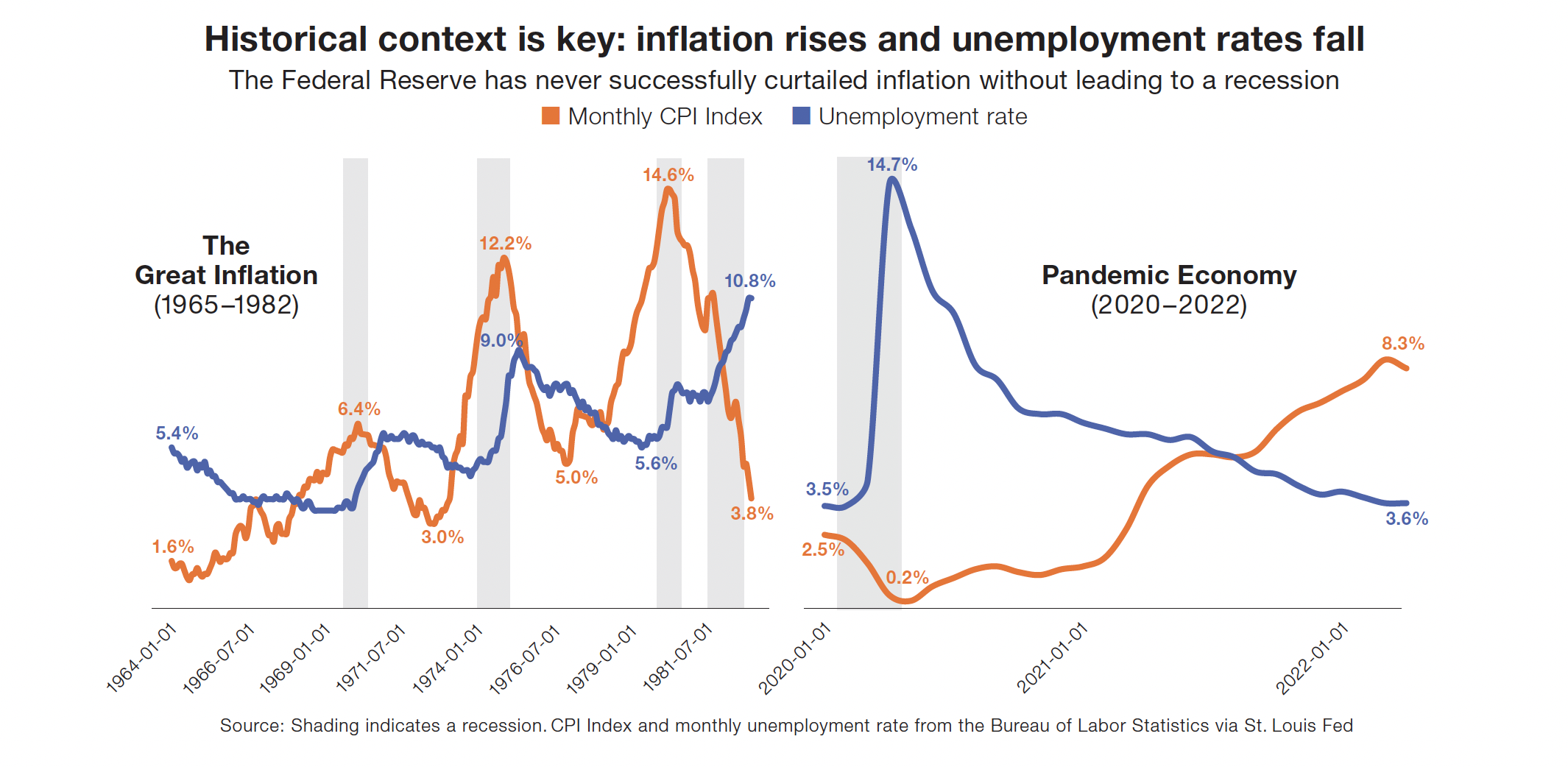
Historically, an uptick in unemployment and a recession follow periods of sustained inflation due to the Fed’s moves to cool off the economy. Forecasts vary on how high inflation will be, but most expect inflation to continue this year into next. Some predict that it will stabilize by the end of 2023. Others expect a somewhat elevated level of inflation then, too.
While the pandemic has disrupted many pre-pandemic patterns, some major banks are now revising their forecasts, anticipating a potential recession. Consumers will have to adapt and change whether inflation is the only major economic crisis on the docket or if inflation is followed by a recession of some kind.
Even with this unpredictability right now, one thing is certain in the near to mid-term future: Experts agree that inflation is here to stay.
Here are five data points that are most relevant for senior decision-makers right now.
What you need to know
1. Plan for inflation
Inflation is here to stay with us in the near term, a recession is likely to follow, and unemployment may rise.
2. Consumers will cope
In the short term, consumer behavior mimics what we would see during an economic downturn. In the long term, it requires institutional adaptations.
3. Inflation is regressive
It negatively affects the less affluent more than the wealthy. Expect more discontent and deepening inequality as a result.
4. Inflation is top of mind
For now, it will decide upcoming elections and significantly shape policy.
5. Governments will be blamed
The uncertainty weakens incumbents. Expect turnover and less meaningful legislation.
1. Plan for inflation
Everyone is talking about inflation. In March, the Consumer Price Index climbed to a 40-year high. Inflation crawled to a near halt during the early days of the pandemic when unemployment skyrocketed, and most people hunkered down and did not spend. Now, inflation has climbed following elevated consumer spending, supply chain issues and war in Ukraine.
The Federal Reserve’s tools for tamping down on inflation are blunt, and unemployment will likely rise as the Fed works to cool off the economy. Our current situation follows historical trends and shows the tension between the Fed’s goals of maximum employment and price stability.
2. Consumers will cope
When inflation cuts into consumer purchasing power, there are several strategies that they can employ, from preserving their savings to stretching their dollar. How long inflation lasts is an important factor in understanding how consumers cope.
In the short-to-medium term, consumers respond as if they are in an economic downturn. They do things like budget, cut back on spending, buy more bargain or store brands, or look for sales. Notably, there are some differences by income level. Country Financial/Ipsos research shows that the focus for lower-income households (defined as those making less than $50K) is to restructure how they go about buying their basic goods. Some of the top strategies they report employing include buying fewer products overall and focusing only on essentials (groceries, utilities, etc.), driving less, or shopping at dollar/budget stores more.
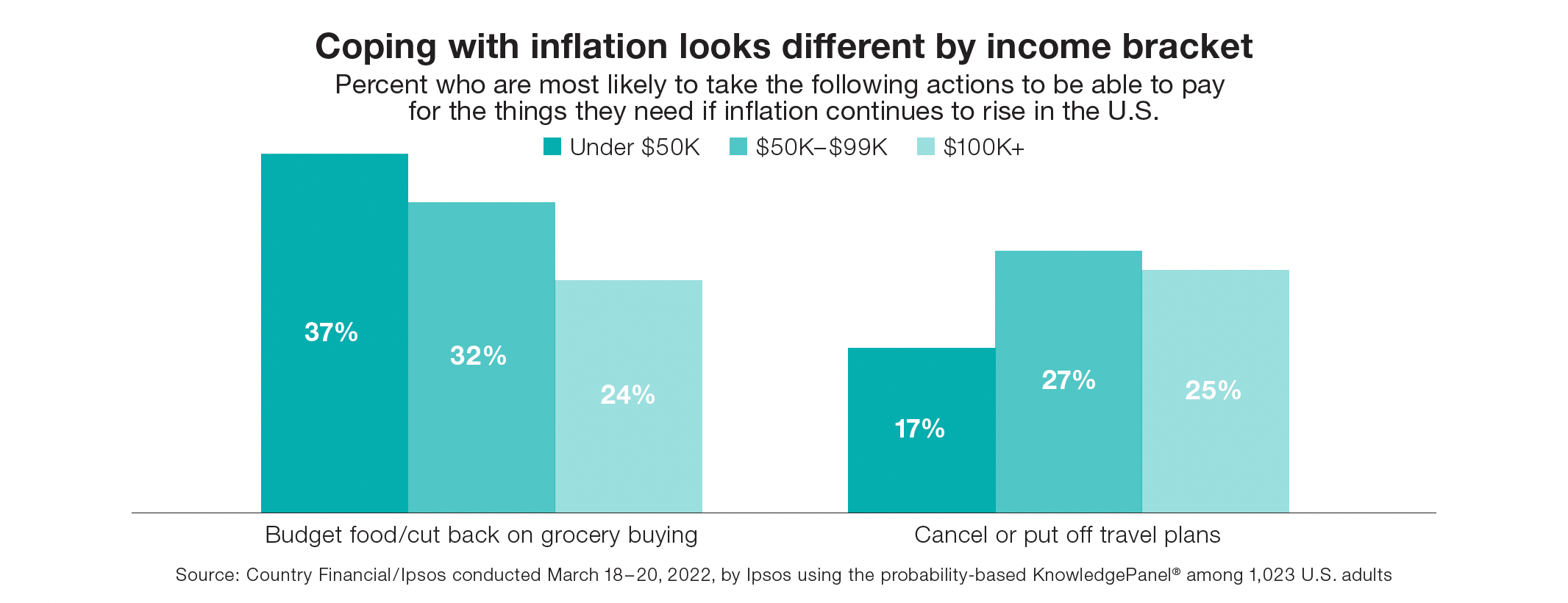
On the other hand, higher-income households (defined as those making over $100K) are more likely to curtail non-essential goods and services, doing things like cutting back or postponing travel or not going for that expensive electronic purchase. Middle-income households report a mix of the two approaches—rethinking how they buy basic goods, like groceries, and cutting back on discretionary spending.
If inflation persists in the long term, consumers have less room to maneuver, and they begin to feel these price pressures. More institutional solutions may come into play, like indexing salaries, keeping assets liquid in indexed secure investments, and annualized salary increases that are tied to inflation. These are all tactics that are used in places like Argentina, Brazil and Turkey. Again, the more affluent benefit the most from such banked solutions.
3. Inflation is regressive
Inflation is a regressive tax; it does not affect all people equally. It is the poor and unbanked that suffer the most. The more affluent have mechanisms to insulate themselves. Being banked and having assets means they can index their savings accounts, use their home equity as a hedge, direct more of their disposable income toward essentials or use savings to weather the storm.
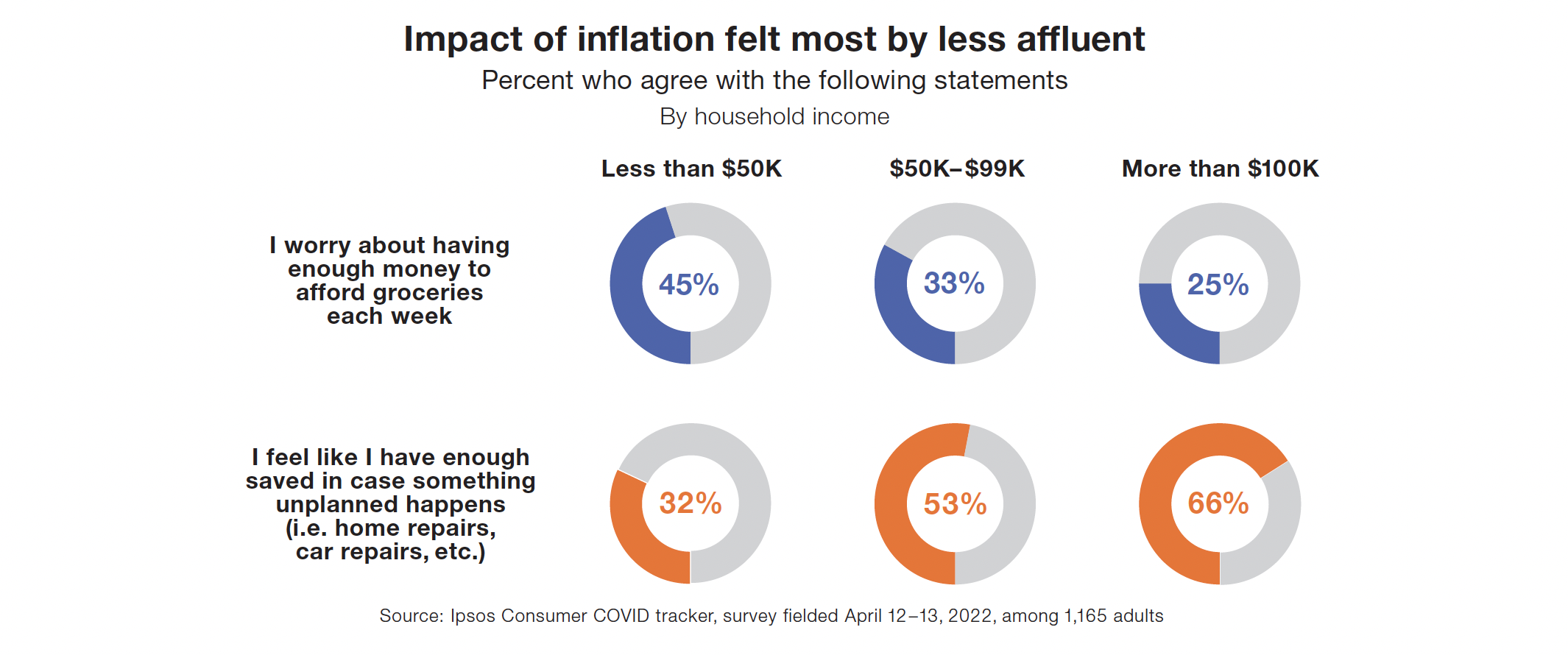
Public opinion research backs this up. People making under $50K per year are more likely to worry about how they are going to pay their bills and afford their groceries. About half of people in this income bracket report feeling this way. Relatedly, they are also much less likely to have savings to tap into.
Because not all suffer the same, unchecked inflation can easily lead to populist reactions. History shows us this. Think Weimar Republic or Latin America circa 1985.
4. Inflation is top of mind
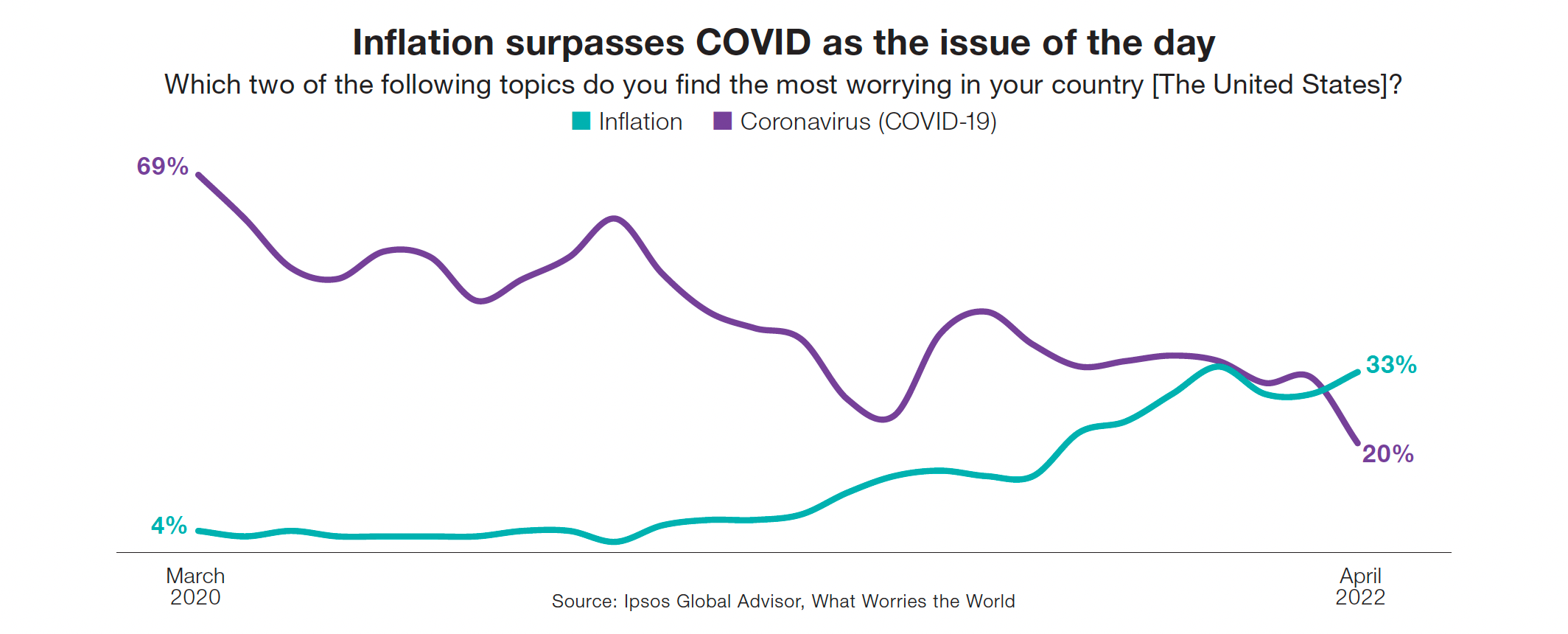
In both the U.S. and around the world, inflation has taken over the agenda from COVID. What does this mean?
Both political and economic actors will try to meet public opinion where it is through policy and action. As an example of this, within the past month, the Fed began raising interest rates to scale back inflation, and President Joe Biden tapped into America’s Strategic Petroleum Reserve to lower gas prices.
As we approach the midterm congressional elections, it is important to note that the candidate or party seen as strongest on the main issue of the day wins the election 85% of the time. Inflation acts as a centripetal force—right now, everything relates to it. We saw this with COVID-19 in 2020, helping to propel Biden to victory. Over the next few years, king inflation will likely anoint new governments—here in the U.S. and around the world.
5. Governments will be blamed
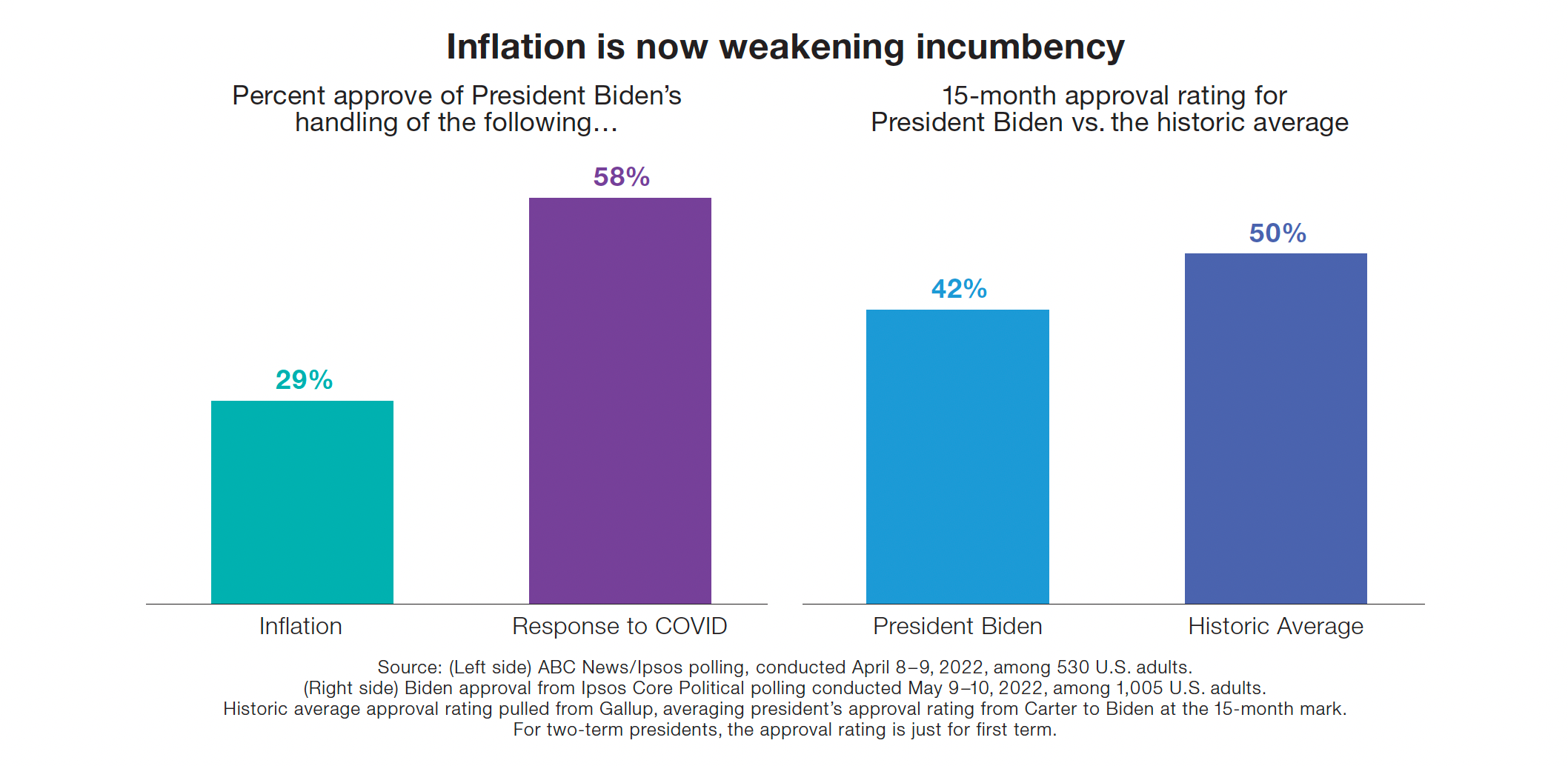
Inflation is eroding the inherent advantage enjoyed by incumbents, which is about 3-to-1. Take President Biden as an example. He won on COVID but is losing on inflation. Look at the numbers below. This puts him in a precarious position relative to his predecessors. More immediately, Biden and the Democrats are facing significant headwinds going into the midterms. Given this, we believe midterms will result in a divided government, where Democrats control the White House, but Republicans control the legislature. Expect the same trend globally.
Bringing it all together
People experience inflation on many fronts: economic, political, and social. Importantly, businesses should remember inflation does not affect everyone equally. The less affluent feel the reverberations of inflation much more acutely than wealthier households. Companies should not underestimate inflation or the following economic, political, and social consequences. Moreover, inflation changes the citizen calculus, increasing uncertainty in politics and business. We focused on the U.S., but the same logic can be applied more broadly.

![[WEBINAR] Winning B2B Buyers: AI Gets You Considered; Trust Gets You Selected](/sites/default/files/styles/list_item_image/public/ct/event/2026-10/Winning%20B2B%20Buyers%20AI%20Gets%20You%20Considered%20Trust%20Gets%20You%20Selected.png?itok=Q4kElwY2)
![[WEBINAR] Accelerating Innovation Development with Synthetic Data](/sites/default/files/styles/list_item_image/public/ct/event/2026-08/thumbnail-templates%20demo_1.png?itok=nao0XJ7q)