Voices of Ukraine: Documenting Life During Wartime
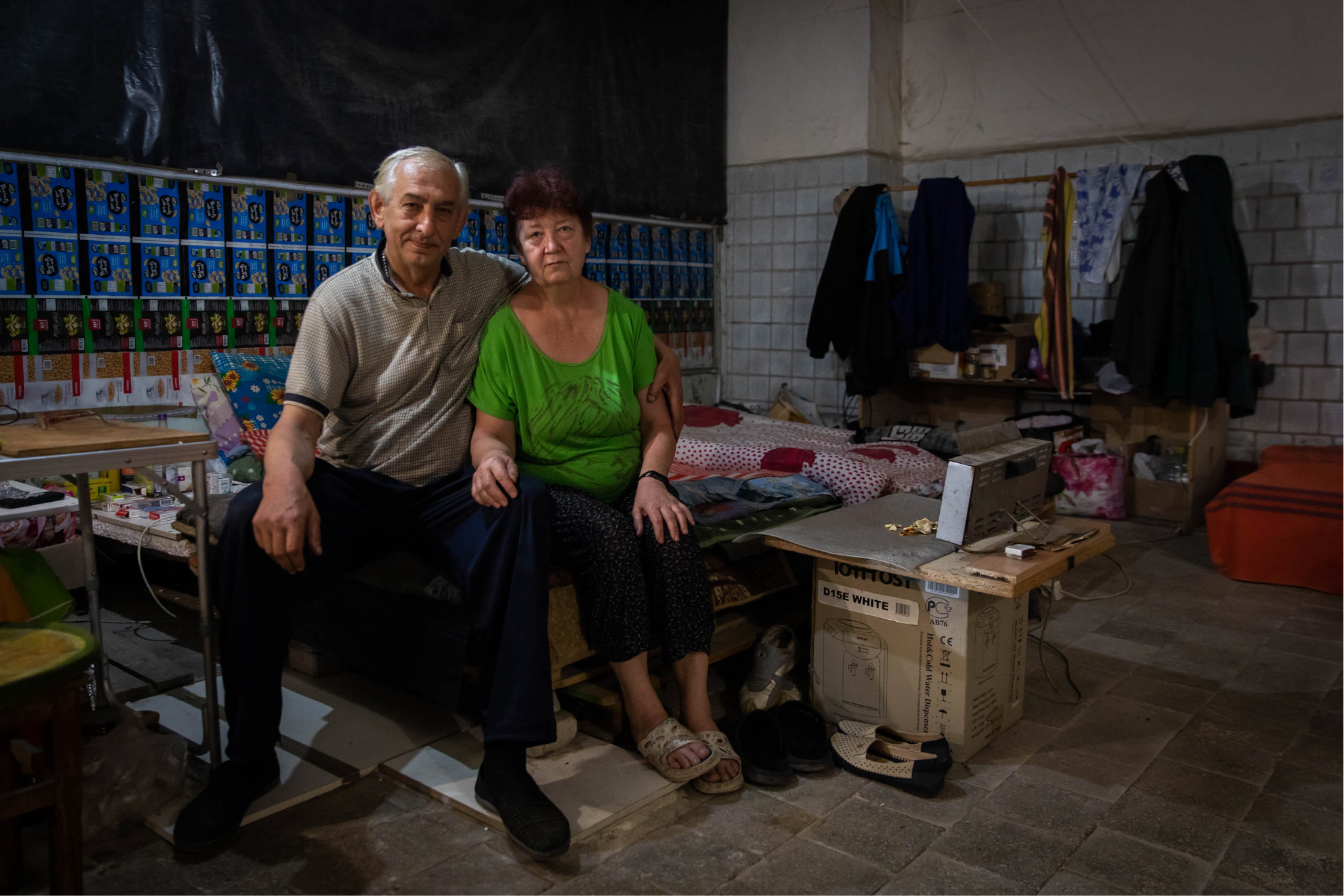
“Every day and every night, the bombing continues; our home is gone, and it is too dangerous to leave,” says Ludmilla. She and her husband Slava have spent three months and 15 days in a windowless underground concrete space they share with more than 60 people in Derhachi, a town north of Kharkiv near the Russian border. They share a bed constructed of pallet boards and foam padding. Like many Ukrainians, they count the days their country has been under attack, the number of months they’ve been displaced, and the friends and relatives who have perished.
“We are lucky. Our neighbor’s house was also destroyed, but they killed her husband and son, too. We’ve been married 50 years and will be okay. At least we are here together.”
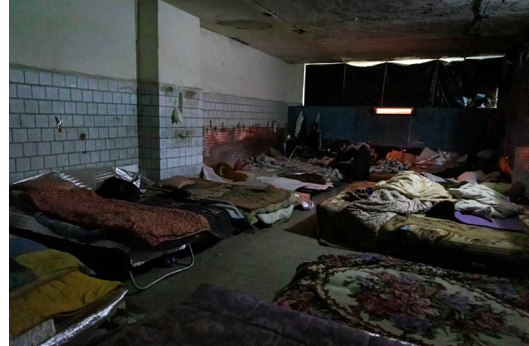
On the wall are rosary beads and an outdated calendar; makeshift beds, cardboard boxes, and threadbare blankets cover the floor. Previously the basement of an office building, the shelter was quickly converted to a bunker following the invasion. Derhachi, formerly home to over 11,000 people, has less than 4,000 residents today. Derhachi is just one example. Throughout Ukraine, millions have been forced to flee their homes. Schools, hospitals, and transportation systems have been rendered inoperable; thousands are without heat, water, or electricity. On September 9, in a joint assessment with the Ukrainian government, the European Commission, and the World Bank estimated that “the current cost of reconstruction and recovery in Ukraine amounts to $349 billion,” a figure that is expected to grow in the coming months as the war continues.
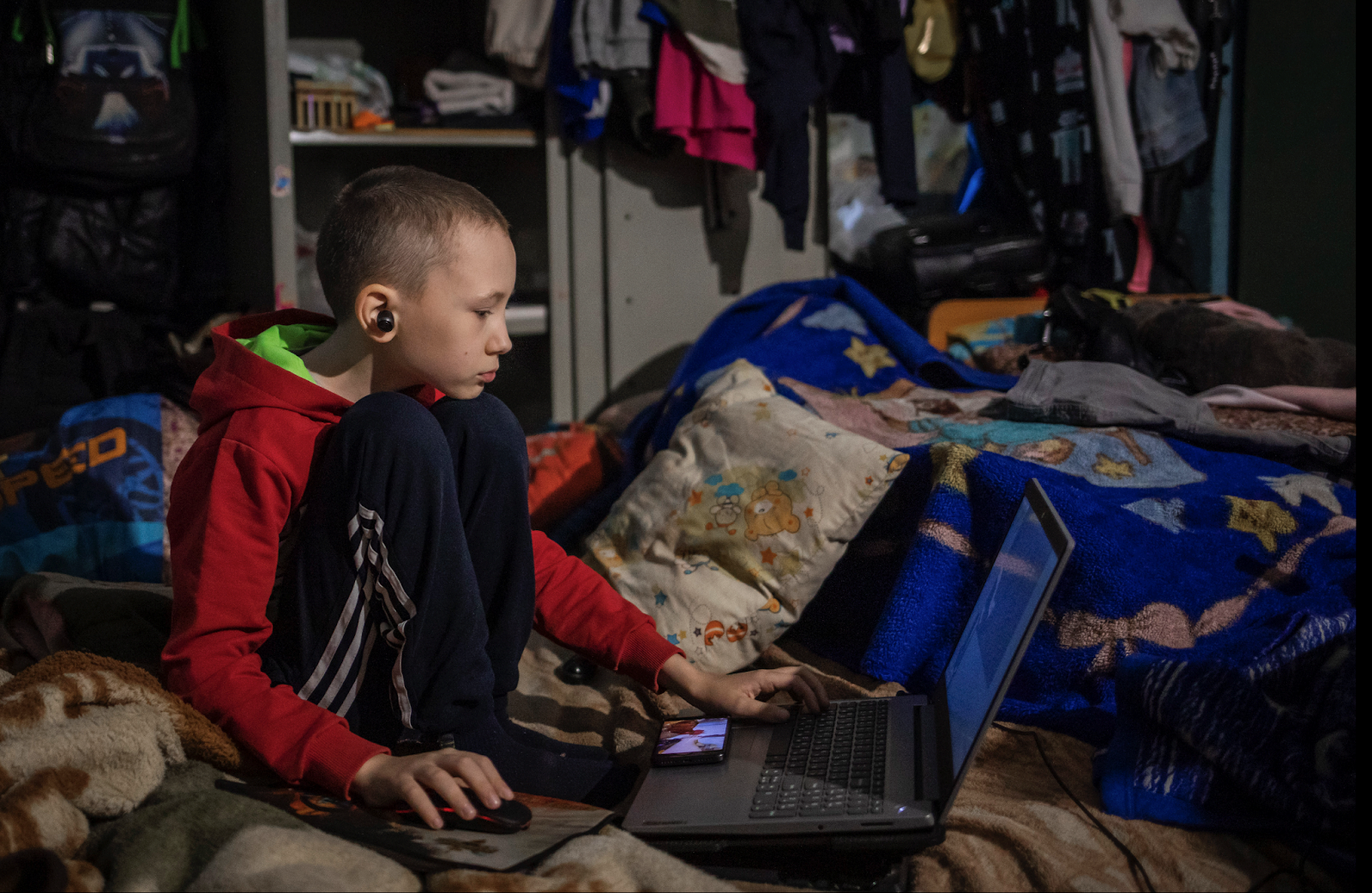
Not far from Ludmilla and Slava, in another windowless basement shelter, young Mykola studies with a laptop crouched amidst a pile of blankets on a makeshift bed made of wooden pallets and folded cardboard.
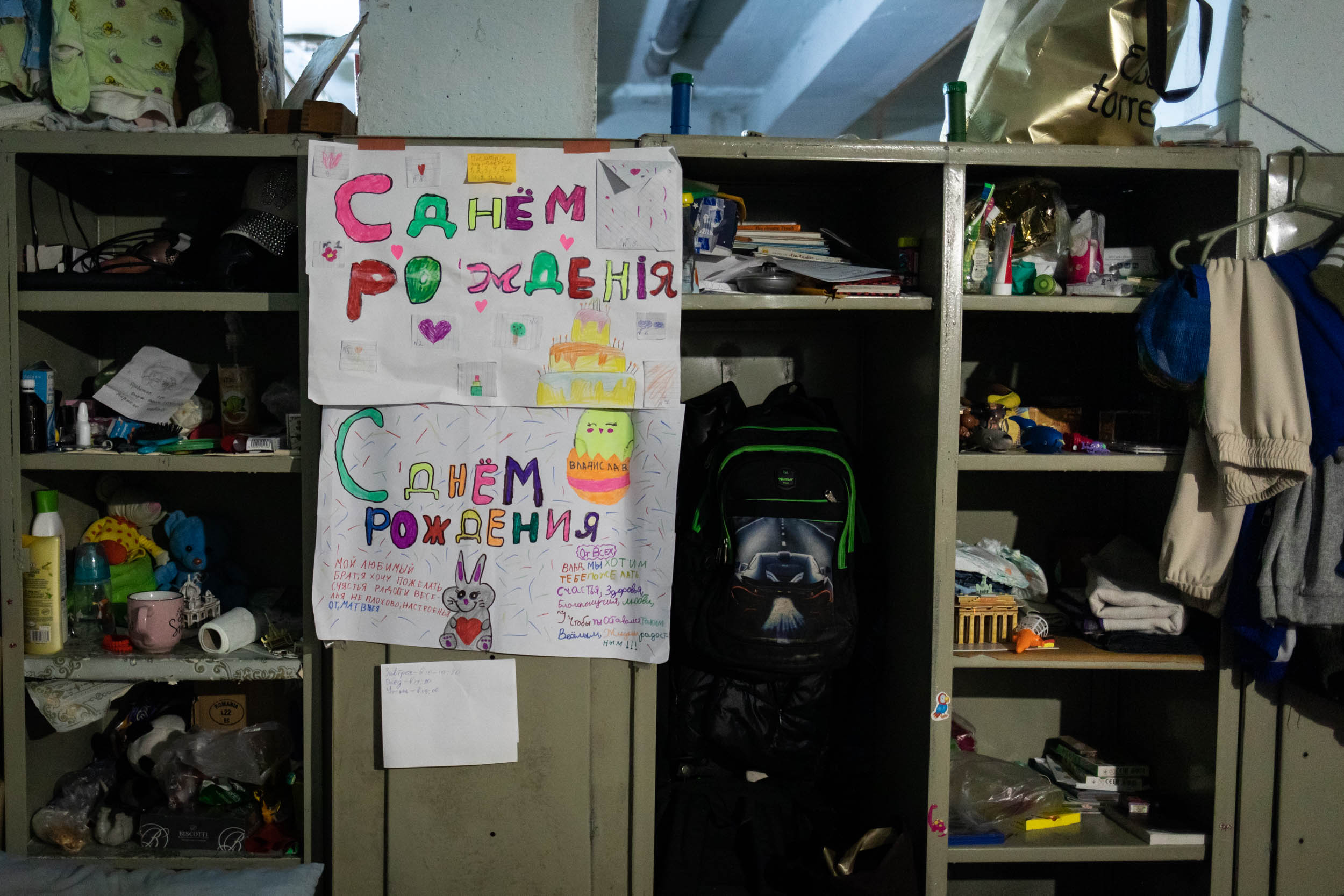
Taped to a metal shelf are crayoned decorations and, on a hook, hangs his school backpack—it’s black and neon green and adorned with a sports car. He offers a soft smile but remains focused as aid workers deliver hot meals and weeks’ worth of non-perishable food items. The near-constant shelling makes daily hot meal delivery impossible.
After missiles destroyed his family’s home, Mykola and his family took their few remaining possessions and moved to a bunker. Since early March, the boy has been among more than 30 who share the underground concrete space.
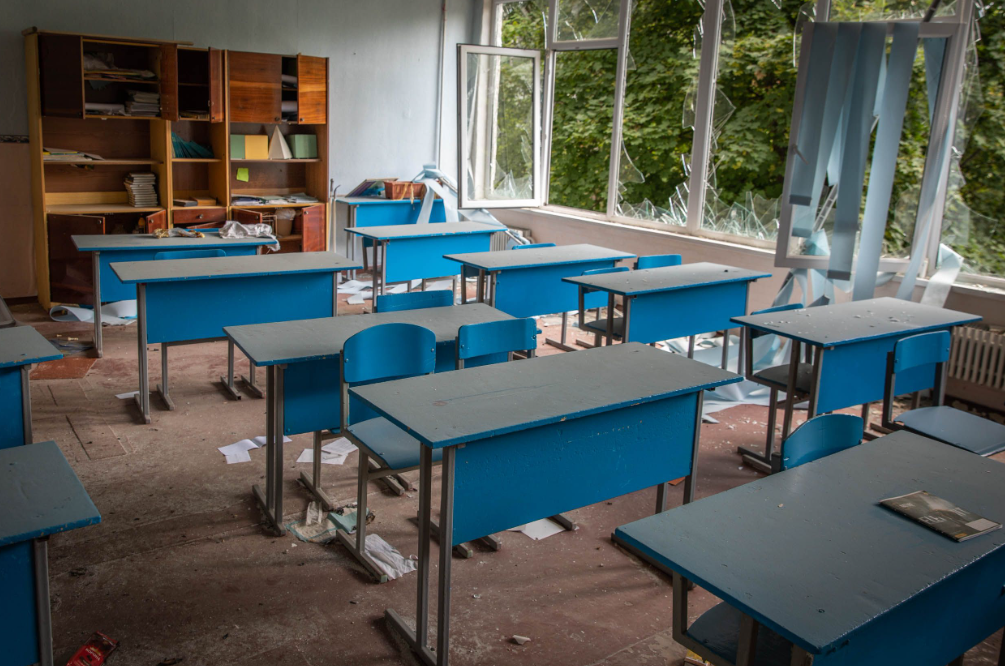
According to Ukraine’s Ministry of Education and Science, more than 2,177 education facilities have been damaged, and 284 have been destroyed. Kharkiv Oblast—where Mykola is from—has sustained the highest number of destroyed and damaged educational institutions in Ukraine. In the region, the most recent assessments estimates that 52 schools and education facilities have been destroyed, and another 370 have been damaged. Many schools that were spared from the bombing and shelling are not permitted to open because they lack bomb shelters.
Since February, more than half of Ukraine’s six million children have been displaced. Many of them have not been able to return to their school this fall, some are being schooled hundreds or thousands of miles from home. Others, like Mykola, will study on their own.
Much like schools, hospitals and other healthcare facilities have suffered since the onset of the conflict. The World Bank estimates approximately 1.4 billion dollars of damage to the health infrastructure throughout Ukraine. However, the hardships far exceed monetary damages as healthcare personnel struggle to provide care without clean water or adequate resources.
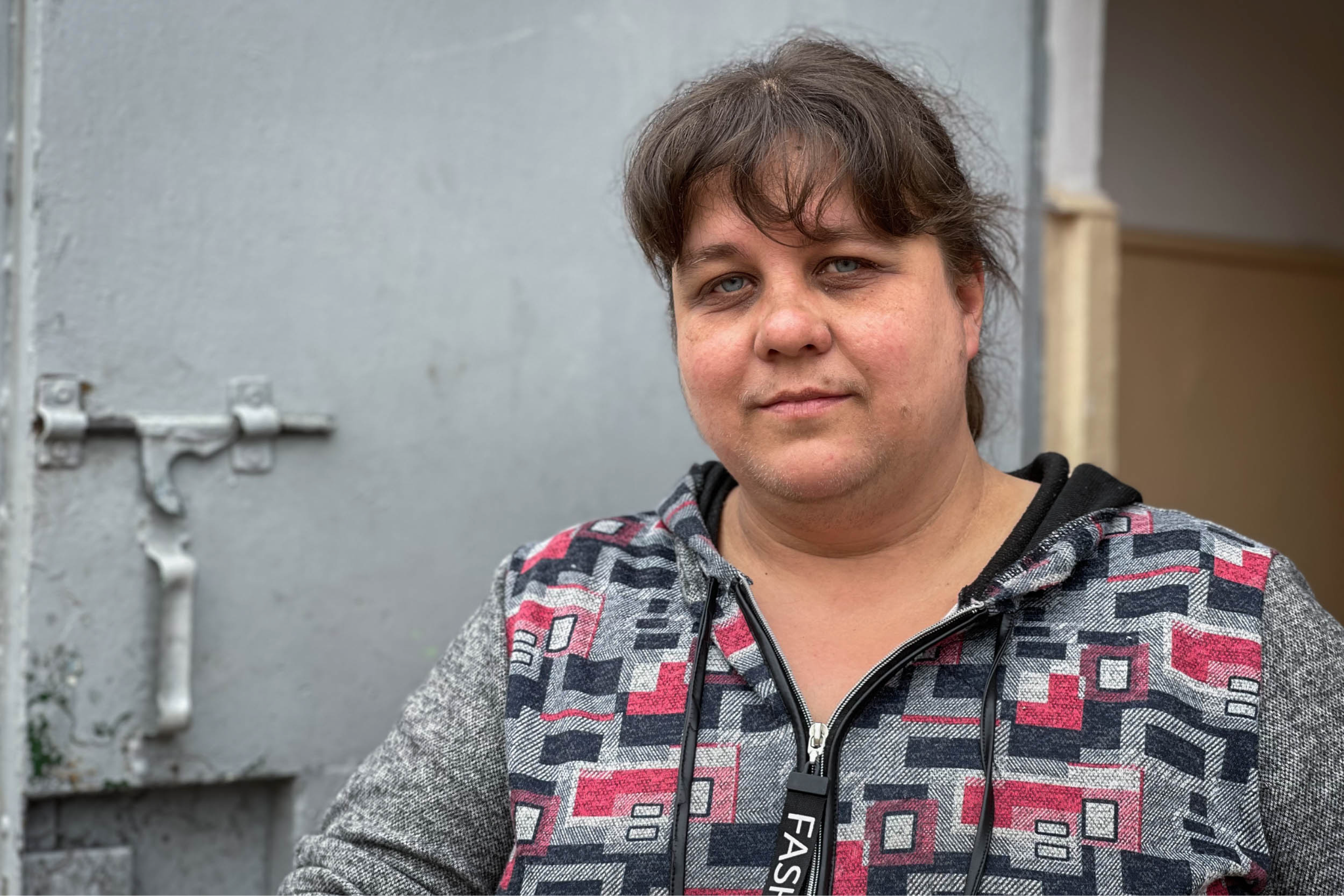
“War has greatly altered our lives, but right now, the most difficult thing is we have no running water. How do we operate a hospital without water?” asks Anya, who has worked at the regional hospital in Mykolaiv for over 12 years. In April, an airstrike destroyed the power supply to her home; she did not want to leave the city, so she and her family moved into the hospital. She works during the day, and the family sleeps in the basement during the night.
“Most days, there are volunteers—some from Mykolaiv, some from Odesa—who deliver water to us. We build a reserve and manage. Now, after so much war, we have adapted to the reality of our situation. We receive a lot [of support], but sometimes it is not enough.”
In March 2022, the pipeline that supplied clean water to Mykolaiv was heavily damaged, leaving the city without any running water for more than a month. Though the city government has since been able to provide “technical water” to the pipes of Mykolaiv, the water is dirty and can only be used for plumbing needs. Ukrainian repair crews are unable to repair damaged pipelines as the water infrastructure is located in nearby Russian-occupied Kherson region.
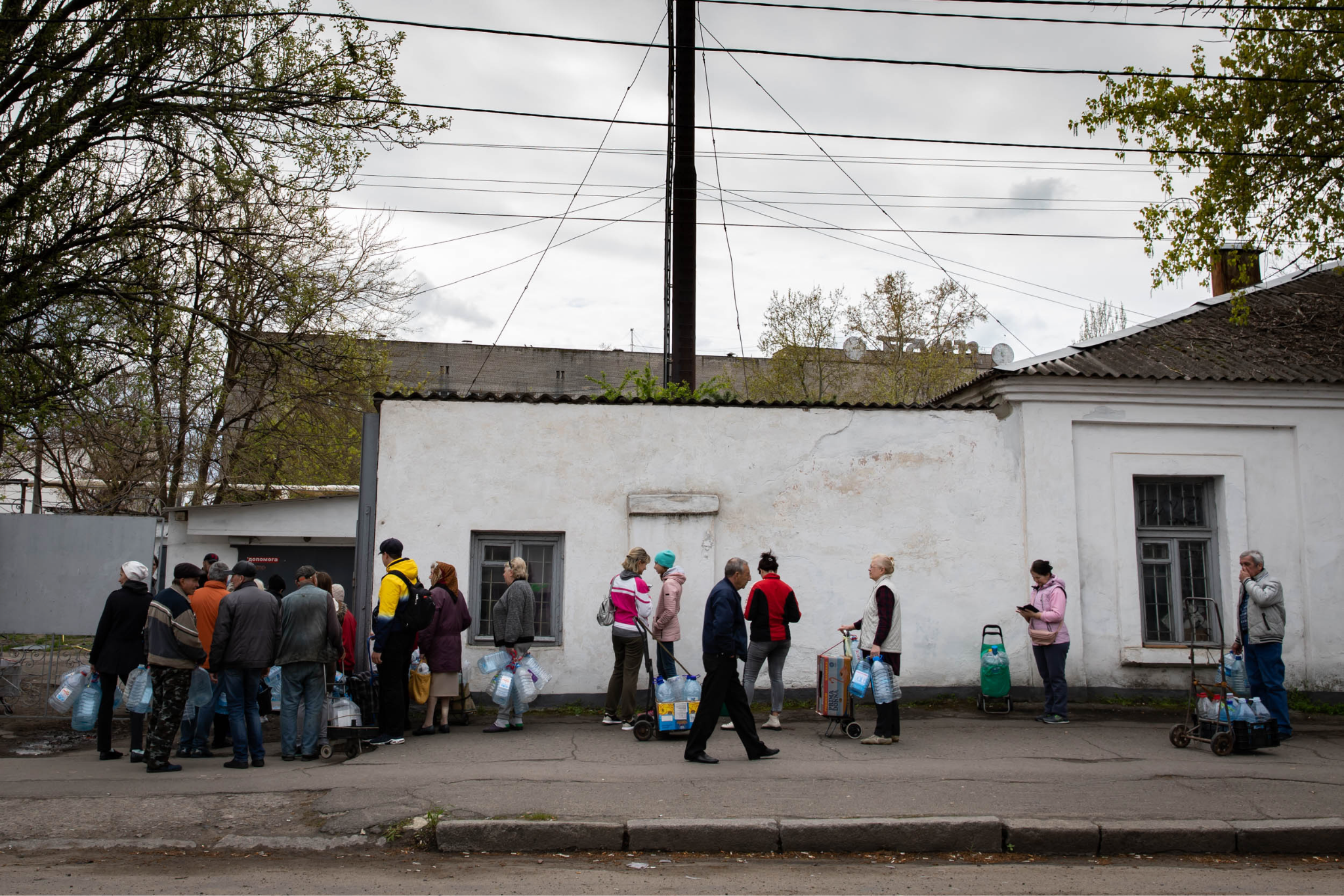
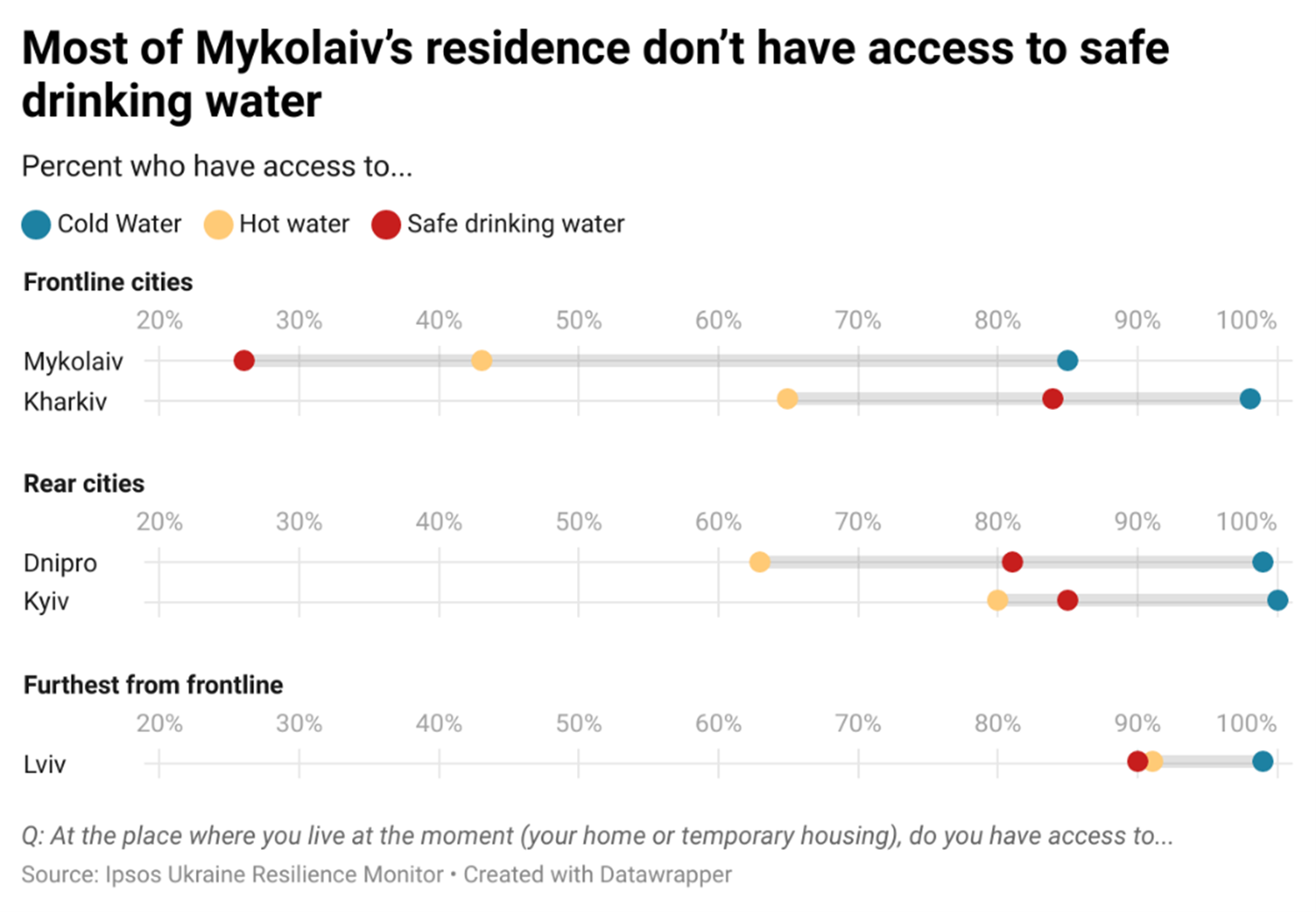
For those residents who remain in the besieged city, life is difficult. Residents must either buy drinking water or rely on volunteers who bring water to Mykolaiv from neighboring cities. Ipsos’ Ukraine Resilience Monitor found that, in September, only one-quarter of Mykolaiv residents had access to safe drinking water, and many don’t have access to hot water or heat.
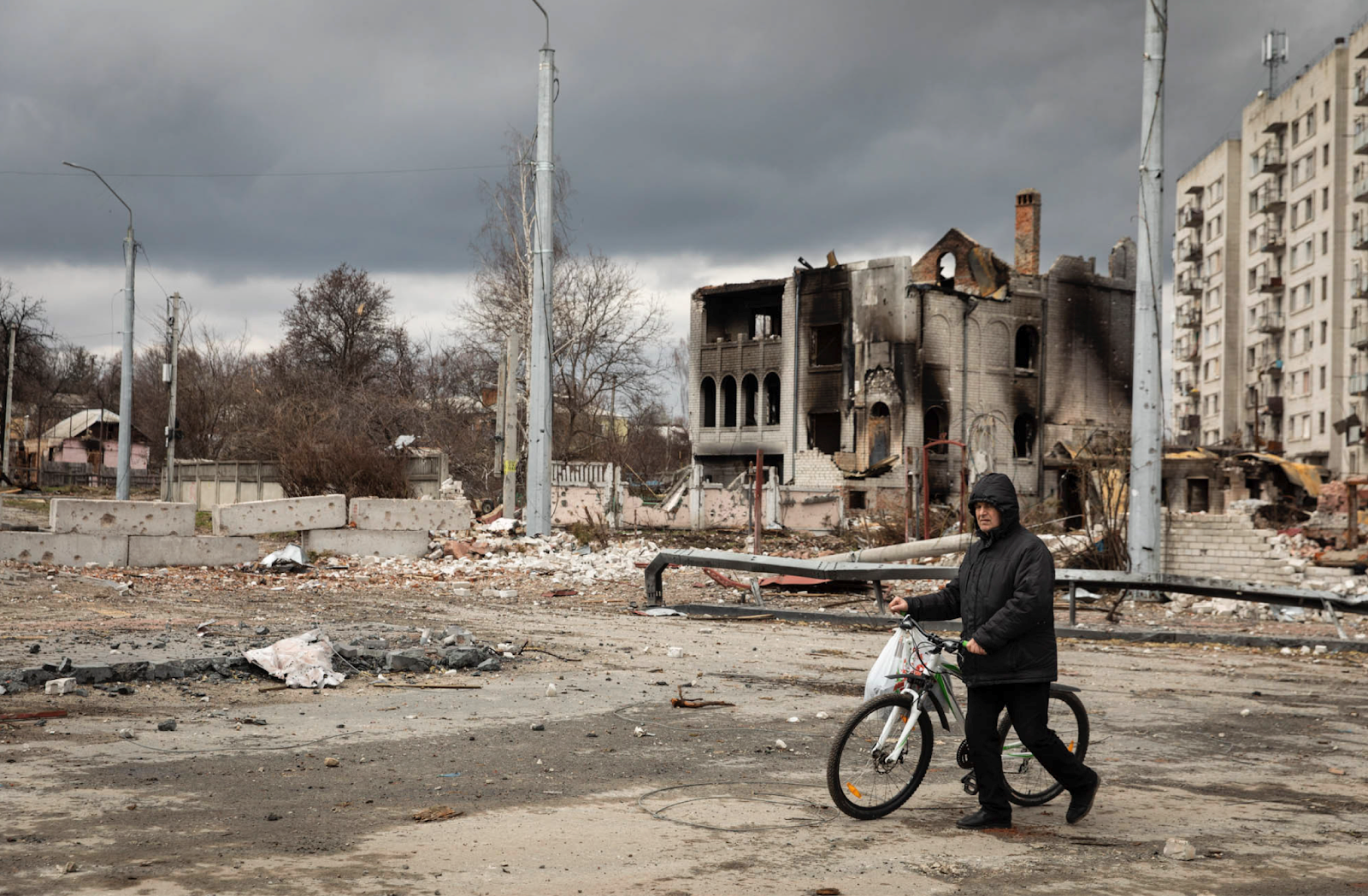
North of Kyiv, the route to Chernihiv—a city once home to 300,000 people and located less than 60 miles from the Russian border—is marked by collapsed bridges, destroyed roadways, and landmines.
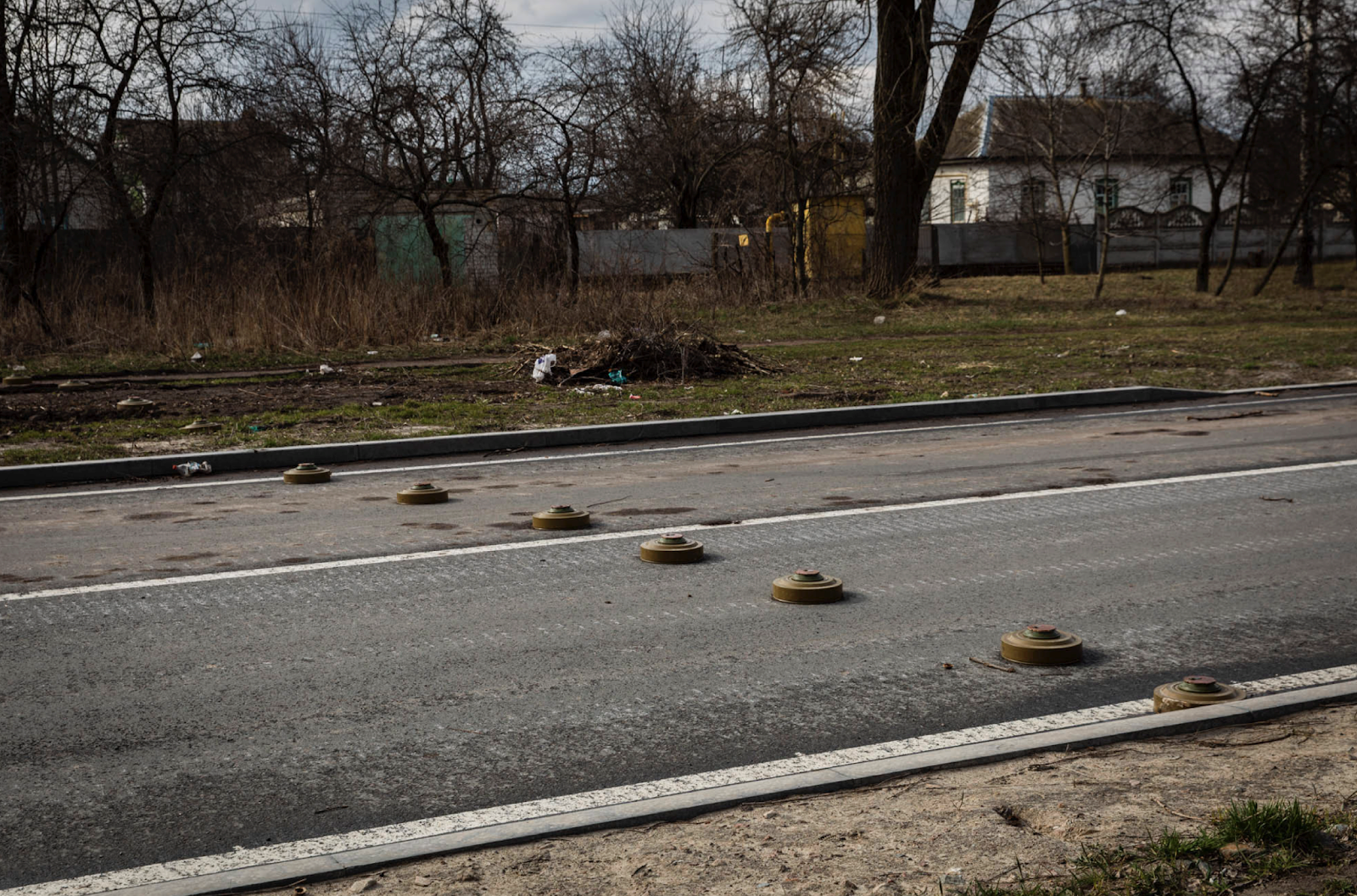
When Ukraine forces regained the city after a 39-day occupation by opposing forces, 70% of the city was devastated. Iryna, a nurse in one of Chenihiv’s hospitals, described the liberated city: “Everything was destroyed. There was no water, no electricity, no medicine, and little food. Many people did not survive.”
In its recent Ukraine Rapid Damage and Needs Assessment – August 2022 report, the World Bank estimated that as of June 2022 the transportation sector sustained $29.9 billion worth of damage. This includes damage to roads and bridges, rail lines, airports, waterways, and ports.
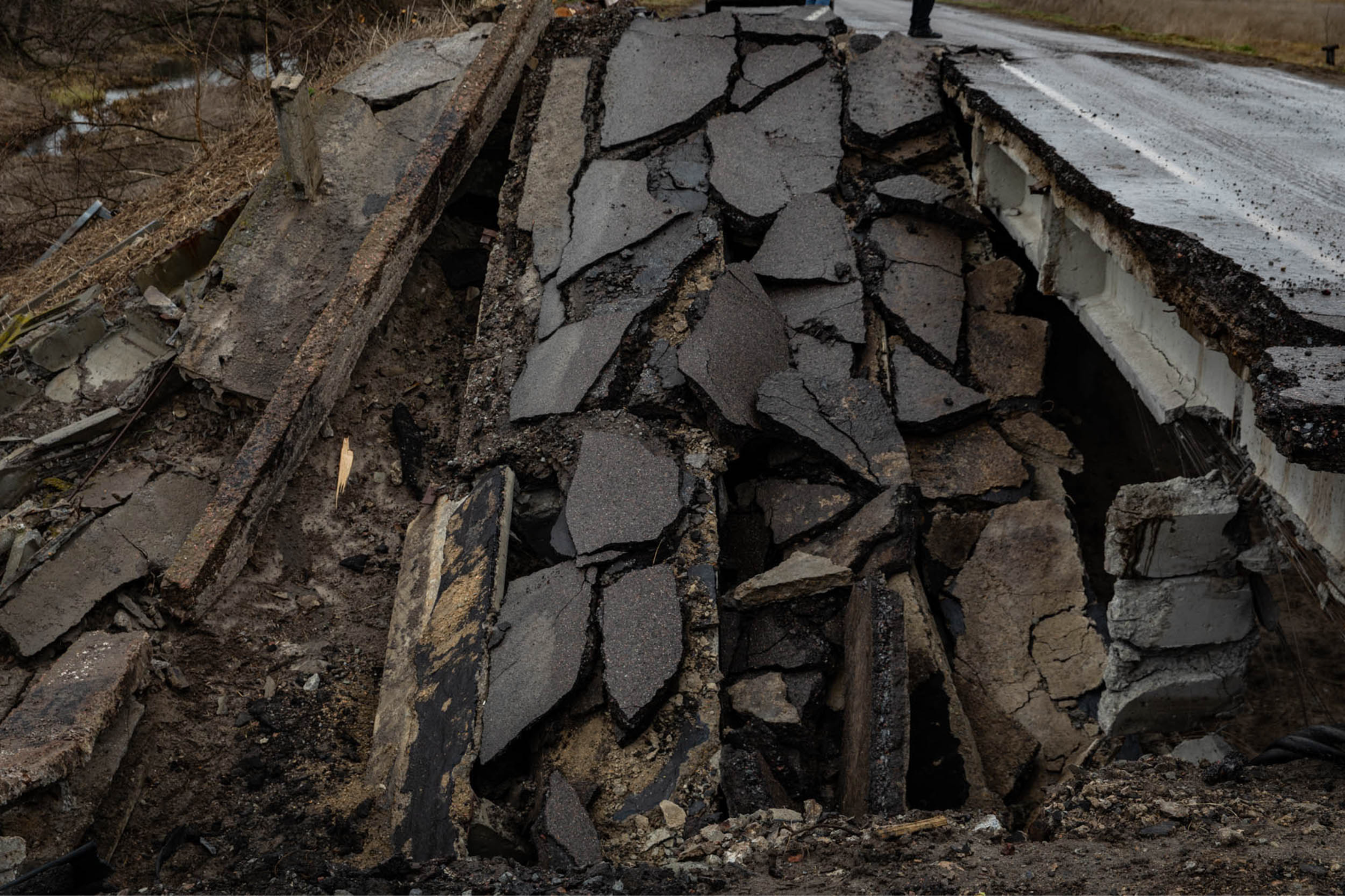
Despite the horror, hardship, and precarity of daily life, an attitude of resilience is pervasive throughout Ukraine.
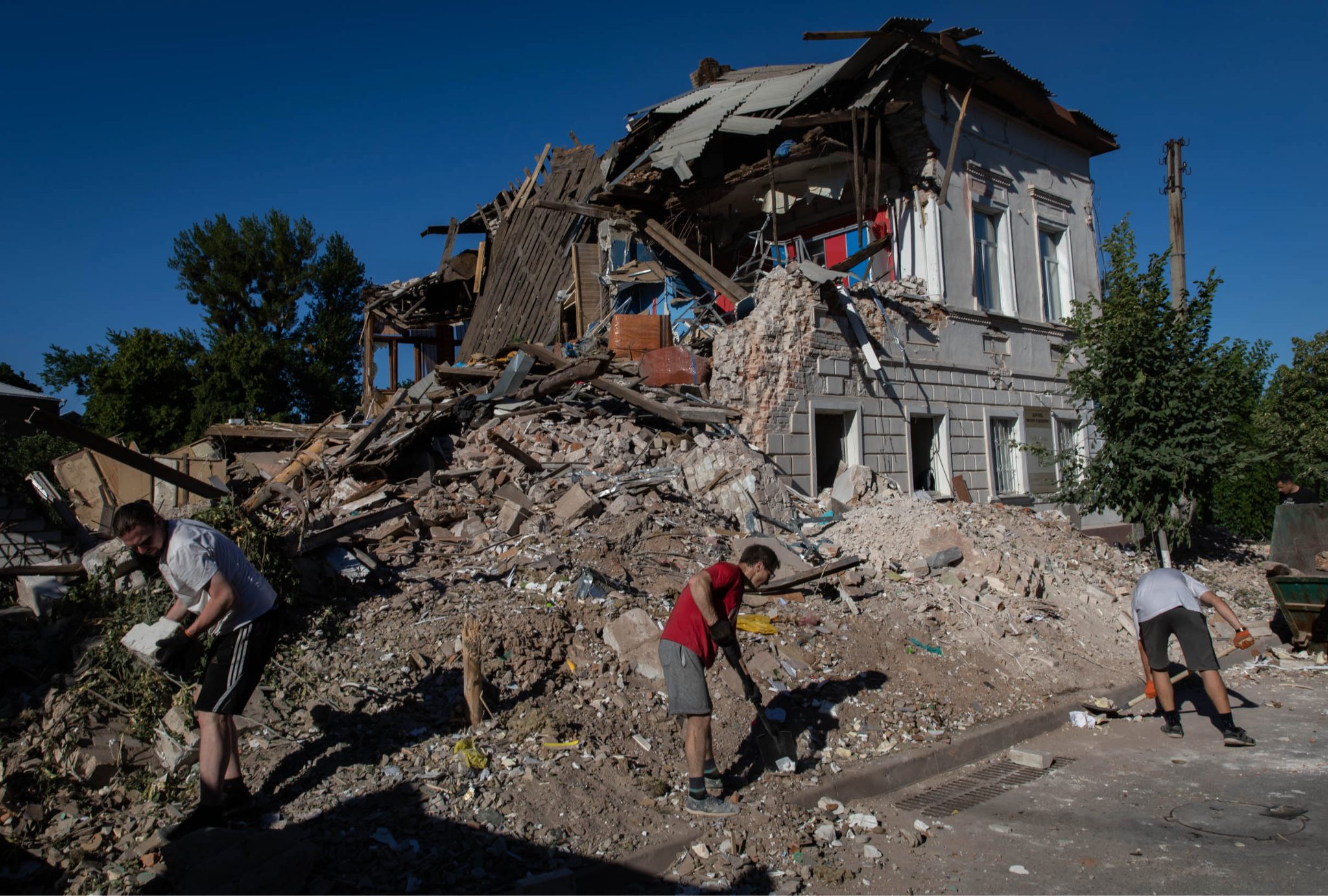
As the international community endeavors to gauge the economic and human impact of the ongoing war, many in Ukraine have already begun the costly and overwhelming task of rebuilding their country, choosing to carve out a new existence in their homeland rather than seek a life elsewhere.
In Kharkiv, Ivan joins a cleanup crew comprised of neighbors and volunteers on the same day that his home was bombed. “We were fortunate; my family was sleeping when the missile hit the other side of the house.”
“Every day, another home is hit, and, every day, we help each other. On many days people die or endure grave injuries. I am lucky. Today we will clean, and tomorrow I will start repairs. What more can I do?”
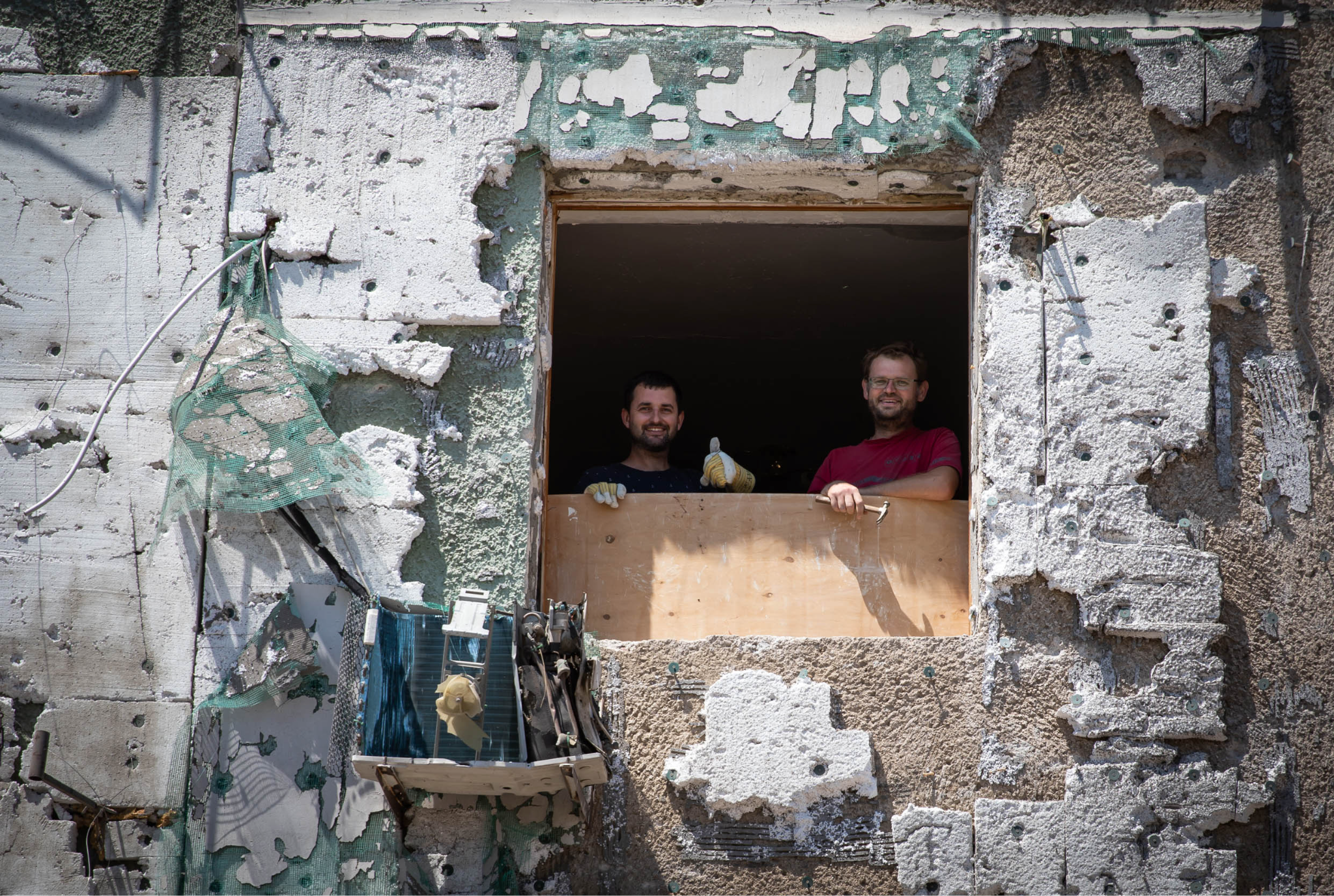
In Serhiivka, a resort town south of Odesa, Andrew and Oleh offer a smile and lean from the window of a partially destroyed apartment building.
The apartment belongs to their former teacher Raya, now an elderly, retired woman who worked for more than 40 years in the local school district. When the two friends learned Raya was in the hospital with several broken bones, they traveled from Odesa to clean and repair her home. Armed with brooms, shovels, wearing tool belts, the duo promised to return each day until the work is finished.
“We hope we will not be bombed again, but we don’t know. Each day when you wake up in the morning, you know that you are lucky. For us and others in this town, it is time to clean and to help and hope the war ends soon. This is what we must do.”
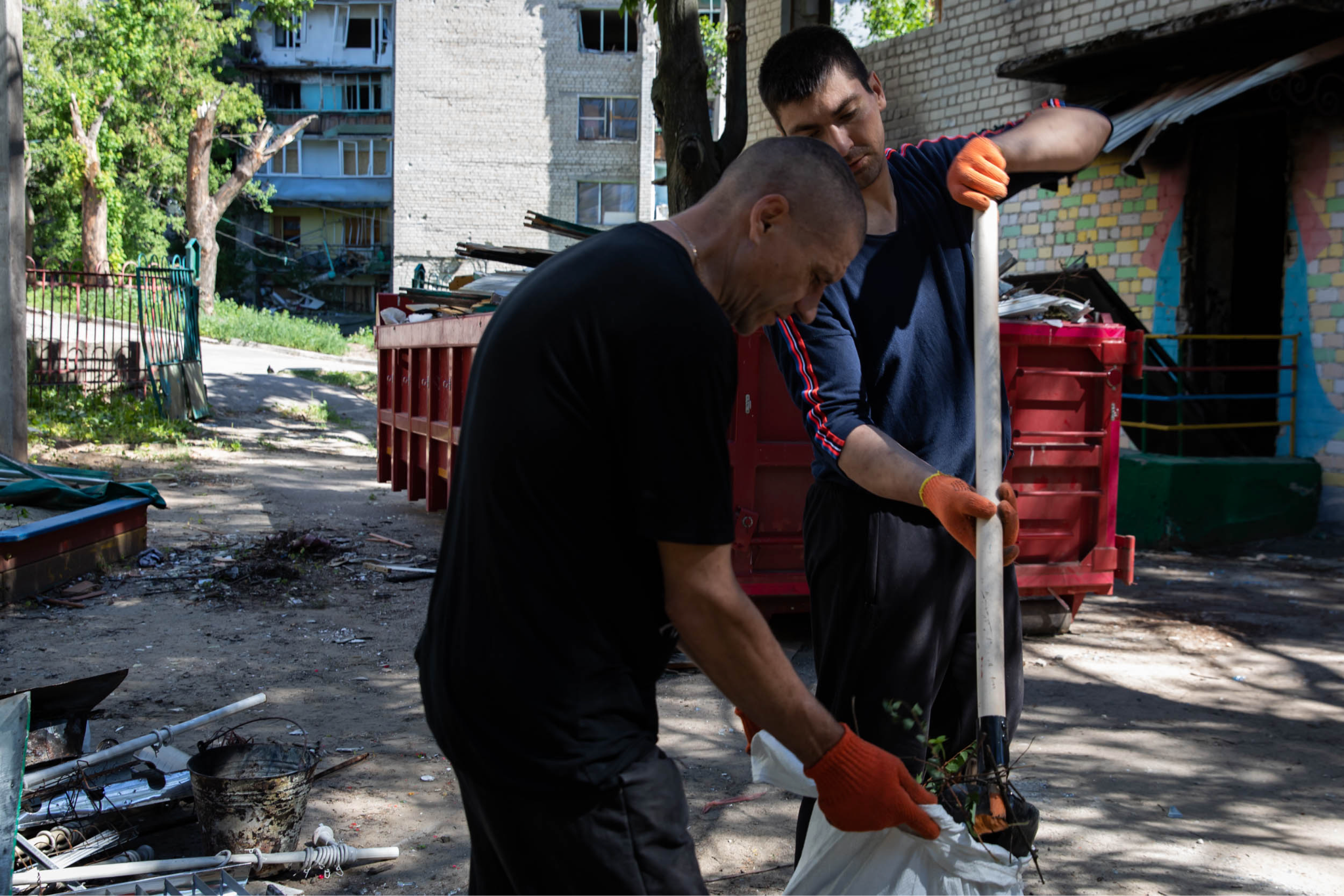
Like Kharkiv and Serhiivka, in Chernihiv, residents have mobilized to repair their town. They have pulled together efforts to clean up, organize food pantries, coordinate care for the injured and elderly, and collectively began restoring a shattered community.
Thinking ahead, perhaps Ivan, 63, says it best. When asked about his plans, he looks at the city he has called home his entire life and promises, “We will rebuild.”
For more from this series, please visit our Voices of Ukraine mini-site.