UPDATED: 9 charts that explain the zero-sum human economy
There’s a weird disconnect between the economy economists look at and the economy people feel in their day-to-day lives. The Austrian school of economics would say, “That’s fine. It doesn’t matter what people think. They spend anyway.”
Perhaps that’s true at a macro level. But if you’re a marketer, how people are responding to prolonged economic stress matters. At the moment, many Americans are feeling the effects of prolonged inflation. A sizeable portion across income bands don’t have any disposable income.
In this zero-sum economy, when something like gas prices (or previously food, dairy, meat, energy) go up something has to give. It’s just math. The other option is to use credit, which is why we see record levels of household debt.
So while many are spending more, are they getting more? And how does that impact their outlook on things? We’ve looked at this from lots of different directions. Here’s what we found:
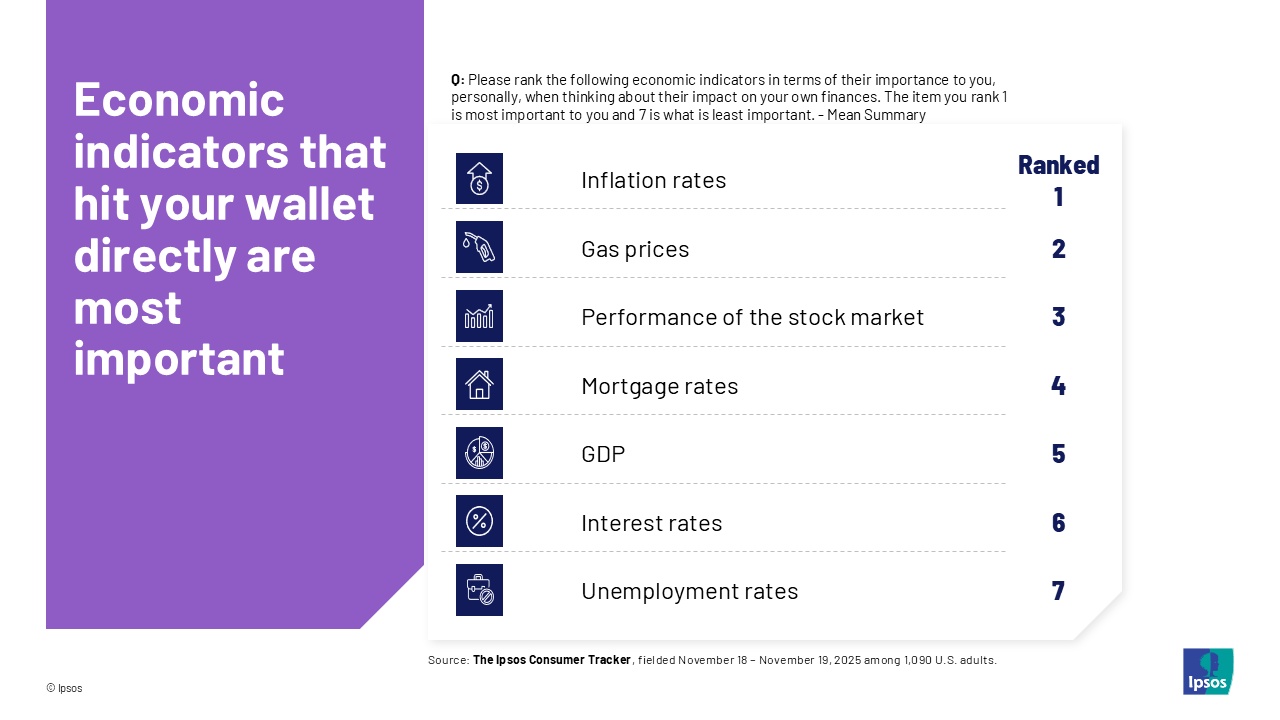
The first part of the disconnect is that economists care about things like GDP and unemployment rates. People, conversely, care about what hits their wallets most directly: inflation and gas prices. As stress continues, and interest rates start ticking back up for the first time in years, this has only become more true.
Moreover, most Americans don’t know much about the broad strokes of the economy that economists watch.
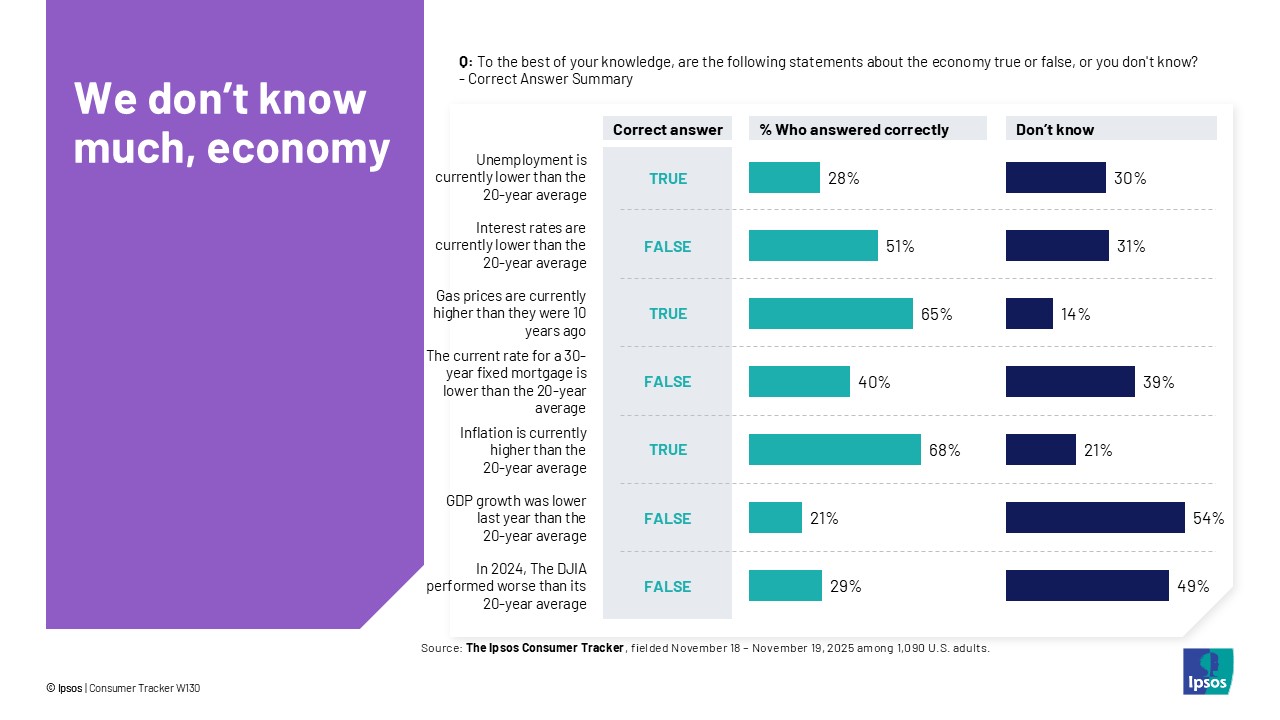
We know this because we asked a series of true-false questions and generously gave folks an opportunity to opt out with an “I don’t know.” That proved to be very popular. Here, we see evidence of people knowing about gas prices as well as caring about them.
We see that, too, in our long-running measure of what people know about compared to what they care about, which we’ve named the Care-o-Meter. There, economic news items almost always wind up on the Care side of the ledger, regardless of how much people Know about them.
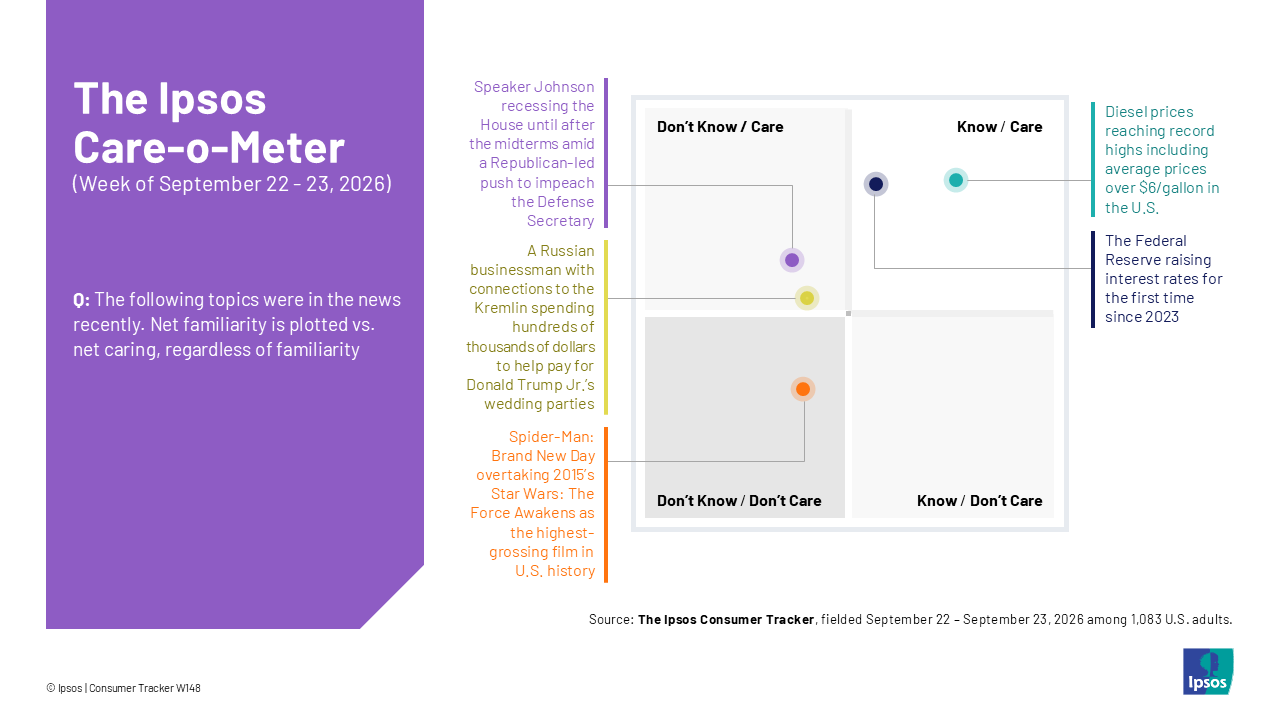
People are really tuned to gas prices. When they go down, people know it. When they go up, they also know it. As for prices on other goods, people have been saying they’re going up since we began the Consumer Tracker during COVID times. That’s not just a baseline consumer grumpiness: It’s true, costs have been going up for that many years on most items. The fact that gas prices are one item that has fluctuated and that we see awareness of that fluctuation just confirms how attuned people are to their household expenses.
Why? And what impact is that having?
What’s the vibe?
You have probably read about the K-shaped economy. Or the “vibes” economy. Or the “windchill” economy, all of which are ways of saying that some people are doing better than others.
The vibes matter and attitudes matter because most Americans say that the economy, and where people think it’s headed, impacts how they spend today.
For marketers, it’s probably best to think of this in terms of the human economy.
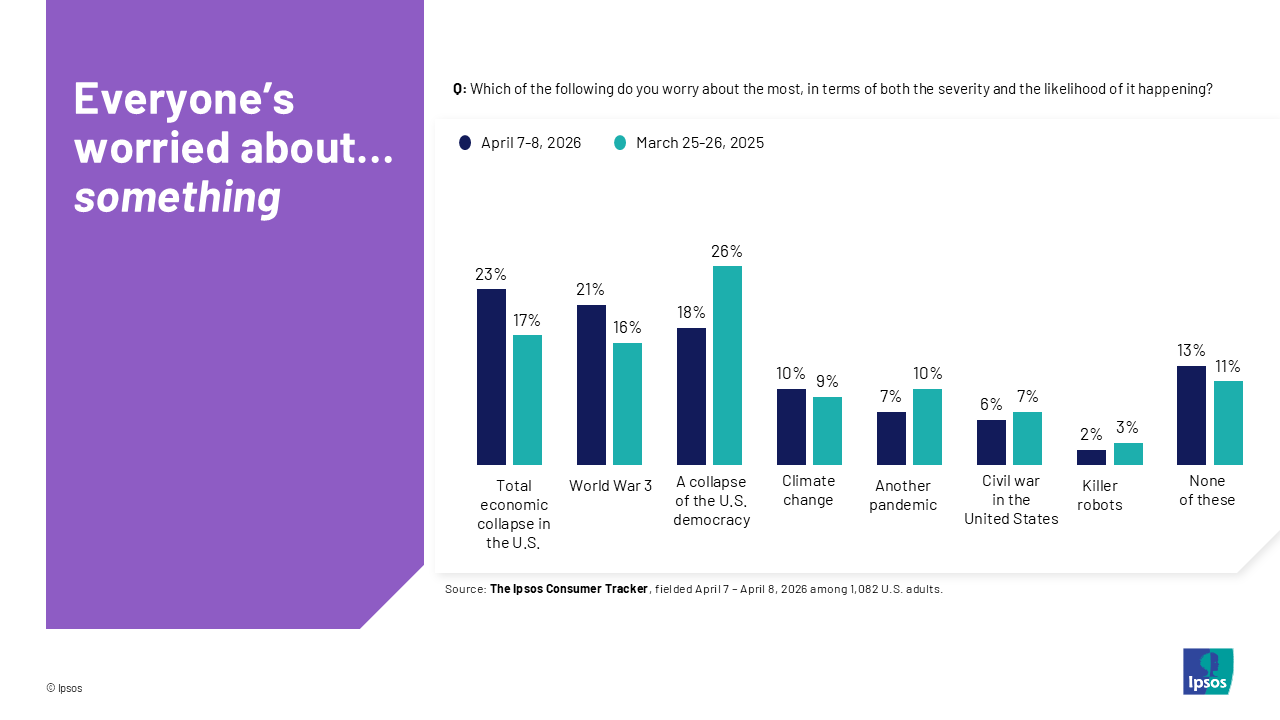
The first thing to understand is that everyone is worried and exhausted. People are stressed about many things, including a wide range of full-on catastrophes. It’s different for different people. There’s no consensus on whether it’s killer robots (a dark horse), or total economic collapse, or another World War.
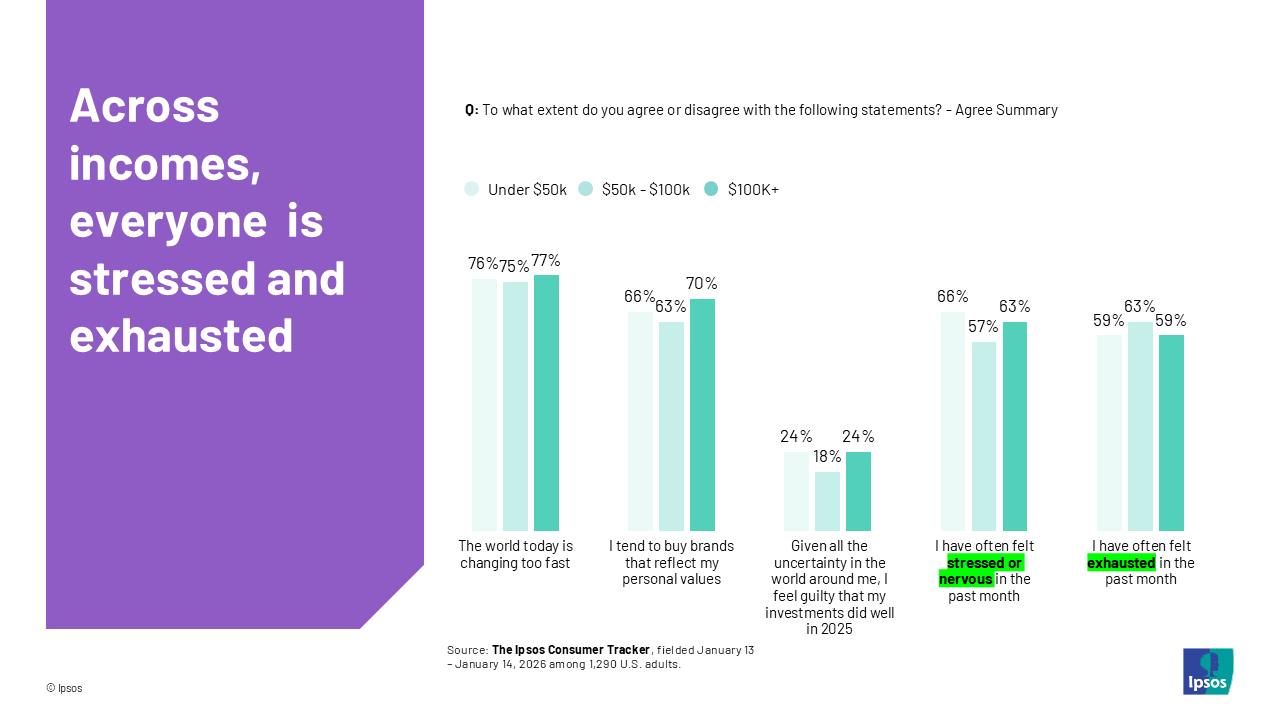
While that’s a lot of existential things to be stressed about, it’s safe to assume the day-to-day is wearing us down as well.
Sure, it’s great news that fewer Americans now say that when they pay their monthly bills they have no money left over (compared to a year ago). But it’s still, give or take, four in ten Americans. That’s … a lot of people. It’s not just lower-income households feeling that way. About three in ten higher-income households say this too.
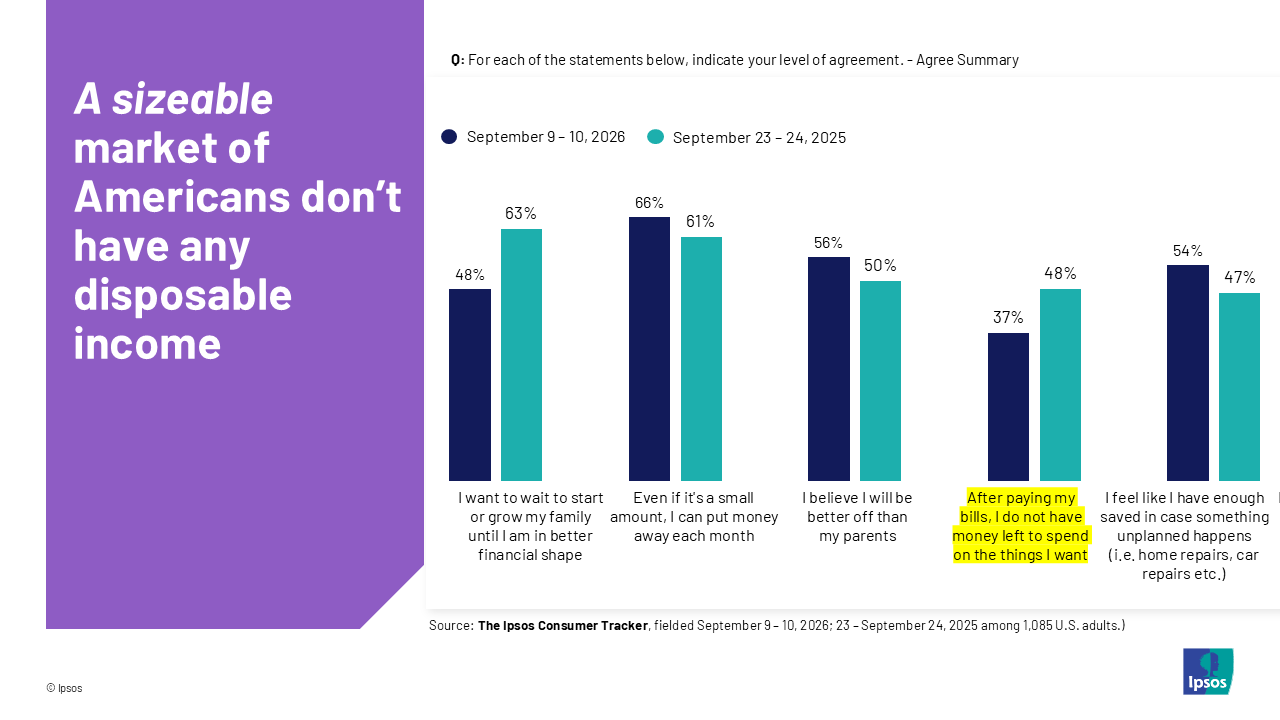
Put simply: Higher-income Americans are feeling better off, but not well-off. And if the affluent aren’t feeling great, you can imagine the 41% who identify as middle class aren’t either.
What are we doing about it?
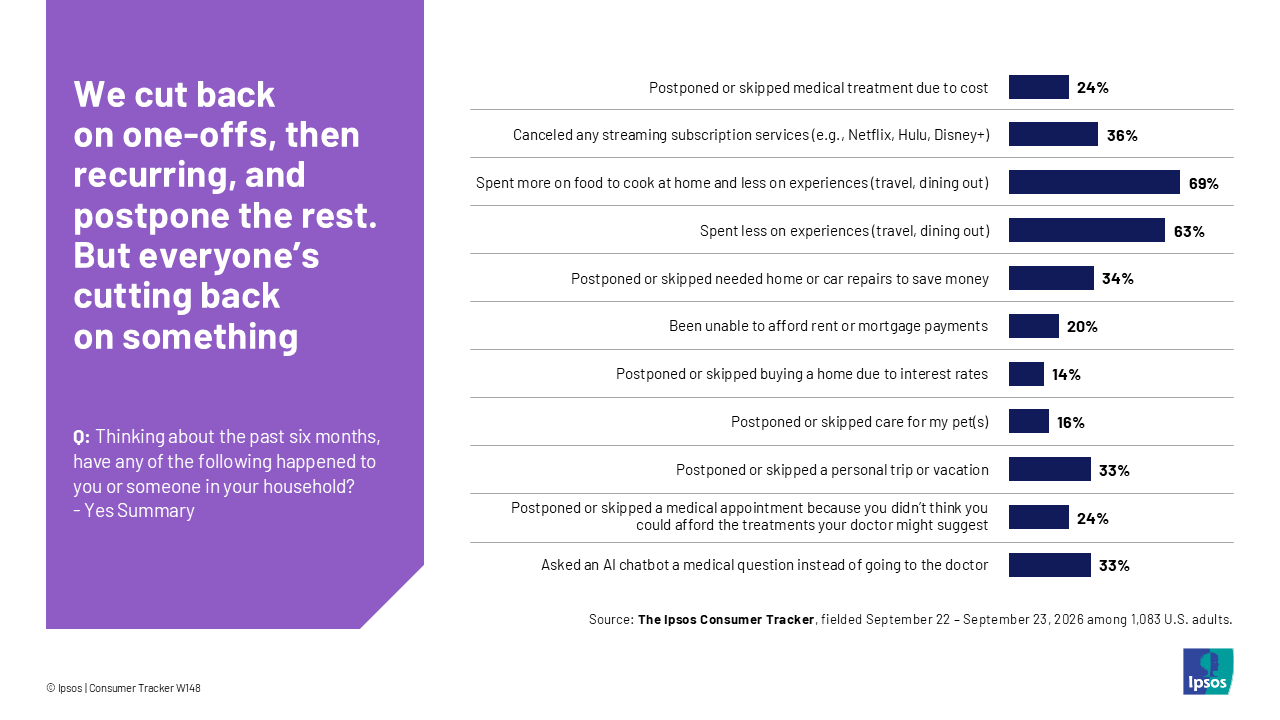
Everyone’s cutting back on something. We start by cutting back on one-offs like dining out or travel. Then we look at recurring expenses like subscriptions and we churn our streaming services. We postpone the rest including car maintenance and doctor visits. One in four have put off going to the doctor because they don’t think they can afford whatever treatment they might be prescribed.
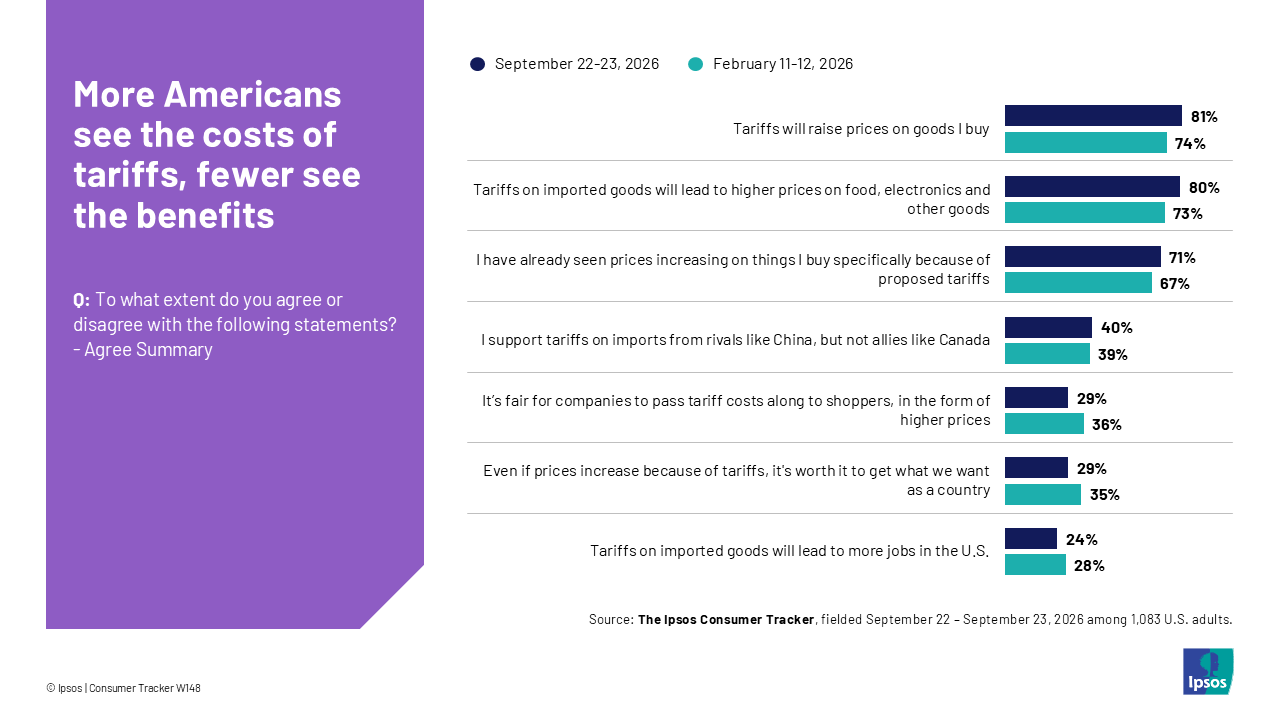
Tariffs are another thing we pay attention to. Since the start of President Trump’s second term, a now-majority of Americans (55%, up 10 percentage points) understand how tariffs work. With that growing understanding comes a growing dissatisfaction. Eight in ten now think prices will go up as a result of tariffs. Fewer than three in ten (29%) say that the higher prices are worth it to get what we want as a nation.
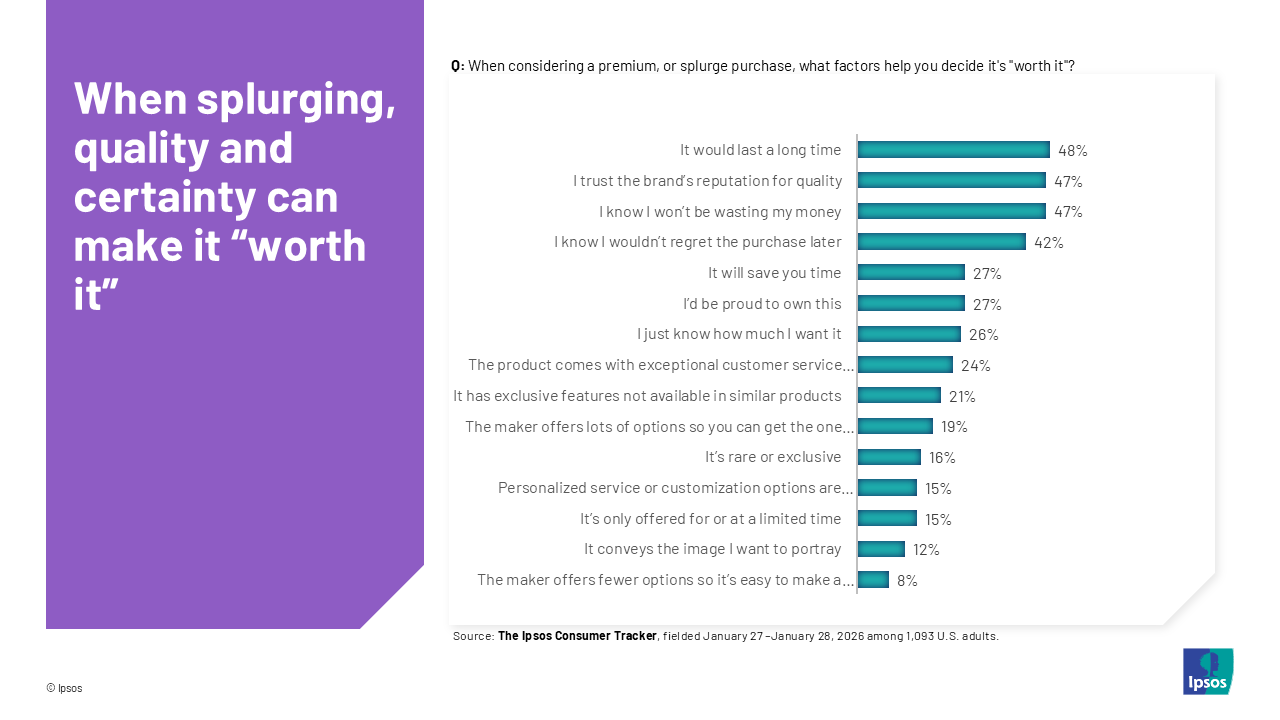
Many are still willing to splurge when they can. They look for value, convenience and a feeling that they won’t regret it later, or feel like they’re wasting their money.
That’s a lot of data. Let’s end with a story.
Because all that said, a lot of this is not new, which is why it’s important to understand a key truth about how your competitive set isn’t just what you think it is.
In my first book, “Buyographics,” I tell the story of Liz, a twentysomething in Champaign County, Illinois. She was saving up to buy a Dell laptop. Had it all picked out and was doing all the right things including budgeting and setting aside money each month to work toward the goal.
But as a twentysomething, every time she got close to her goal one of her friends would get married. She’d have to buy “an ugly pink bridesmaid’s dress,” and gifts, and sometimes shower gifts, and sometimes have travel expenses.
So she never got her laptop.
The competitive set wasn’t just other laptop makers. In a zero-sum economy, so was the wedding industrial complex.
When one price goes up (today it’s gas, but in recent years it’s also been dairy, or meat, or energy), something in the budget has to give.
So the question to marketers is how you make your product or service more like a want-to-have laptop and less like a need-to-have dress or worse-yet, a can-postpone expense.