Aussies feeling burned by the searing cost of living as election nears
Like a kangaroo, punishing prices keep hopping up as the top issue in Australia.
The high cost of living Down Under has Australians stroppy as Oz’s federal election enters the last leg of the race.
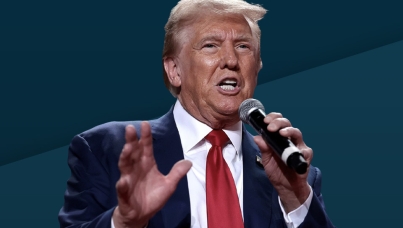
When 2025 dawned populist politicians who took a page or two from U.S. President Donald Trump’s playbook seemed poised for electoral victory à la the Make America Great Again (MAGA) leader by tapping into anti-incumbent anger.
But the recent election in Canada shows the appetite for MAGA-style politics, while strong may be waning, in the wake of Trump’s global trade war, which is predicted to hit several countries, including Australia, hard.
Below, we take the temperature of Aussies as politicians sprint towards the May 3 finish line.
1. The Trump Effect. Liberal Party of Australia and current Opposition Leader Peter Dutton, who is seen by some as too Trumpian, currently has the worst performance rating of any opposition leader over the last twenty years of Ipsos in Australia’s polling trend data with 27% approving of his performance and 47% disapproving.
Dutton has previously promoted the idea of an Australian DOGE (Department of Government Efficiency) but more recently sidestepped Make Australia Great Again comments at a campaign rally.
“As Australia has compulsory voting, there is a larger number of floating, or weakly committed, voters at play, and Trump’s unpopularity in Australia suggests that referencing DOGE or other Trump ideas isn’t a safe way of winning over these voters,” says Jessica Elgood, Ipsos in Australia’s Public Affairs Director.
Meanwhile, Australian Prime Minister and Labor Party leader Anthony Albanese, who swept to power in 2022, has 38% approving of his job performance and 39% who disapprove. And 46% now select Albanese as their preferred prime minister versus 32% who select Dutton as preferred PM. But this seems to be due to Albanese being seen as the best of the not-quite-inspiring options.
“His strength in this election is relative, not absolute — that is, he looks good against his opponent, but only because his opponent is performing poorly. The data suggests there is no great enthusiasm for Albanese,” says Elgood.
2. Inflation nation. The painful cost of living appears to have left Australians with a few yet-to-heal scars.
When Albanese and the Labor Party ended nine years of conservative rule in May 2022 he reiterated his “no one held back and no one left behind” mantra in his victory speech.
That has proven easier said than done.
During the “working-class hero’s” tenure, persistently high prices has been seen as a persistent problem.
Ipsos’ What Worries the World monthly polling finds when Albanese was elected 33% of Aussies said inflation was a top concern for their country. And while the national inflation rate peaked in December 2022, inflation concern now sits at 46%, vs. the 33% 29-country average, looming above the other top issues (crime/violence, 34%, healthcare, 31%, poverty/social inequality, 28%, and climate change, 21%).
3. Getting on the first rung. The cost of everything from yummy meat pies to cutesy Queenslanders has gone through the roof in the first half of this decade.
The mean price of residential dwellings soared to AUD$976,800 in the last quarter of 2024, well up from $691,000 in late 2019 right before the COVID-19 pandemic sent home prices up, up, up and away in Australia and across several other countries.
The odds are stacked against those who didn’t own property pre-COVID. Younger Aussies are acutely aware of how tough getting a foot on the property ladder is these days.
The inaugural Ipsos Global Housing Monitor finds a strong majority of Australians aged 16-34 think even if today's young people work hard and get good jobs, they will have a hard time getting the right kind of housing (82%) and that it’s harder for people their age to buy/rent a home to settle down in than it was for their parents’ generation (80%).
And while 84% of younger Australians would like to own their own house just over three in five (62%) don’t think they’ll ever be able to afford to do so. Meanwhile, less than one-quarter (21%) of 16-34-year-olds feel there isn't much that government in Australia can do to deal with the country's housing problems, while 52% disagree.
It’s not just the majority of younger Aussies who believe government play a role in turning homeowning dreams into reality. National politicians have all rolled out housing plans during the election, though Ipsos’ polling for Daily Mail Australia finds no one plan is fully capturing the public’s imagination.
Dutton’s 20-year-old son Harry even awkwardly recently entered the chat with the Opposition leader admitting he would help his three kids with house deposits after initially dodging the question.
4. Not always super sunny. The crushing cost of housing, and well pretty much everything else, looks to have taken a toll on the national mood.
The latest edition of the Ipsos Global Happiness Index finds while a strong majority (71%) of Australians say they’re happy that’s down 14 percentage points from the 85% who said the same in December 2021 right before inflation really took off. The national happiness level is also lower than it was pre-pandemic (86% in December 2019).
And the latest edition of Ipsos’ Global Consumer Confidence Index finds less than half of Australians across the generations (45% of those aged 16-34, 39% aged 35-49, 41% aged 50-74) think their current quality of life is good.
Though, interestingly despite the brutal real estate market, younger Aussies (62% aged 16-34; 50% aged 35-49) are significantly more optimistic than older people (28% aged 50-74) that their quality of life will be much better in five years than it is now.
5. What to do about a warming planet? Climate change is just one more thing to feel less than optimistic about.
The country recently made international headlines for shooting about 700 koalas after a devastating bushfire. And in 2019/2020 Australia suffered “one of the worst wildlife disasters in modern history”.
And yet Dutton had to recently clarify that climate change is real after a recent debate in which the Liberal leader said he’s “committed to nuclear” while the Labor leader remains focused on renewable energy options.
Aussies aren’t too impressed with current plans.
The new Ipsos People and Climate Change report finds that while 56% of Australians (vs. 62% on average across 32 countries) think their country should do more in the fight against climate change just over one-quarter (28%) say Australia’s government has a clear plan in place for how government, businesses, and people themselves are going to work together to tackle the important issue – slightly lower than the 32% global average.
While the climate change crisis is clearly worrying it’s the cost of living crisis that’s top of mind right now.
“Cost of living is very much the dominant issue,” says Elgood. “That said, there are other issues that very much overlap with cost of living, such as housing affordability. This has been an increasingly key issue for voters over recent years, particularly those living in metro/urban areas where housing costs are prohibitive.”
Whomever Australia’s next prime minister is will, like other world leaders, have to deal with the New America while at the same time trying to help Aussies everywhere from cities to the outback who have been battered by this inflationary era heal.
Melissa Dunne is a senior data journalist with Ipsos and is based in Canada.
Check out Ipsos in Australia for our latest polling.