
7 in 10 Britons believe immigrants place extra pressure on the NHS
- 7 in 10 (70%) Britons believe that immigration places extra pressure on the NHS, and 32% believe that migrants use the NHS more than those born in the UK.
- However, the public do recognise the contribution to the NHS from immigrants: 75% believe that the NHS relies on migrant workers.
New polling from Ipsos has found that 7 in 10 (70%) of the British public believe immigrants to the UK put additional pressure on the NHS. This includes almost two in five (37%) who say they place a great deal of extra pressure on the NHS, and a third (33%) who say they place a fair amount of extra pressure.
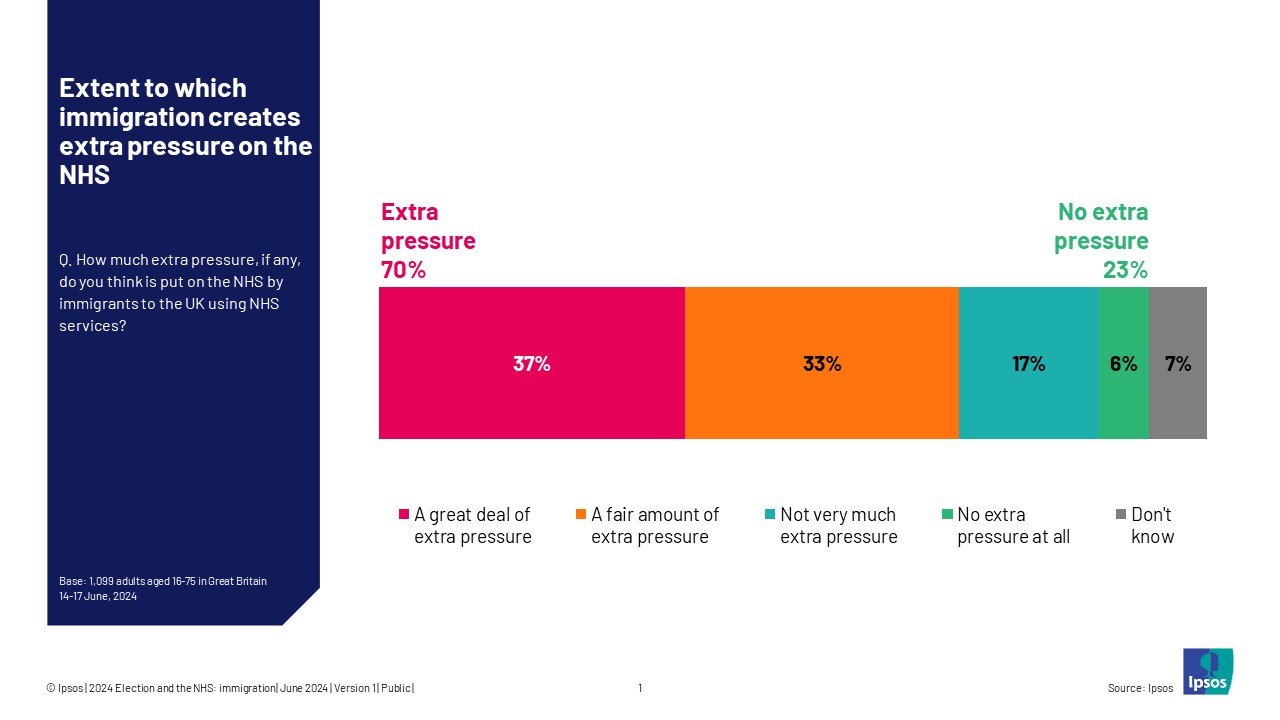
The data on the real additional pressure placed on the NHS is mixed. The NHS will be dealing with more people as a result of immigration, though many of these will be tax-payers, and migrants tend to use the NHS less than UK-born residents.
On the question of whether migrants use NHS services more, less or about the same as the UK population, the public are split. Over three in ten (32%) say migrants use NHS services more than the UK population. A similar proportion (30%) say migrants use NHS services the same amount, and one in five (20%) think migrants use NHS services less than people born in the UK. Fairly high proportions (18%) don’t know.
However, there is also high awareness of the reliance the NHS has on migrant workers. Three quarters (75%) say the NHS relies on migrant workers a great deal, or a fair amount.
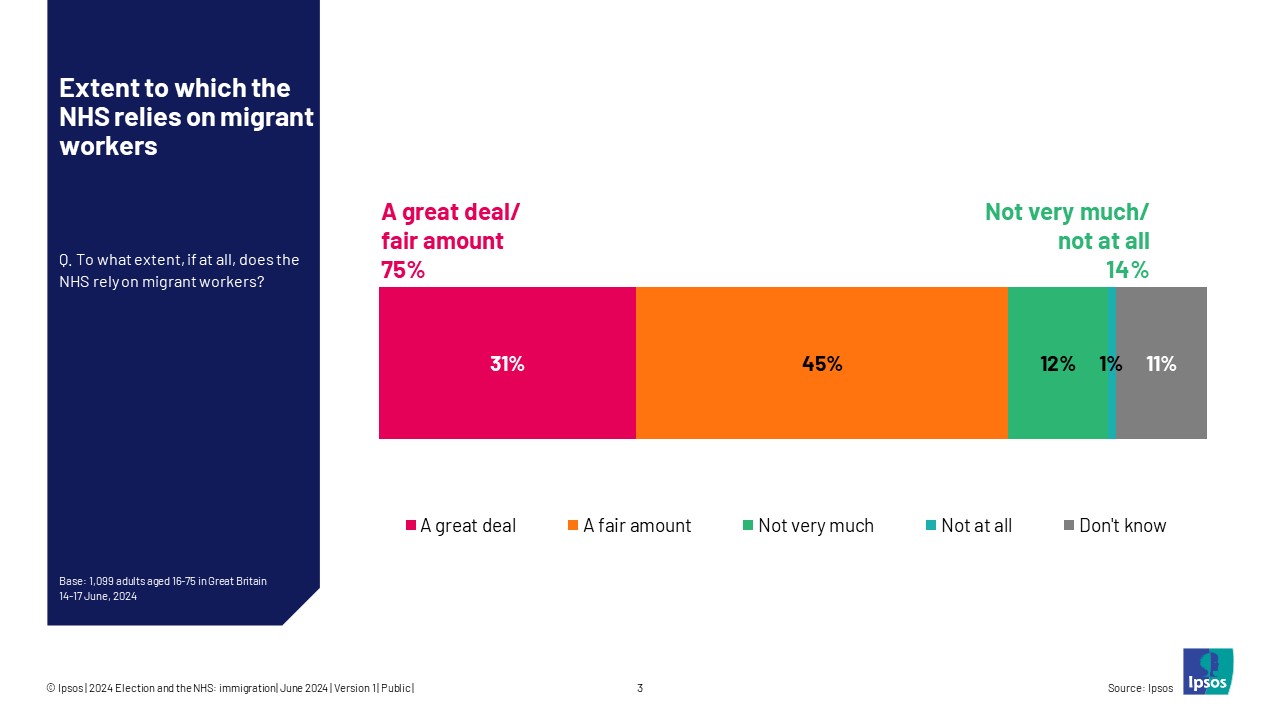
There is also a high level of understanding about the number of NHS workers who are migrants to the UK. On average, the public believe that around two in five workers in the NHS migrated to the UK, a perception that is likely to be broadly accurate. Currently, one in five workers in the NHS is a non-UK national. However, the number of migrants will be higher than this because some have subsequently taken UK citizenship. Again, high proportions (32%) don’t know.
Commenting on the findings, Anna Quigley, Research Director at Ipsos, said:
We have heard some politicians put the blame for long NHS waiting lists on non-essential immigration. These results show us that amongst the public there are divergent views on the complex relationship between immigration and the NHS. The public may over-inflate the pressure immigration puts on the NHS, while recognising the important role they play in service delivery. A more nuanced debate on these issues should help the public become better informed about the real pressures the NHS is under, and the challenges ahead.
Technical note
Ipsos interviewed a representative sample of 1,099 adults aged 18-75 across Great Britain. Polling was conducted online between 14-17 June 2024. Data are weighted to match the profile of the population. All polls are subject to a wide range of potential sources of error.


