Britons are cautiously open to sharing energy data, but want clear value and safeguards
‘Smart data’, as described in the survey, is the secure sharing of customer data with authorised third parties. In the home, this could include sharing energy use data (collected by smart meters) so that suppliers could offer households tailored energy services.
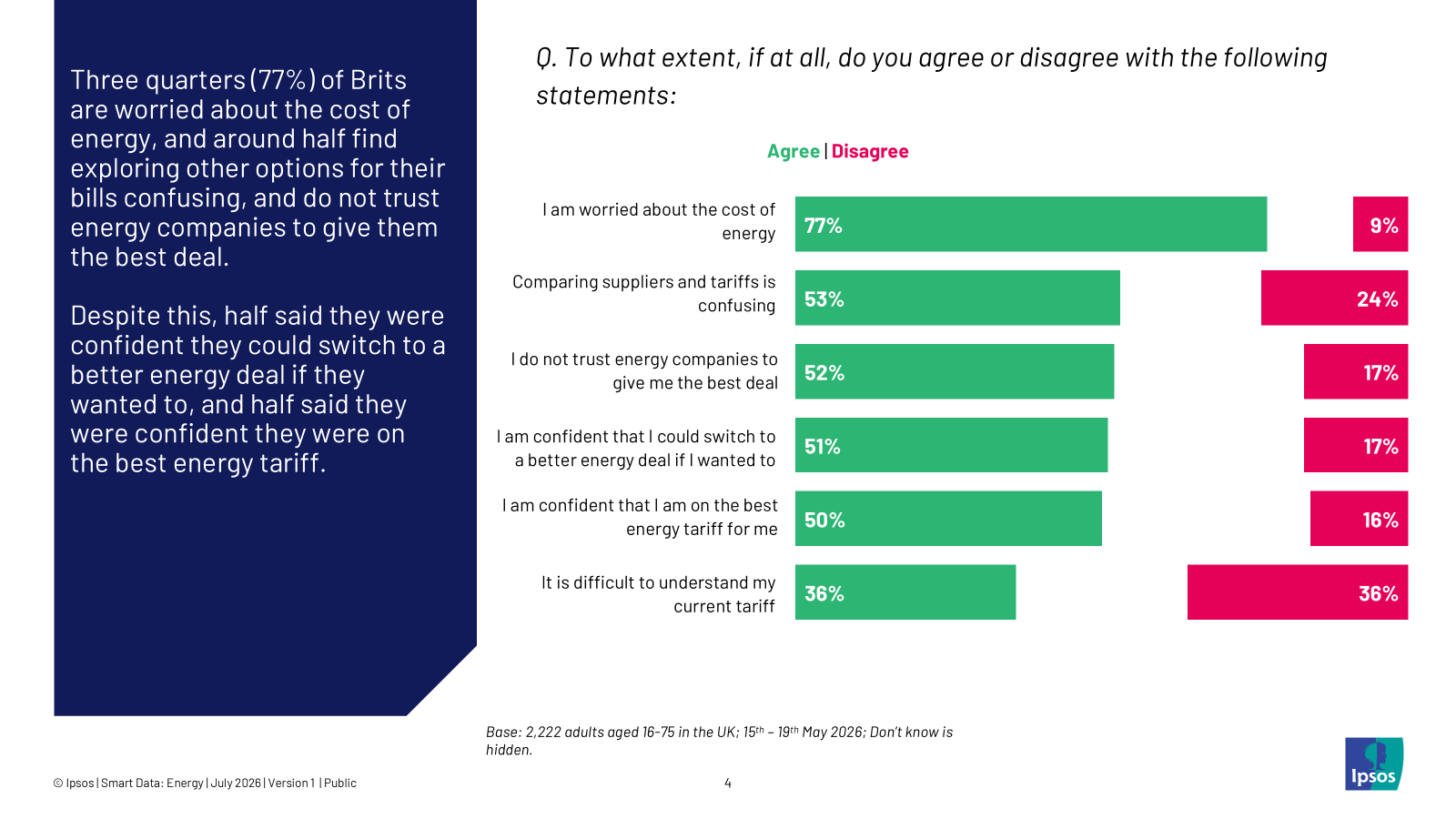
New Ipsos polling shows why this matters. Energy is still a high-pressure market for consumers: 77% of Britons are worried about the cost of energy, 53% say comparing suppliers and tariffs is confusing, and 52% do not trust energy companies to give them the best deal.
But the findings also show that adoption of Smart Data services cannot be assumed. Awareness is still limited: when asked about the concept of Smart Data generally (not specifically in energy) only 34% say they are familiar with Smart Data, while 35% say they are unfamiliar.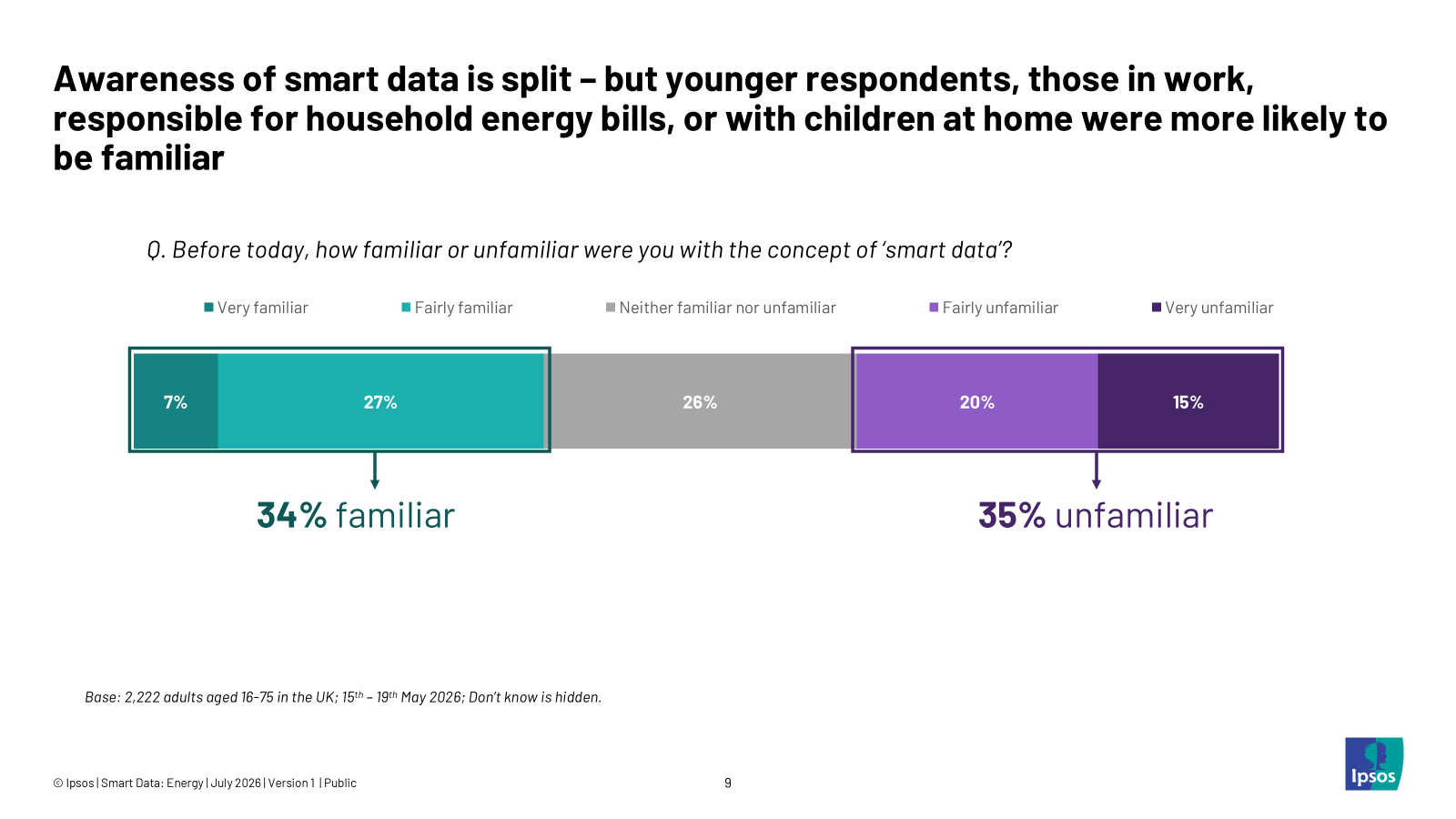
Just over half, 54%, would be comfortable sharing household energy data with authorised third parties to access better services or savings, but 38% would not.
The public response is therefore not rejection. It is conditional acceptance. People want a clear financial benefit, guarantees that data will not be sold or shared further, independent oversight, and a clear explanation of what data is being used.
This is particularly important for energy flexibility, where the success of the future energy system depends partly on households moving some electricity use away from peak demand periods. Smart Data can help make that shift feel more practical and worthwhile by showing people what they personally could move, when they could move it, and what they might save.
The polling suggests strong potential: 80% say they could shift at least some electricity use to off-peak times without major inconvenience, although about a quarter (24%) said they could shift 30% or more of their electricity use to off-peak times and 55% said they could shift less than this.
But barriers remain, especially work patterns, uncertainty about savings, distrust that companies will charge the correct rate, and caring or family routines.
Quote from Colin Strong, Head of Behavioural Science, Ipsos in the UK
Smart Data in energy is not just a data-sharing issue. It is a public confidence issue. People are open to the idea that their energy data could help them get better deals, save money or use energy more flexibly, but they need to understand what is being shared, who is using it, what benefit they get back, and who is accountable if something goes wrong. The opportunity is significant, but it will only work if Smart Data is designed around real households, real routines and real concerns about trust and fairness.
Note
Ipsos interviewed a representative sample of 2,222 UK adults aged 16–75 online between 15–19 May 2026. Data are weighted to match the profile of the population.