Electoral Volatility
Electoral volatility and low turnout are plaguing politicians, pundits and pollsters as the 'real' election is about to begin. With voting day just a month from Thursday, reports of huge differences between one poll and another based on the 'gap' or 'lead' between Labour and the Conservatives disguises small changes between one poll's findings and another. But comparing the same organisation's polls over time, it is clear that public opinion is moving towards the Conservatives.
MORI's poll from over the weekend shows that among those 55 percent who say they are 'certain to vote', the Tories now have a five point lead over Labour, 39 percent to 34 percent, while among those less likely to vote, or certain they will not, Labour has a ten point lead. Most of the volatility is swinging between the Conservatives and Labour, with the Liberal Democrats a pretty steady 21 percent, rising to 22 percent on a 60 percent turnout, and to 23 percent if the turnout miraculously rose to 70 percent, where it was, or above, in every election since the war save 2001.
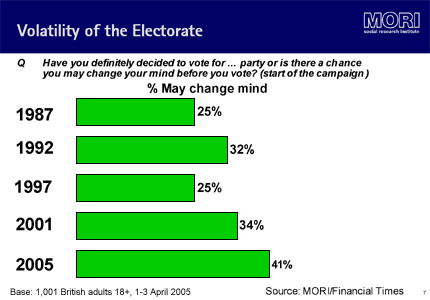
And whereas in 1987 and 1997, a quarter of those who said they would vote said at the outset of the campaign they might change their mind, and a third said they might in 1992 and 2001, a massive 41 percent now say that although they think they'll vote for one party or another, they are doubtful to the point of admitting they just might change their mind between now and the 5th of May. A disproportionate number of the 'waverers' who say they might defect are coming from the Labour camp, further bad news for New Labour. Worse yet is that while 74 percent of Tories say they are certain to vote, only 57 percent of Labour supporters say they are.
The Conservative's five point lead with a 55 percent turnout reduces to three percent if 60 percent vote and is level pegging at 70. If everybody voted other than the 11 percent who say they definitely will not vote, and the 9 percent who say they are undecided and the one person in a hundred who refuse to say how they will vote split proportionally, Labour would be returned with a majority of over 100 seats. On a 55 percent turnout, if these figures were to be replicated at the election, Labour would still be in power, just, but in a hung Parliament and at the mercy of the Liberal Democrats to form a coalition government, The 'project' would be back on.
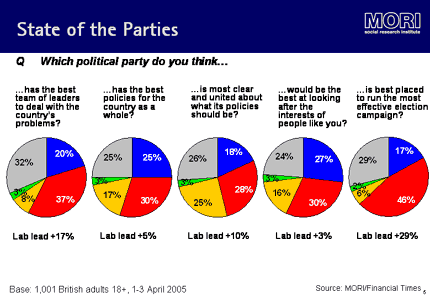
Labour has a lead on every other measure of electoral popularity among the electorate as a whole. That's the good news for Blair & Company. The bad news is that their scores are down, way down, on every measure from four years ago.
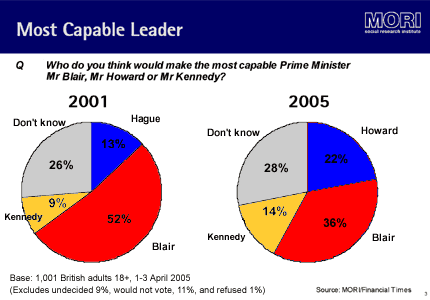
On which party leader would make the most capable PM, in 2001 Mr Blair had a massive 39 point lead, his lead over Mr Howard is 14 points today, a fall of 25 percentage points. On best team of leaders, Labour's lead is now 17 percent, cut in half from 2001, on having the best policies, now 5, was 25; on being clear and united, now 10, down 21 points; on looking after the interests of people like us, now just three percentage points, and it was 21, so down 18 points.