
Iraq: Is Anybody Listening?
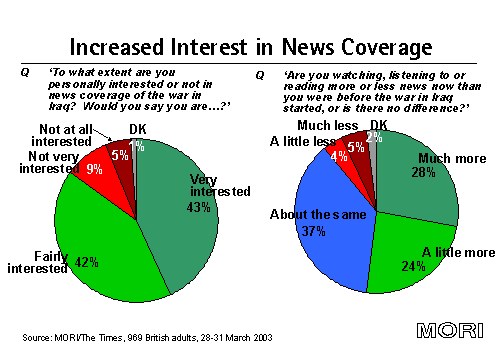
The British public very nearly to a man (sic) say they are 'interested' in news coverage of the war in Iraq. More than four people in ten (43%) express the view that they are 'very' interested and another 42% are 'fairly' interested, making 85% in all, while one person in twenty, 5% say they are not at all interested, and another one in ten, 9%, saying they are 'not very interested'. Somewhat more men than women are 'very interested' in news coverage of the war, but perhaps not by as wide a margin as one might expect: All 43%, men 47%, women 40%.
Nine in ten young people (18-24) say they are 'interested'. What happened to 'apathy' among young people then? And four in ten (39%) young people say they are 'very interested' in the news coverage of the war (the same percentage that voted in 2001). Only marginally fewer than older folks. Only one in ten of the young people say they aren't interested, while 16% of old people (65 and over) say they are not interested.
Nearly all (nine in ten) Conservative Party supporters and Labour Party supporters alike say they are interested, and just under half of each group say they are 'very interested', but fewer of the Liberal Democrats say they are, 40% of whom say they are 'very interested', and one in six, 18%, say they are not interested.
Watching more now than before the war
Three young people in four, 74%, say they are spending more time watching, listening to or reading more news now that before the war started (!).
More viewing is especially the case with those who say they watch the digital channels most: BBC News 24 (68%) and Sky News (67%).
Labour supporters are much more likely to say they are spending more time now than before the war, 63%, v. Tories 47% and Lib Dems 46%.
Women are a somewhat more likely (54%) to have increased news consumption than men (49%) are. More men than women watch Channel 4 (42% to 32%), BBC News 24 (39% to 31%), and Sky (39% to 35%). Those in middle class households, ABC1s, are more likely to watch BBC and Channel 4; C2Des more Channel 5; ITV1 and digital channels equally middle and working class viewers.
More women tend to most watch the terrestrial channels, men the digital/cable/satellite channels. Fewer young people watch Sky most; the Sky strength is in the 25-44 year old group.
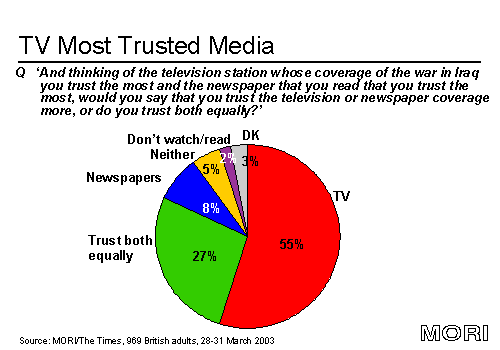
Londoners are most likely to say they don't trust either (11%) v. 5% for rest of country. More working class trust the telly; more middle class, especially the ABs, trust their newspaper.
Interest in coverage is significantly higher among supporters (48% very interested) than opponents (39%) of British involvement, and they have also increased their news consumption more. This suggests that following the coverage may push viewers towards supporting the war.
Sir Robert Worcester is Chairman of MORI


