Pulse Check - December 2025
Checking the pulse of the nation
-

Most likely to...
We asked Brits how they think the party leaders might behave at their office Christmas parties this year. Farage is voted most likely to embarass himself (32%), followed by Starmer (20%) and Davey (14%). Farage (24%) and Davey (23%) are expected to grab the mics first and take part in some office karaoke. But, the public thinks Badenoch (14%) is most likely to dominate the dance floor.
Click here -
Focus on Scotland
Our latest Scottish Political Monitor was released last week. The SNP remain ahead in Scottish voting intention figures for next year’s Scottish Parliament elections, with Reform on the rise and Labour falling back. Meanwhile, the Scottish public appear divided pretty much down the middle in terms of their support or opposition to Independence.
Click here -

Burnham waiting in the wings?
Our most recent Ipsos Political Pulse survey put a series of politicians head to head and asked the public who they would prefer as Prime Minister. Keir Starmer and Nigel Farage were tied but Andy Burnham was slightly ahead of Nigel Farage and 13 points ahead of Keir Starmer. Meanwhile, Kemi Badenoch showed improved poll ratings, achieving a statistical tie with both Starmer and Farage.
Click here
2025 Political Polling: Wrapped
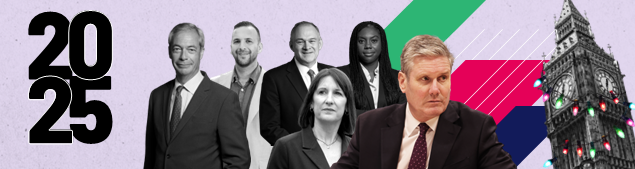
The UK political landscape this year has seen monumental shifts, unpredictable changes, and record breaking polls. We’ve been with the public every step of the way, recording their reactions, opinions and concerns; and have explained these findings in a broader societal context.
Here’s your run down of some of the key Ipsos polling records broken this year:
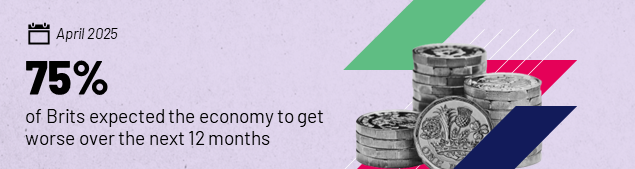
In April, the first record breaking findings came through. Our Economic Optimism Index fell to a historic low - the lowest levels ever recorded since Ipsos began collecting this data in 1978. The data found that 75% of Britions expected the economy to get worse over the next 12 months, and just 7% thought it would improve, giving a net Ipsos Economic Optimism score of -68.
The net figure of -68 was slightly lower than levels seen during some of the more challenging economic periods in recent history including the global financial crisis in July 2008 (-64) and the cost-of-living crisis in June 2022 (-64).
In May, Kemi Badenoch dopped to the worst Ipsos favourability score ever recorded for a leader of the opposition. Only 17% of the public said they held a favourable opinion of the Conservative leader, 49% unfavourable, giving a net score of -32. Though it should be said in more recent times, the Conservative leader has seen her ratings improve somewhat.
In June, Reform UK recieved the highest vote share Ipsos has ever recorded for them (34%), in our relaunched Political Monitor. This put them nine points ahead of the Labour Party, who recieved 25% - the lowest share Ipsos had recorded for them since October 2019.
But it didnt stop there. In September, we saw even more voting intention records broken. Reform (34%) led by 12 points over Labour (22%). Labour’s vote share of 22% was the lowest Ipsos had recorded for the party since June 2009. And the Conservatives’ 15% share, was the lowest vote share we’ve ever seen for the party since our records began in 1976.
And it only got worse for Labour. Going into the Labour conference, both Keir Starmer and Rachel Reeves’ statisfaction ratings reached historic lows.
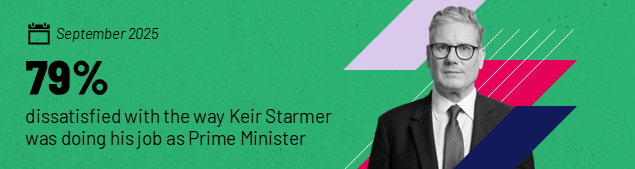
Only 13% were satisfied with the way Starmer was doing his job as PM, with 79% dissatisfed, giving him a net rating of -66. This is the lowest satisfaction rating recoded by Ipsos for any PM going back to 1977, making him the most unpopular PM on record in 45 years. Previous record holders include Rishi Sunak (-59, April 2024) and John Major (-59, August 1994).
Simiarly, 13% were satisfied with the way Rachel Reeves was doing her job as Chancellor, and 69% dissatisfied, giving her a net rating of -59. These scores are comparable to Kwasi Kwarteng in October 2022, just after the mini budget (12% satisfied, 65% dissatisfied, net -53).
In November, we saw the highest vote share Ipsos has ever recorded for the Green Party (15%). Starmer’s satisfaction ratings remained unchanged, but Reeves saw a further dip in satisfaction, breaking the record for a second time this year, with 71% dissatisfied, 11% satisfied, giving her a net rating of -60.
Finally, in our December Political Pulse survey, 71% of the public told us the country was heading in the wrong direction. This is the first time more than 7 in 10 have said ‘wrong direction’ since this polling series began back in January 2020.
Reflecting on the findings, Ipsos Politics Director Keiran Pedley said:
Politically it has been a very good year for Reform UK and an extremely challenging one for the Labour government. Following by-election wins and a successful local elections, Reform have established a strong and consistent poll lead, routed in immigration being the number one issue on the mind of voters and a general dissatisfaction with the status quo. Meanwhile, Labour have set record lows, in terms of voter shares for the party and leader satisfaction ratings for the Prime Minister that have fuelled speculation about his future. With key elections in Scotland and Wales next year, along with a bumper set of local elections too, 2026 promises to be a major inflection point for the Labour government. We just cannot be sure yet in which direction.