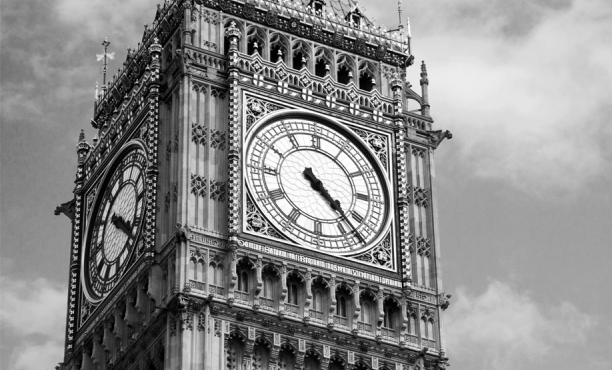
New polling data from Ipsos in the UK, conducted 21-23 July 2026, reveals continued high levels of economic anxiety across the nation as Andy Burnham assumes office as Prime Minister.
MORI Scotland was commissioned by the Scottish Executive in October 2004 to conduct one-to-one depth interviews and a national telephone survey among design professionals. The survey examined their knowledge of, and attitudes towards, the Executive's policy on architecture, which was introduced in October 2001.
In 2003, MORI Scotland was commissioned by Glasgow City Council to conduct a series of four large scale residents surveys over the following two years. Each survey doubles as a recruitment exercise for the Glasgow Citizens Panel.
In July 2003 MORI Scotland was commissioned by Glasgow City Council to recruit and manage a new Glasgow Citizens' Panel. In a departure from methods used in the past, it was decided that the panel would be recruited over a series of waves — a process which is ongoing. Each financial year, two residents' surveys are conducted among representative samples of around 1,000 people in Glasgow with each survey doubling as a panel recruitment exercise. The surveys focus on local services and wider community issues, and the results are used to inform service development. To date (autumn 2005), four waves of the survey have been conducted and a fifth is underway.
MORI's exclusive survey for The Sun reveals that, among the general public, David Cameron is the clear favourite to lead the Conservative Party, and neither his age or education background are seen as barriers to him becoming Prime Minister.
The latest Deloitte / MORI Delivery Index shows a new fall in optimism in the government's long term policies towards the economy and public services in September.
MORI's research for The Electoral Commission during the 2005 General Election campaign shows that 46% think that electoral fraud is either a fairly big or very big problem in Great Britain. This compares to 69% of the public who say the same about false insurance claims and 79% who think benefit fraud is a problem.
A MORI survey released today conducted among Black and Minority Ethnic residents on behalf of The Electoral Commission (EC) reveals that whilst Black and minority ethnic voters were considerably less likely to have voted than White groups at the 2005 general election, there was also a real difference between the different ethnic communities.
The latest MORI survey for the GLA shows Londoners support the way the police responded to the attacks of July 7th. Three-quarters (77%) say they are satisfied with the way the Met Police responded to the attacks and 15% say they are dissatisfied. The survey also shows that two-thirds (65%) are noticing an increased police presence after the attacks and half (49%) say higher visibility policing makes them feel safer.