
What does the new ‘eating at home’ mean for grocers and restaurants?
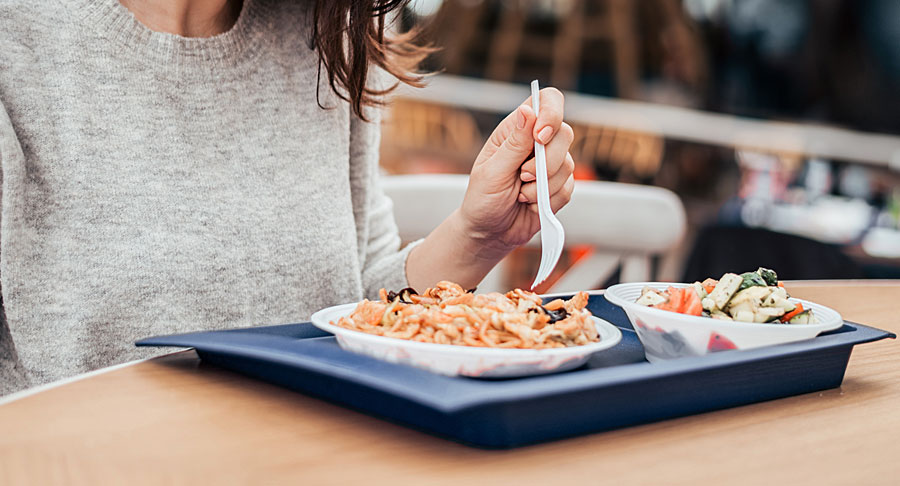
Americans have adjusted what and how they eat during COVID-19, along with where they get it. Ipsos research shows that 55% of Americans say they are cooking more than before the pandemic. About three in ten are also using more food and grocery delivery. This opens the door for grocers to further their competition with restaurants.
This is especially relevant for younger adults ages 18-34, who eat everywhere but have always been bigger fans of restaurants than other age groups.
For instance, more grocers might invest in “grocerants” or restaurants with strong culinary credentials inside the stores. Walmart recently opened its first U.S. virtual food court in New York where customers can combine items from 25 menus and shop the store while they wait for their order.
Also expect expansion of virtual or ghost kitchens where grocers share food production space in-store to enable rapid takeout and delivery or restaurant-quality meals from the store. 7-Eleven recently unveiled a concept store in Florida incorporating a Fusion Fresh restaurant, the Wine Cellar, a nitro cold-brew and iced tea bar, and a car wash.
As restaurants and retailers jockey for share with new services and partnerships, it is important to keep people at the center of their plans. Most investments can be put to the test early on:
- Get customer reaction to new ideas that come to market, whether yours or your competitors. Employ mystery shoppers, geo-triggered surveys, self-guided shops and user observation to find out what works and what doesn’t.
- To test innovative ideas in early stages, consider research that uses 3D augmented reality that can be done qualitatively or with quantitative scale online to test ideas in full context rather than flat-dimensional concepts, and before the expense of building out in-store.
- Shoppers also want grocers to make it easy to get takeout, as Ipsos research shows. That means skipping the checkout line to having the ability to add grocery items to their order and drive-thru. Just don’t lose sight of the primary purpose as 59% of shoppers would prefer to shop in-store.
Importantly, getting food for any meal is anybody’s game now, and food retailers need to remain flexible to compete.


![[WEBINAR] TOAST 2026: Under Pressure - Fewer, Fragmented, Fought-For](/sites/default/files/styles/list_item_image/public/ct/event/2026-07/thumbnail-templates_1_0.png?itok=MxL-wPJW)
