
Making the most of our regrets
 As part of our ongoing work to better understand consumer decision-making, Ipsos (along with our academic partners, including the LaPsydé laboratory in Paris University) have conducted new research into the concept of regret.
Regret is an emotion that plays a critical part in how we adapt our decision-making, affecting whether it is more automatic or more deliberative in nature (see below).
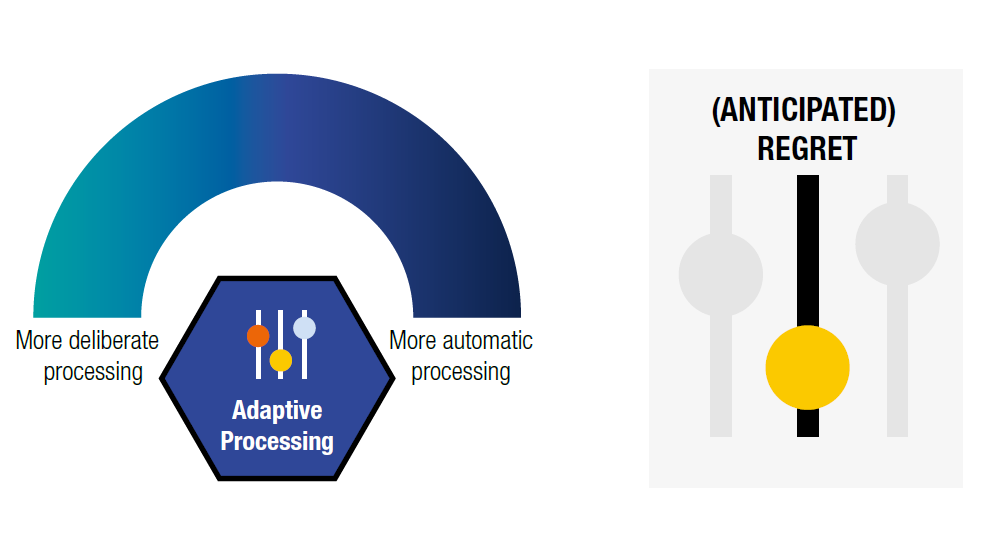
As a counterfactual emotion, regret allows us to reflect on what could have happened in contrast with the actual outcome. This kind of more deliberate thinking allows us to weigh up options and cope with conflicting preferences.
When we talk about regret, this does not just mean reflecting on the past. Anticipating the regret we might feel if something has undesired consequences can affect the decisions we make in the present moment.
Measuring levels of regret (or anticipated regret) in consumer surveys can help us look in more detail at behavior shift, behavior stickiness and behavior intent in a range of scenarios. In this paper, we focus on shopping habits, the impact of advertising on brand choice and vaccination intent.
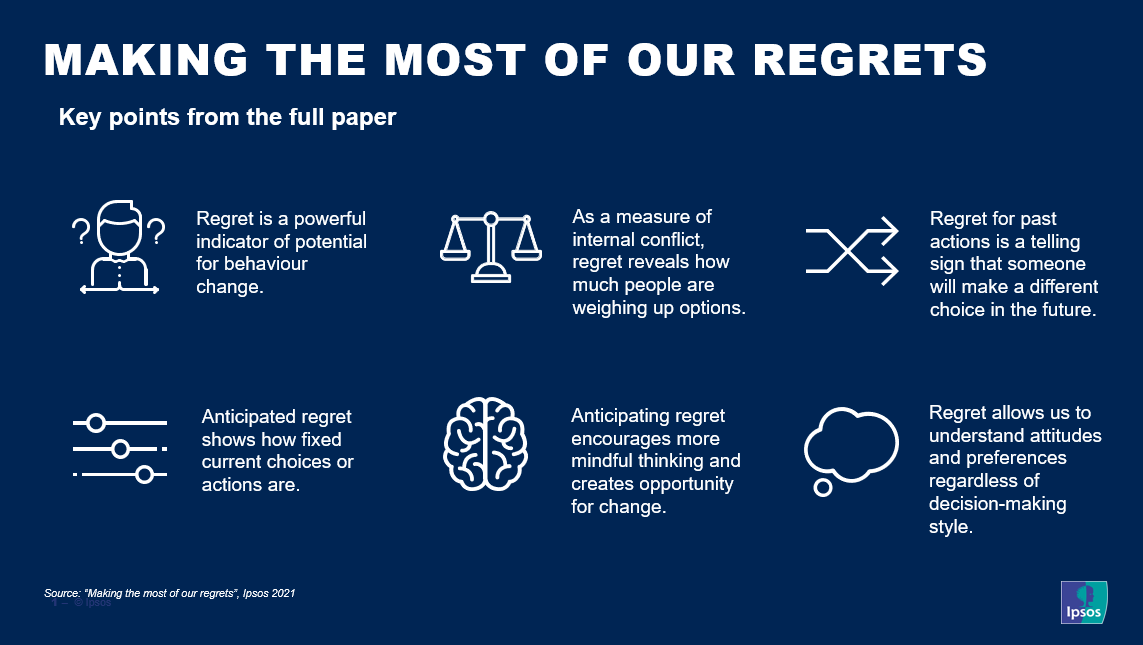
Key takeaways
Read more in: Making the Most of our Regrets
Also see: Dancing with Duality: Achieving brand growth in a mindful and mindless world.
WHY REGRET IS A CORE MEASURE IN THE BEHAVIOUR CHANGE TOOLBOX
Every day we make a myriad of decisions. Most of these follow our standard routines, but some require harder thinking and potentially lead to new or changed behaviours. Standard shopping habits have been disrupted in the wake of the Covid-19 pandemic, for example, with a large proportion of consumers switching to online channels. Our 28-country study shows 45% of people have made purchases online more than they did before.1 But even in a stable environment, when making everyday decisions such as choosing a brand, we might decide to go for a change and try something new – which might then become a new normal. In recent research, we identified that human decisions arise along a continuum, where multiple cognitive processes, ranging from more mindful to more mindless (i.e. automatic), are operating at the same time.2A regulatory process, like a controller, monitors and guides this cascade of processes. The behaviours that result are, to varying degrees, mindful or mindless and they are often adapted to context. One key feature of this regulatory process is its ability to detect cognitive conflicts, inhibit automatic “mindless” responses, and trigger more deliberative and “mindful” processing of information, leading to decisions perhaps more suited to the situation. Regret is an emotion that has been identified in academic research as a critical part of this cognitive conflict detection and inhibition process (aka executive adaptive process or “System 3”)3 that helps us choose between more heuristic-based (mindless) or more deliberative (mindful) approaches or preferences.
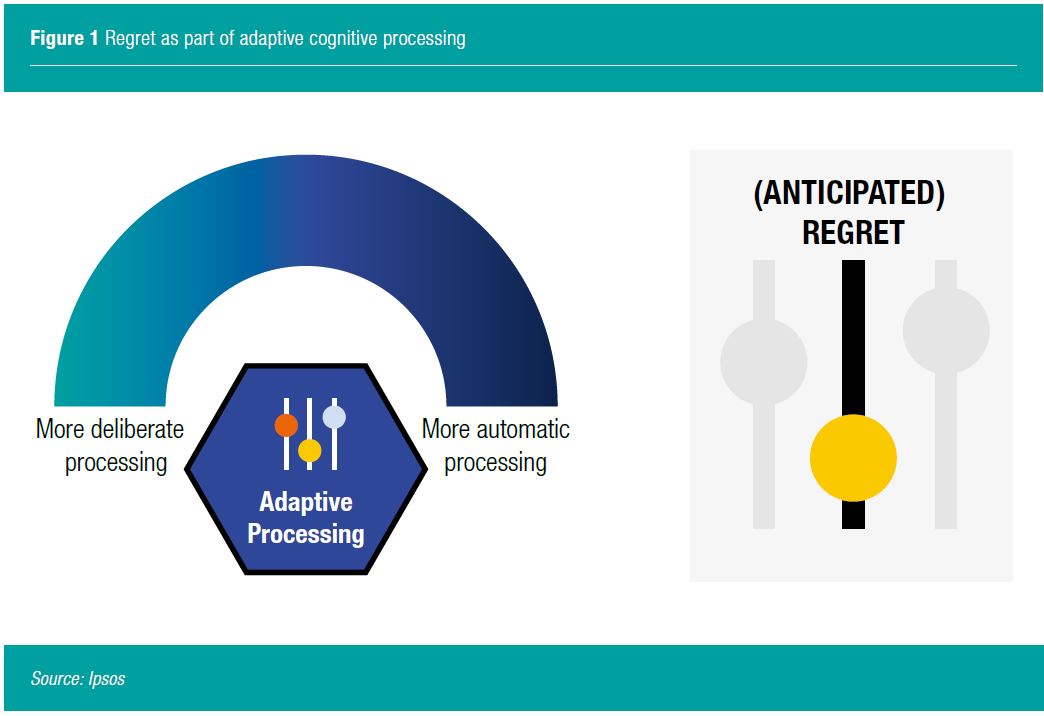
For example, think about your favourite cereal. You might have the habit of consuming a specific brand of cereal and it now became a “mindless” choice. You just don’t think about it when purchasing. Now imagine that, staying at a friend’s home, you try a new cereal brand which turns out to taste great. You may start regretting buying your usual brand and this may trigger a questioning of your preference. A reassessment of different cereal brands will happen in your mind, engaging automatic and deliberate thoughts, such as price points, flavour, colours, associated memories, etc. Consequently, you may decide to switch brand or to ultimately stick to your favoured one. But, in either case, it will have taken some time, consideration and new experiences before your cereal brand choice becomes a no-brainer again. As a counterfactual emotion, regret allows us to reflect on what could have happened in contrast with the actual outcome, forcing us to operate outside of our automatic, mindless thinking. When it is active, more mindful thinking implies that we “scan” and weigh up our options. This counterfactual thinking is also activated when we consider the regret we may feel if a future action or decision has an undesired outcome – especially when this situation is loaded with uncertainty. We call this “anticipated regret”.
STUDYING REGRET
At Ipsos, along with our academic partners including the LaPsydé laboratory at Paris University, we conducted applied research to demonstrate how regret, as a key emotional construct involved in decision-making, can be a major driver of behaviour and behaviour change.
In this paper, we outline some of our latest findings which shed light on this element of consumer and citizen decision-making processes and explain why we consider regret to be an critical component in the market researcher’s toolbox. These three sections focus on how regret can inform us about:
1. BEHAVIOUR SHIFT
Regret allows people to mentally cope with inner conflicts between multiple options. When this inner conflict is, for example, a struggle to choose between brands, measuring regret on past behaviour can help researchers gauge respondents’ likeliness to change their behaviour.
2. BEHAVIOUR “STICKINESS”
Anticipated regret regarding future actions can also help marketers understand if a behaviour change (in particular a forced one due to a contextual change like the Covid-19 pandemic) is here to stay or might fade away or revert when things return to a normal, for example a shift to online shopping as the preferred shopping option. Regret can guide brands to know how much effort they should put into encouraging a certain behaviour so that becomes more
“mindless” to consumers and anchors a new normal.
3. BEHAVIOUR INTENT
Measuring anticipated regret allows us to capture both mindful and mindless processes that are effectively driving the decisions people make, whatever their decision-making “type”, i.e. whether they are more prone to more impulsive or considered decisions. This makes it useful to many social and market research conundrums.
Ipsos is working with leading academics and university programmes to frame the theoretical foundations of our scientific developments:
“Our partnership with Ipsos started before the Covid-19 pandemic: we are working together on a general framework of human behaviours, decisions, and opinions. In that context, we have been working on how we could advance this understanding by integrating in polls and surveys specific questions on “counterfactual emotions”, like regret, that come into play when we are comparing the consequences of our choice with the ones of an alternative choice. In fact, by forcing us to think against the facts, against what we usually think, executive emotions activate this critical inhibition thinking process to help us appreciate our future decisions and course of actions.
Our goal here is to develop further knowledge on individuals’ perception of important topics, like Covid-19, by leveraging theories we are developing in our lab and that can be used and applied by Ipsos in their studies.”
BEHAVIOUR SHIFT
Regret helps consumers to cope with conflicting preferences and ultimately leads to behaviour change. In 2020, we conducted research in the US and Mexico to better understand how consumers choose between brands and how advertisement can impact, and potentially disrupt, such decisions. In both countries, we selected a leader and a challenger brand for a specific test category. All respondents were buyers of the leader brand. We then exposed half of the sample to an effective ad for the challenger brand , after which one-third switched and chose the challenger brand instead. As well as looking at brand choice behaviour, we also investigated the ad’s impact on other key metrics such as choice regret and response time, particularly focusing on differences between “switchers” (respondents who would choose the challenger brand after viewing the challenger ad) and “non-switchers” (those who would stay loyal to the leader brand).
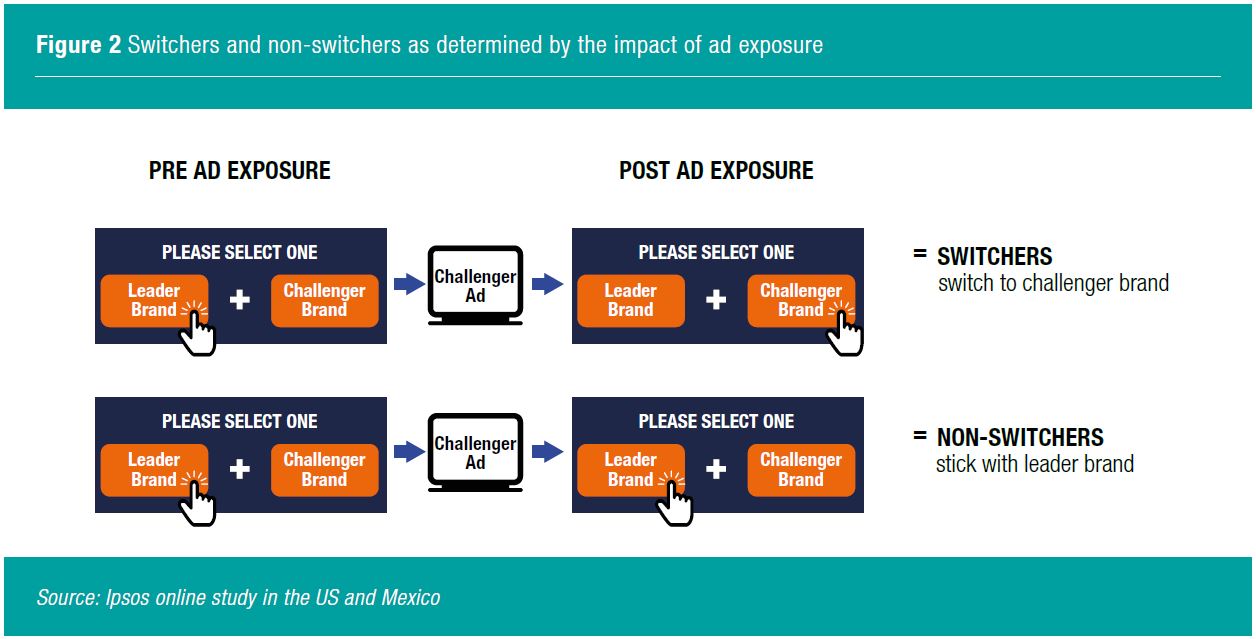
Our study provides evidence that marketing interventions – such as an advertisement – can indeed disrupt an automatic mindless decision and cause consumers to change their usual choice by inducing a more mindful decision-making process. We found that these interventions had an impact on:
- Exposure to an effective ad can stop automatic decision-making, disrupting “habit”. One-third of leader brand buyers switched to the challenger brand after having been exposed to the challenger’s ad.
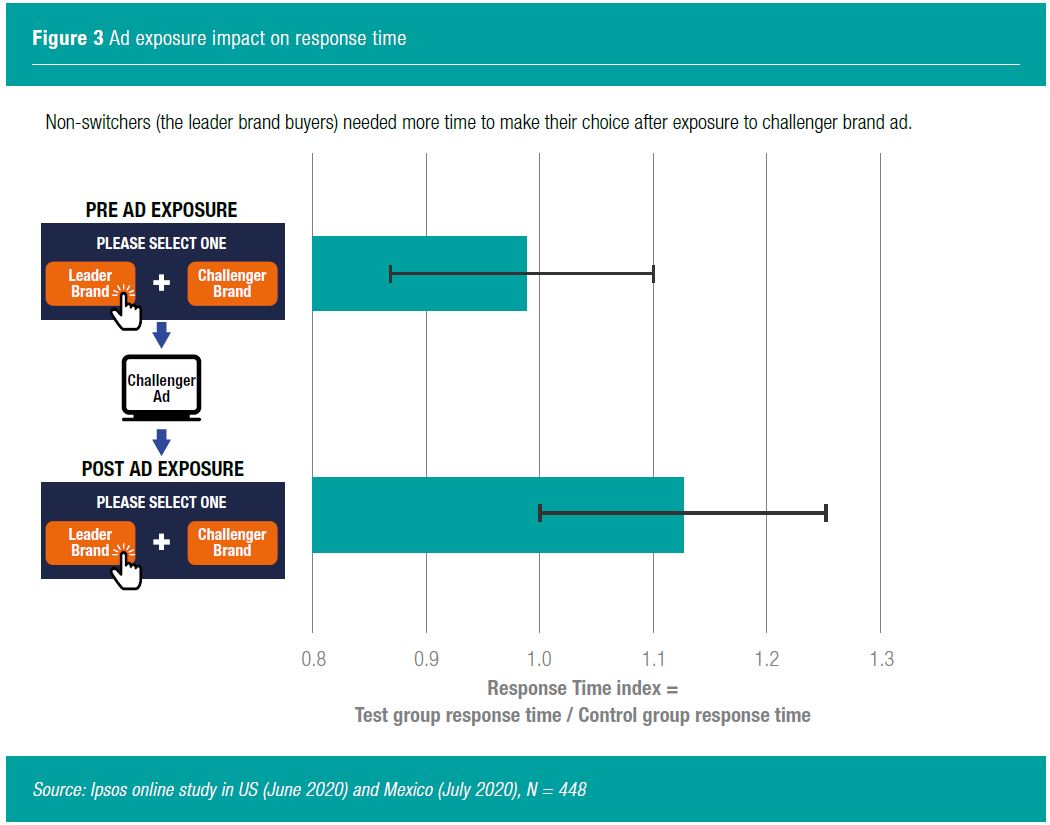
- Leader brand buyers who did not switch to the challenger brand nevertheless took longer to make their selection after being exposed to an effective ad for the challenger brand, pointing to a disruption of their automated quick decision process (see figure 3).
- Respondents who switched to the challenger brand following ad exposure had stronger memories of this ad’s content than non-switchers, suggesting that a more mindful decision-making process that considered the ad’s content and message had been triggered.
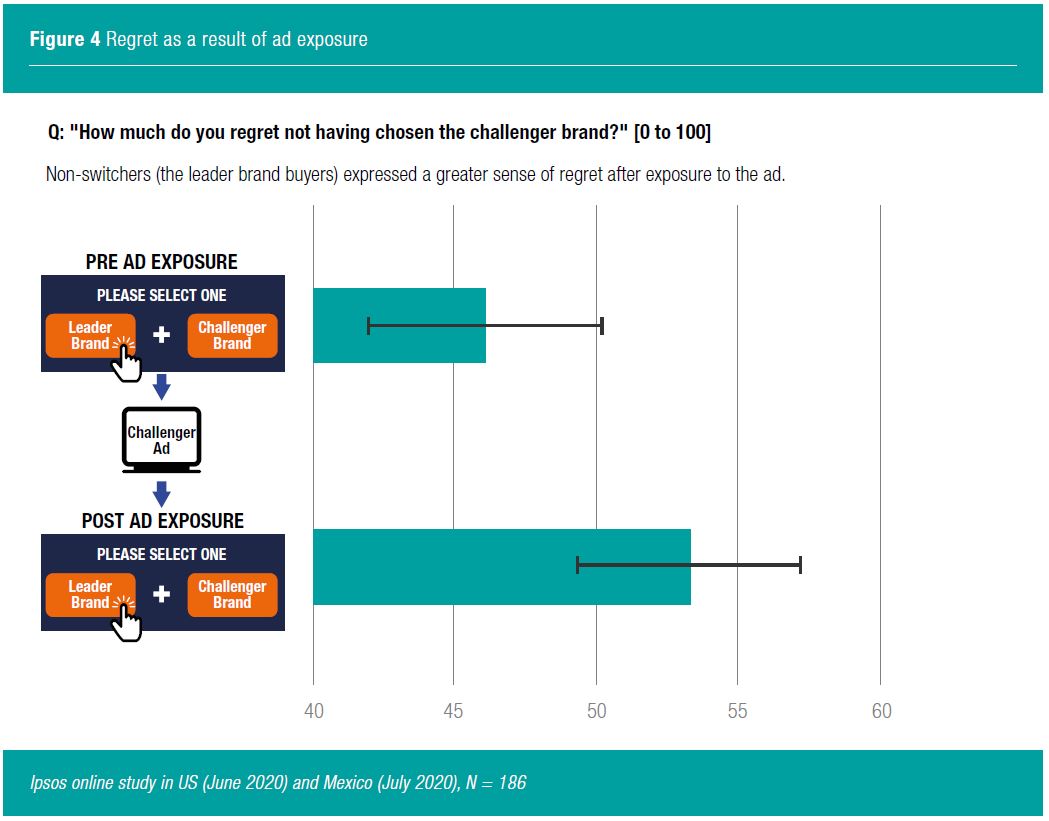
To better understand the dynamics of the decision-making process and assess how regret could help researchers better design their interventions, we also asked respondents how much they regretted not having chosen the challenger brand before and after they viewed the ad. We found that regret is a strong indicator of conflicting cognitive processes and potential behaviour change.
- Leader brand buyers felt significantly more regret for not choosing the challenger brand after being exposed to challenger brand’s ad. Regret revealed the ability of ads to induce inner conflict and impede automatic brand selection and loyalty (see figure 4).
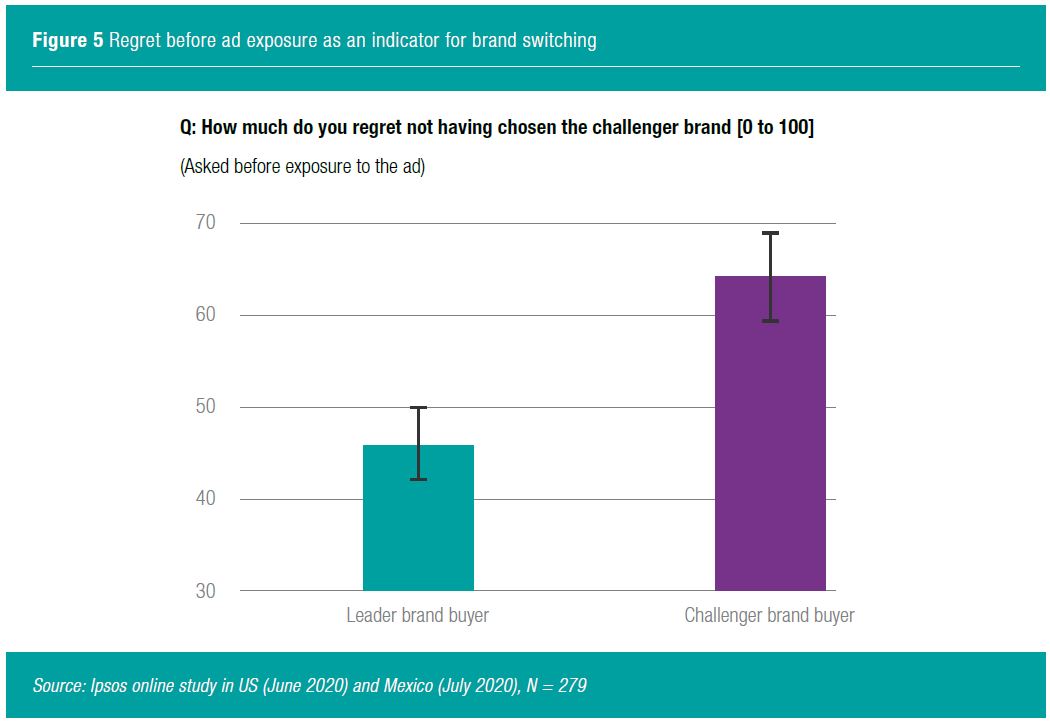
- If people expressed regret before being exposed to the stimulus (in this case, the ad) they would more readily change their behaviour. The higher the regret for not selecting the challenger brand before ad exposure, the higher the chances of switching to it. An inner conflict might already exist before ad exposure, making the ad even more impactful. This too can be measured through regret for not choosing the challenger brand.
Overall, the challenger brand’s ad managed to disrupt the automated (“mindless”) leader brand choice. In promoting an alternative choice, it triggered a mental conflict that led to a more “mindful” style of cognitive processing and encouraged changes in brand choice. The level of regret for not choosing the challenger brand, which reflects the extent to which a consumer is considering the different options, appeared to be a telling sign of potential for behavioural change (aka customer churn). Higher regret indicates we are still scanning options. Representing the ongoing internal process of weighing up different options, regret can help researchers gauge the appetite for behaviour change.
BEHAVIOUR STICKINESS
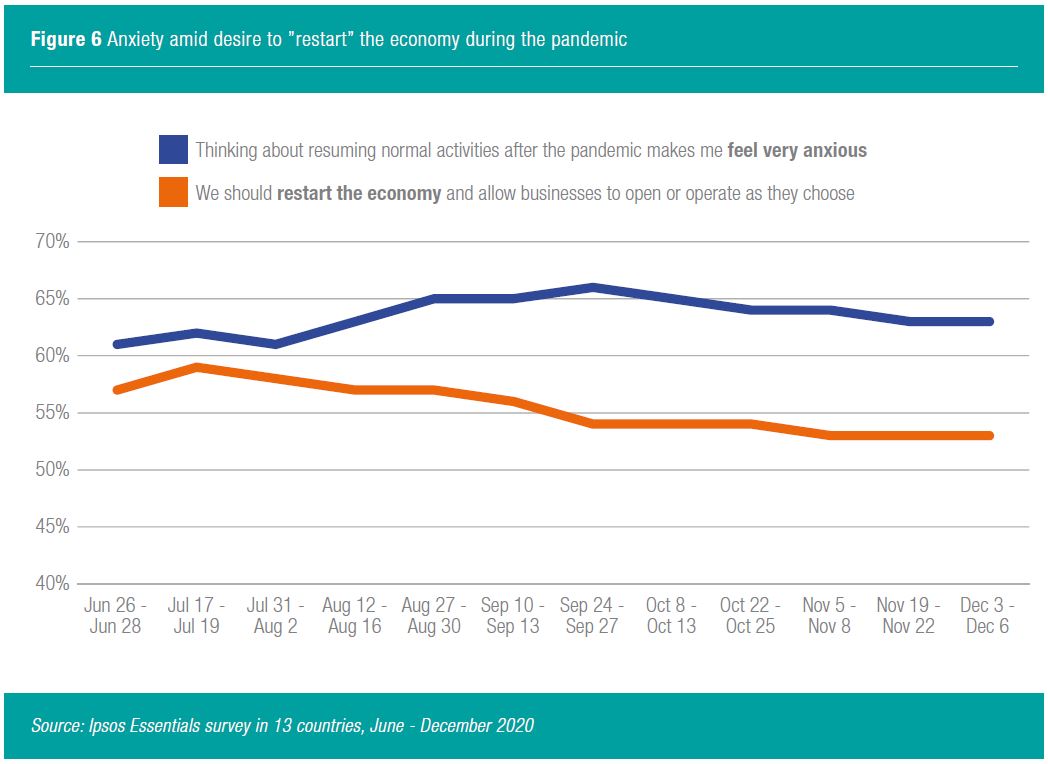
Anticipated regret can help marketers gauge if a change in behaviour is here to stay. Throughout 2020, consumers struggled with how to handle fears about returning to normal activities following the outbreak of Covid-19 as well as the lockdowns and restrictions on movement it entailed. Our research found that, during the second half of the year, over 60% of those surveyed in 13 countries felt we should restart the economy even though about half also felt anxious about resuming normal activities (see figure 6).
Shopper behaviour is one of those activities at the centre of the dilemma. Ipsos tracking found 40% of the world’s consumers saying that their shopping behaviour changed radically in 2020, specifically in terms of:
- Making fewer shopping trips.
- Using grocery delivery services (or ordering online and picking up in store).
- Being more careful about expenditure.
- Stockpiling certain items - particularly food and personal care.
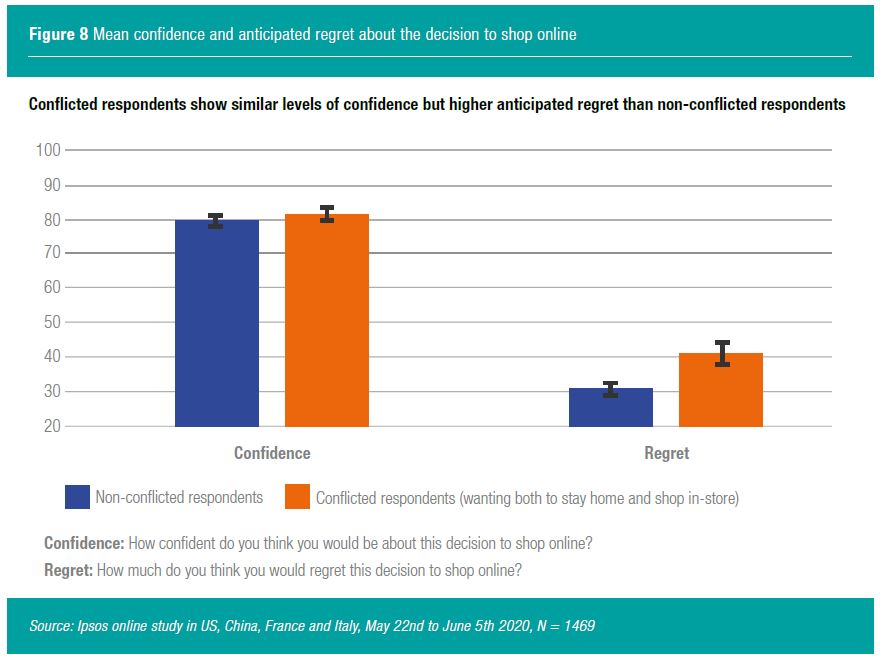
To better understand the emotions behind these changes in shopping behaviour, Ipsos conducted research in the US, France, Italy and China in mid-2020 which showed that many people were experiencing inner conflict in their desires to go out shopping and stay at home to protect themselves and others from Covid-19. People expressing this inner conflict, both wanting to stay home and to go out and shop, were more likely to anticipate regret about their future behaviour no matter what the outcome of their decision was (i.e. they felt they may regret acting on their preferred option afterwards). Our findings demonstrate that choice certainty and anticipated regret play two separate roles in consumers’ decisions, the former being more context-driven while the latter is more reflective of an ingrained behaviour. Shoppers’ intention to shop online for non-essential goods was driven by a desire to protect themselves from Covid-19. Among people eager to go out shopping during the pandemic, those who also wanted to stay home to protect their health (and were thus “conflicted”) were three times more likely to shop online than their non-conflicted counterparts (see figure 7). They also expressed a high degree of confidence about their decision to shop online (80%): it seemed they had made their choice (see figure 8). But how do we know whether this change will stay? In order to explore whether these shoppers stay loyal to the online channel, and automatically repeat this behaviour in the future, we looked at anticipated regret.
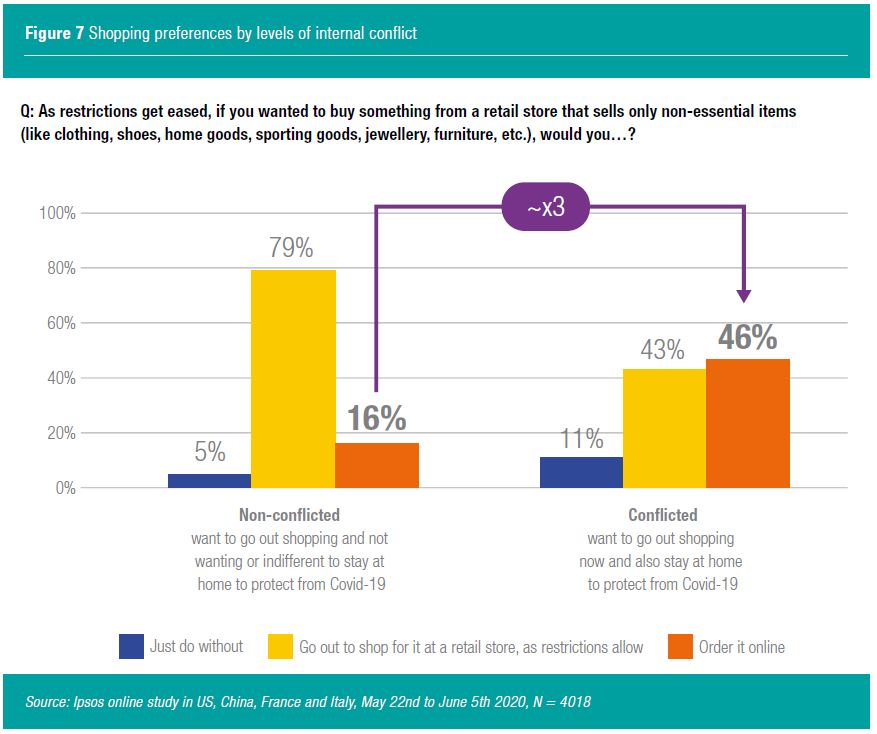
We found that conflicted shoppers who ultimately shopped online showed greater anticipated regret about their decision than those who were not conflicted about what to do. Importantly, higher levels of anticipated regret indicate that conflicted online shoppers would be more on the lookout for reasons to resume former behaviours, and even potentially postpone purchases in order to do so. Inner conflict is, in this way, a key indicator of the temporary nature of behaviours. So, even though customers might be certain that they will engage in new behaviours, for example to adapt to a new context, measuring anticipated regret allows us to evaluate how stable the new intended behaviour might be in the longer term. This difference between certainty and anticipated regret is critical for researchers who may need to understand the difference between context-related behaviours and more ingrained ones.
Anticipated regret indicates consumers’ “choice stickiness” and allows us to determine whether a special effort has to be made in any aspects of the customer experience in order to turn an encouraged behaviour into a more natural and, ultimately, lasting behaviour.
BEHAVIOUR INTENT
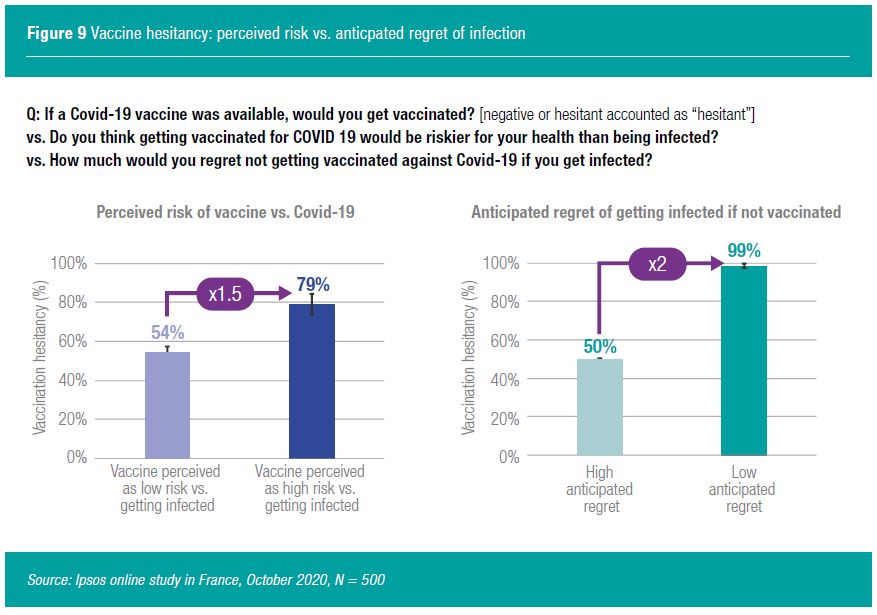
Anticipated regret is a consistent driver across different types of decision-making profiles – as seen in Covid-19 vaccination intent. When it comes to understanding vaccination intent or its counterpart, vaccination hesitancy, at Ipsos we take a holistic view looking at different potential drivers that might be at play, such as motivation, ability, information processing, or social context.4 Here we specifically focus on the importance of an individual’s thoughts and feelings to better understand vaccination intent. Numerous scientific studies have shown that both the perceived risk of a vaccine and the anticipated regret correlate reliably with getting vaccinated. Research indicates that anticipated regret is generally a stronger predictor of vaccination intentions and behaviour than other risk appraisal indicators. It is also assumed that this may be because anticipated regret captures a combination cognition and affect5 – i.e. emotional experience. To test this, we designed a survey that would dive deeply into the question of how risk assessment and anticipated regret are related to vaccination hesitancy. In this study, conducted in France in October 2020, we asked each respondent to indicate: their intent to get vaccinated once a vaccine becomes available, how much they think getting vaccinated for Covid-19 would be riskier for than being infected, and how much they would regret not getting vaccinated if they were to get infected. We indeed observed that anticipated regret is more strongly correlated with vaccination hesitancy than the perceived risks of the vaccine and of the virus (see figure 9).
Additionally, and more importantly, we also assessed respondents’ ability to detect and disregard mindless, or heuristic-based thinking that might derail them from making mindful, logical decisions. Respondents were asked to solve relatively simple logic tasks framed in such a way that the automatic “gut feeling” answer would be incorrect. We also asked respondents how sure they were about their answers. This allowed us to classify them according to their ability to detect flaws in their automatic answers and inhibit misleading, automatic, or mindless thinking. The risk assessment question taps into more cognitive thinking while the anticipated regret one captures both cognitive and affective responses. Thus, the relationships between risk, anticipated regret and vaccination intent should differ according to respondents’ ability to inhibit possibly misleading, affective gut feelings. As expected, we found that anticipated regret is consistently a powerful determinant of vaccination intent across respondents. Anticipated regret has a strong effect upon vaccine hesitancy for people with high and low gut thinking inhibition abilities, i.e. whether they tend to block their automatic reasoning or not. On the other hand, perceived risk of the vaccine strongly impacts vaccination intent only for people with high inhibition abilities (see figure 10).
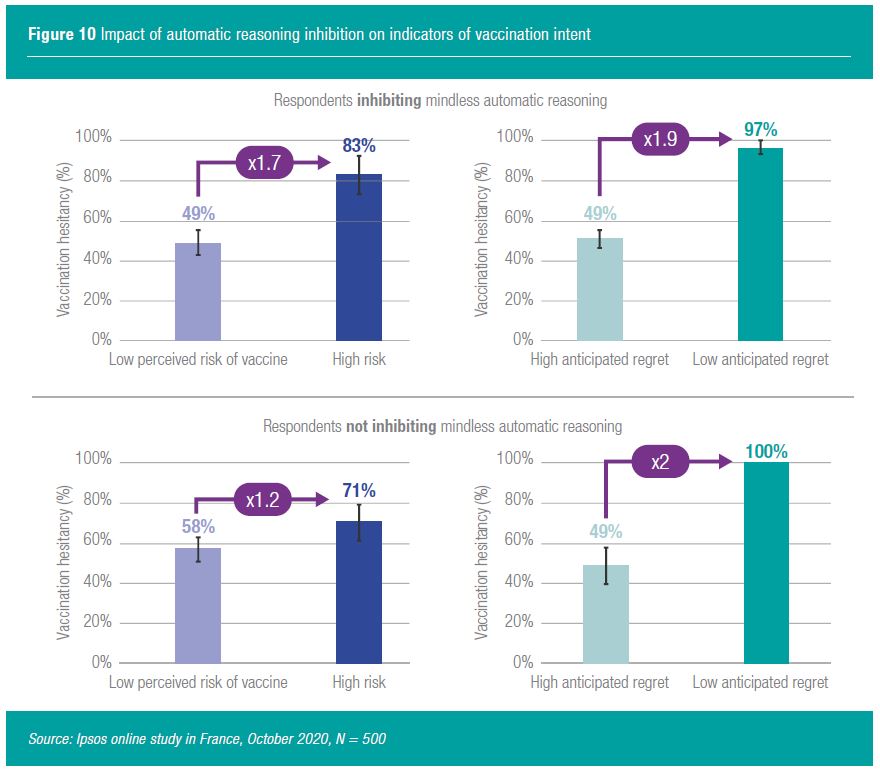
Our results show that measuring anticipated regret brings additional value to the researcher, allowing them to capture both mindful cognitive and mindless “gut” based processes driving the decisions people make. More importantly, this applies whatever their ability to inhibit potentially misleading automatic thinking is. For researchers, this shows that framing a question with anticipated regret allows us to decisively capture attitudes or preferences from a larger population than by asking apparently more straightforward, logical or rational questions.
LEARNING FROM REGRETS
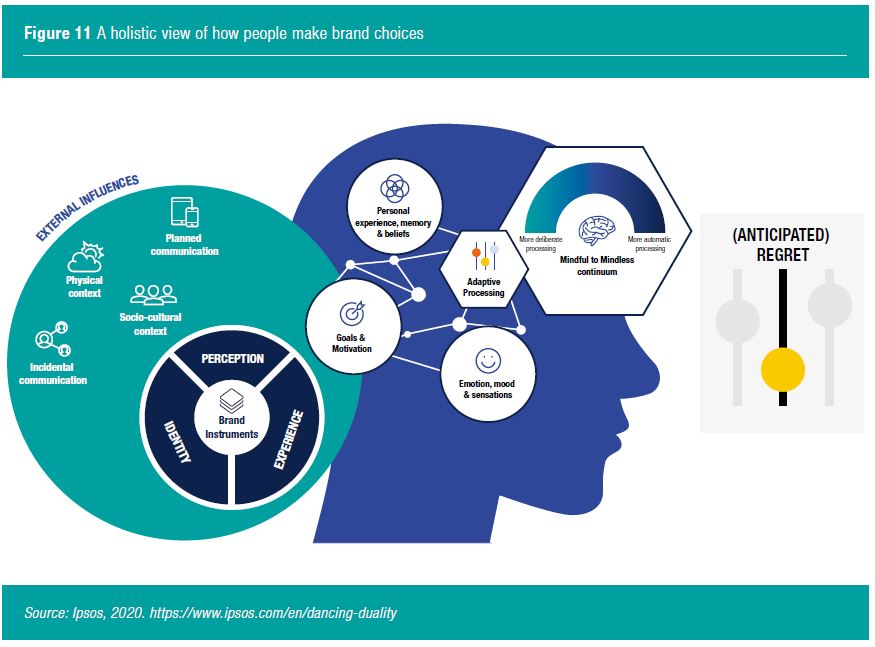
It is clear from these three examples that regret is a key construct for better understanding the cognitive processes related to behaviour change. It is also important to consider the role of context and external influences when looking at how regret and internal factors affect the choices that people make (see figure 11). But our research on regret shows the following:
- You can disrupt the consumer decision-making process by adding conflict, tipping the scale from more automatic to deliberate decision-making. Disruptions can take the form of ads, new packaging, and other such interventions.
- Then, the level of conflict you have created can be measured via regret. This is a strong indicator of whether actions, such as advertising, will create the behaviour change you desire.
- Regret and anticipated regret can also be used as a telling sign of consumers’ potential for behavioural change. It can show, for example, how fixed a consumer’s current brand choice is in their mind.
- By enabling consumers to anticipate that they might feel regret if they act as they intend to, you can also disrupt their decision-making process, and get a better chance to drive them to change.

![[WEBINAR] TOAST 2026: Under Pressure - Fewer, Fragmented, Fought-For](/sites/default/files/styles/list_item_image/public/ct/event/2026-07/thumbnail-templates_1_0.png?itok=MxL-wPJW)
