Who influences the influencers?
Beauty routines develop over time. Women experiment with new skin care and makeup products that meet their needs, but in order for a product to be used regularly, it must also fit with morning and evening beauty routines. Not everyone is satisfied with their routine, so they rely on a number of sources to provide them with recommendations and advice. What influences beauty consumers in North America, and how does this vary around the world?
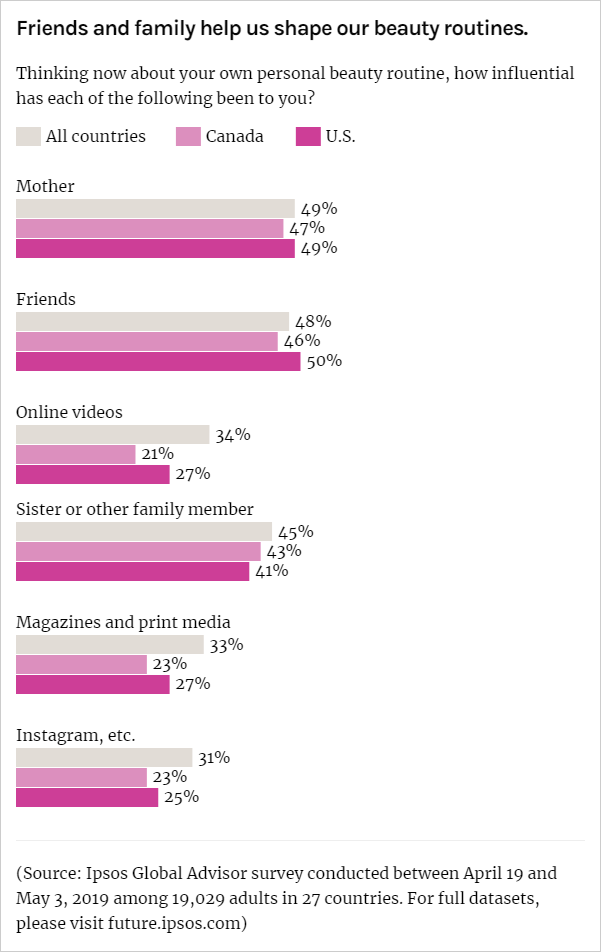
Ipsos Global Advisor asked women about what influences their beauty routines, and the results underscore the range of sources. Globally, we stick close to people we know first, relying on our mothers, friends and sisters or other family members for their recommendations. The second tier of influencers are “experts” from online videos, magazines and other print media, as well as Instagram or other social media.
Digging a little deeper, in the U.S. and Canada similar trends emerge, but friends as influencers stand out in the U.K., China and Japan. In China, outside of people they know, consumers rate online videos as most influential (55%). In South Korea—a leader in starting new beauty routines—people rely on online videos more than print and just ahead of Instagram/other social.
Therefore, it is essential for brands to use multiple touchpoints to influence today’s beauty consumer. Manufacturers and retailers need to consider both the close-to-home beauty influencer as well as the “expert” who is online, in print and engaged in social media. For in-person recommendations, samples and trial sizes of products as well as in-store and on-package education play important roles. But personal influencers are themselves influenced by media influencers, and by in-store and online experts. Online influencers tend to focus on brands that have an interesting and relevant story or origin, and that lend themselves to videos/online education, results and fun. Brands need to cultivate online influencers while simultaneously cultivating the reviews and recommendations of everyday product users.
This article was originally published in What the Future, an award-winning deep dive into different aspects of consumer thought and behavior. Each quarterly edition features exclusive new data from world-leading research firm Ipsos. WTF explores how the opinions of today impact the trends of tomorrow.