
Ipsos Quick Take: The Midterm Elections
It is not an understatement to say that we have all experienced unprecedented change in the last two years. Think of it: waves of hope and grief as the U.S. struggled to get the COVID pandemic under control, historic levels of inflation, the overturn of Roe v. Wade, and with that, the federal right to abortion, and the results of a presidential election questioned, contested, and violently fought against, to name just a few changes.
The midterm elections, the two-year mark into a president’s tenure in office, is a time where the voting public can react to these events and the party in power. Even so, very few Americans who are eligible to vote end up casting a ballot. What does that do to the politics of these races and their potential outcomes?
Ipsos forecasts narrow Republican gains in the midterms. Republicans are likely to win the House of Representatives by a small number of seats, while the Senate and the most competitive gubernatorial elections could go either way. Here’s the data.
KEY FINDINGS:
- Among all Americans, Republicans are more trusted on economic issues, while Democrats perform better on social issues.
- Midterms are generally decided by passionate groups of people whose viewpoints may differ from those of the majority.
- To determine who will win, forecasters focus on what constituencies are motivated and energized.
What you need to know:
1. Historical patterns matter
In over 75 years, no president with President Biden’s approval ratings has seen their party gain seats in the House in the midterms.
2. Most Americans don’t vote in midterms
The people who do tend to vote often have issues that they are very passionate about, which can differ from the issues the wider public cares about.
3. Inflation dominates public concern, but not for likely voters
Partisan likely voters are passionate about a certain set of issues.
4. Republicans have an advantage on the economy, Democrats on other topics
Each party is trying to steer the conversation towards the topics that give them an edge.
5. Very few races are competitive
Select swing states in the rust and sun belt will likely determine control of the Senate, and what role election deniers will have in the 2024 election.
1. Historical patterns matter
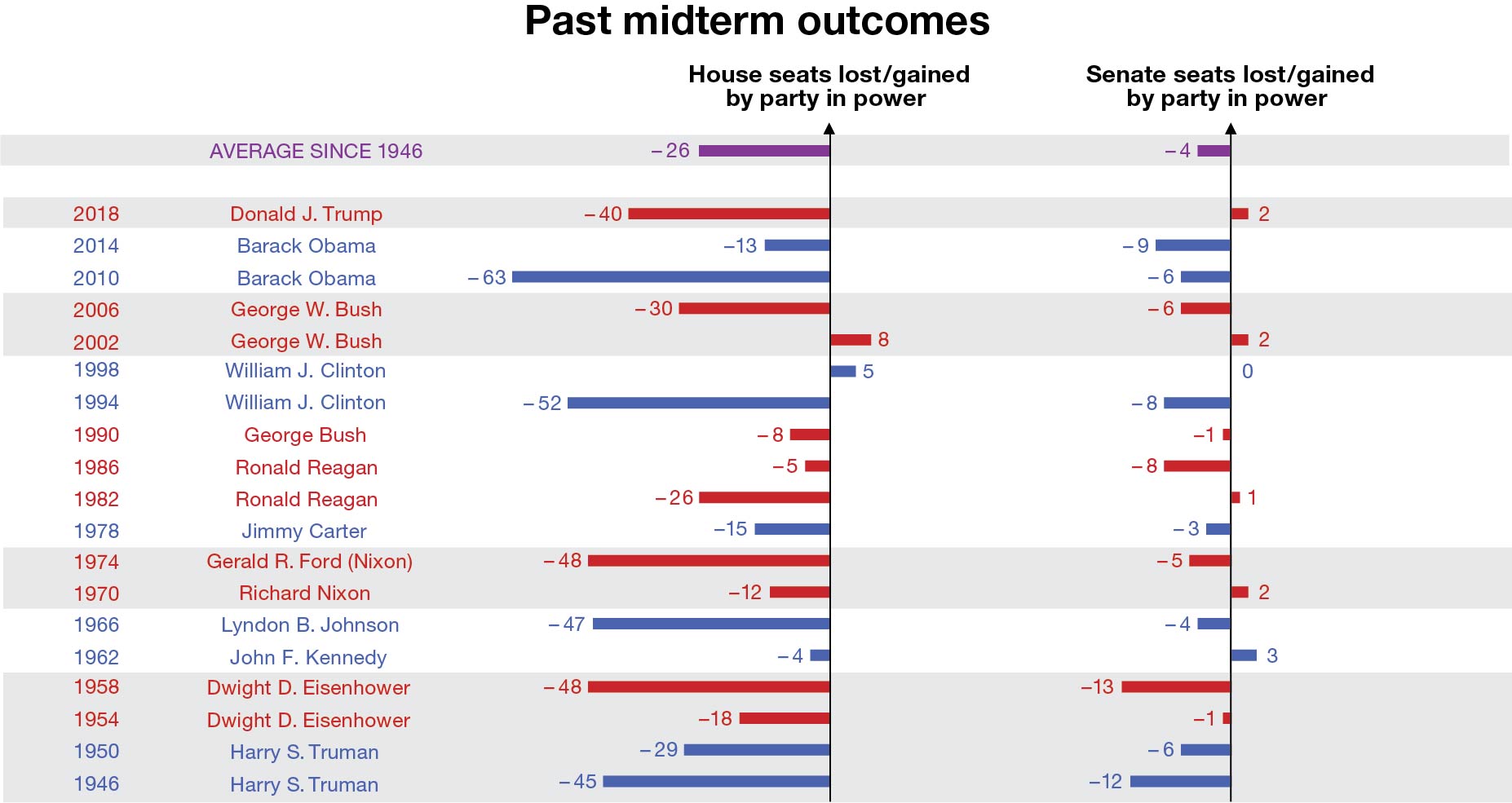
History plays an important role in framing midterms, with voters reacting to the people and party in power. Since 1946, there has not been a single midterm where the party in power, led by a president with Biden’s approval rating, has gained seats. On average, over that time, the president’s party has lost four seats in the Senate and 26 seats in the House.
As those averages indicate, elections in the Senate are not as closely tied to the president. There have been instances of unpopular presidents picking up seats in the Senate during the midterms. Reinforcing this perspective, President Biden’s job numbers just make it that much more difficult for Democrats to make inroads in the House.
2. Most Americans don’t vote in the midterms
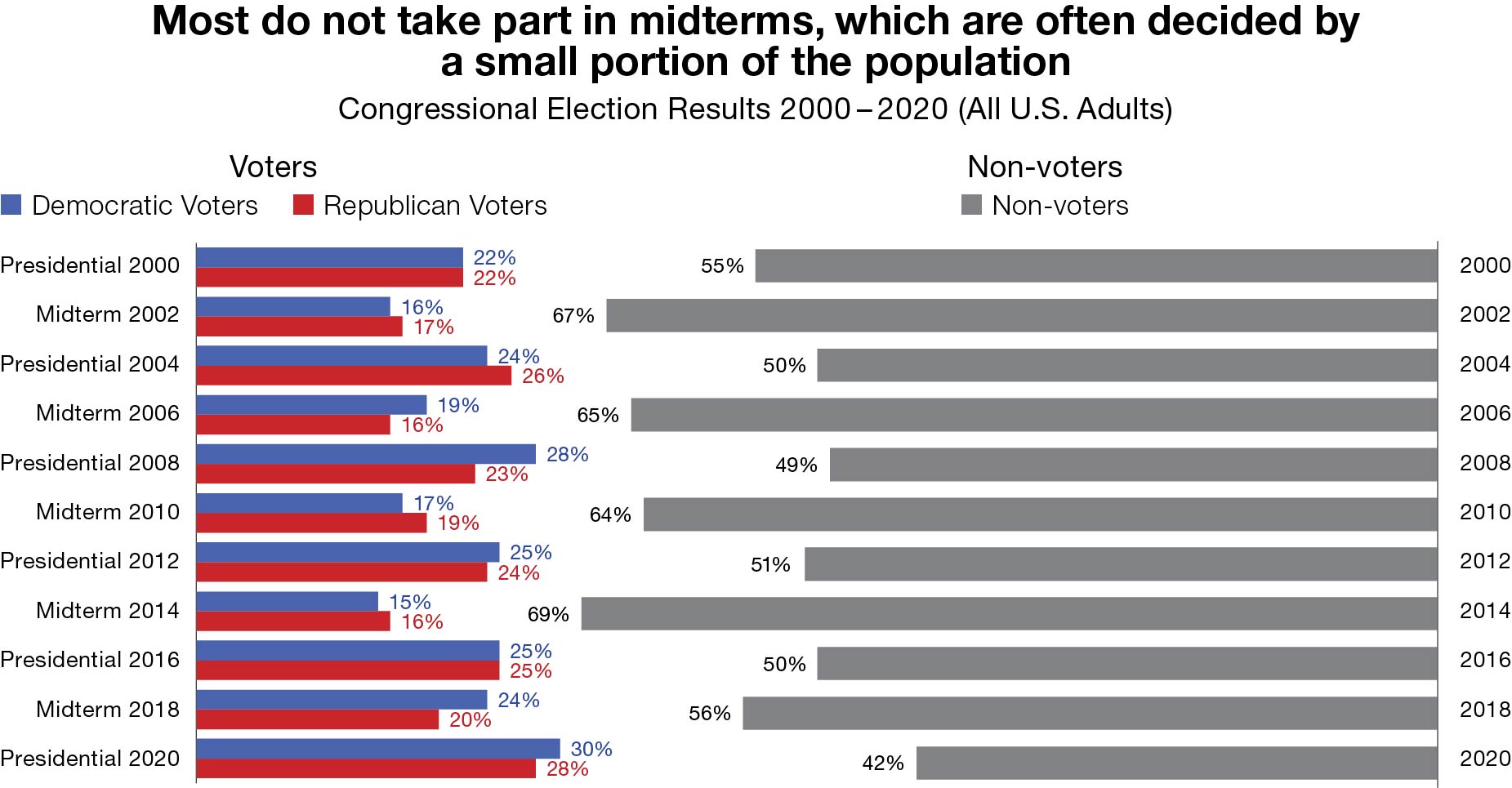
Election reporting zeroes in on the percentage of votes cast. But that misses how few people actually participate in elections, particularly midterm elections. The truth is that most elections in the United States are decided by a relatively small proportion of the population.
Indeed, it’s rare that more than 40% of the total voting age population ends up voting in midterm elections. Both Democrats and Republicans win no more than 25% of the eligible voting population in these races.
Midterms are generally decided by passionate groups of people whose viewpoints may differ from those of the majority. To determine who will win, forecasters focus on what constituencies are motivated and energized.
3. Inflation dominates public concern, but not for likely voters
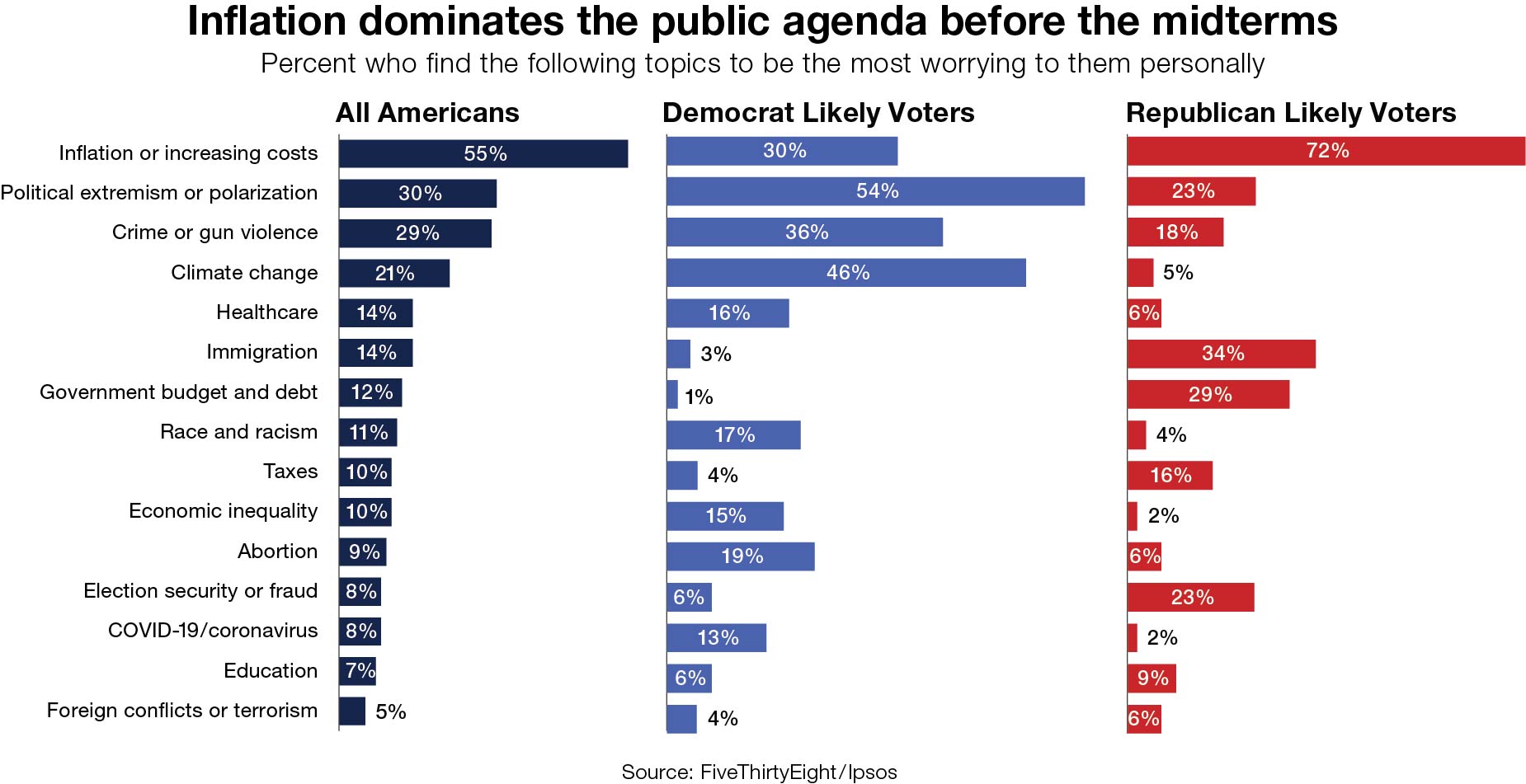
Right now, the economy is the top worry for the typical American. But the typical American is not necessarily the typical midterm voter. Because of this, other issues that appear to be second-tier concerns for the public as a whole, like abortion or immigration, can be motivating issues for the midterms.
Specifically, when we throw partisanship into the mix, the main issue changes as well. For example, Democratic likely voters are much more concerned about climate change, gun violence, and political extremism—which, in this context, likely refers to Republican political extremism. Republican likely voters, on the other hand, are worried about inflation and are also very concerned with immigration and election security—a nod to the “Big Lie” or the belief that the 2020 election was stolen from Donald Trump.
Due to the select and motivated groups that tend to turn out in midterms, issues like election security or abortion can be catalysts for change in these elections, driving turnout and nudging results.
4. Republicans have an advantage on the economy, Democrats on other topics
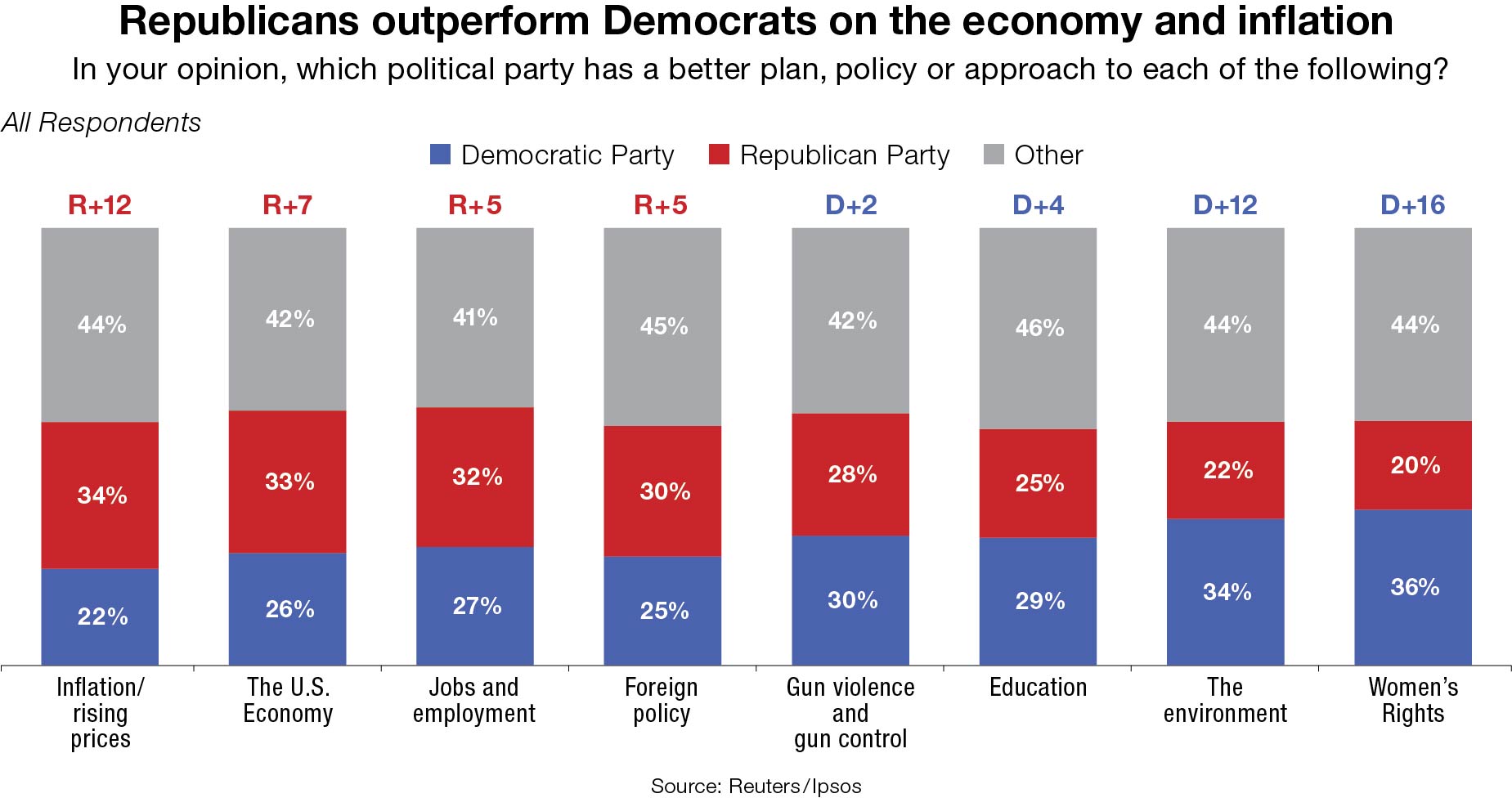
Among all Americans, Republicans are more trusted on economic issues, while Democrats perform better on social issues. Though, notably most Americans don’t think either party addresses these issues well. This may help partially explain the lower voter turnout in midterm elections; people have low expectations of the two parties.
Still, each party will try to shift the debate and public conversation to topics that favor them. Democrats are trying to focus voters on abortion and the subversion of democratic norms, and Republicans are zeroing in on higher prices and immigration. That remains the question: can messaging alone buck the historical trend?
5. Very few races are competitive
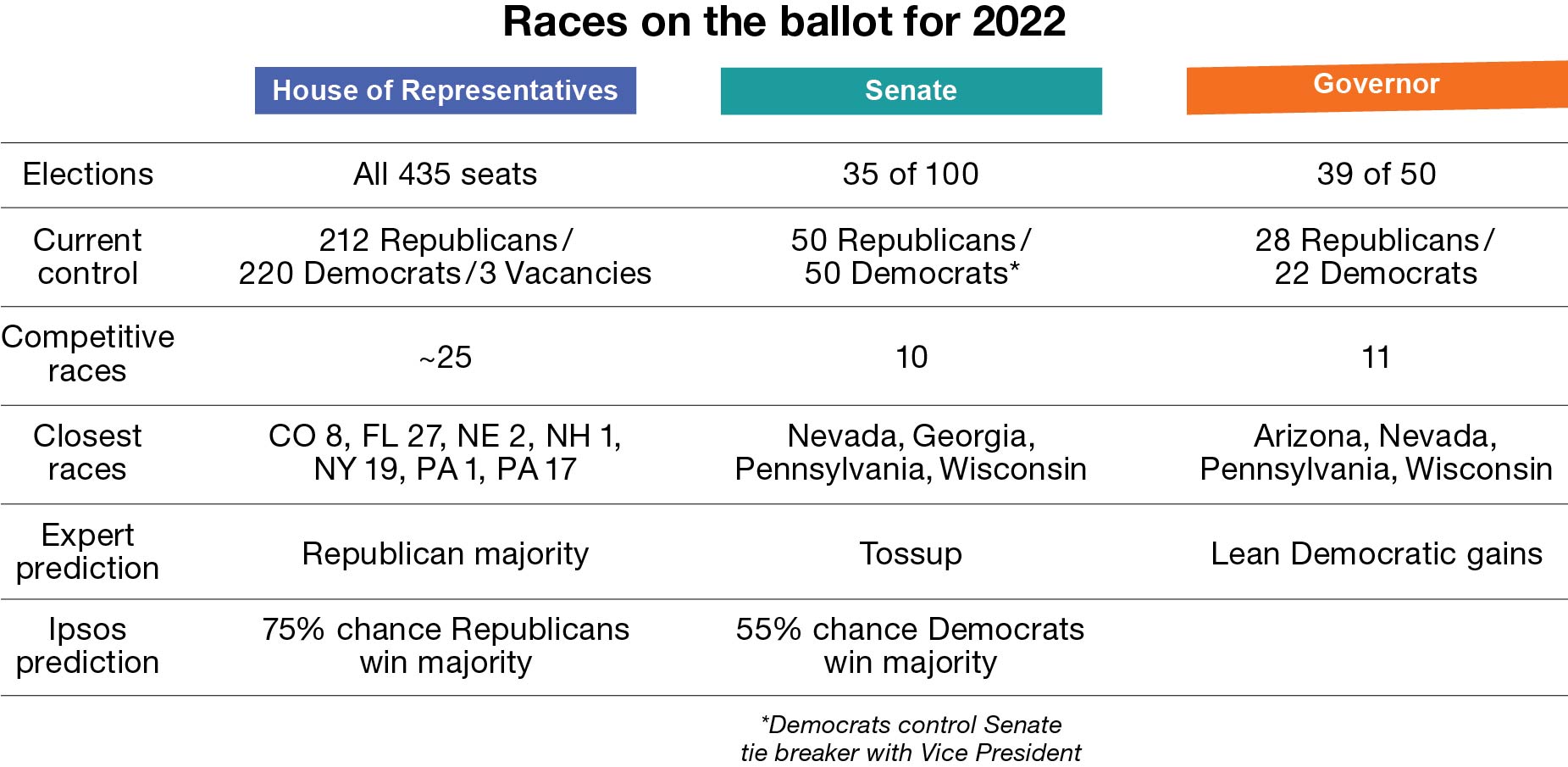
The midterms involve hundreds of different elections at various levels of government. For the 2022 elections, all 435 seats in the House of Representatives, 35 Senate seats, and 39 governors’ mansions are up for grabs.
However, only some of these races are actually competitive due to strongly partisan residential patterns and gerrymandering. Statewide contests in Arizona, Nevada, Georgia, Pennsylvania, and Wisconsin will likely determine the balance of power.
These swing states will determine control of the Senate and whether Republicans who deny the results of the 2020 election will have authority over the 2024 presidential election.
Wrapping it up: The Ipsos forecast
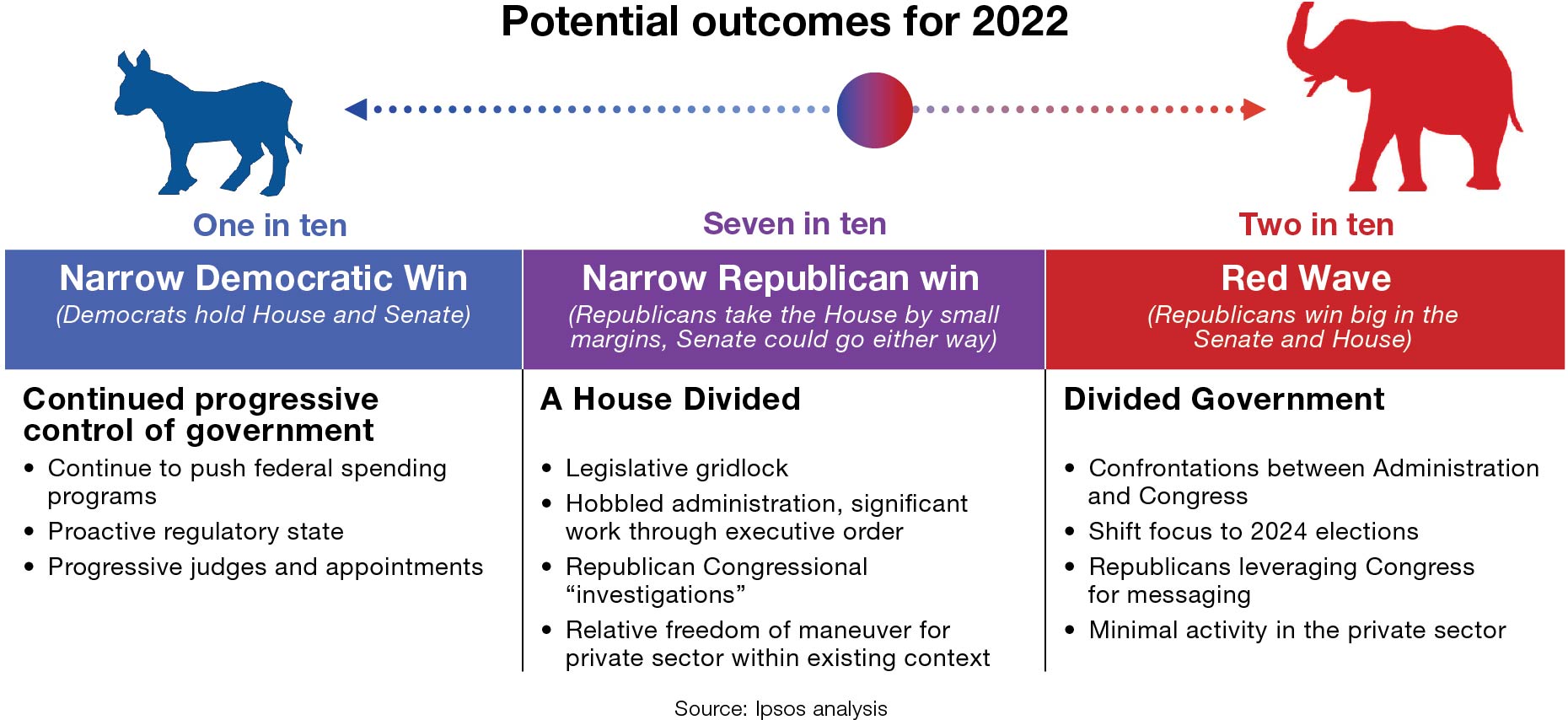
Given the historical and political context, our forecast suggests a narrow Republican gain in the midterms. What does this mean? Republicans are likely to take control of the House of Representatives by a relatively small number of seats, while the Senate is a coin flip and could go either way. The Senate could even come down to a single race: that of Pennsylvania or Georgia. Likewise, the gubernatorial elections are very competitive and could go either way.
For more on this topic, revisit our on demand webinar.
![[WEBINAR] Know America at 250: Public Opinion Update](/sites/default/files/styles/list_item_image/public/ct/news_and_polls/2026-09/250_0.png?itok=7pwykKmG)
![[WEBINAR] Ipsos Global Trends 2026: The U.S. Edition](/sites/default/files/styles/list_item_image/public/ct/event/2026-09/thumbnail-gt-26.png?itok=AbsiS6xk)
![[WEBINAR] AI in Higher Education: How AI is Reshaping Teaching and Learning](/sites/default/files/styles/list_item_image/public/ct/event/2026-10/How%20AI%20Is%20Reshaping%20Teaching%20and%20Learning.png?itok=XYdLaI-4)