Most Americans now understand how tariffs work; More see the costs, fewer see the benefits
The Ipsos Consumer Tracker, fielded on Ipsos' Omnibus platform, asks Americans questions about culture, the economy and the forces that shape our lives. Here's one thing we learned this week.
Why we asked about tariffs: In the run-up to his second term, President Trump promised he would levy tariffs broadly. We asked then not just how people felt about them, but if they understood how tariffs actually worked. At the time, a majority did not understand the fundamentals of tariffs. With a new round in the news against major trading partners like Canada, we thought we’d check in again.
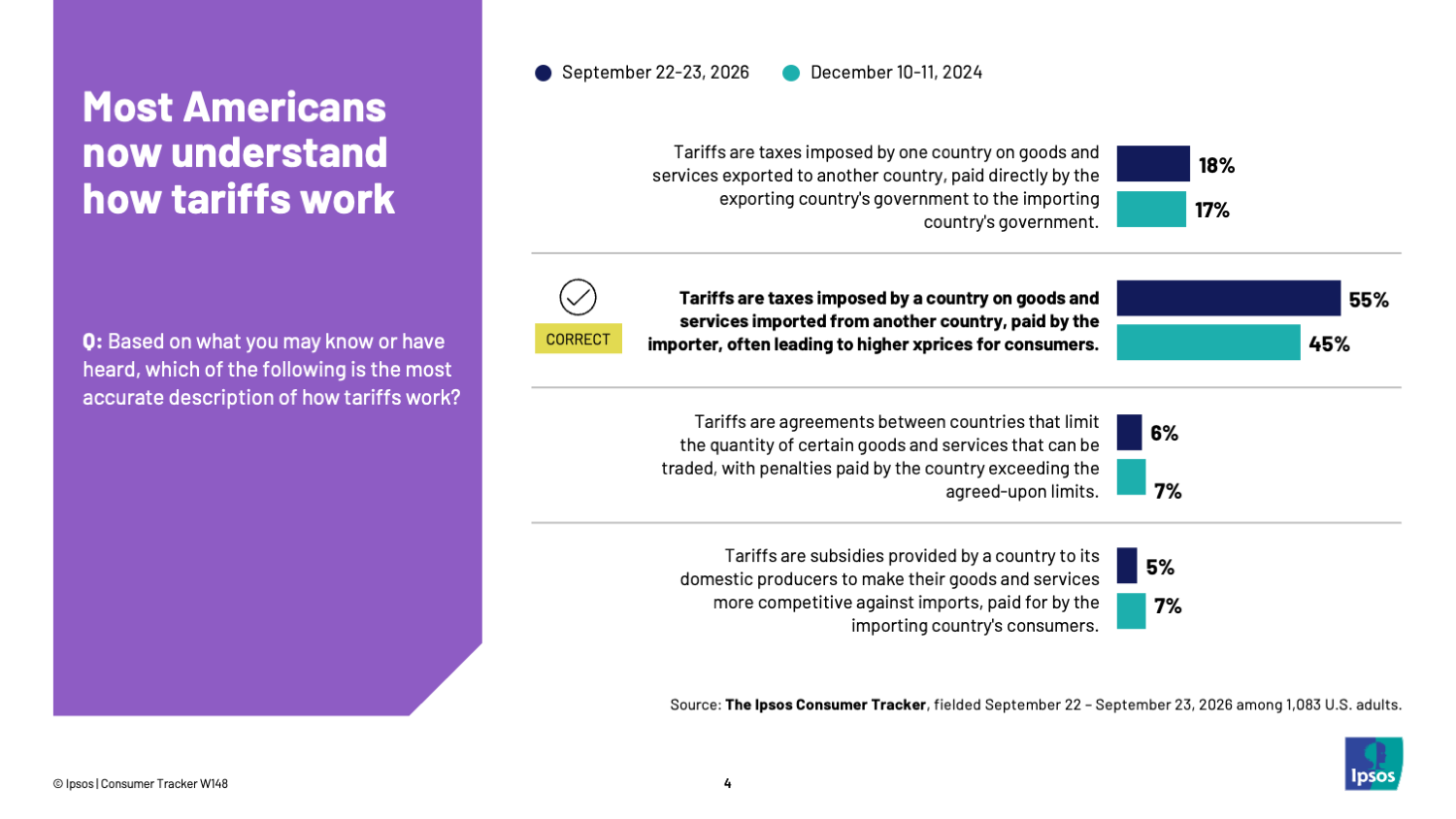
What we found: More Americans now understand how tariffs work, with a majority now correctly answering that “tariffs are taxes imposed by a country on goods and services imported from another country, paid by the importer, often leading to higher prices for consumers.” That’s up 10 points from when we asked in December 2024. Perhaps the important point isn’t just that shift, it’s who understands better now. All of the change comes from Republicans and independents. The number of Democrats getting it right is unchanged at 64%.
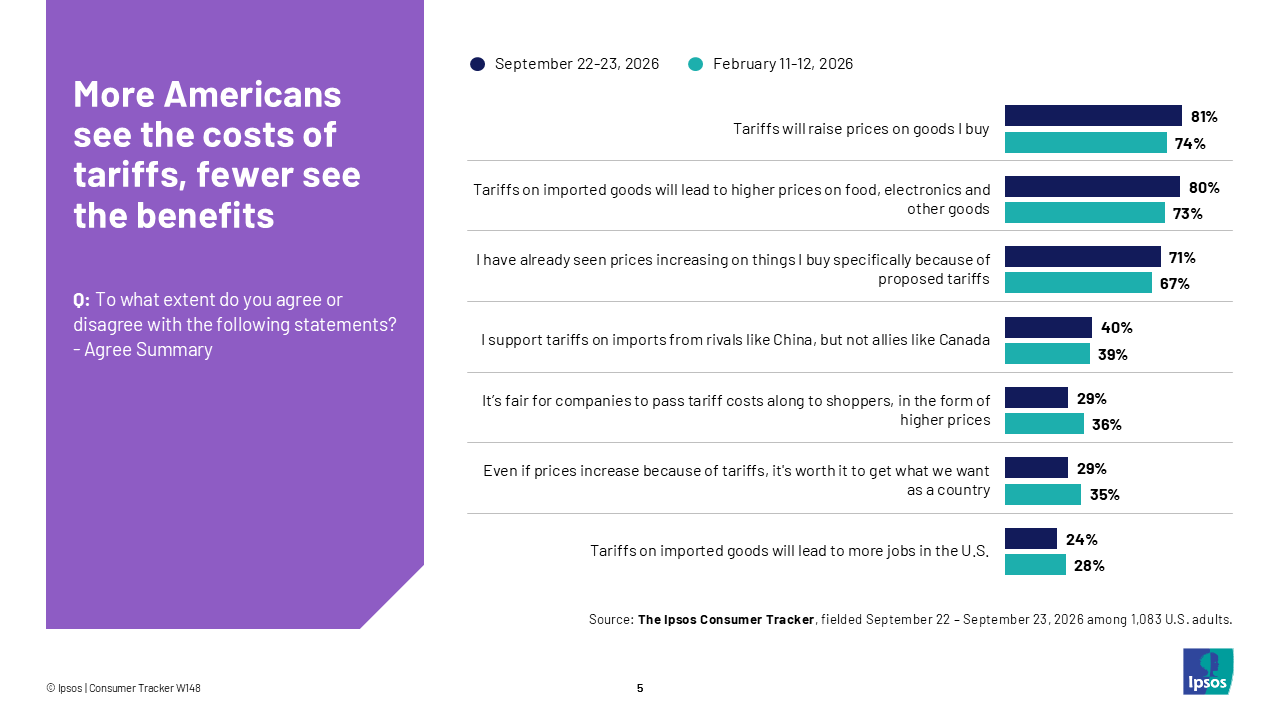
The attitudinal question about tariffs we asked several times, most recently in February. Belief that tariffs will lead to more American jobs has dropped to its lowest point of just 24% thinking they will. And 80% now think that tariffs will lead to higher prices (also a new high). And fewer (now just 29%) think that the higher prices are worth it to “get what we want as a country.”
So as more people understand what tariffs are and live with the economic outcomes, fewer see the benefits.