
![[WEBINAR] How to build trust in the AI era](/sites/default/files/styles/main_image_612x500/public/ct/publication/2026-02/thumbnail-trust-ai_0.jpg?itok=Xj-Vop1Z)
The Human Touch: How Trust and Human Skills Will Drive Success in the AI Future
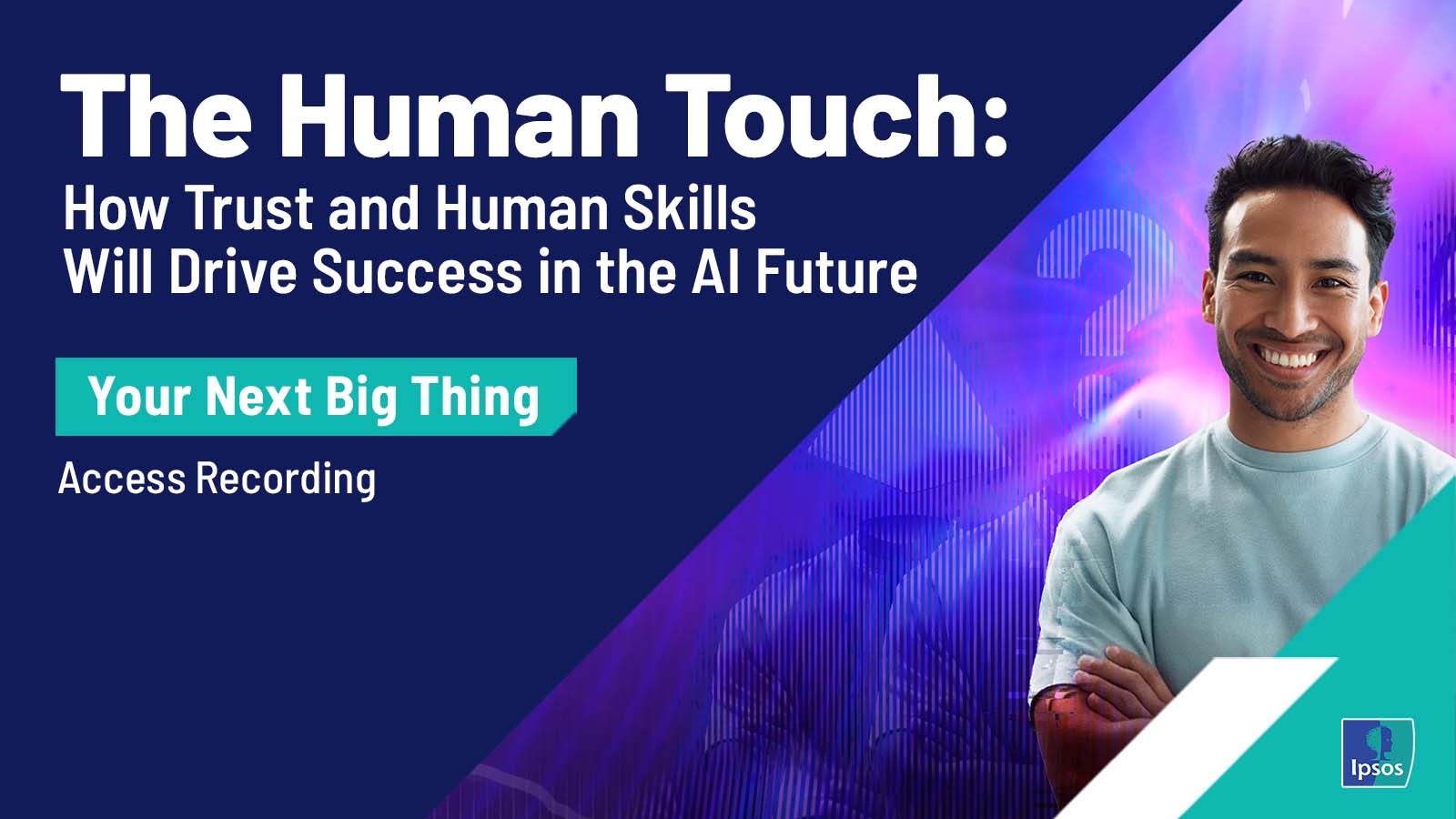
Trust and human judgment are becoming the future workforce’s most crucial assets as AI reshapes industries.
In our panel discussion, The Human Touch: How Trust and Human Skills Will Drive Success in the AI Future, we explore how mastering trusted data and irreplaceable human skills can chart a path to success, regardless of the technology shifts changing the world of work.
Watch our panel of talent, education and innovation experts show us the future of work where trust and wisdom will be our greatest strengths. We share strategies for building dynamic teams ready to tackle the challenges of tomorrow.
 Laurie Bae |  Kristin Vines |  Josh Payne |  Charlotte Gjedsted |  Anna McAvoy |
For more insights from this series, please check out our solutions for How to Build Trust in the AI Era.
Key highlights and takeaways:
1. Human oversight remains crucial:
- Kristen Vines highlighted the importance of human oversight in leveraging AI, emphasizing the need for strategic skills and cross-functional capabilities. AI adoption necessitates a different level of leadership to ensure efficiency and accuracy, as AI cannot always be relied upon to be accurate.
“If you look back over the last decade, early on, AI was present, but it wasn't showing up in our day-to-day work. We were working with big data sets. We were having to do a lot of manual training of the modules. But now we're seeing it adopted really, really fast within the workforce. And so it comes down to what type of talent we're looking for, which is, it doesn't change that the work has to be done, it changes the work that humans are doing. So we really are looking for a different level of leadership and a different level of skillset to be able to come in and do those roles. … We need to have the human oversight, but we are able to be much more efficient, deliver products much faster if we're all aligned on the outcome and we hire in the right talent to look at that, be strategic work, cross-functionally, we can actually deliver faster and really advance and technology a lot faster.”
2. Evolving skills demand:
- Josh Payne stressed the importance of having a sense of agency and strategic mindset, noting that the job market now values those who can navigate both strategic and tactical levels of abstraction.
"AI is absolutely transforming many functions. I think software engineering is the most profoundly transformed at this point in time, but it's coming for everything else. … From a day-to-day function on the job, what that really means is being able to traverse the levels of abstraction, the levels of strategic, like versus tactical. And the people that I really like working with are those that have that sense of taste, that ability to be strategic and have a high sense of agency.”
3. Educational Challenges and Opportunities:
- Charlotte Gjedsted emphasized the balance required in education, blending AI and fundamental skill-building while preserving creativity in humanities.
“Learning shouldn't be efficient, right? When you're in K-12, the learning happens in the struggle and in the journey. And I think the tension that I see with our students and our faculty revolves around when students are trying to use AI to circumvent that journey. That is where most of the conversations about AI and education kind of stall out, because the most energy is put towards protecting the learning journey and academic integrity. And I don't think we've gotten past it yet, as in education.”
4. Adapting recruitment strategies:
- Kristen Vines shared insights into adapting recruitment processes with AI tools to enhance efficiency while maintaining the importance of human connection in employment.
We do use AI, and we don't review every resume because we can't. And we're trying to hire faster sometimes and find the right skillset. So maybe an AI tool might screen through the resumes to take 600 resumes to 10 resumes. But it's critical then that we master creating that job description and identifying those skillsets that we want in that role as we're hiring folks. So what might narrow down? It's important that people really put some time and effort into pointing out the skills that would differentiate them, that could get picked up, that would match that job role that we're hiring for.
5. Fostering curiosity and a growth mindset:
- Josh Payne suggested that curiosity is a 'muscle' that must be trained, crucial for adapting to new AI landscapes and maintaining a proactive, explorative mindset.
"Certain people have more inherent curiosity than others, certainly. But it is something that everyone can train. [Curiosity] is going to be one of the absolute most important skills in this next era is because at the core, curiosity is the ability of your mind to traverse these levels of agency and exploration and going all the way from the low level to the high level. That's going to be so important to stay ahead.”
6. Leveraging arts education for critical thinking and tech literacy:
- Anna McAvoy emphasized the often underestimated technological literacy and critical thinking skills that arts graduates bring, essential in complementing AI's capabilities.
“It's easy for us to forget having done degrees a long, long time ago, that as an employer, when we see somebody with an arts degree, we actually forget that that person's actually probably more technologically literate than we are. They've grown up with this technology all around them and they have an inherent sense of what we would call STEM capabilities. So they have, on the one hand, this ability to be a critical thinker, which is what AI can't do and is what we need. But also they've grown up with technology all their lives, so they have that as well. And I think it's getting that balance. And sometimes as someone who's slightly older, it's easier to, we can't overlook that.
Full Transcript:
Laurie Bae (05:06):
AI is transforming everything, but it still needs humans in the loop to truly unlock its potential. So, who are the right individuals for this revolution and how will they build trust with the data they rely on? As the workforce undergoes this transformation, the ability to oversee AI technology and trust in data becomes critical to not just survive but thrive Trust and uniquely human skills will be the superpowers to navigate us through this future in flux. Welcome to the Human Touch: How trust and human skills will drive success in the AI future. Join us in this Ipsos Your Next Big Thing series webinar as we explore how leaders can build successful teams in the AI era. I'm Lori Bay, senior client officer for the tech sector at Ipsos. Here to dig into how we can equip the future workforce with essential skills and data confidence. Joining me is a fantastic panel for today.
Laurie Bae (06:04):
First, we have Kristen Vines, chief people officer of mobile vision platform, Hayden AI, who has experienced building teams for several tech companies. Next, we have Josh Payne, founder of website optimization platform, Coframe, and guest lecturer at Stanford University. We also have Charlotte Gjedsted, Dean of Technology at Lick-Wilmerding High School, a top high school located right here in San Francisco. Also, joining us is our Anna McAvoy from Ipsos’ Corporate Reputation team. Each of these experts has valuable insights into the skills shaping tomorrow's workforce in an AI-augmented world. First, let's talk about the environment that we're seeing today. Ipsos Reputation Council report reveals that nearly nine in 10 Chief communications officers believe that AI will fundamentally transform businesses. However, only 11% feel that existing ethical policies are adequate for widespread AI adoption. Despite this, companies continue embracing ai, often citing AI adoption as a cause for staffing and organizational changes, which sparks a whole range of questions about the future workforce.
Laurie Bae (07:15):
Whether you're an executive building out a team, just graduating and entering the workforce, or even if you're a parent navigating your child's education, we are all deeply invested in understanding this emerging workforce. But there are gaps between what companies want and what people think they want. Hiring managers prize soft skills like critical thinking and problem solving above experience or AI training. This is according to Ipsos research with the college board and the U.S. Chamber of Commerce. Conversely, a global survey by Ipsos for Bank of Santander shows that people actually think AI is the most desired training area with 61% believing it will be in demand soon. This gap demonstrates the challenge people have in preparing to work with ai. With AI technology evolving rapidly, adjusting team building strategies becomes imperative. Let's dive into our panel. Kristen, I'd love to start with you. You've been building teams for companies over lots of different tech phases. The most recent advancement, of course, the integration of ai. I'd love to know if you've seen a change in either the type of talent you're getting, the type of skills you're seeing, or even what you're looking for.
Kristin Vines (08:32):
Yeah, I really think I would say we see the change over the last couple of years. If anything, if you look back over the last decade, early on, AI was present, but it wasn't showing up in our day-to-day work. We were working with big data sets. We were having to do a lot of manual training of the modules. But now we're seeing it adopted really, really fast within the workforce. And so it comes down to what type of talent we're looking for, which is, it doesn't change that the work has to be done, it changes the work that humans are doing. Hmm. And so we really are looking for a different level of leadership and a different level of skillset to be able to come in and do those roles. I tend to see more of an up level, if you want to say, you have to see more strategic skill sets and especially if you're looking at folks that can do cross-functional work because the work is still there. And the human piece is so, so important because AI is not going to always be accurate. We need to have the human oversight, but we are able to be much more efficient, deliver products much faster if we're all aligned on the outcome and we hire in the right talent to look at that, be strategic work, cross-functionally, we can actually deliver faster and really advance and technology a lot faster.
Laurie Bae (09:52):
Yeah. Thank you. Josh, specifically in founding and building AI companies, are you looking for the same types of things or is it a little bit different?
Josh Payne (10:01):
There are a lot of similarities. You know, the, the one thing that I'll key in on is a sense of agency and a sense of taste. So there was an era which didn't end too long ago, where people focused a lot more on the nitty gritty, low level stuff. You know, bringing it engineering, for example, right? People were writing low level code by hand. Say people studio still do this today. It feels crazy to say that, but <laugh> it is true that AI is absolutely transforming many functions. I think software engineering is the most profoundly transformed at this point in time, but it's coming for everything else. And so our job as operators is to try to figure out where's the puck headed? And the people I like to work with, and the people I like to look for are those that can themselves figure out where the puck is headed. And on a day from a day-to-day function on the job, what that really means is being able to traverse the levels of abstraction, the levels of strategic, like versus tactical. And the people that I really like working with are those that have that sense of taste, that ability to kind of, you know, be strategic and have a high sense of agency.
Laurie Bae (11:16):
Do you think that's changed at all since either you've been in school or when you go back to guest lecture? Are you seeing that evolution also in the students?
Josh Payne (11:23):
Oh, tremendously. People are focusing on very different things now, and it's one of those, one of those areas where you must think about these different things. When I was in school, there was, AI was starting to emerge. I would say there was a lot of excitement in, in the field, but it was still very low level. And I don't think any of us really truly predicted where it would be now. Now what I see, at least in folks that I interact with who are in school or, or just out of school people are starting to think a little bit more about the things I was saying earlier, like the levels of agency and abstraction. People realize that being super deep into a certain area that is low level importantly isn't going to have a very long shelf life. Now you can go very deep into an area in terms of like expertise and, and true understanding. That's actually one of those areas where I think people have a, a lot better outcomes than AI and are going, going to continue to have because of the, the context that they have. But when it comes to, I use the term you know, low level for this, things that are more tactical, sort of execution oriented, that's where AI is really accelerating us and, and automating a lot of this stuff. And so it's less it's a, it's a lower leveler thing to focus on.
Laurie Bae (12:43):
Yeah. Thank you. And Charlotte, I know the students you're guiding have a few years until they enter the workforce, but hearing what Kristen and Josh are saying about what they're looking for, is that in alignment with how your school thinks about their relationship with technology or AI specifically?
Charlotte Gjedsted (12:59):
Yeah, I would say so. I think, you know, speaking to the human first, right? Understanding how and when to critically engage with a tool in general, whether it's AI or the internet or a hammer, right? At a technical art school, I do think that there is absolutely that same level of diving in. I think the distinction though is that in K 12, right? Like you have to build the fundamental skills, those low level skills that you have the capacity and understanding to innovate and iterate and like get to the higher level. But yeah, I do think I do see that, and I, what I see at ING is a lot of students who are excited to innovate and play and also want desperately want support in figuring out how to use the tool to its fullest capacity. And we have our tech arts program and our, most of our STEM courses have really gone all in with AI because they're, the learning is more rote or procedural.
Charlotte Gjedsted (13:55):
Same with world languages, right? Where it's kind of about memorization to some element. Whereas our humanities courses tend to shy away from AI because they want to preserve creative thought and analytical voice. So I am seeing that I am seeing growth. I'm curious about how you see the future of the workforce in general, because I do think that there are skills that transcend technology, that rely on human connection, empathy, curiosity, excitement to learn humility. All of those things I think are important and come before even being able to learn something at a base level.
Laurie Bae (14:33):
Yeah, I think we're hearing that consistently, Kristen.
Kristin Vines (14:35):
Yeah. I mean, number one, the job is still there. Yeah. It's just how we do the job really drastically changes. Yes. Yeah. I think it's important to point out when you talk about the low level work, at the end of the day, a software engineer, a software engineer still needs to know how to code. Yeah. They have to, you know, I, I think general data says that AI is like 30 to 50% inaccurate in the coding. So those software engineers can actually build product faster and develop faster, but they also have to go in QA it, use human judgment, understand if it's, you know, modeling things the way it needs to be to get the right outcome. And if they can't do that, yeah. Then they're not necessarily the right person to, so you have to be I think adaptable is a good word to say.
Kristin Vines (15:21):
. And how you're learning your skillset and what you're doing. And especially for the new college grads that you were talking about. Look, there are still jobs for new college grads. I think that's important to recognize. It's just how do we elevate our skillset to match what we're doing in the world today? And they have to be up for change. You know, so many things. I think in history, we sit down and people go really deep. Josh was talking about in their expertise, that just won't cut it, I think, as we move forward. So really displaying that adaptability and really coming in and delivering results. You know, people want to see how, you know, how you can use these, this technology to deliver great results in great outcomes. And that will be the skillset that we're looking for, and that's what we're looking for today. Yes. I think we tend to look at a little bit of a higher level skillset especially for a company like mine. An AI company that's really trying to get ahead in the market and make sure that our technology's up to speed. But we also want people that can deliver in a very efficient and strategic way. If you want to say,
Charlotte Gjedsted (16:31):
I do think there is an inherent tension between that goal and the goal of like an education institution, right? Like, learning shouldn't be efficient, right? When you're in K 12, the, the learning happens in the struggle and in the journey. And I think the tension that I see with our students and our faculty revolves around when students are trying to use AI to circumvent that journey. And I think that that is where most of the conversations about AI and education kind of stall out, because the most energy is put towards protecting the learning journey and academic integrity. And I don't think we've gotten past it yet, as like in education. Well,
Kristin Vines (17:13):
I think that really translates to like real life, that adaptability. So that learning mindset, that growth mindset. Yeah. You have to have that. Yeah. Right. And you know, at the end of the day, if we're just using AI or being very technical and not thinking about new ways to do that, being innovative, buta the best innovation happens in the workplace when people are collaborating. Yes. And using their minds and talking about how we can do things differently. And then maybe you use AI to actually deliver on that in, in some aspect or another, but that's where the greatest ideas come from, right? It's not an AI bot generating the idea, it's humans and, and really being curious and asking questions. I think that's something to really point out versus just coming in and saying, I can do this job for you. Yeah. and I think if students can understand that and start to translate, you know, what they're learning in the classroom mm-hmm. And then using the resources in the right way. And I think that education is so important. So, yeah.
Laurie Bae (18:16):
I'd also love to go back to a point you had you said about 30 to 50% accuracy when it comes to what AI is producing for your coders. It's a huge topic when we talk about ai, which is just the trust and the data. Like how much can we trust it yet? And where does the human come in to make sure that we are ensuring that trust? And I'd love to hear it both from the corporate side, but also how we're circumventing that in the school, both from teachers and from the student side. So anyone can
Kristin Vines (18:51):
Start, I mean, I can jump in. Look, number one, you earn trust. Mm. It's just not given immediately. And there's two sides of that. There's trust in data security and, and those things that are very, very important mm-hmm. That we're protecting our data, and that people don't think we're using their data for the wrong reasons. Mm-Hmm. We put in safeguards, like, you know, for example, if we're recording an interview and AI is using that to translate the feedback, we ask permission upfront. Mm-Hmm. And there are rules around how long we can keep data and we have to be compliant in following that. And that goes to transparency. And I think building trust and building relationships, you have to have transparency. Hmm. But at the end of the day, if I'm thinking from a HR standpoint trust is critical in leadership and how we lead our teams and being transparent and really saying, doing what you are saying you are going to do, I call that, you know, you've heard the term high say, do ratio.
Kristin Vines (19:52):
I sort of live and breathe that if someone's not doing what they're saying. And so that's when you start to build trust and then you can introduce AI and data and then have that balance and that Right. Human oversight. And that's where, again, the skillset comes in, that you have to have a different skillset to be able to do that. Yeah. And build relationships at the end of the day, you know, we need to make sure that we're building connection. Yeah. people crave connection. They want that human factor. And when they're coming to their jobs every day, it can't just be sitting down and doing one tactical thing. Monotonously. Yeah. You know, we have to be able to, you build those relationships across the company, across the schools or wherever you're working and build that trust and reliability and adaptability. And then you really do get better outcomes, better product and accelerated learning, if you want to say.
Laurie Bae (22:18):
What about a different flavor of trust, which is like the ethical, like in school, right? You know, I have a son who's just, I can't use AI that's cheating, or that's some school's philosophy, but I'm hearing if you want to be successful in the workforce, you have to learn how to use it. So what's, what's your take on that? Yeah,
Charlotte Gjedsted (22:36):
I think there's kind of three lenses to view AI responsible use in schools, the student lens, the faculty lens, and then the administrative lens. I think from the student lens, responsible use and like academic integrity, again, the real conversation is about engagement and engagement in learning. And so you can write policies until you're blue in the face, but that does not mean people will follow them. And the core reasons why students might engage in dishonest behavior remain stable no matter what the technology is that's present. It's that they view the learning as transactional. They're just doing it to get the grade. They view the assignment as meaningless. They don't value the assignment, or I've heard from multiple students, it's the choice sometimes between AI or sleep. So like centering engagement and belonging, I think has to be at the fore of the conversations about responsible use and also teaching ethics and limitations and teaching. How, and when you invite a AI in and where the human should be teaching AI systems is a piece of it. From a faculty perspective, I think
Charlotte Gjedsted (23:42):
Generative AI couldn't have come at a worse time because we were just recovering from the pandemic. And I think teacher burnout was at an all-time high when suddenly now we had to then combat fear that students were no longer doing the work. And so I think we lost a ton of the teaching workforce post pandemic, and we have a lot of new teachers coming in. And so again, I think it's investing in the humans that are there, right? Centering teacher development, centering teacher wellbeing, and like building back the trust in schools, institutional trust and trust in students. Because I think AI has eroded a ton of the trust between students and faculty right now, where students aren't sure, students feel like maybe some teachers are singling them out for saying it's AI generated work when they're saying, I didn't use AI and vice, or vice versa.
Charlotte Gjedsted (24:33):
And then from the institutional level, it's accountability, right? It's transparency. It's providing tools and structures that create systems of transparency and accountability. So we're looking at an AI tool that is almost like a walled garden where students can interact with an AI bot as like a tutor, a learning tutor, and it'll differentiate the content, and teachers can see the chat history in that way. And so creating that level of transparency kind of alleviates the policing of the work and builds back some of the trust. Again, it's, it's a tool and the human issue remains, but I think there are systems that you can start to put into place, but I do think it does start with examining the human things that are coming to the fore when we start to talk about AI in education. Mm-Hmm
Laurie Bae (25:20):
<Affirmative>. Josh, do you see that also at a higher education level? I know a lot of the courses you're lecturing at are more AI focused, but just in that generation or that, that phase of life
Josh Payne (25:32):
Yes. Sort of answer is yes, but there's actually something deeper wrote we should probably probe into here. When I think about the whole question around ethics, around using AI in a learning setting or in any setting for that matter, I think it's actually important to ask why a few times. Why, why are we why are we learning? What is the objective? Like, what, what is, what is the point of us doing this assignment or taking this test? Presumably that is to become better and more robust, I would say maybe from an intellectual standpoint, then the question becomes maybe ask why again, why do we want to become more robust at this particular thing? And that, that really comes in at a strategic level. You know, there, obviously students aren't quite mature enough to make that assessment for their own on, on their own in many cases.
Josh Payne (26:22):
But, but we should be asking that question, that why question. What's interesting is that at a higher level people have a bit more maturity and agency to be able to answer that question for themselves in a, in a really solid way. Especially people at, you know, places like Stanford where I see a lot of really great connecting of the dots between themselves and their, their goals to real world outcomes that they want to drive and missions that they have in life. And so, to use a simple example here, let's say that someone's been assigned an assignment in a class on, let's say someone is a computer scientist, but they have to take an accounting class, you know, for, for their, their prerequisites because this, these systems, let's admit, they're, they're rigid, right? And they're not adaptive to, to what is actually important.
Josh Payne (27:14):
Certain students might identify that and say, I don't actually need to know how to do this specific accounting thing. AI can take care of it for me and it's going to take care of it for me for the rest of my life, so I don't need to learn it. I have a maybe what might be potentially a controversial take here, and I think that's okay for them to then go and use AI to get assistance on this. Obviously, disclosing it and having a dialogue about it with in their instructors you know, it makes sense, but they're paying for their education. They should be able to sort of guide their time in a way that makes sense. It becomes a complex issue when you talk about you know, ways in which credentials can be used and you, you don't want to gain the system, obviously. But when it comes to making decisions about longer horizon things in life high agency people will be able to make that assessment. So I think it's just really important to ask why a couple levels down.
Laurie Bae (28:10):
Thank you. So far, this has been super insightful. And I love all of the different POVs, both from the corporate lens, the educational lens, the corporate reputation lens. We do have some audience questions to get to that have been filing in, so I'm going to take some of those right now. Let's see. Okay, the first one is for Kristen, and it's back in the day. Oh, this is familiar to me. Back in the day when you wanted a job, you printed out a resume you sent it into a hiring manager via mail or in person even. Today with automatic automated tracking systems that are using AI to evaluate and reject candidates before humans even take a look. How do companies preach that the increased use of AI is important, but it's still important to hire a human with skills that are very human?
Kristin Vines (29:05):
Great question. Sort of related to some of the things I've already said, but yes, things have changed quite a bit and how we do our job as a recruiter has drastically changed, but there are things that they're still doing that are very core to what it means to hire and recruit people into a company. Number one for me it's so important to stress the experience, and I was talking about that human connection. And I often state to candidates, and I also state to all of the employees at Hayden, which is really creating that end-to-end experience. And it's that lifecycle of the employee. And that is all about the experience you're having, the connections you make, the growth and development you experience as an employee. And what's most important to you as a person going to a company. I think Josh talked about values, or one of you talked about values and aligning those values with your hiring the company that you're going to.
Kristin Vines (30:05):
But we do use AI and we don't review every resume because we can't. And we're trying to hire faster sometimes and find the right skillset. So maybe an AI tool might screen through the resumes to take 600 resumes to 10 resumes. But it's critical then that we master creating that job description and identifying those skillsets that we want in that role as we're hiring folks. So what might narrow down? So it's important that people really put some time and effort into pointing out the skills that would differentiate them, that could get picked up, that would match that job role that we're hiring for. And then we might, I think I mentioned this earlier, use AI to record an interview, but it doesn't take out the fact that we choose the company that is aligned with our values, which we talked about, and we choose the company that we want the best experience with.
Kristin Vines (31:02):
And at the end of the day, the studies are very, very clear. If you are engaged and you are in an environment that you feel very psychologically safe and you feel like you can be in innovative and grow and develop, you will be, I think it's like 85% more productive on a day-to-day basis. And you will also want to stay longer and are invested and want the outcome of the company to be the same as everyone else until you're working and collaborating and innovating together. So it's a long-winded answer to say the human piece is so, so important, even though we're using sources to make it more efficient for ourselves.
Charlotte Gjedsted (31:41):
Could I ask a follow up question? How are you contracting bias that might be built into an AI tool as it's screening the resumes? And I know that like humans have bias too, so like Right, it's true, but also humans built the model. So I guess I'm just curious about how do you have trust in the system that you're using to not be replicating bias in the resumes that feeds you?
Kristin Vines (32:00):
It's a great question, and I think it's verify, right? So if you're looking at maybe you're, you're polling and saying like, is this real? Are these really the resumes that we're looking for? But when you're identifying that skillset, you want to make sure it is a skillset that really matches what the role needs, right? So if it's, I'll use something basic, but you might say like, you have to have C++ coding experience, right? And that is a particular skillset that you might not be doing C++, but you might need it to check the code. Mm-Hmm. Right? That the AI's building for you. So making sure that we're, it's actually we're checking and verifying, and I think that is the whole balance of like AI versus human interaction. Yeah. can we go through 600 resumes? No. <laugh>, that's a lot. And it takes, yeah, it used, we used to spend hours and hours, one going through resumes sourcing. But you know, I think what we're finding a lot is a lot of those resumes that come through are AI bots. And we have to like, be able to screen through those things Yeah. And then find the real humans that are going to be a best, the best match for the job. So, yeah. Thank
Laurie Bae (33:12):
You. Okay. Next question is for Charlotte, but I think it could be for more of a decade ago. We all pushed our children to major in stem. What would you counsel them to study now to set them up for success?
Charlotte Gjedsted (33:28):
Do you want to take that one to start? <Laugh>? I'm happy to. Sure.
Josh Payne (33:32):
Yeah. <Laugh> no, I, I'm, I'm happy to riff off this one. I actually think that, and I, I think I probably would've answered this, whether or not AI was in the picture, having a well-rounded approach to life is, is likely going to yield the best outcomes. I know people have to choose a major, but it's really about kind of what you focus your time on. And like, when, when it comes to being in the job market unfortunately having a CS major is, is, is going to be tough in the coming, in the coming years. I just to be upfront this, this might change to an extent as the sort of like CS major institution evolves and makes more use of higher level, you know, agency and using AI and so on and so forth. So I don't know what will happen there, but at least right now in this current moment, the job market for CS graduates is very tough.
Josh Payne (34:25):
However, something that just looking, you know, at co frame and how we're, how we're doing hiring and, and, and sourcing for people and what we're looking for and what I hear from other operators and founders is the sense of taste that is basically two part stem and we call maybe the right brain, I suppose, or maybe it's left, I don't know which one switch. And the creative side or the fine artistry, right? I obviously have to hire a lot of very technical people, but something, something that I often ask for interviews is like, you know, do you play music or like, do you do anything artsy on the side? Or what have you created recently? Right? some of our absolute strongest hires that we've made recently were like English majors or, you know, philosophy majors people who, who, who don't have STEM background. And what's really interesting is that AI can help fill in some of the gaps that are left in, in the expertise, especially at the lower level. And it's also an amplifier for whatever ideas that you have. And that's always, that's always going to be the case going forward. I can, I can guarantee whatever you focus on, just basically plan for AI being an amplifier of that. Mm. So I think having a well-rounded approach is best.
Laurie Bae (35:41):
And Charlotte's nodding a lot.
Charlotte Gjedsted (35:45):
A little, yeah. I think thinking about like the outcome makes it more transactional. And if we go back and think about what you do, I would counsel students to think about what excites you, like what sparks joy, like what makes you want to learn more and stick with it. Because, and maybe this is too idealistic, but I feel like paths will unfold in front of you if you are persistent and resilient and you identify the thing that brings joy. When I was in high school, I took an AP psych course and that set off my path down. I took, got my BA in psychology, I got my in curriculum instruction, and I got my doctorate in educational psychology. And the transferability of systems thinking into technology is really where that helped me understand. And also the excitement around learning, like the skills around learning. And so I think subject agnostic, like stem, English, whatever, find the thing that makes you feel more human and excited and engage in that. Which maybe is idealistic, but <laugh>, it's what I would hope my daughter would do. Yeah.
Anna McAvoy (36:56):
Yeah. I, you know, I think, I think these conversations are really interesting, but I think it's easy for us to forget having done degrees a long, long time ago, that as an employer, when we see somebody with an arts degree, we actually forget that that person's actually probably more technologically literate than we are. You know, they've grown up with this technology all around them and they have an inherent sense of what we would call STEM capabilities. So they have, on the one hand this ability to be a critical thinker, which is what AI can't do and is what we need. But also they've had this, they've grown up with technology all their lives, so they have that as well. And I think it's getting that balance. And sometimes as someone who's slightly older, it's easier to, we can't overlook that.
Laurie Bae (37:38):
Yeah, absolutely. This question I think could be for everyone, but what should or should we not be relying on for ai?
Anna McAvoy (37:51):
Well, I, I, I would say critical thinking. I would say critical thinking and looking at an idea from different perspectives. And to your point, bias, we need to look at bias as well. And I, I think that's, that's absolute ai, AI's great for automation and kind of turning through the sort of repetitive tasks that we all have to do and work. But like, it's not very good at the unpredictable. And the reality is, I mean, whose job is a hundred percent predictable, and that's where we need critical thinkers.
Josh Payne (38:23):
Yeah. Atrophy is a real thing. I've, I've noticed this some even in myself. Like as I start to rely more and more on AI in certain areas, those areas that required me to be good at them start to atrophy. And that might be okay, we have to ask the question why? Why does it make sense for us to be good at this thing Now if it doesn't make sense for us to, to be good at like, it, it doesn't make, it wouldn't have made sense for me to be good at like very low level assembly level programming. I just don't have to, like, I can write higher level programming. That's what most of the industry is based on. And that's fine. There are some people who specialize in that, and it's okay for them to know how that works. But for other things like true critical thinking, being able to actually problem solve, that's the atrophy you have to worry about.
Josh Payne (39:07):
You can't let your brain atrophy away. There's this really great diagram that I like to show sometimes when I talk about this. And I usually talk about this in the context of, of computer science, but it's, it's applicable broadly. If you're trying to go from point A to point B and the road ahead of you has a couple of little, you know, potholes in it it's generally okay to let AI fill in over those potholes because, you know, you would've been able to figure it out and there's not, not any real reliance. And you kind of understand what would've happened if, if the road is instead a massive canyon and AI is bridging you across that canyon and you have no idea how you got there to the end point, that is probably not okay with the exception of if you didn't actually need to know how to do that. Mm. And you have to have that kind of judgment to be able to distinguish what I actually have to be able to do versus what I don't. But if you are letting your yourself atrophy at the high level critical thinking, which is going to impact everything, that's a problem.
Charlotte Gjedsted (40:02):
I like that visual. That's a good visual. I think the conversations I've had with students and teachers, maybe this won't be a popular thing to say with this crowd <laugh> but there is an inherent perception that like work that's AI generated is cheaper, right? It's less valuable. And that's true for student work, and that's true for how students feel receiving AI generated work from teachers is they don't care enough about making this lesson, so they're going to offboard it to ai. Mm-Hmm. That's the attitude right now. I don't know how it will evolve over time, but in general, it seems like there seems to be a higher currency around handmade things or human made things. And I wouldn't be surprised if, if that subculture didn't continue to persist as we get deeper and deeper into the AI era. So I do think that that level of like craft and like very kinesthetic, tactile craft will consider, will continue to be important.
Again, I work at a technical arts school, so <laugh>, that's a bias area of wood shop, metal shop. So there's a lot of like hands-on learning there. And I agree like that critical thinking, the metacognition to know when there is a gap and know when you are offboarding something to a tool, that in and of itself I think is there is, it's a neutral judgment, right? The judgment of good or bad happens when you start to ask the five why's, you know, why am I doing this? What am I losing? Is this okay in the long run? So yeah, I think critical thinking. And I also think like empathy and connection and relationship building. I'm concerned when I hear people using AI as like a therapist or a companion, I, that makes me very sad. Because I do want a future in which people can interact with each other. And I actually don't think that that's a problem that started with ai. I think that that's just a problem that, again, AI is kind of bringing to the fore, because we see that with social media. We see how teens self-esteem and mental health have declined with the rise of social media. So I think kind of leaning back into building human connection and building empathy and compassion is going to be critical. And I don't think AI can or should replace that
Laurie Bae (42:18):
Specifically. Oh, sorry. Specifically for you, Kristen, I wanted to ask, when either building a resume or, you know, going for a job hunt or an interview for that specific context, what advice would you have as far as what people should be and shouldn't be using AI for, like on their resume? Should they be using AI to write the entire thing to help with the search?
Kristin Vines (42:42):
I think AI can help you form the format, but you have to provide the content, right? So look, at the end of the day, I just want to piggyback off of something you both were saying, but I say this often and people make fun of me because it is a little bit of a joke. But you cannot take the h out of HR <laugh>. And it is so important to remember that every single person has a different style of learning. They have a different style of communicating, they have a different style of operating. And we have to remember that when we're hiring folks, when we're building our resume and putting skill sets or those soft skills like communication or critical thinking and how do we, how are we able to apply those skills to the work? So if I'm in an interview and I say I am a really great communicator and I can communicate cross-functionally and align people well, then I better have an example of how I've done that in the past.
And it doesn't just have to be in the workforce. It can be, I, you know, I just recently were hiring interns at, at work, so I was interviewing a new college grad and I asked him to give me an example of a project that he worked on in school and how did he collaborate across, you know, across different types of personalities and different types of work styles to accomplish that end result. Because they all had different skill sets they brought to the table. And I think that's what people forget. It is that human interaction. It goes back to what I was saying before, connection, the end-to-end experience and how people thrive in that is that story is different for each person. Everybody has different values. And so remembering that and really taking that and using that to your advantage for whatever field you choose to go in, whether it be software engineering, whether it be marketing, whether it be human resources you know, I went into HR because I think I have a very high EQ and that has allowed me to be very successful in the role that I'm playing because I understand what's happening in the room.
. And I can read what direction people might be going. I can understand that you learn different ways than you learn, and we can apply that as we grow and develop our employees. So
Laurie Bae (45:00):
Thank you. So I think this last question is a great way to wrap up. We could all answer this, which is what advice would you give somebody entering the workforce in the future? And it could be whatever flavor
Kristin Vines (45:13):
Sector. I mean, I'll just, since you know, sort of piggyback, piggybacking on what I just said, it's really just making, having that learning growth mindset, really being curious, being adaptable and really delivering on the things that you say you're going to deliver on and differentiating yourself. And so I think that there is definitely a market for new college grads no matter what. It's just how do you market yourself to, you know, be able to be your best self and deliver your best results at work. So,
Charlotte Gjedsted (45:48):
Hmm. Yeah. And I liked what was said earlier in this conversation about finding some, finding an organization whose values align with your values. And if you do that, I do feel like the work becomes more fulfilling. And then it kind of doesn't really matter where you're at as long as you feel that you are aligned with the work that you are doing.
Josh Payne (46:11):
I would say that curiosity is a muscle and you have to, you have to train it, you have to strengthen it. People don't really think of it as a muscle. They think it's inherent. And I actually don't think that's necessarily the case. Certain people have more inherent curiosity than others, certainly. But it is something that everyone can train. And I think it's going to be one of the absolute most important skills in this next era is because at the core curiosity is the ability of your mind to traverse these levels of agency and exploration and going all the way from the low level to the high level. You know, that's going to be so important to stay ahead.
Anna McAvoy (46:51):
Do you know, everyone said everything. The only thing I would add is don't set boundaries for yourself. Just don't set boundaries for yourself. And it's back to this growth mindset thing. You know, you may have done a degree in something, but you want to do something else. And if you feel you want to, then go for it.
Laurie Bae (47:05):
Thank you. Thank you so much to all of you panelists for this honestly fascinating conversation. And thank you to our audience. Please explore our Your Next Big Thing report offering you both data and tools to empower you in conjunction with AI to make informed decisions and drive possibilities. I'm Lori Bay with your Ipsos' Your Next Big Thing.
Other events
-
14
Sep 2026
-
09
Sep 2026
-
24
Sep 2026![[WEBINAR] 2026 KEYS: Ipsos Global Trends](/sites/default/files/styles/200x112/public/ct/event/2026-09/thumbnail-keys-0924.png?itok=H7WblI1q)