
What will be the legacy of the hottest summer on record?
Extreme weather has dominated headlines this summer. From heatwaves and wildfires to droughts and flooding, communities across the world are experiencing the effects firsthand. But is this changing how people think about climate change, and what does it mean for governments, businesses and brands?
In a recent Ipsos discussion, sustainability, insight and ESG experts reflected on what they're seeing in the data and hearing from consumers around the world.
Watch the full discussion here or read the highlights below
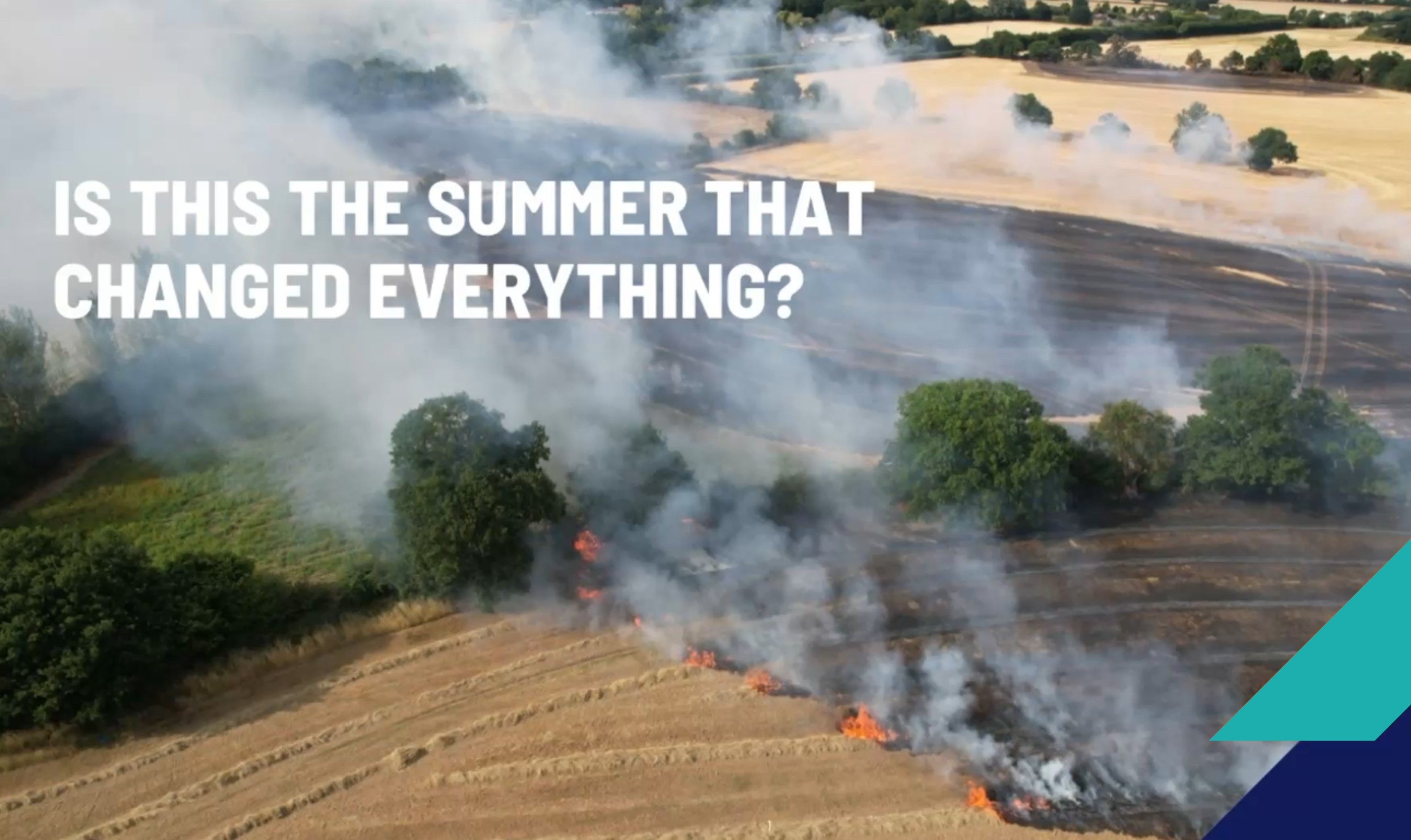
Key moments from the discussion: the 3-minute read
 Sue Phillips, Chief Sustainability Officer, Ipsos
This isn't weather, this is climate change live on every continent in real time.
According to the U.S. National Oceanic and Atmospheric Administration (NOAA), July has just tied as the joint warmest July on record globally.
That's not a one-off. The ten warmest Julys ever recorded have all happened since 2016, and the last four years alone hold the top four spots.
In Europe, it's not one heatwave, it's the fifth heatwave we've had this summer. Firefighters from France to Britain to Croatia are fighting blazes fed by heat and drought, while in Japan, record-breaking rains have triggered landslides, power outages and floods.
The question is: will 2026 be the tipping point for people to acknowledge the impact of climate change and that its cost is now directly related to our own cost of living?”
When climate change stops feeling distant
 Simon Atkinson, Chief Knowledge Officer, Ipsos
People really are feeling it. Three in four are saying they can see the impact of these changes in the weather in their own country. The same proportion, three in four, are saying they feel vulnerable.
Climate change often gets squeezed out by more pressing, everyday issues people worry about, like cost of living, housing and crime. But we're starting to see some change in the numbers. In France, we've seen a very significant 14-point rise in the proportion of people saying climate change is a big issue for my country.
We don't know yet where this is going to go, but we are starting to see a shift.
As individuals, we still feel that we have a role to play in this. And there can also be an expectation that, if we're taking steps to change, businesses and governments need to as well. Where we see a real pessimism is whether public services in particular are well prepared to help our countries go through this.”
What people are talking about
 Felicity Mellish, Head of Activation, Ipsos Synthesio
If we think about the UK, for example, we are seeing some conversations around people's blood tests being cancelled, because they just can't keep the samples cold enough. Others are talking about disrupted rail journeys and adapting working patterns around access to air conditioning.
For hybrid workers, there is this trade-off... where do you get the best air con?
Three per cent of the conversation is actually focused on maggots and the fact that people are finding maggots in their food bins due to the heat that they've not experienced before!
We're also seeing some social tension around the high use of water by big data centres and a sense of big corporations benefiting at public expense."
The cost of extreme weather
 Janelle James, US Head of Cultural & ESG Intelligence, Ipsos
In many ways, extreme weather is reshaping consumer behavior quietly and in real time.
Among 750 consumers across the U.S., roughly four-in-ten say the financial strain is their top climate worry, eclipsing property damage, power outages, and health risks. The climate financial concerns stem from food inflation and spiking energy costs.
We heard from a dad in Washington state, who told us that climate change is having a huge impact on his family’s overall budget. They’ve had to cut back food expenses, buy alternative things, eat less of some things that they prefer to, and just generally change their diet.
The bottom line for leaders across many consumer sectors is that extreme weather is influencing behaviour directly and indirectly.”
What will be the legacy of the hottest summer on record?
Climate change may be global in scale, but for many people it is increasingly experienced through everyday realities: the cost of a grocery shop, a cancelled journey, an uncomfortable night's sleep, or even what's waiting in the wheelie bin.
First, people want governments and companies to show visible action. Second, organizations need to understand how people are adapting and support them through those changes. Finally, sustainability messages resonate most when they connect to everyday realities.
Talk about ways to save energy costs, not your net zero targets. The more relatable a sustainability message is to everyday lives, the better it will be adopted and behavior potentially changed.
Watch the full discussion
These highlights capture just a selection of the insights shared during the conversation.
Watch the full discussion on YouTube featuring Sue Phillips, Simon Atkinson, Felicity Mellish and Janelle James as they explore how extreme weather is reshaping public attitudes, consumer behavior and expectations of governments and businesses.
- Looking for more sustainability insights? Visit the Ipsos Sustainability page for the latest research, analysis and expert commentary from around the world.
![[WEBINAR] What the Future: Success](/sites/default/files/styles/list_item_image/public/ct/event/2026-07/thumbnail-wtf-success-.png?itok=3mnYDE70)