
Younger Americans interpret “natural” food labels differently
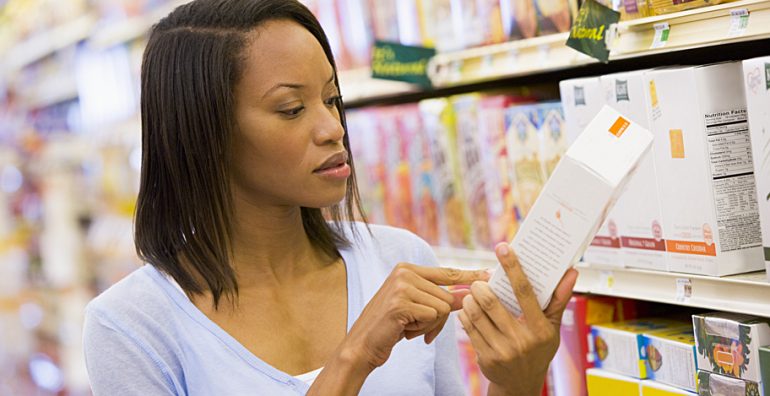 That’s driving shoppers to put more “natural” items like Reed’ssodas, RXBAR protein bars and Evol Foods frozen dinners into their grocery carts.
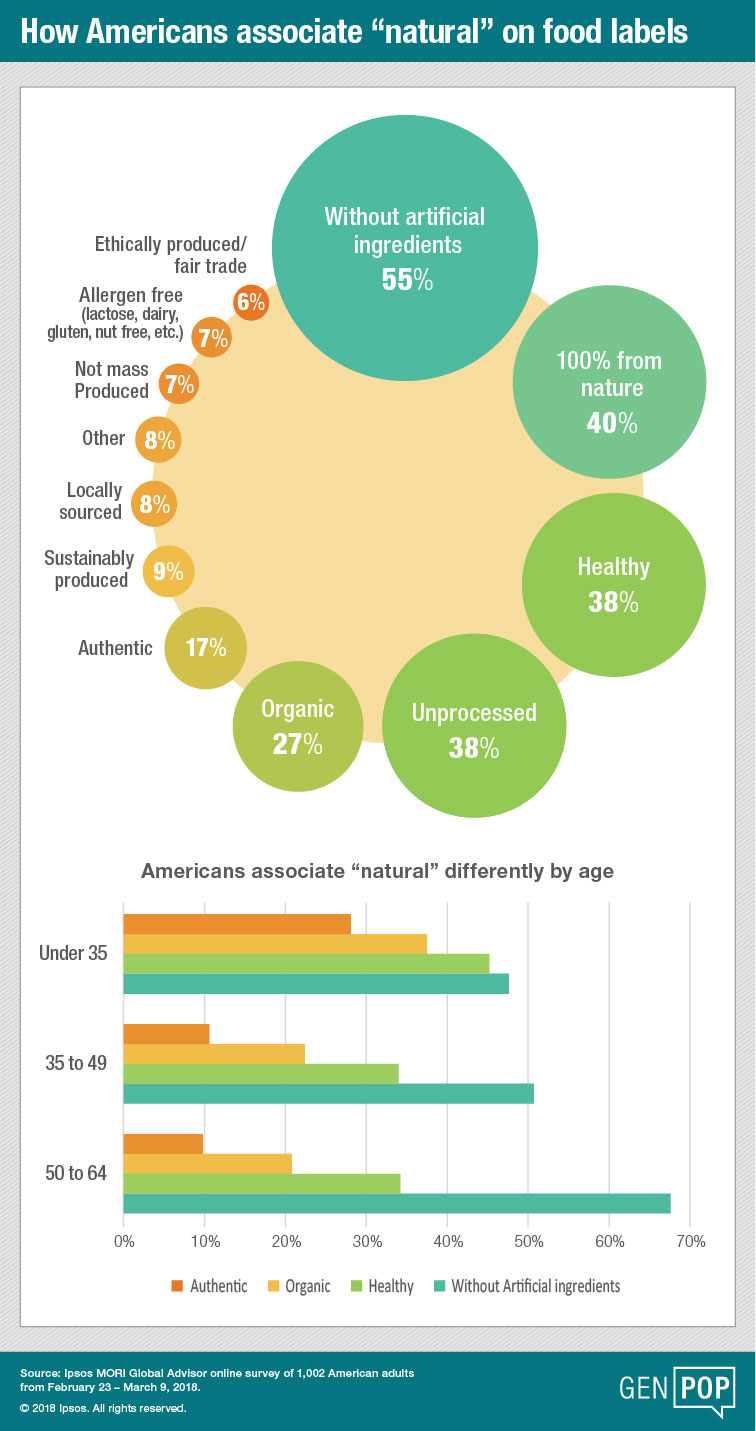
Yet, American shoppers vary in how they interpret the notion of “natural,” according to a recent study by Ipsos. This is especially true by generation. Around the world and in the U.S., people most commonly associate “natural” to mean “without artificial ingredients,” “100% from nature,” and “healthy.” But American shoppers under age 35 more so than their older peers see “organic” and “authentic” as proxies for natural.
The result is an increasing demand for “healthy” food, especially among millennials, who tend to be the most conscious of what they’re eating, says Britt Calvert, director ProductQuest, Ipsos Marketing U.S. That includes better-for-you frozen meals and less processed (but still processed) snacks. “As long as they trust the ingredients, they feel good about what they’re eating…even if they grabbed something from the chips or freezer section. People want to have their (100% natural) cake, and eat it, too.”
So, food companies are giving their brands makeovers and including labels that connote “natural” to all kinds of foods. With Amazon’s $13.7 billion buyout of Whole Foods, the trend is likely to accelerate.
Unlike the “natural” label, organics are regulated by the U.S. Department of Agriculture. Organic sales are a good indicator of the demand for healthier foods. In the U.S., organic food sales reached a new record of $45.2 billion in 2017, according to fresh data from the Organic Trade Association. That’s up 6.4% from the earlier year, compared to a flat overall food market.
While the U.S. government doesn’t regulate “natural” claims, the Food and Drug Administration recently requested public comments on it. That may indicate that the FDA is considering regulation in the future, says Christopher Newman, assistant professor of marketing and food labeling expert at the University of Mississippi.
The risk is brand loyalty
In the absence of formal guidelines, Newman says that brand trust will likely become a more prominent issue, especially since the research shows that millennials equate natural claims with increased healthfulness. “While this is sometimes true, it is certainly not always the case,” he says.
“It is important for brands to know exactly how their particular customer segments are interpreting natural claims to ensure that the products they sell with those claims match customers’ expectations and interpretation of the claim. Otherwise, consumers may become skeptical of the brand and switch to a competitor.”
This demand for transparency is another trend across all consumer products including food and beverages, says Calvert. Shoppers are better informed than ever before about the products they buy. So, “a claim can’t just be thrown on a product,” she says. “This is especially true for traditional brands that don’t have a heritage of being ‘natural.’ They’ll likely need to provide consumers with good, solid proof as to the authenticity of their ingredients in order to play in this space.”
This article was originally published in GenPop, a new online magazine from Ipsos about people and what makes them tick. Click here to read other articles equally as great.

![[WEBINAR] TOAST 2026: Under Pressure - Fewer, Fragmented, Fought-For](/sites/default/files/styles/list_item_image/public/ct/event/2026-07/thumbnail-templates_1_0.png?itok=MxL-wPJW)
![[WEBINAR] The Modern Twenty-Something: How Gen Z Thinks About Money, Milestones, and More](/sites/default/files/styles/list_item_image/public/ct/event/2026-07/thumbnail-templates_0.png?itok=GNEHIkP1)