
Are We Flying Yet? Affluents and Travel Beyond a Pandemic
One area of the American economy that has been hit hardest by the COVID-19 pandemic is the airline industry. The impact of air travel extends beyond just flights taken but has a ripple effect across the whole of the travel industry. By its very nature, air travel is not a localized phenomenon, so behavior and attitudes are impacted and shaped through and by national concerns, such as a pandemic.
In the case of the COVID-19 pandemic, travelers may be subject to quarantines on both ends of their flights, limiting short term stays and negatively impacting the quality of life when returning home. In this complicated environment, even time could not tell the choice to travel. Instead, it will be a case of risk and reward, pitting the pent-up desire to travel against health and safety concerns. Thus, any analysis of COVID-19 and the air travel ecosystem must look at multiple components: business and vacation travel, as well as foreign and domestic flights. In addition, you have one segment of the population that flies more (over 29 million round trips per year) and spends more on travel (close to $360 billon): affluent Americans. (1)
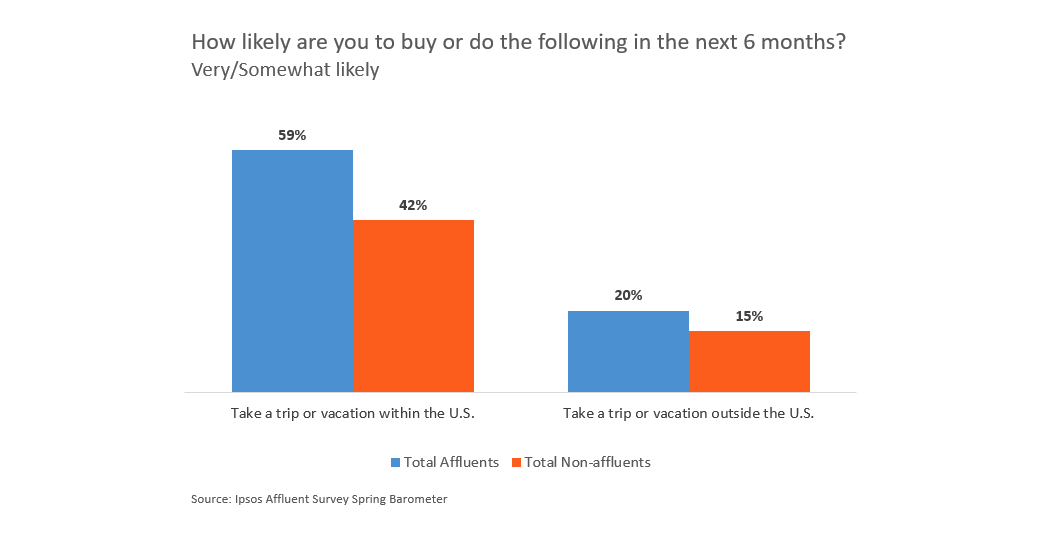
The most recent Ipsos data show that Affluent travel will bounce back sooner than the general population, but not any time soon. This insight comes from the May Ipsos Affluent Survey Barometer and also a recent Ipsos study on business travel. While more than half of all affluent Americans plan to take a trip in the U.S. in the next six months, nearly half of those trips will be in the four to six-month range. These numbers, while significantly higher than those for the general population, still indicate a slow recovery to pre-COVID levels. The recovery, in terms of travel outside of the U.S., will be even slower, with only 20% of Affluents planning a trip outside of the U.S. compared to 15% of the general population.
One major reason why Affluents will travel sooner than the general population revolves around their sense of financial security despite the pandemic. Affluents are substantially more positive about their financial security (70%) than the general population (51%). (2)
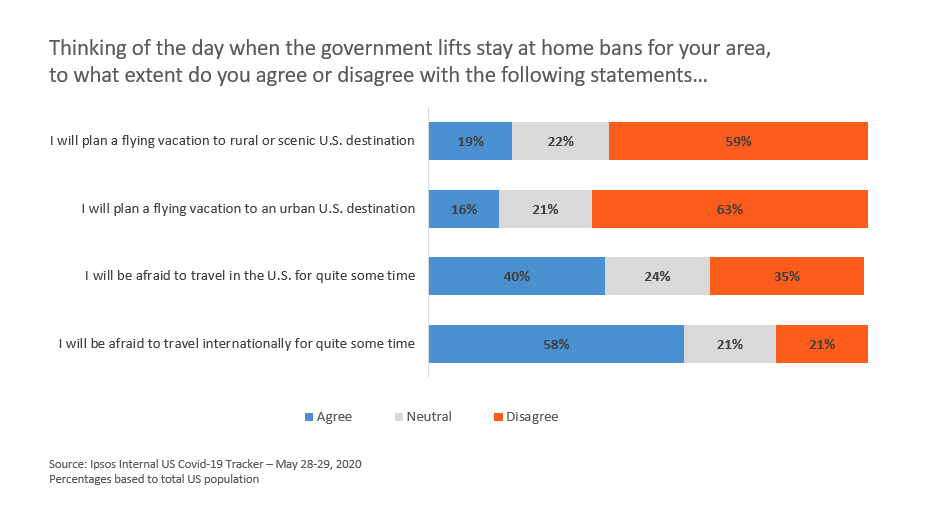
Yet, why the slow-down in the travel recovery, even for Affluents? The fact is people are still reluctant to fly. Nearly half, 48% of Americans feel less comfortable about the idea of flying than they were a month ago, with almost a third, 31% feeling much less comfortable (3). A clear majority, 58% say they would be afraid to travel internationally for quite some time, and only 40% would be afraid to travel domestically. Less than 20% say that they plan a flying vacation to destinations in the United States.
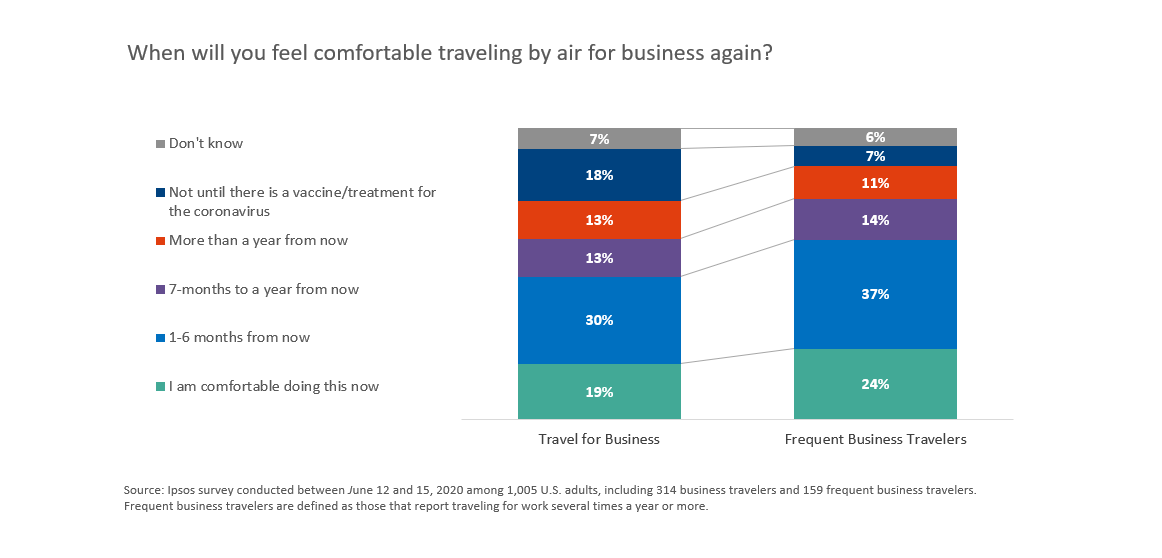
Even business travelers are reluctant to fly, either for business or pleasure. However, business travel looks somewhat optimistic. When thinking of flying for a business now, the comfort level for business travelers remains low. There is, however, a group that would still take to the skies if they must – frequent business travelers. 1 in 4 frequent business travelers are willing to fly now and their numbers will rise significantly in the next year with 9 in 10 feeling comfortable flying for business next year.
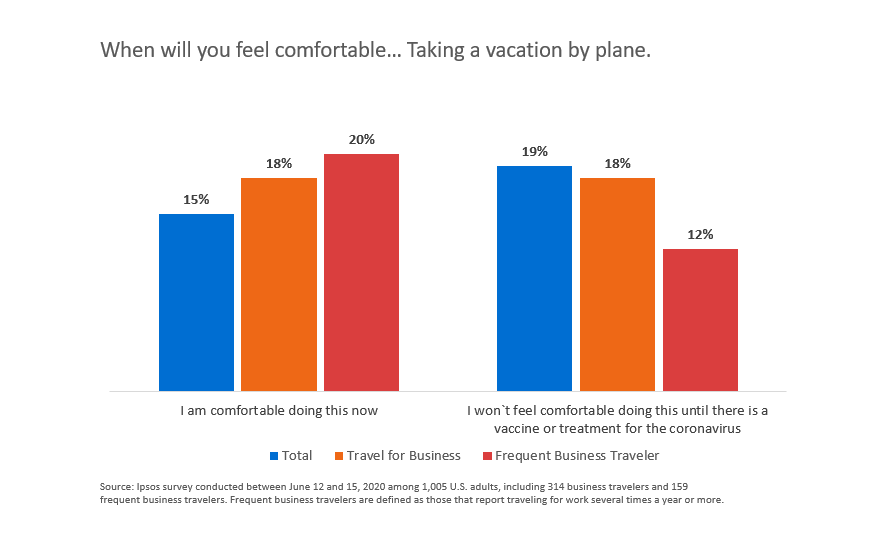
But, traveling for pleasure continues to be uncertain. Travelers want to but they are not yet comfortable. Even business travelers are hesitant to travel for personal leisure. 1 in 5 Affluent travelers are not comfortable to fly to a vacation until a vaccine or treatment is found. Business travelers are a bit more courageous, with 6 in 10 of them comfortable flying for a vacation within a year’s time (between now and a year from now).
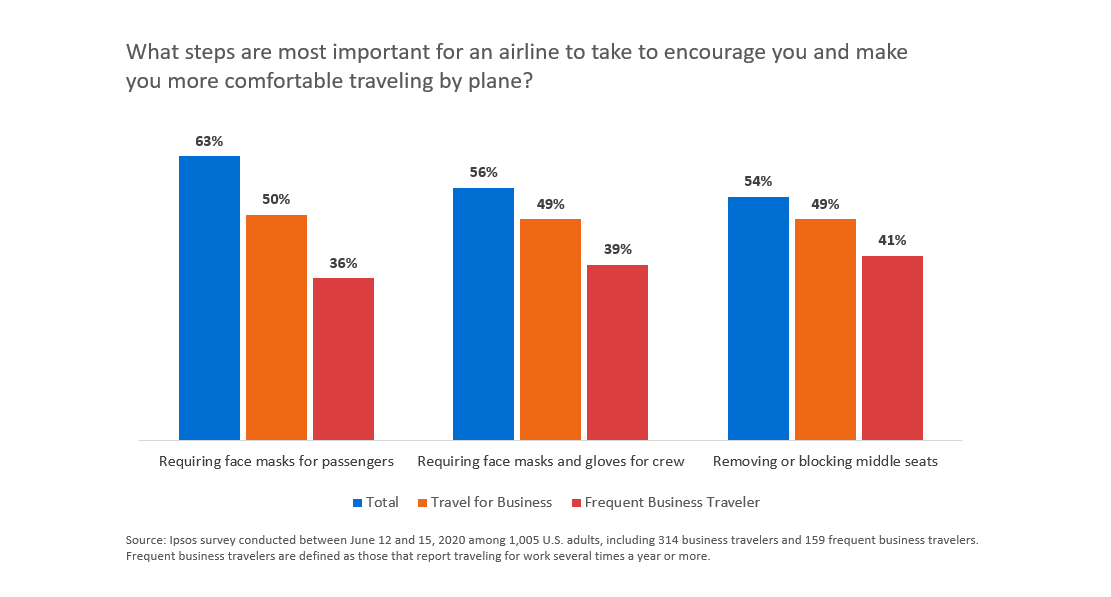
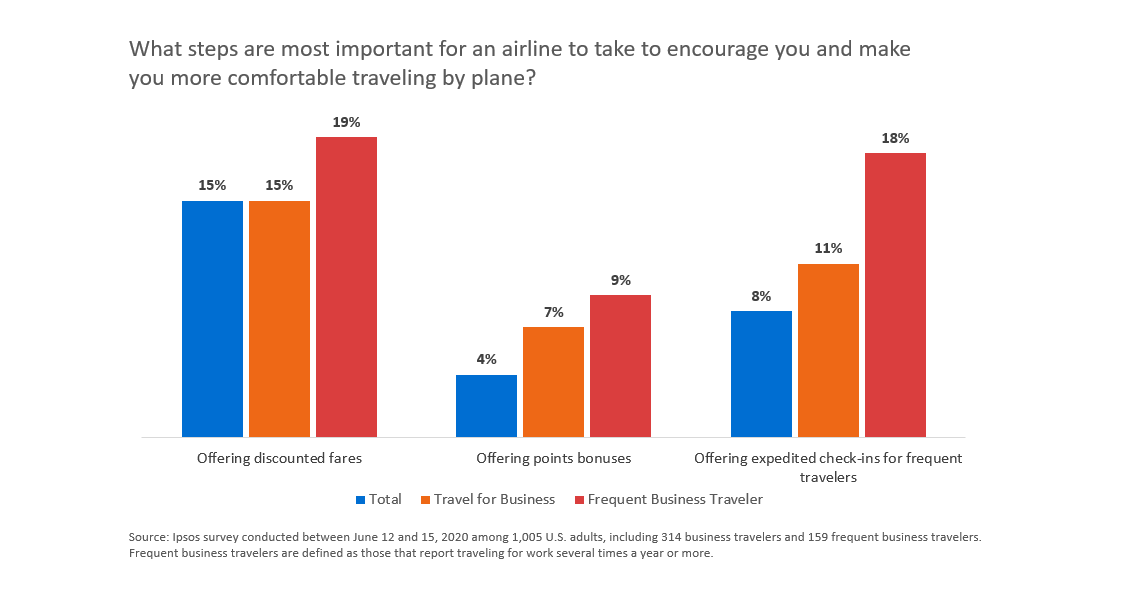
What would make travelers feel comfortable to fly? Increased precautions and protocols from airlines would encourage air travel among Affluents – such as requiring facemasks, gloves and enhancing social distancing through blocking middle seats. When 55% of Affluents say that they will travel in the U.S. as fast as they can, what it really means is that they will travel again when their overall safety concerns have been addressed. Perks are welcome though. Discounted fares through corporate travel agents and programs, points bonuses from travel vendors, and expedited check-in are all on business travelers wish lists.
Takeaways:
- Travel will bounce back sooner for Affluents: 59% of all affluent Americans (vs 42% gen pop) plan to take a trip within the next 6 months. The vast majority of those projected trips (79% vs 68% gen pop) are further out – 4-6 months, versus immediate term.
- Affluents will travel because they can. The cost of travel is not a factor at this time. Affluents have a greater sense of financial security (70% vs. 51% gen pop) even amid the pandemic
- To travel is to travel safe. While Affluents say they will travel as soon as they can (55%), they will only really travel again when their overall safety concerns are addressed.
- However, Affluents show greater willingness to be screened (for symptoms) before boarding (88% vs. 69% gen pop). They also believe that it is their responsibility to protect themselves (61% vs. 55%). This shows that Affluents are open to these additional processes and precautions as being part of the new ‘normal’.
Brands should be ready for when the travel sector re-opens, even if slower. As Affluents will be the first to be passing through those terminal gates again, travel perks, such as points for travel, discounted fares and expedited check-in process, could be used as marketing engagement opportunities to help alleviate the stress and concerns travelers may have.
The Ipsos Affluent Survey provides insights on Affluents (the Top 20% income). Ipsos Affluent Study USA reports data in the Spring and in the Fall using a rolling 12-month average, and through the Affluent Barometer and Speedometer to understand attitudes and behaviors among this most valued group of people.
For More Information
Please contact David Giunta ([email protected]) or Amy Hunt ([email protected]) for additional information about Ipsos Affluent Intelligence and how to activate on these insights for your brand or audience.
Citations
- Ipsos Affluent Survey, Spring 2020
- Ipsos Affluent Survey May Barometer
- Ipsos Coronavirus Tracker (conducted between June 12 & June 15, 2020)
- Ipsos Affluent Survey May Barometer
![[WEBINAR] How winning brands are making themselves essential in a tight economy](/sites/default/files/styles/list_item_image/public/ct/publication/2026-09/thumbnail-templates%20demo_3.png?itok=0YmowUKN)

